

French Glass Bookcase
A french glass bookcase combines timber and glazing to showcase volumes and objects, bringing continental elegance to a room.
French Glass Bookcase
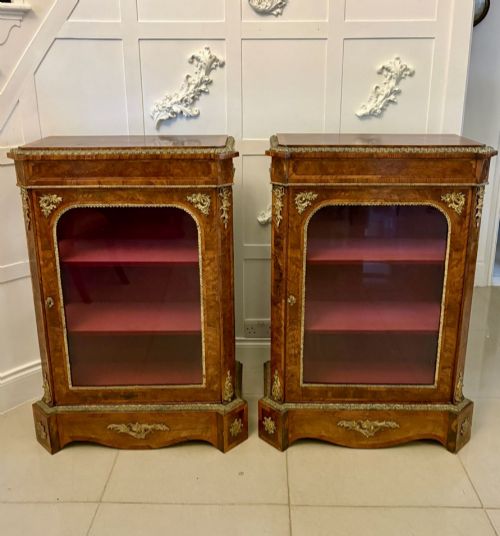
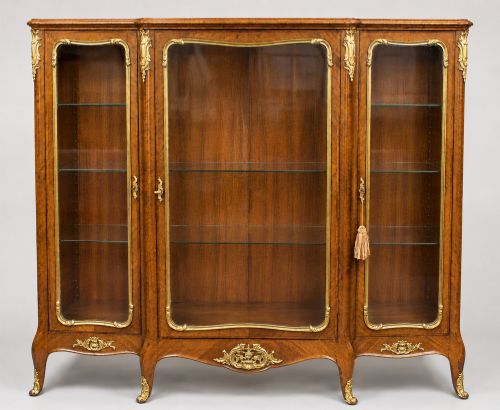
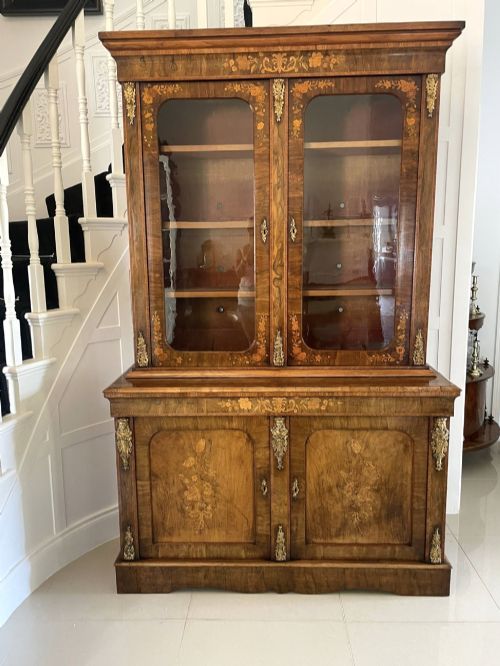
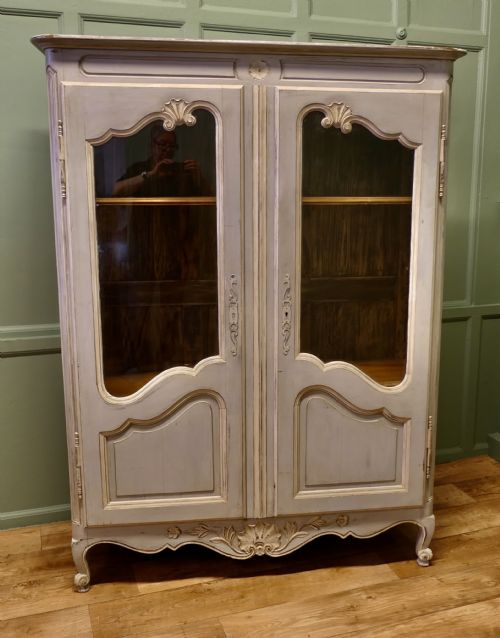
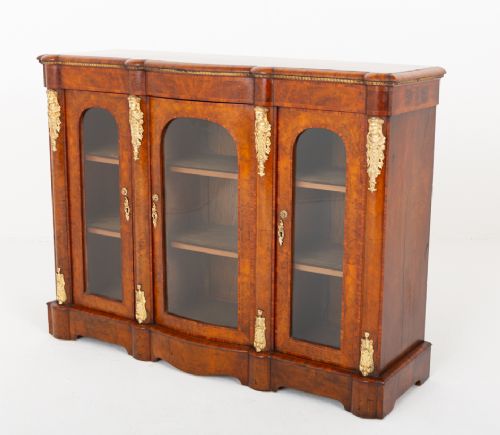
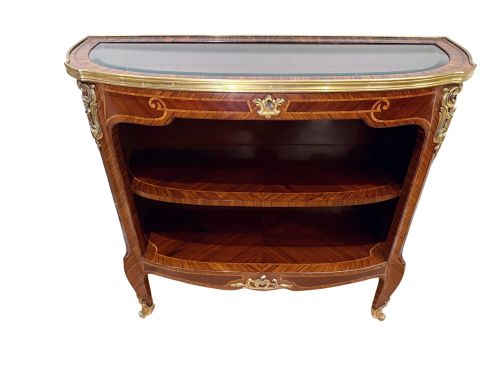
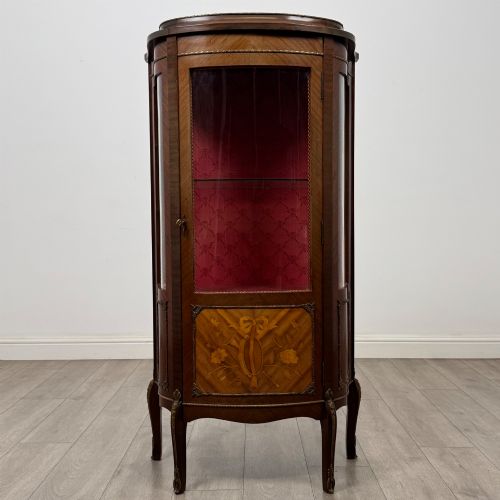
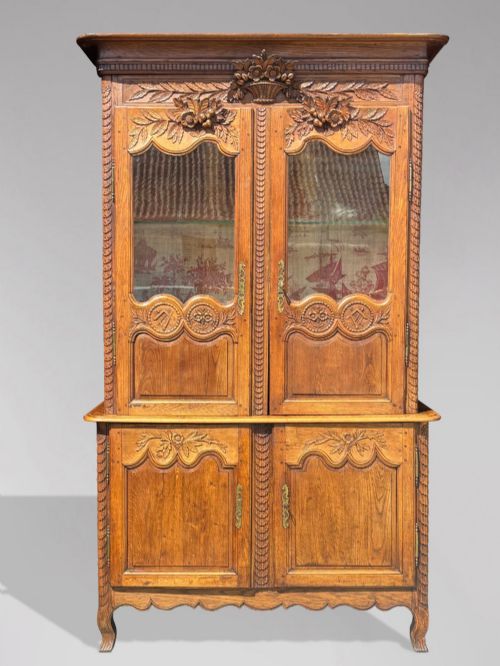
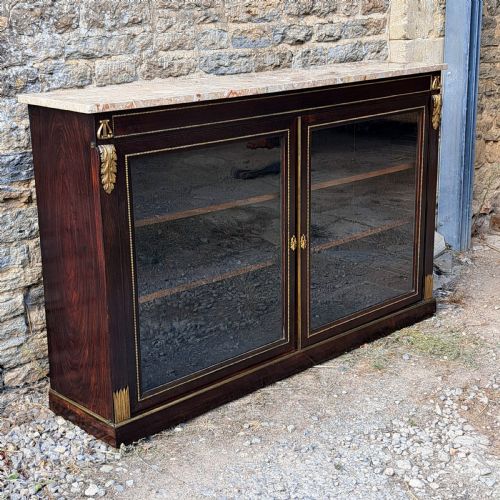
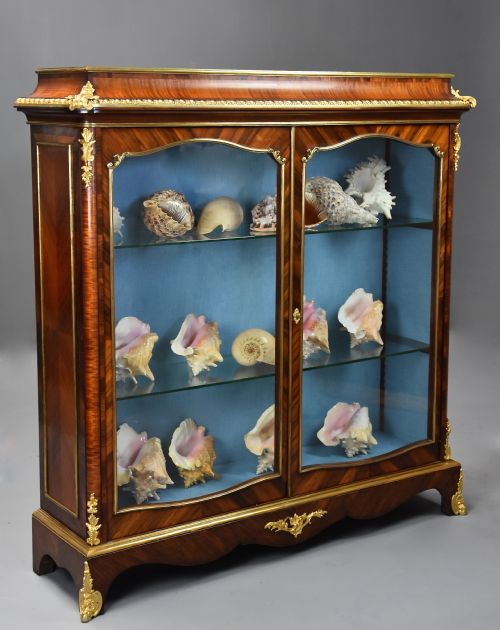
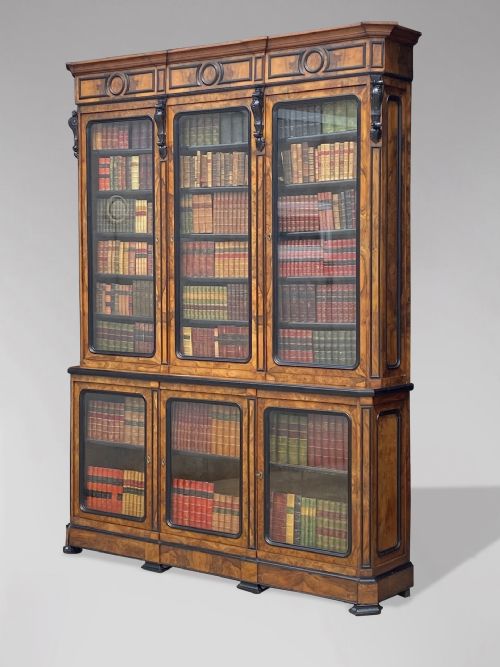
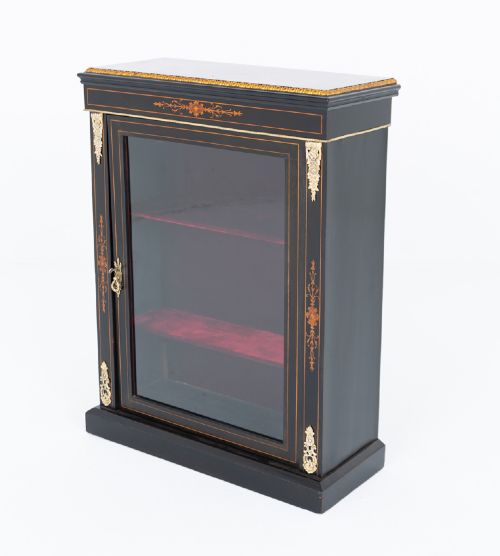
A french glass bookcase is a hybrid storage piece designed to display and protect books or decorative objects behind glazed doors. These items appear in forms such as vitrines, pier cabinets, and library bookcases originating from the nineteenth century onwards.
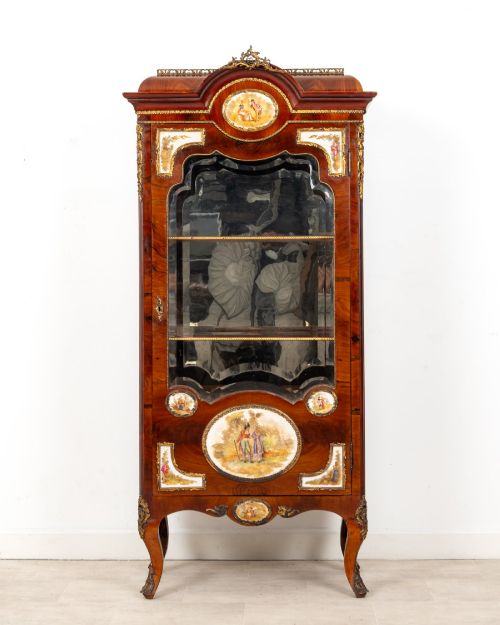
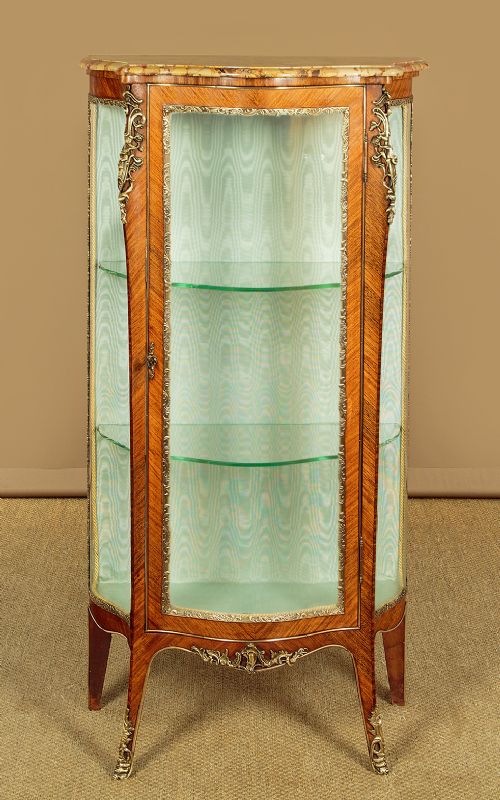
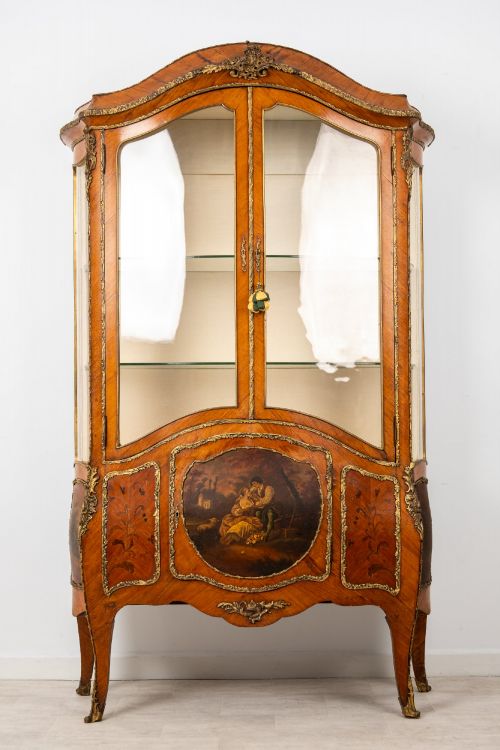
The version most commonly met on this page combines walnut, kingwood, or mahogany timber with glazed panels and brass or ormolu mounts. Makers often adopted revival aesthetics, including Louis XV and Rococo styles, alongside Victorian interpretations.
Pieces frequently feature adjustable shelving and fitted cabinets below, serving both as functional libraries and display furniture. Their origins stretch across French and Victorian workshops, utilising burr walnut and marquetry inlay.
How they were made
Carpenters constructed carcasses from solid woods like oak or mahogany, applying fine veneers of walnut, kingwood, and burr walnut to visible surfaces. Marquetry inlay and ebonised details frequently enhance the exterior timber panels.
Gilt bronze, known as ormolu, and cast brass provide decorative mounts along corners, feet, and cornices. Glazing is secured within timber frames, sometimes utilising curved or concave glass panes alongside painted panels in the Vernis Martin tradition.
Materials recorded across the inventory include mahogany, kingwood, burr walnut, and ebonised timber accented with brass and ormolu.
What varies in quality
The refinement of the ormolu mounts and the precision of the marquetry inlay separate standard production from exceptional pieces. Castings with sharp detail and hand-chased finishing indicate superior craftsmanship compared to softer, mass-produced metalwork.
The choice and figuring of veneers, such as richly patterned burr walnut or figured kingwood, dictate the visual depth of the cabinet. Furthermore, the inclusion of special elements like original painted panels or complex curved glass elevates the standing of a piece.
Gabriel Viardot·Paul Sormani
The French Glass Bookcase Glossary
- Vitrine
- A glass-fronted cabinet designed specifically for displaying porcelain, curiosities, or decorative objects. These pieces often feature glazed sides to let light flood the interior.
- Ormolu
- Gilt bronze mounts applied to furniture for decorative effect. The technique involves treating brass or bronze with a gold amalgam.
- Marquetry
- The art of applying pieces of veneer to a structure to form decorative patterns. Artisans use contrasting timbers like walnut and mahogany to create pictorial designs.
- Pier Cabinet
- A low cabinet built to fit the wall space between windows. They typically feature a single glass door and top surface for display.
- Vernis Martin
- A simulated Japanese lacquer technique developed in France. It involves applying multiple layers of translucent varnish over painted panels.
French Glass Bookcase: Frequently Asked Questions
What is a french glass bookcase used for?
These cabinets serve as dual-purpose furniture for housing library collections while displaying decorative objects behind protective glazing. The enclosed shelving keeps dust away from fragile bindings and delicate porcelain.
Historically, they occupied salons and formal libraries where hosts displayed their refined tastes to visitors. Today, they function well in living spaces and studies for organising books alongside curated ornaments.
How do I date a french glass bookcase?
Dating relies on examining the underlying construction timber, the style of the hardware, and the prevailing design movement. Pieces from the nineteenth century often display revival aesthetics like Louis XV or Rococo alongside Victorian marquetry.
Turned feet, hand-cut dovetails in the drawers, and the composition of the glass panes offer further chronological clues. Comparing the veneer types against known period preferences helps narrow down the decade of manufacture.
How do I care for wood and glass?
Maintain the timber by keeping the piece away from direct sunlight and sudden temperature shifts that cause veneer to crack. Regular dusting with a soft, dry cloth preserves the polished finish without building up residue.
Clean the glass panes using a mild solution applied to a cloth rather than sprayed directly onto the surface. This prevents moisture from seeping into the surrounding wood frame or damaging metal mounts.
Where should I place it?
Position the cabinet against an interior wall away from radiators to protect the delicate wood veneers and antique glass. Adequate ambient light helps illuminate the interior shelves and highlights the ormolu mounts.
Ensure the floor is level so the doors hang true and latch correctly within their frames. Pairing the piece with complementary antique or transitional furnishings creates a balanced interior scheme.