


French Gilt Table Lighting
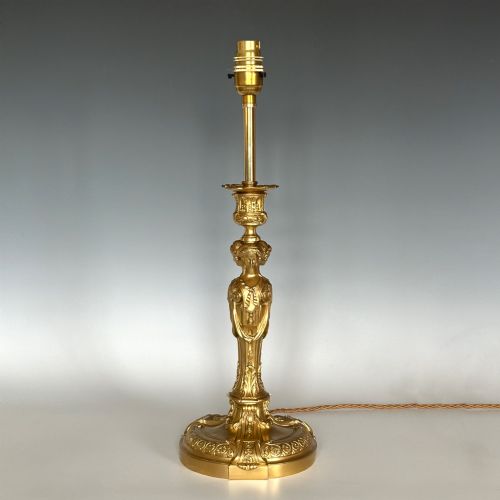
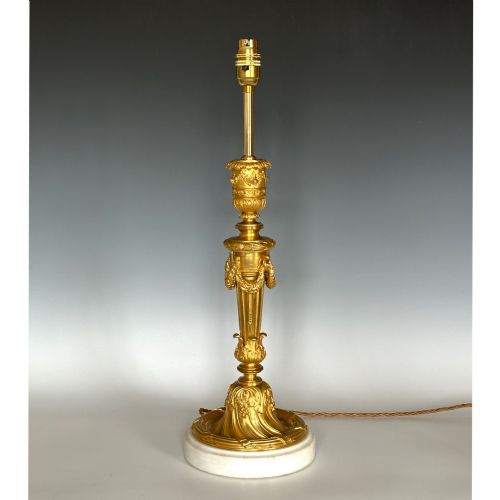
French gilt table lighting brings warmth and metallic lustre into a room through gilded metals and polished marble.
French Gilt Table Lighting
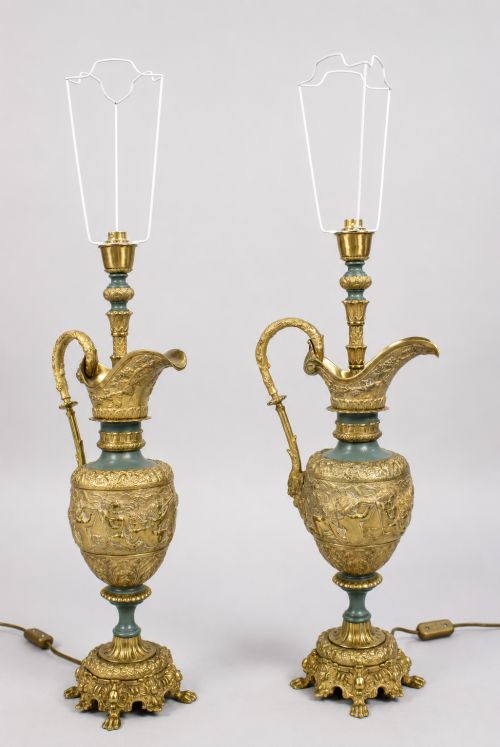
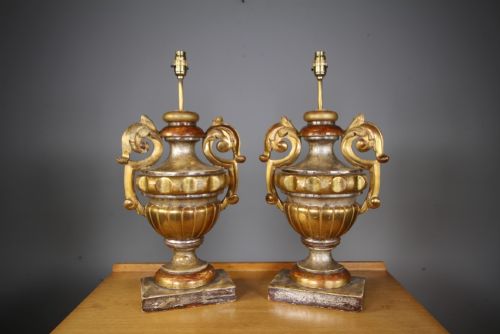
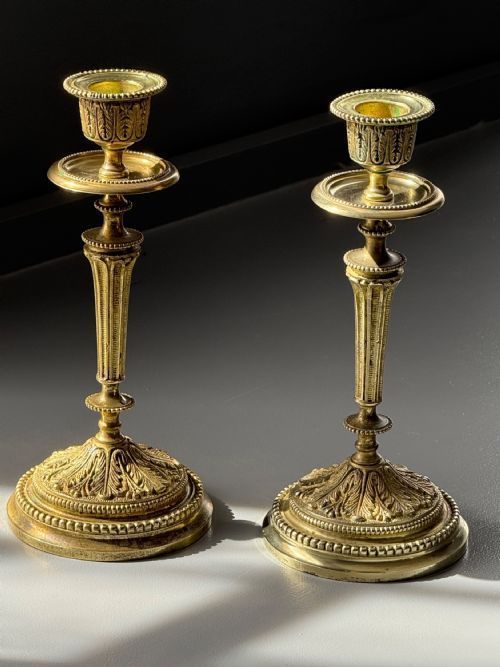
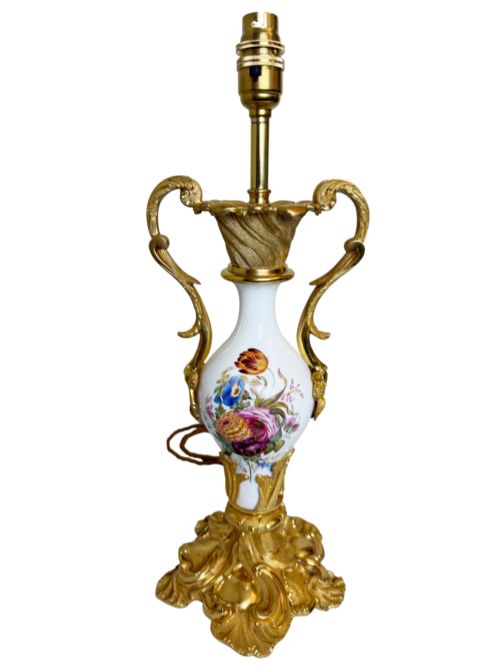
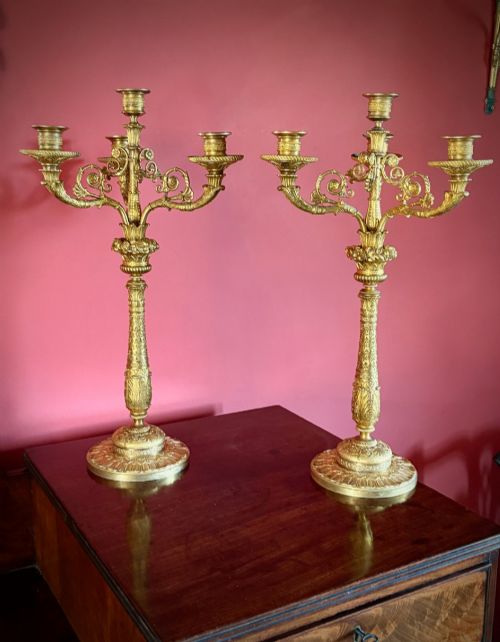
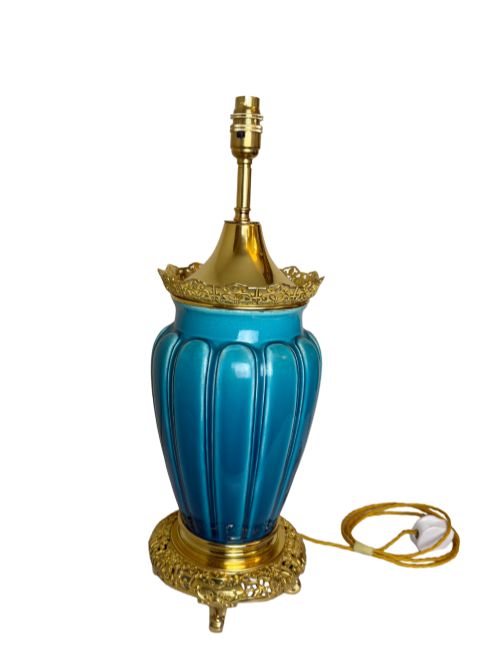
French gilt table lighting comprises decorative lamps, candelabra, and candlesticks fashioned from gilded metals, bronze, and ormolu. Pieces span the nineteenth century into the early twentieth century, reflecting enduring classical and revivalist aesthetics.
How they were made
Craftsmen utilised cast bronze, brass, and gilt metal, applying mercury gilding or electroplating to achieve a durable golden surface. Ormolu mounts required precise metal chasing and fire gilding to create sharp detail against contrasting patinated areas.
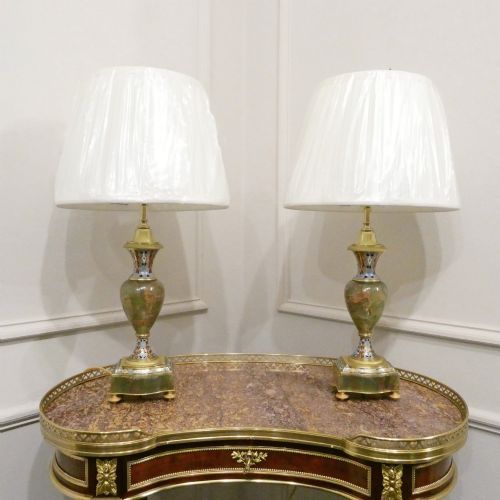
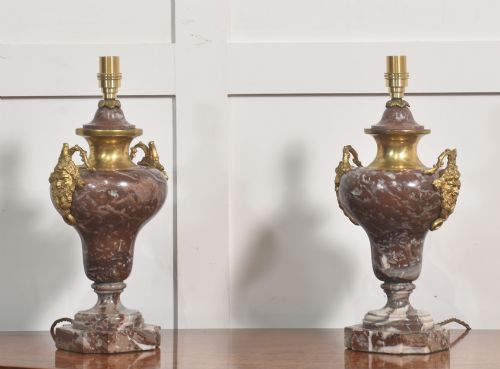
Many items incorporate natural materials such as rouge marble, onyx, alabaster, and cut glass turned on lathes or carved by hand. Porcelain components from Sèvres styles and champlevé enamel additions provide colourful accents to the metal framework.
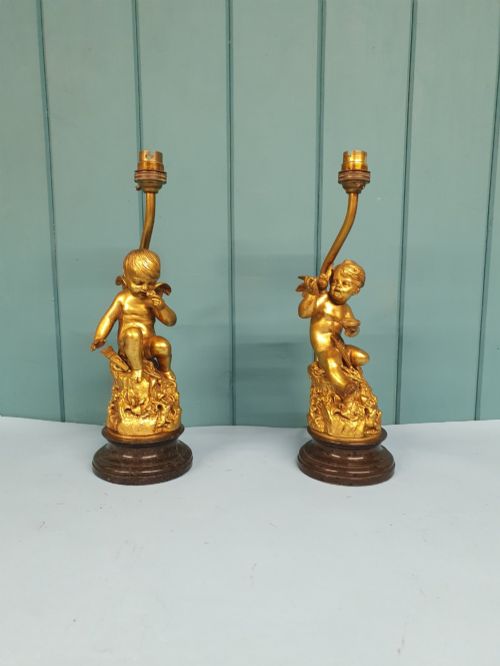
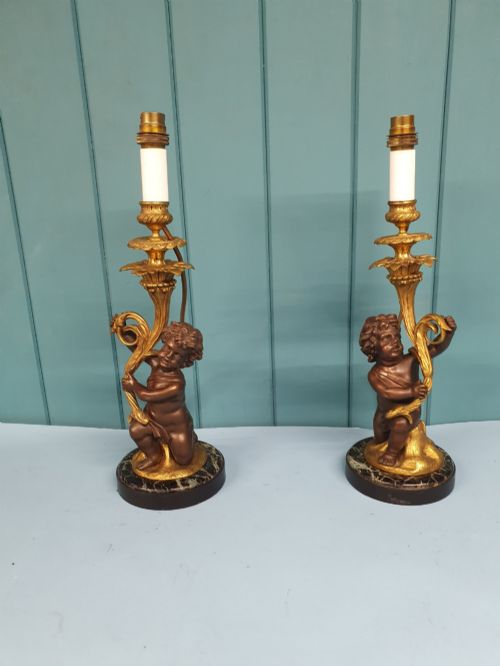
Several bronze cherubs hold up lights, proving that seventeenth-century angelic multitasking survived well into the twentieth century.
What varies in quality
The crispness of the chased decoration separates standard commercial castings from exceptional workshop production. Finely hand-finished ormolu displays deep relief and subtle burnished highlights on high points, whereas lesser items remain flat and uniform.
The choice of secondary materials dictates overall weight and presence, with dense marbles and heavy bronze cores indicating superior manufacture. Original gilding longevity and the integration of porcelain or crystal elements further influence the standing of each piece.
E Rousseau·Pierre Philippe Thomire
The French Gilt Table Lighting Glossary
- Ormolu
- Gilded bronze produced through an amalgam of mercury and gold applied to metal. The technique created a rich, matte yellow finish characteristic of fine French decorative objects.
- Champlevé
- An enamelling technique where troughs are dug into a metal surface and filled with vitreous paste before firing. It frequently decorates nineteenth-century brass and bronze bases.
- Cassolette
- A decorative vessel shaped like a covered urn, often reversible to function as a candlestick. These are frequently mounted in ormolu above marble plinths.
- Retour d'Egypte
- A neoclassical design style inspired by Napoleon's campaign in Egypt. It incorporates distinct motifs such as sphinxes, pharaohs, and lion paw feet into lighting bases.
- Alabaster
- A fine-grained translucent stone used for carved lamp bodies. It accepts polish well and allows soft light diffusion.
French Gilt Table Lighting: Frequently Asked Questions
How do I identify French empire lighting?
French empire lighting exhibits strict symmetry, militaristic motifs, and classical architectural forms such as columns and urns. Materials typically combine dark patinated bronze with bright ormolu mounts.
These pieces often feature lion paw feet and classical deities, reflecting the aesthetic preferences of the early nineteenth century.
What is the difference between ormolu and gilt brass?
Ormolu specifically denotes mercury-gilded bronze, where a gold and mercury amalgam was fired onto the bronze base to burnish the gold layer. Gilt brass or gilt metal usually involves a different base alloy and alternative plating methods.
Ormolu generally displays a deeper, warmer golden tone and sharper hand-chased detail compared to standard gilt brass.
Were these lamps originally electrified?
Most nineteenth-century pieces began as oil lamps, gas lamps, or candlestick candelabra before receiving later electrical conversions. Conversion work was usually undertaken in the twentieth century to adapt antique bases for modern domestic use.
Wiring methods and internal fittings vary widely according to when the conversion took place.
How do I clean gilt bronze lighting?
Gilt bronze requires gentle dusting with a soft, dry cloth to prevent accumulation of grit within the chased recesses. Moisture and abrasive chemical polishes strip away fragile surface gilding.
Preserving the original patina ensures the longevity of the metal finish.