

French Gilt Occasional Table
When you choose a french gilt occasional table, you bring home a piece of nineteenth-century reception rooms designed for display and convenience.
French Gilt Occasional Table
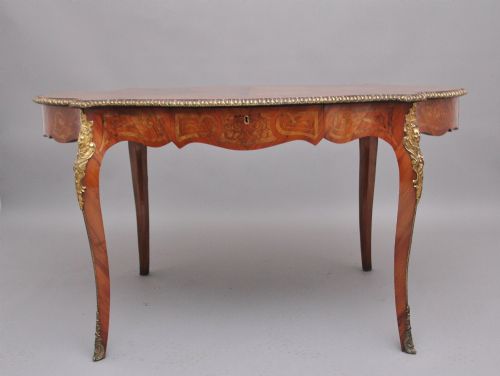
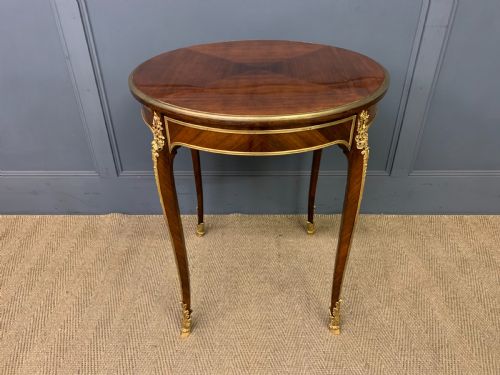
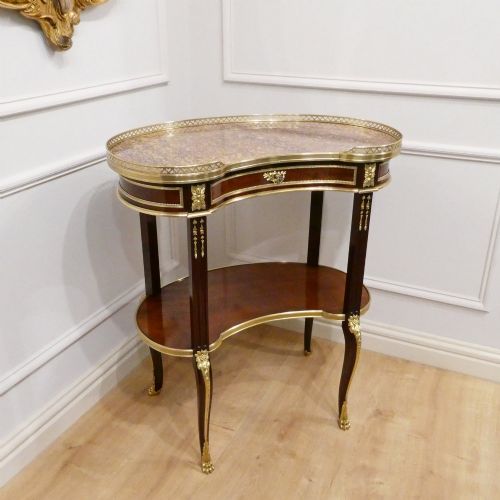
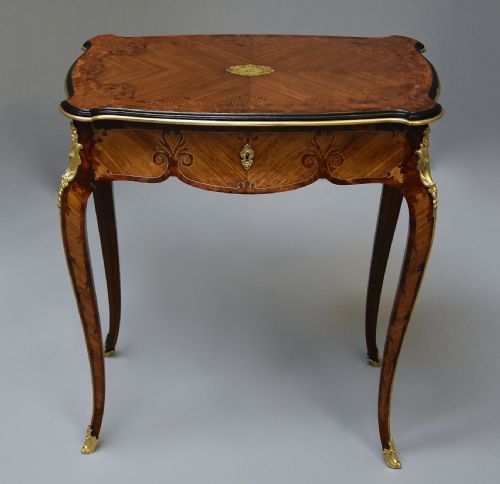
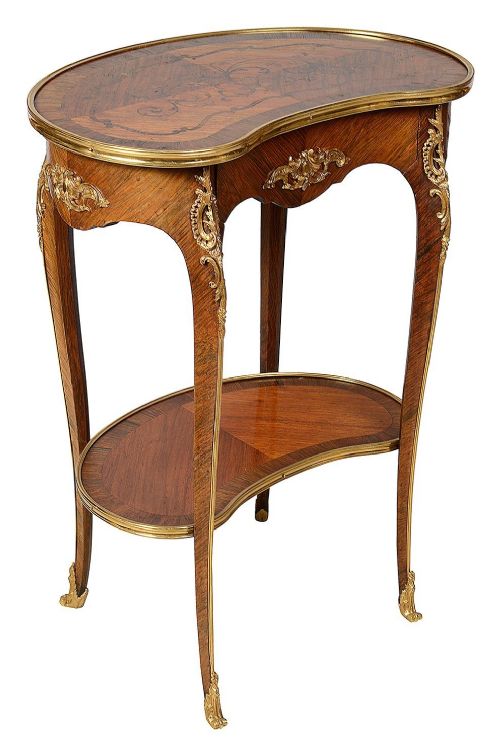
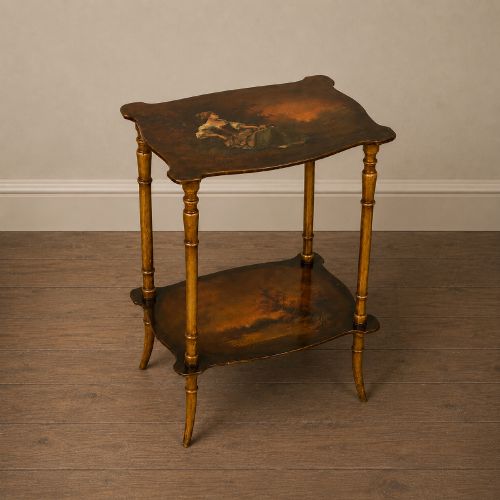
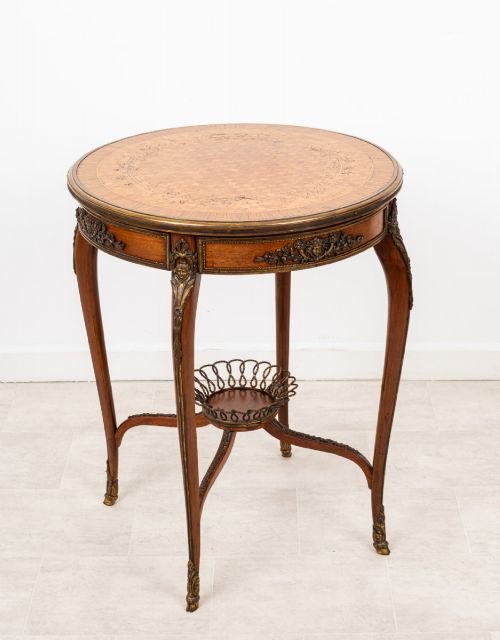
A french gilt occasional table encompasses side tables, centre tables, gueridons and etageres originating primarily across the nineteenth century and into the Edwardian era. These pieces appear in revival styles referencing Louis XV and Louis XVI, alongside Empire designs.
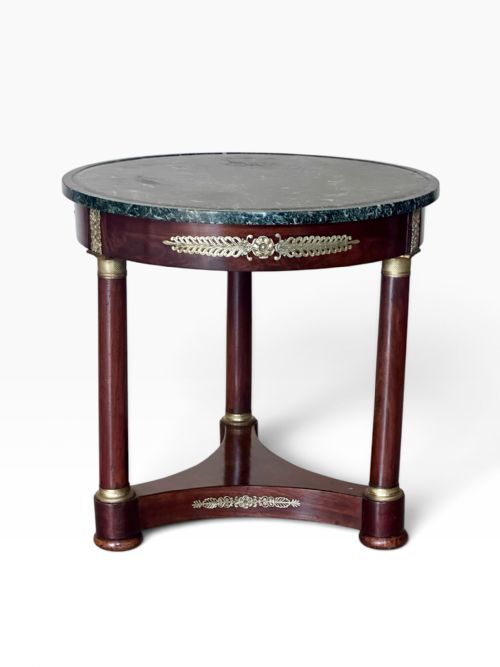
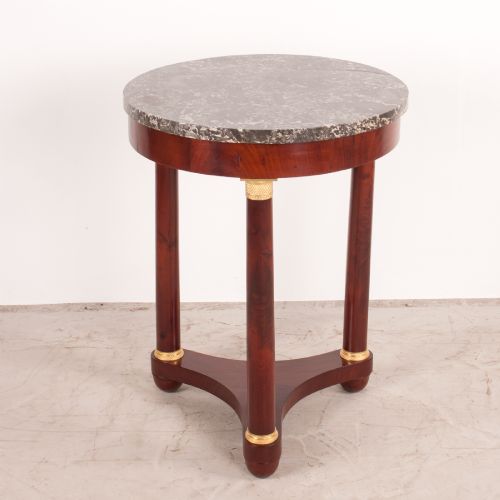
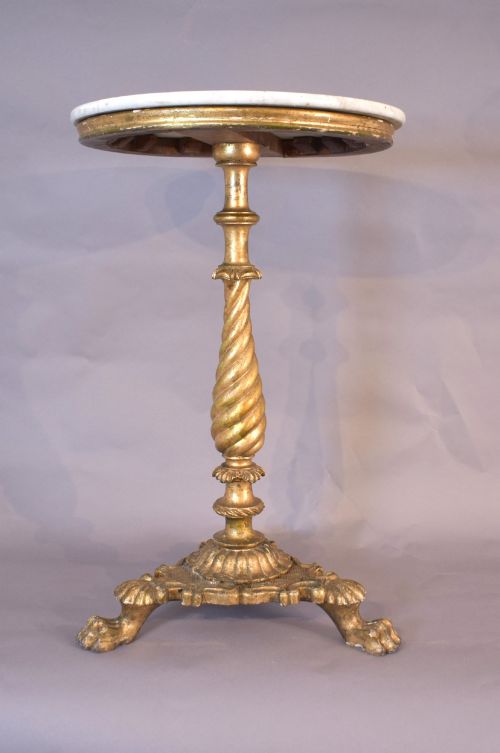
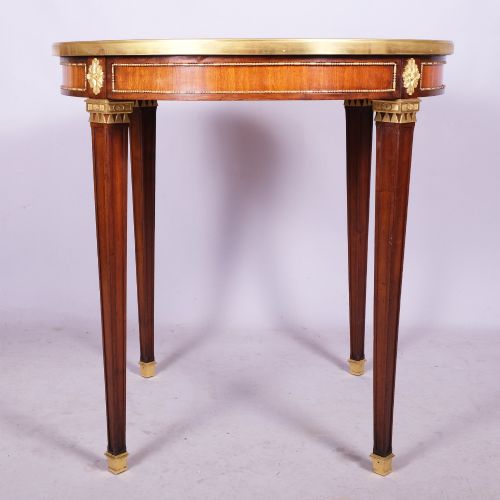
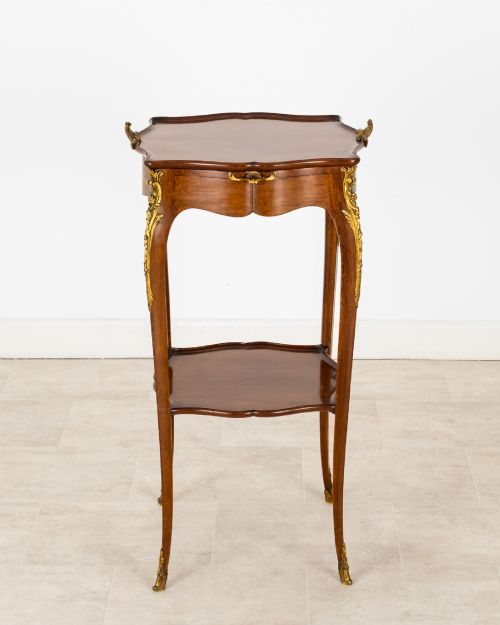
The format varies from round marble-topped drum tables and tripod gueridons to multi-tiered etageres and nesting tables. Most examples use gilt bronze or ormolu mounts to accent timber structures.
Materials and construction
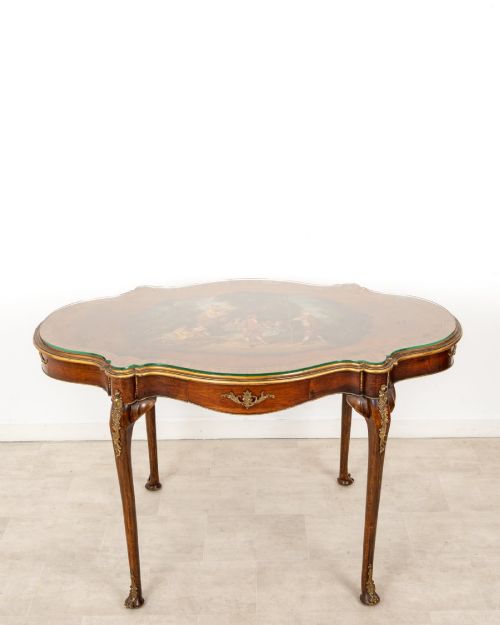
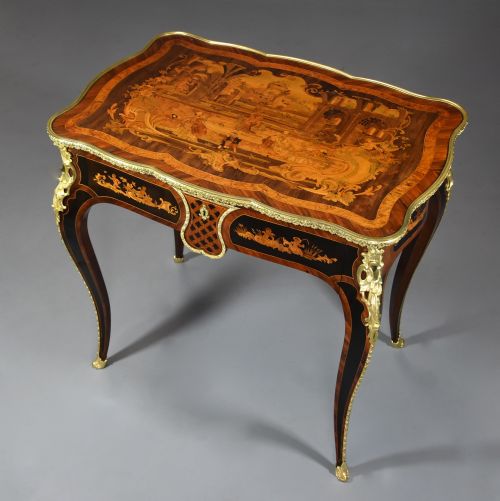
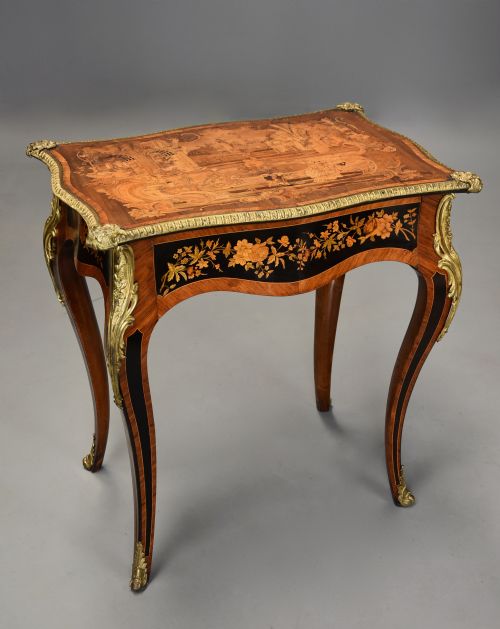
Cabinetmakers built these tables using hardwoods such as mahogany, walnut, rosewood and kingwood, often applying intricate parquetry, marquetry or vernis martin decoration. Tops frequently feature inset white or rouge marble, onyx or painted panels.
Metalwork forms a defining element, utilising cast ormolu and gilt bronze mounts, edgings and sabots. Gilt wood and painted finishes also appear extensively across the frame structures.
The furniture styles recorded on this page range from Louis XV and XVI revivals to French Empire and Chateau designs.
Assessing quality
Quality rests on the crispness of the bronze casting and the precision of the gilt mounts, where finer pieces display hand-chased detail rather than flat factory casting. Timber work demonstrates similar division, distinguishing simple veneering from complex floral marquetry and parquetry patterns.
Attribution or maker signatures elevate certain items, particularly those associated with workshops such as Maison Millet or Joseph-Emmanuel Zwiener, or pieces created in the manner of Francois Linke.
Maison Millet·Joseph Emmanuel Zwiener·Francois Linke
The French Gilt Occasional Table Glossary
- Ormolu
- Gilt bronze mounted onto furniture or cast into decorative ornaments. The technique involves applying a mercury and gold amalgam to bronze before firing.
- Guéridon
- A small French table supported by one or more columns, often featuring a circular marble top. The form gained popularity during the seventeenth century.
- Étagère
- A set of open shelves or a tiered side table used for displaying small objects. These pieces often feature multiple levels supported by slender columns.
- Marquetry
- Decorative veneer work arranged in pictorial or geometric patterns using various woods. Craftsmen assemble these thin slices of timber onto the carcase.
- Vernis Martin
- A type of simulated Japanese varnish developed in France during the eighteenth century. The technique produces a translucent, glossy finish on painted furniture.
French Gilt Occasional Table: Frequently Asked Questions
What is a gueridon table?
A gueridon is a circular table, frequently supported by a central pillar or tripod base, designed for use in reception rooms.
These pieces often feature inset marble tops surrounded by gilt bronze or ormolu galleries.
How do I style a gilt table?
These tables function well as lamp tables beside seating or as freestanding centre pieces in hallways and drawing rooms.
Their reflective metallic mounts and marble surfaces complement both traditional and contemporary interiors.
What woods were used?
Cabinetmakers utilised exotic timbers including kingwood, rosewood, mahogany and walnut for the carcases and veneered surfaces.
Parquetry and floral marquetry patterns frequently decorate the tabletops and shelves.