

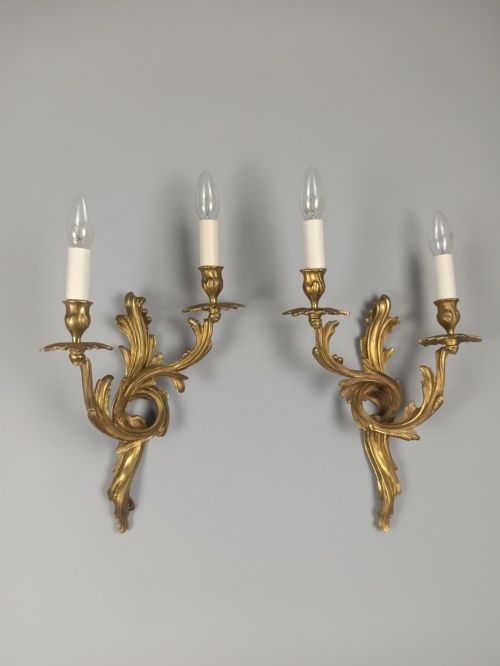
French Gilt Bronze Candelabra
French gilt bronze candelabra bring heavy nineteenth-century metalwork into a room, offering multiple candle arms shaped by classical design and Parisian workshops.
French Gilt Bronze Candelabra
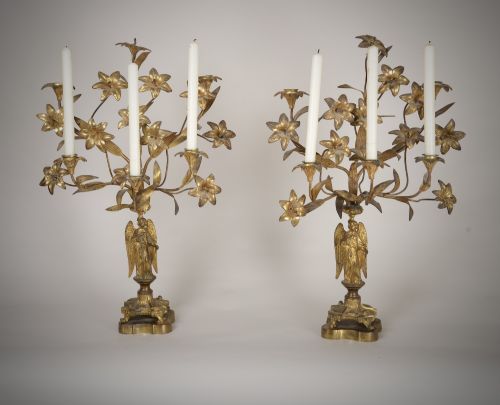
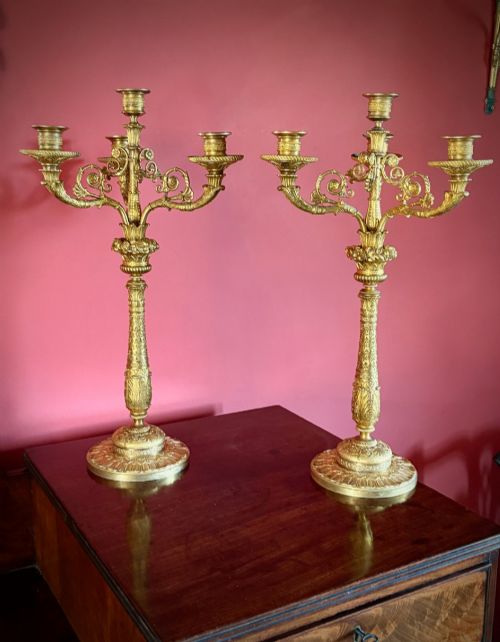
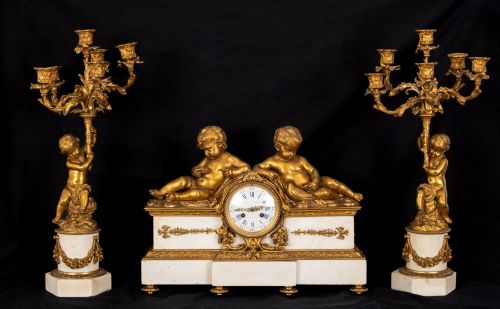
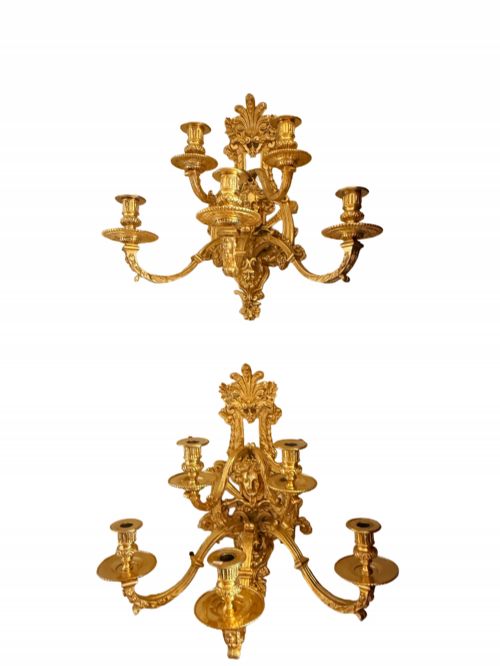
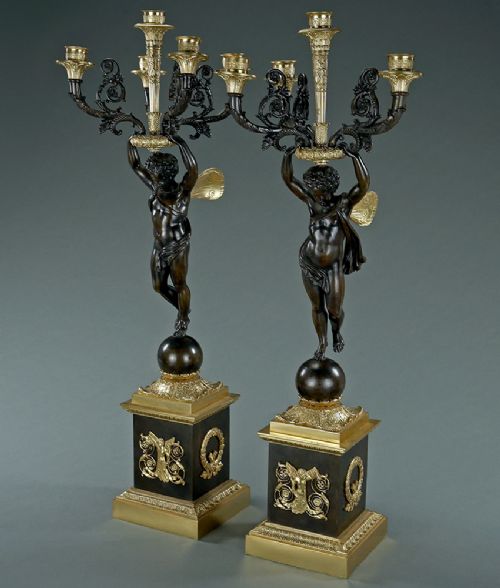
French gilt bronze candelabra are multi-light branched candle holders produced predominantly during the nineteenth century, encompassing periods from the Empire and Restoration through to the late Victorian era. These pieces appear frequently as matched pairs, designed to sit upon mantelpieces or side tables, often accompanying clock garnitures.
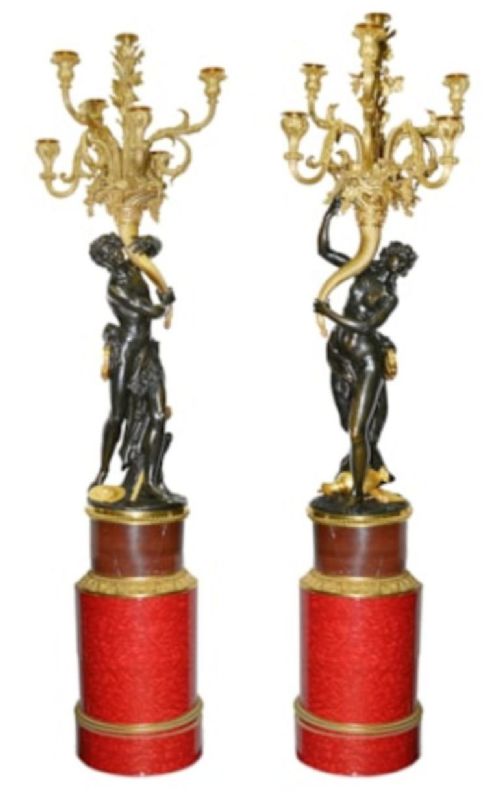
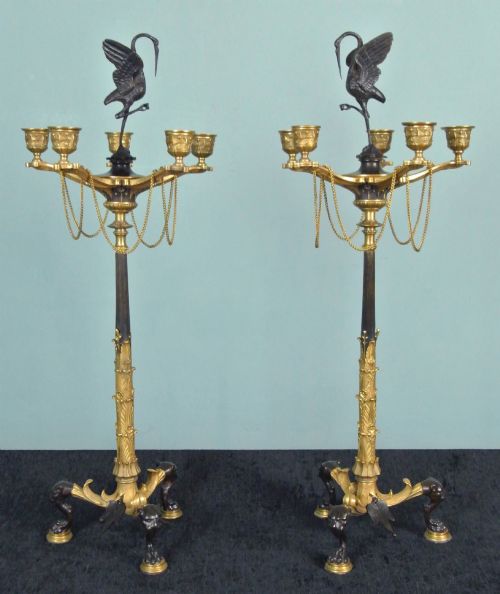
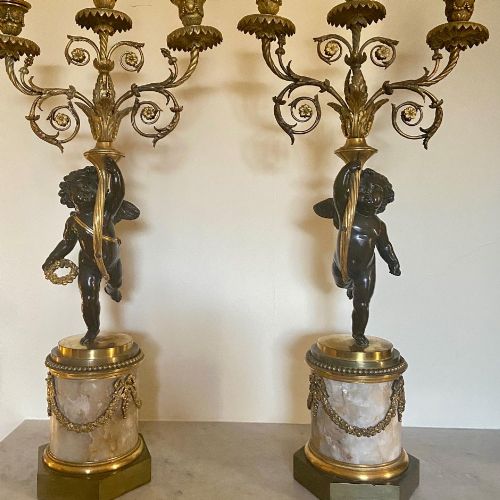
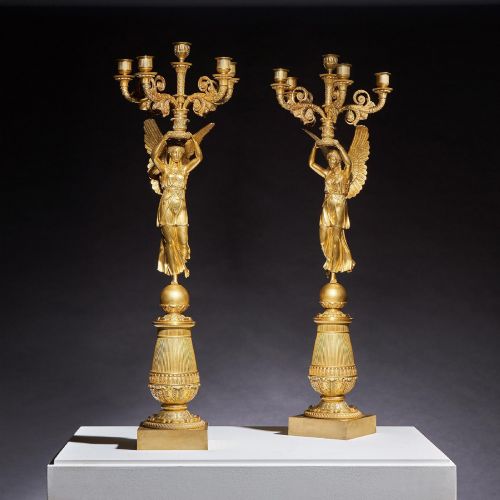
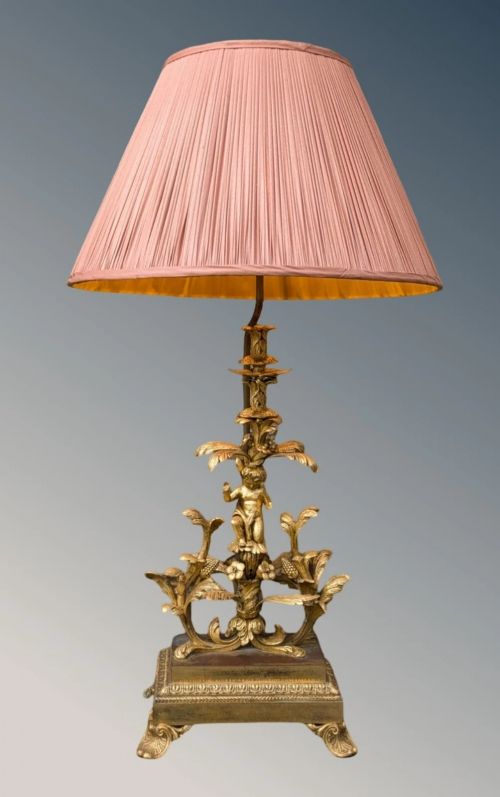
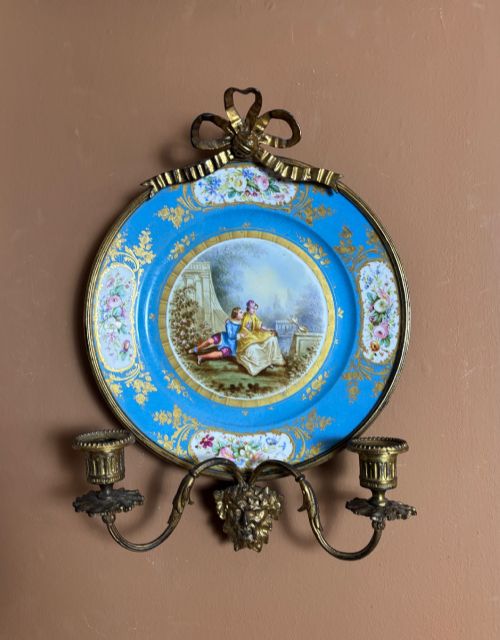
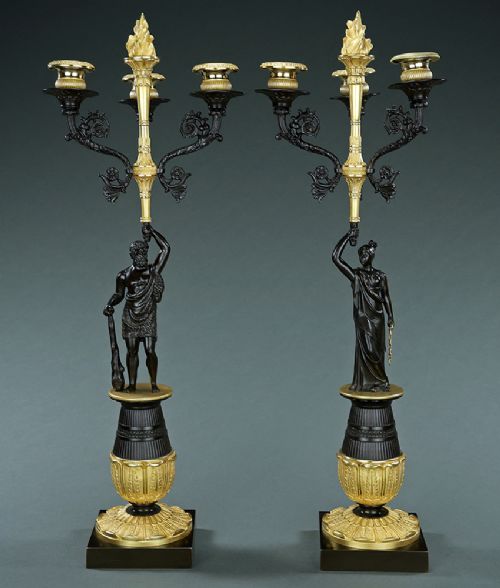
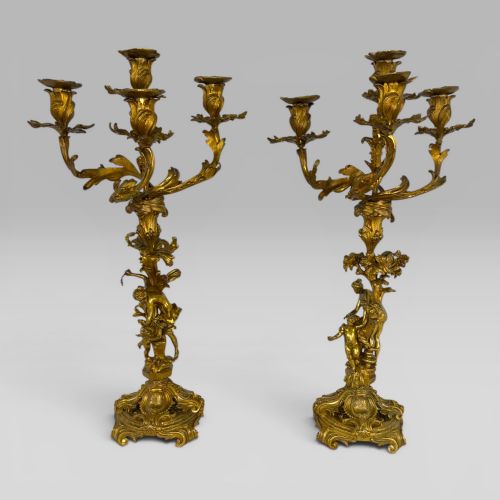
The physical form relies on a central shaft branching into two, three, four or more candle holders, sometimes incorporating figural elements such as putti, fauns, or mythological figures. Many examples integrate contrasting bases made of white marble, onyx, or champleve enamel, reflecting historical revivals including Louis XVI, Rococo, and Gothic styles.
How They Were Made
Candelabra were constructed by casting bronze components in sections, using the lost-wax or sand-casting method to achieve intricate detail on foliage, figures, and scrollwork. Once cast, the separate elements were assembled using threaded rods and internal screws, allowing complex multi-branch structures to remain stable.
Surface finishing involved mercury gilding or electroplating to apply a layer of gold to the bronze, known as ormolu, which was then burnished in specific areas to create contrast against matte textures. Patinated bronze sections were treated with chemical solutions to achieve deep brown or black tones, pairing directly with the bright gilt highlights.
French Gilt Bronze Candelabra Retail Price Guide 2026
Typical asking prices for french gilt bronze candelabra among the pieces listed under this phrase on Sellingantiques today, from the lower quarter to the upper quarter. They describe what is for sale here now, not the wider market.
Stag and doe figures occasionally support the candle branches, bringing nineteenth-century forest wildlife directly onto the formal mantelpiece.
What Varies in Quality
The distinction between ordinary and superior pieces lies primarily in the crispness of the chasing and the depth of hand-finishing applied after casting. Workshops that employed skilled chisellers produced metalwork where acanthus leaves, hair, and drapery possess sharp relief and clean edges, whereas lesser examples retain a soft, blurred surface directly from the mould.
Material selection also dictates the hierarchy, with heavy, well-cast bronze cores and genuine imported white marble or fluorspar bases commanding greater weight and presence. Furthermore, attribution to known makers or signed examples elevates the standing of an individual pair above anonymous commercial production.
Francois Redmond·Barbedienne·Pierre Philippe Thomire·Thiebaut Freres·Rabiat·Claude Galle
The French Gilt Bronze Candelabra Glossary
- Ormolu
- Gilt bronze, formed by applying a gold amalgam to a bronze base and heating it to vaporise the mercury, leaving a durable golden layer. This technique defined high-end decorative objects in France from the eighteenth century onward.
- Garniture
- A set of matched ornamental objects designed to be displayed together, typically consisting of a mantel clock flanked by a pair of candelabra or vases. These sets anchored formal interior displays on nineteenth-century mantelpieces.
- Chasing
- The manual process of refining a cast metal surface using small punches and hammers to sharpen details and textures. High-quality chasing separates master bronziers from routine foundry production.
- Patinated bronze
- Bronze treated with chemical agents to alter its surface colour to dark brown, green, or near-black. This dark finish was frequently contrasted against bright gilt ormolu mounts.
- Champleve
- An enamelling technique where troughs or cells are hollowed out of the metal surface and filled with vitreous enamel powder before firing. The resulting coloured panels decorate the stems or bases of the candelabra.
French Gilt Bronze Candelabra: Frequently Asked Questions
How do I clean gilt bronze candelabra?
Maintenance requires only a soft, dry cloth to remove dust from the crevices of the metalwork. Moisture and commercial metal polishes must be avoided, as abrasive cleaning strips the historic gold ormolu layer.
Preserving the original surface condition protects both the appearance and the historical integrity of the piece. Regular gentle dusting prevents grime accumulation without risking damage to the delicate burnished highlights.
Were these electrified later?
Many nineteenth-century candelabra were converted to electricity during the twentieth century, involving drilled channels or wired candle tubes inserted into the sockets. Collectors encounter both unaltered candle-burning examples and older wired conversions.
Assessing a piece involves inspecting the original nozzle cups and drip pans to determine whether drilling altered the core structure. Reversible wiring methods generally preserve more of the antique fabric than permanent alterations.
How can I tell Empire style from Rococo?
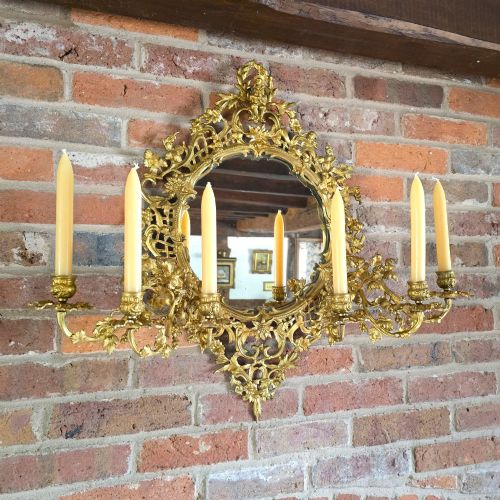
Empire style pieces display strict symmetry, military motifs, classical figures, and geometric rigour inspired by ancient Rome and Greece. In contrast, Rococo revival candelabra feature asymmetrical scrolls, shell motifs, naturalistic foliage, and flowing organic curves.
Recognising these aesthetic markers helps place an object within its nineteenth-century revival context. The choice of motifs directly reflects the historical period imitated by the foundry.
What is a clock garniture?
A clock garniture is a matched decorative set featuring a central mantel clock accompanied by two matching side pieces, such as candelabra or urns. These ensembles were manufactured as a unified decorative scheme for formal reception rooms.
Finding a complete, matching three-piece set indicates that the components survived together without separation. The materials and chasing on the candelabra should match the clock case precisely.