

French Gilt Brass Appliques
French gilt brass appliques bring decorative wall lighting into interiors through cast metal forms shaped by historic revival styles.
French Gilt Brass Appliques
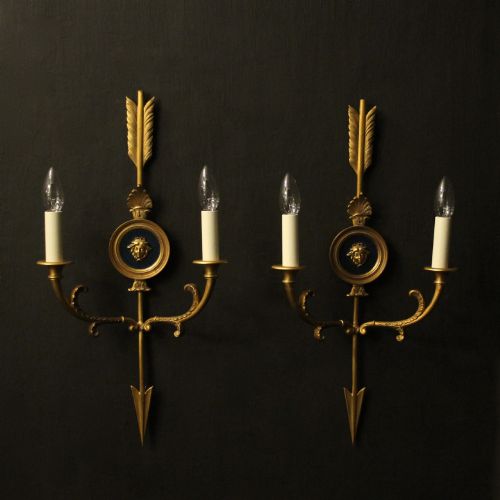
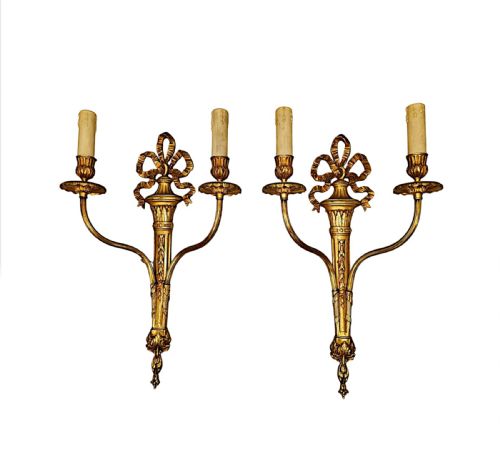
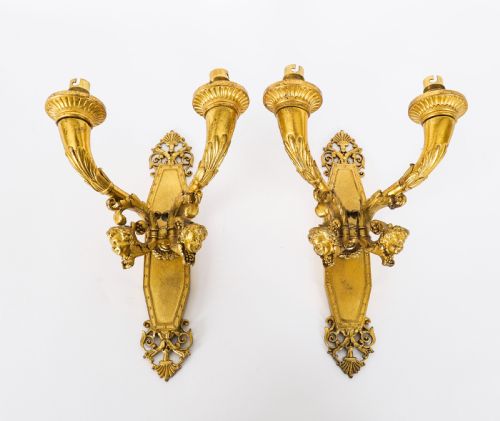
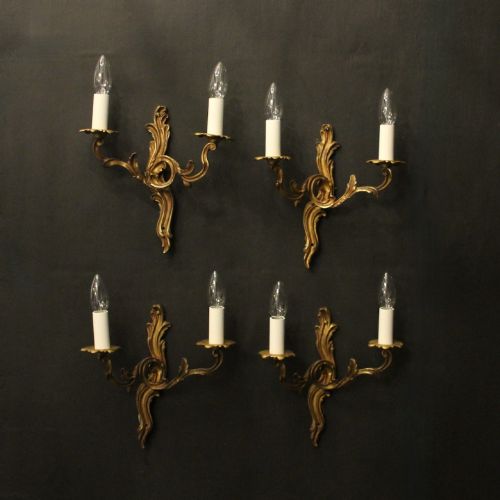
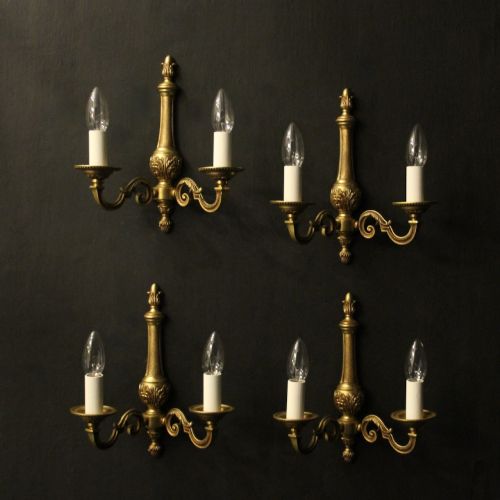
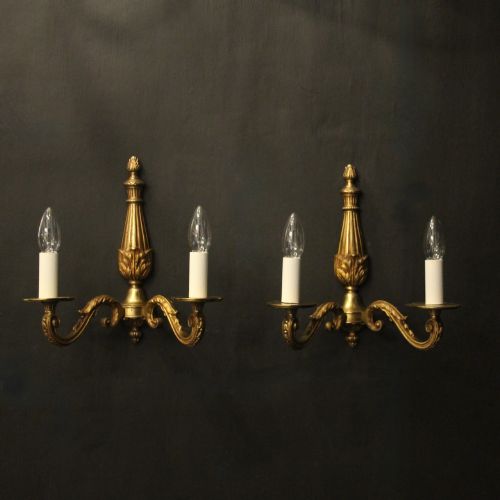
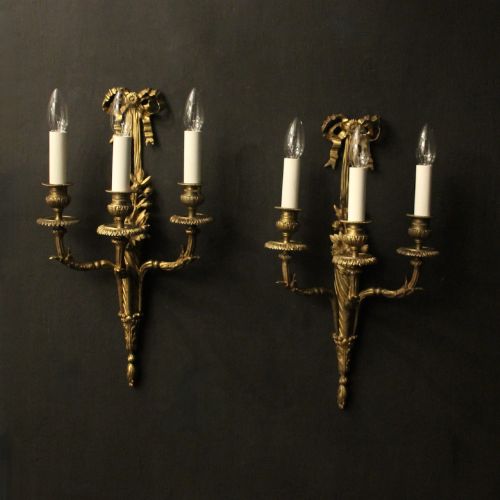
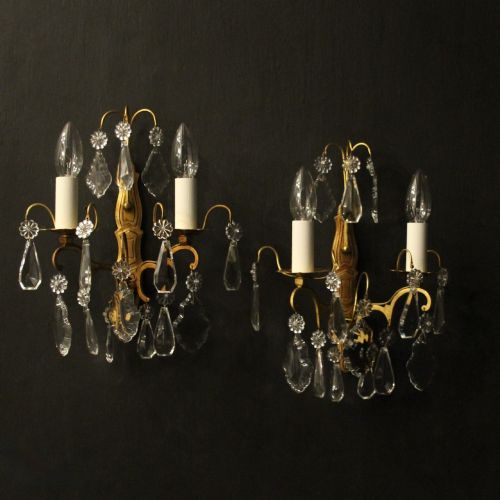
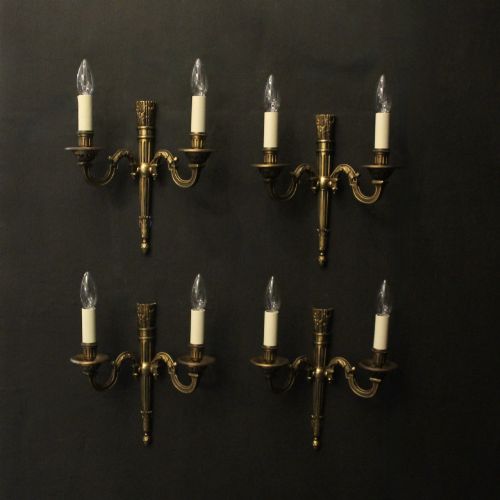
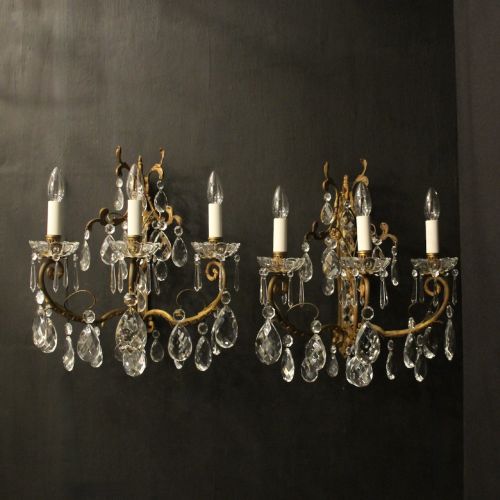
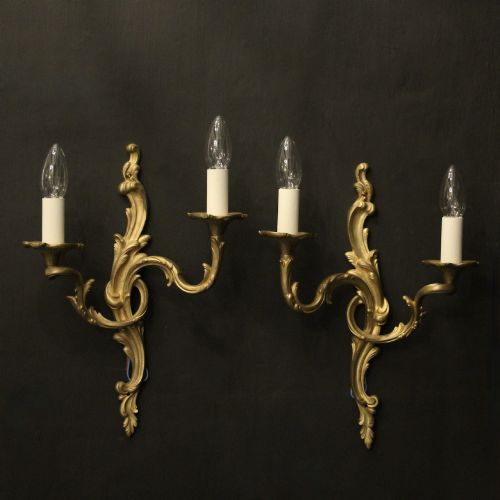
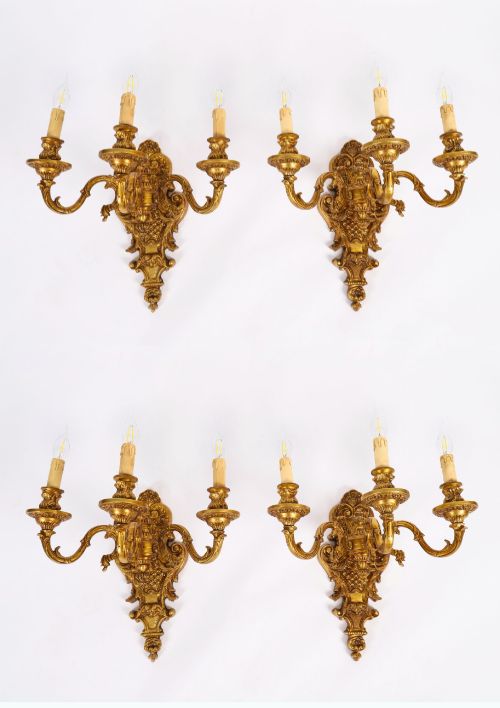
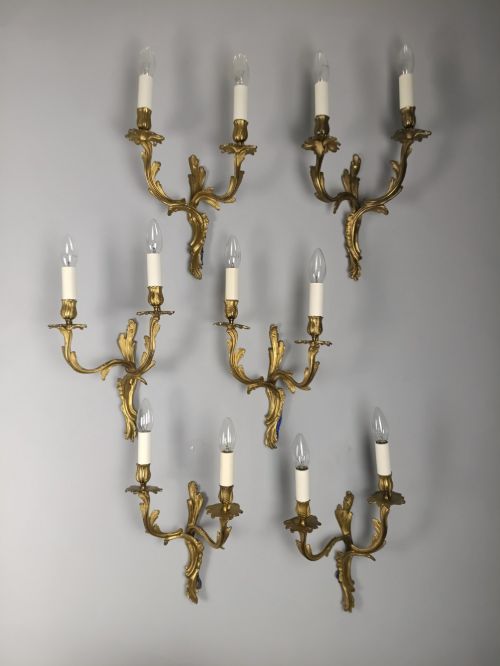
French gilt brass appliques comprise wall lights, wall sconces, and furniture mounts shaped in styles such as French Rococo, Louis XVI, and French Empire. These pieces function primarily as wall-mounted light fixtures with single, double, or triple arms, along with occasional half lanterns and wall chandeliers.
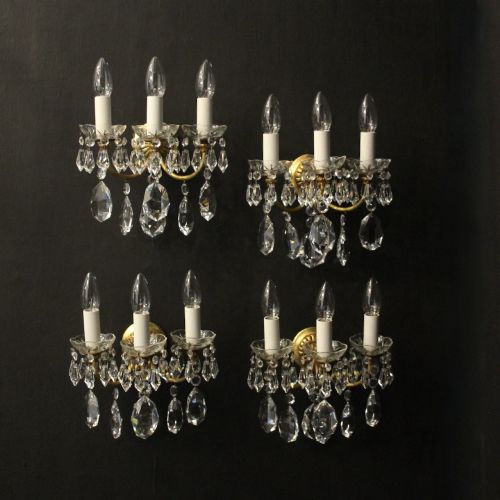
The selections available here span from the nineteenth century into the 1920s and 1930s, reflecting periods of revival including Rococo Revival and Louis XIV Revival. Buyers frequently encounter matched pairs and larger sets featuring twin or triple arms intended for symmetrical wall placement.
How they were made
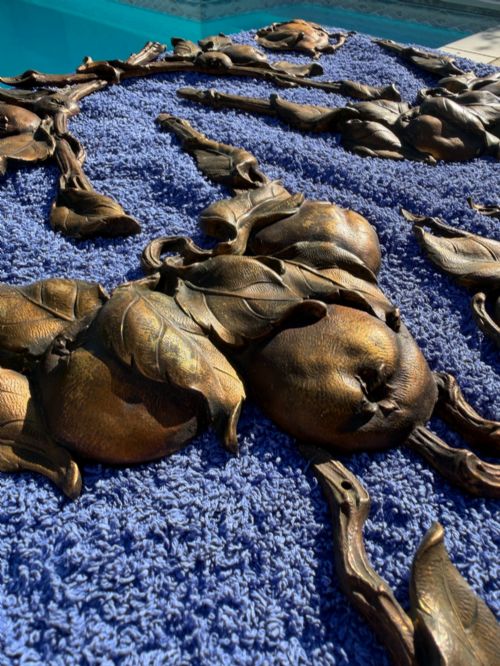
These items rely on metals such as brass, bronze, and metal substrates finished with gilding or ormolu to achieve a bright metallic surface. Workshops utilised casting techniques to form intricate scrolling arms, ribbons, and structural mounts.
Selected examples incorporate crystal components and porcelain flowers to complement the gilt brass and bronze frameworks, adding textural contrast to the mounted light fittings.
Several wall lights incorporate porcelain flowers alongside gilt bronze foliage, bringing an unexpected touch of a country garden indoors.
What varies in quality
The standard of an applique rests upon the crispness of the metal casting and the depth of the chased detail across the brass or bronze surface. Finer examples display sharp relief in motifs like acanthus leaves and ribbons, whereas simpler pieces show softer contours.
Proportion and scale also dictate the character of the object, with larger matched sets requiring consistent casting quality and uniform mercury gilding or modern electroplating across every component.
Poix Blin
The French Gilt Brass Appliques Glossary
- Applique
- A wall-mounted light fixture or decorative metal mount designed to be fixed directly to a vertical surface. These items often hold multiple candle or electrical light arms.
- Ormolu
- Gilded bronze produced by applying a mercury and gold amalgam to a bronze base and heating the object to fuse the finish. The technique creates a durable, luminous golden surface on nineteenth-century pieces.
- Rococo Revival
- A nineteenth-century design movement mimicking the asymmetrical scrolls, shell motifs, and naturalistic curves of the eighteenth-century French Rococo style. It dominates many of the twin and triple-arm wall lights found in this category.
- Louis XVI Style
- An aesthetic characterised by classical symmetry, straight lines, urns, and neoclassical foliage rather than the exuberant curves of earlier periods. Appliques from this design tradition appear alongside Empire variants.
French Gilt Brass Appliques: Frequently Asked Questions
How do I choose between pairs and sets of four?
Pairs suit smaller rooms, chimney breasts, or flanking a mirror where two symmetrical points of light suffice. Sets of four allow for balanced illumination along a longer hallway or across multiple walls in a principal reception room.
Consider the scale of the wall space before selecting an arm count, as twin and triple-arm configurations project further into the room and create a wider spread of light.
Were these wall lights originally wired for electricity?
Most appliques dating from the nineteenth and early twentieth centuries were originally designed for candles before undergoing conversion to electricity during subsequent decades. Rewiring is standard practice to ensure safety and compatibility with modern domestic electrical standards.
When evaluating pieces described as rewired, check that the internal fittings suit your intended installation method and wall box positioning.
How do I distinguish between gilt brass and ormolu?
Ormolu specifically denotes a gilded bronze substrate finished with historical mercury gilding processes, yielding a warm and deep metallic lustre. Gilt brass typically presents a slightly different alloy composition beneath the gold finish and often dates to later manufacturing periods.
Both materials require similar gentle care to preserve the integrity of the surface layer without stripping the gold finish.
How do I clean gilt brass appliques safely?
Dust the metal surfaces regularly with a soft, dry cloth to prevent the accumulation of grime within the chased recesses of the casting. Avoid harsh chemical cleaners, abrasive polishes, or water immersion, as these substances can strip the gilding from the brass or bronze.
If the piece incorporates crystal drops or porcelain flowers, clean those specific elements independently using a damp cloth while protecting the surrounding metal.