



French Gilded Bronze Candlesticks
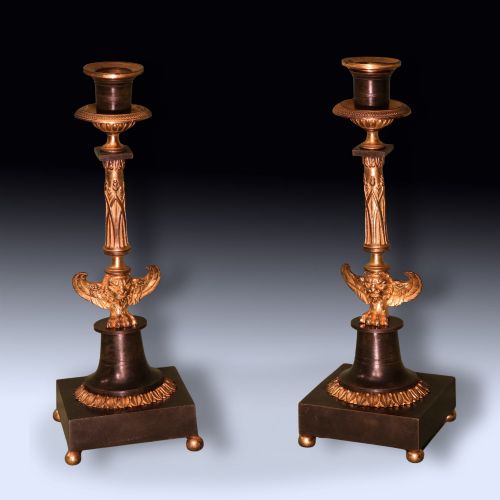
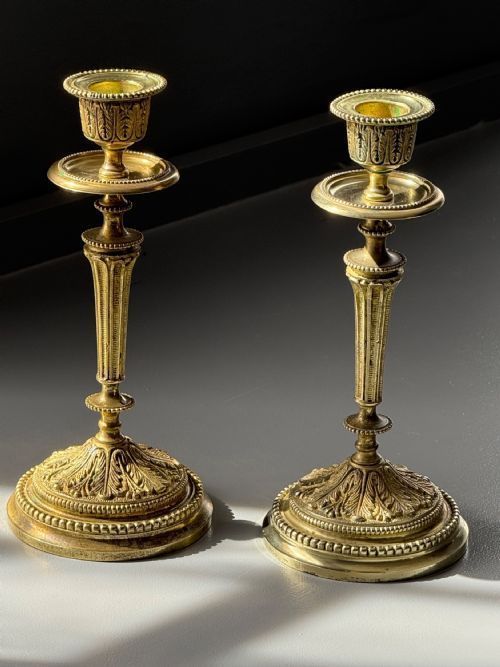
French gilded bronze candlesticks bring together heavy cast metal and rich surface gilding to illuminate historic interiors with warm, reflective light.
French Gilded Bronze Candlesticks
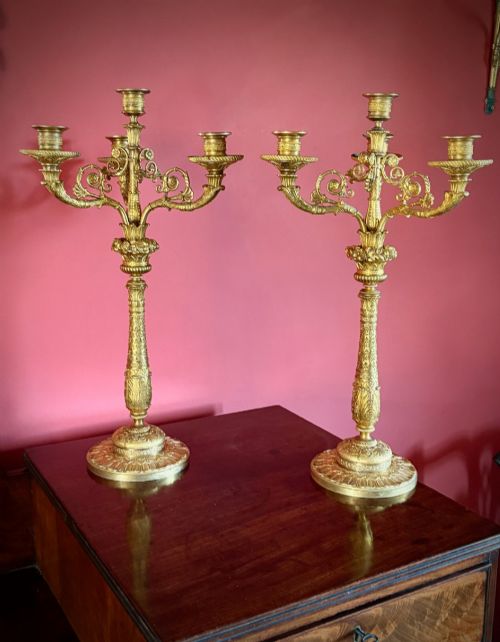
When you search for french gilded bronze candlesticks, you encounter a variety of lighting forms spanning the eighteenth and nineteenth centuries. These objects range from single candlesticks to multi-branch candelabra, often adapted later into table lamps or combined with inkstands and desk sets.
The pieces appearing on this page originate predominantly from the nineteenth century, including specific dates such as 1850, 1860, 1880, and 1890, alongside eighteenth-century examples and revivals. Stylistic influences span French Empire, Louis XVI, Louis XV, Regence, and Charles X, alongside Victorian interpretations.
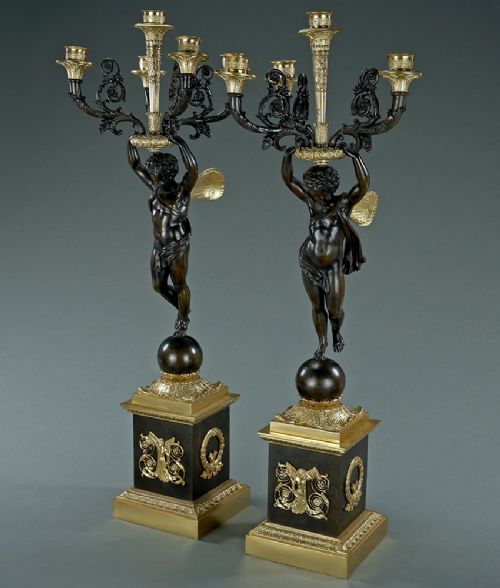
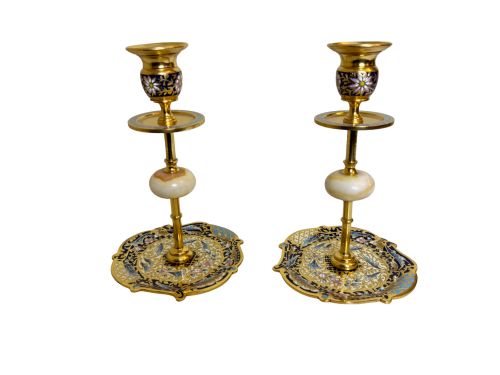
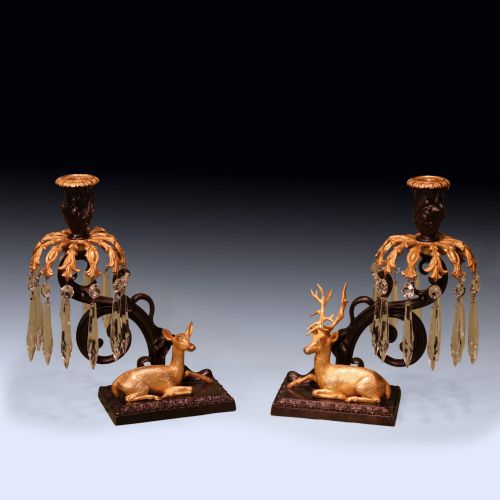
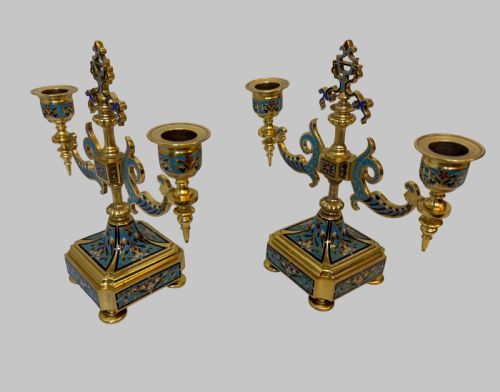
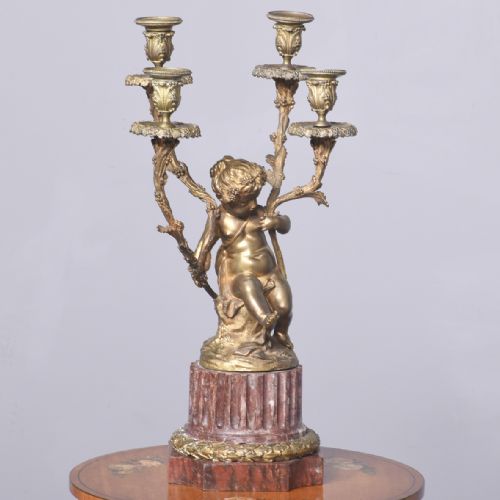
Makers and designers drew upon classical motifs, animal figures such as stags, does, and dolphins, and architectural elements like caryatids. Alongside pure bronze and ormolu, items frequently incorporate marble, onyx, champleve enamel, cloisonne, and biscuit porcelain.
How they were made
Artisans produced these items by casting bronze into detailed moulds, employing techniques that allowed for intricate figural and botanical ornamentation. The heavy metal components provided a stable base for supporting multiple candle branches or heavy nozzles.
Surfaces were finished with ormolu, applying a fine layer of gold amalgam to the bronze base through heat gilding, or through standard gilding processes using gold leaf or liquid metal. This created a durable, lustrous golden sheen that contrasts with areas of patinated dark bronze, brass, or carved stone elements.
Many items integrate contrasting materials secured mechanically within the bronze framework. Marble and onyx plinths, enamel panels, and ceramic figures by manufacturers like Meissen were mounted directly into or alongside the cast metal armature.
French Gilded Bronze Candlesticks Retail Price Guide 2026
Typical asking prices for french gilded bronze candlesticks among the pieces listed under this phrase on Sellingantiques today, from the lower quarter to the upper quarter. They describe what is for sale here now, not the wider market.
Cats and kittens join stags, does, and dolphins among the creatures cast in metal to watch over the room.
What varies in quality
The clarity and depth of the metal casting set the baseline for quality. Superior examples display sharp, crisply defined chased details in the foliage, figures, and architectural moulding, whereas inferior pieces often exhibit softened contours and smoothed surface textures from worn moulds.
The application and preservation of the gilding dictate visual richness. Thick, even ormolu with distinct matte and burnished areas indicates superior craftsmanship, while thin or unevenly applied gold finishes diminish the interplay of light across the surface.
The integrity of the construction and the selection of supplementary materials influence overall distinction. Heavy, stable assemblies utilising genuine marble, onyx, or champleve enamel sections demonstrate a higher grade of manufacture than lightweight brass substitutes or poorly fitted components.
The French Gilded Bronze Candlesticks Glossary
- Ormolu
- A gold-coloured alloy or the technique of applying finely ground gold mercury amalgam to bronze. This process produces a bright metallic finish characteristic of high-end French decorative metalwork.
- Candelabra
- A branched candlestick designed to hold multiple candles simultaneously. These pieces often feature removable central finials or arms radiating from a central stem.
- Champleve
- An enamelling technique where troughs or cells are hollowed out of the metal surface and filled with vitreous enamel before firing. It appears frequently on nineteenth-century decorative bases and stems.
- Patinated bronze
- Bronze that has been treated with chemical solutions to darken or colour the surface deliberately. This dark finish provides a visual contrast against the brighter gilded sections.
- Caryatid
- A sculpted female figure serving as an architectural support element. In these lighting pieces, they frequently form the central shaft or stem.
French Gilded Bronze Candlesticks: Frequently Asked Questions
How do I clean french gilded bronze candlesticks?
Dust surfaces gently with a soft, dry brush to prevent accumulation in recessed chased details. Avoid harsh chemical cleaners, abrasive cloths, or metal polishes that can strip the delicate gold surface layer.
Moisture should be kept away from mixed-media pieces that incorporate marble, enamel, or fabric elements. Professional conservation is recommended if deeper cleaning is required.
Were these candlesticks converted into lamps?
Many historic lighting pieces undergo conversion to electricity for modern household use. Wiring is typically routed through the existing central channel without altering the primary metal structure.
Unconverted pieces retain their original socket and nozzle configurations designed exclusively for wax candles. Collectors often weigh the historic integrity of an unconverted piece against the functional utility of a lamp base.
How do I identify the period?
Dating relies on stylistic markers, casting techniques, and material combinations associated with specific historic reigns and revivals. Pieces marked with specific nineteenth-century years or stylistic titles reflect the prevailing design revivals of that era.
Examination of assembly methods, such as the type of internal screws and the wear patterns on the bronze, assists in establishing age. Comparing decorative motifs against documented French design patterns provides further chronological context.
Can I burn real candles in them?
Original sockets and drip pans accommodate standard taper candles securely. Care must be taken to catch dripping wax before it contacts the delicate ormolu or vulnerable stone bases.
Because many items are antique or serve as decorative table lamps, continuous use with lit candles is often discouraged to preserve the finish. Modern alternatives, such as LED candles, offer illumination without heat or wax risk.