



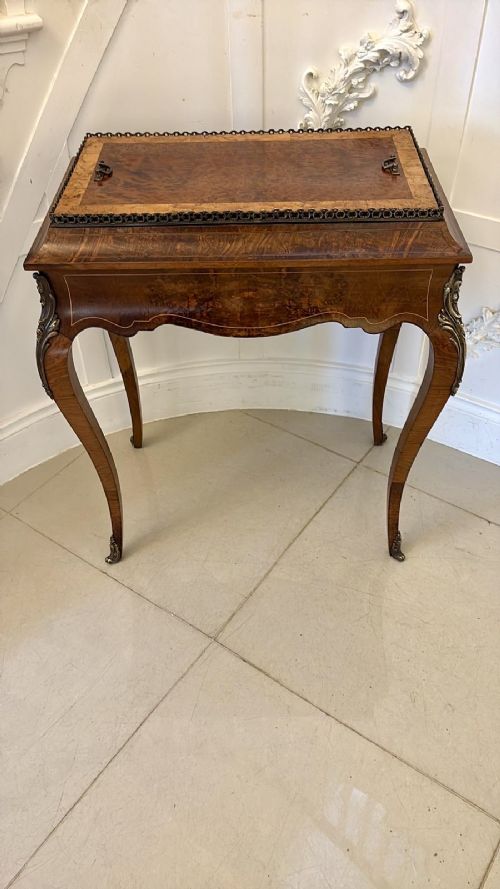
French Furniture Brass Mounts
French furniture brass mounts combine rich timbers and heavy cast metal work to bring continental elegance into a room.
French Furniture Brass Mounts
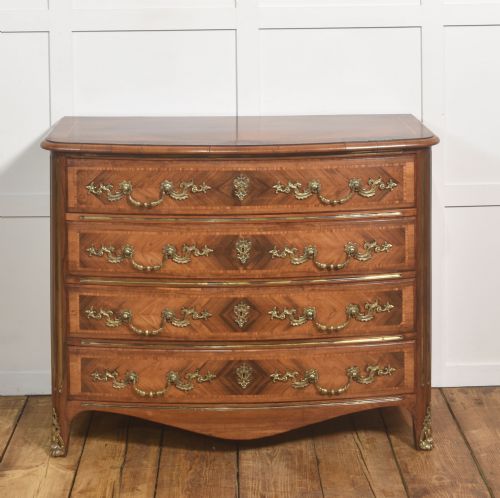
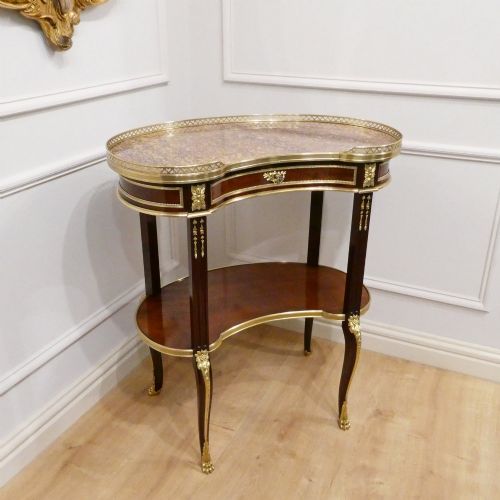
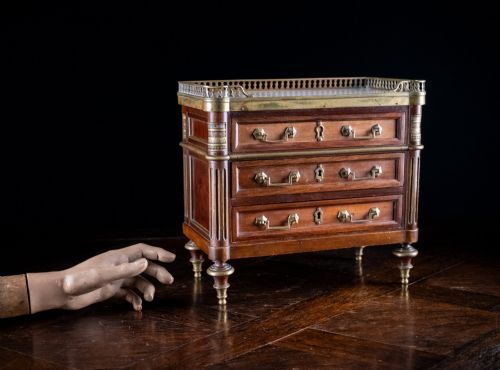
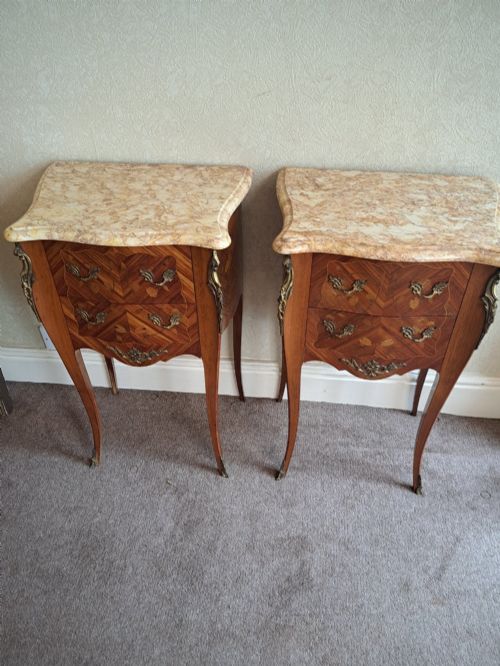
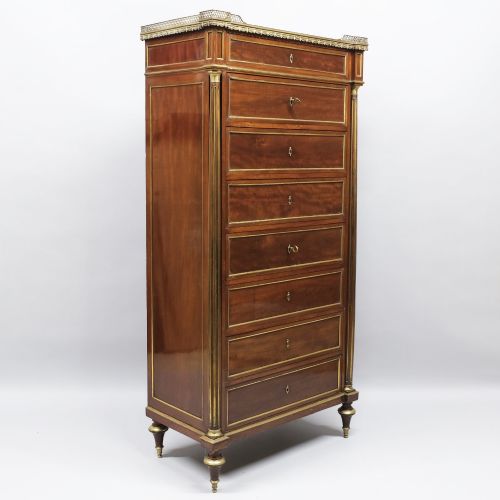
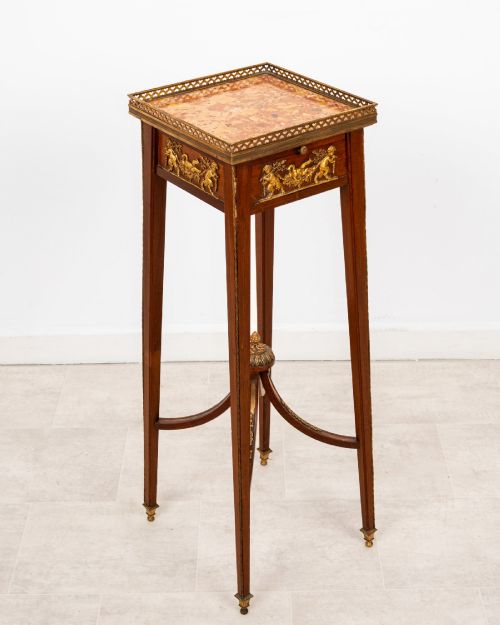
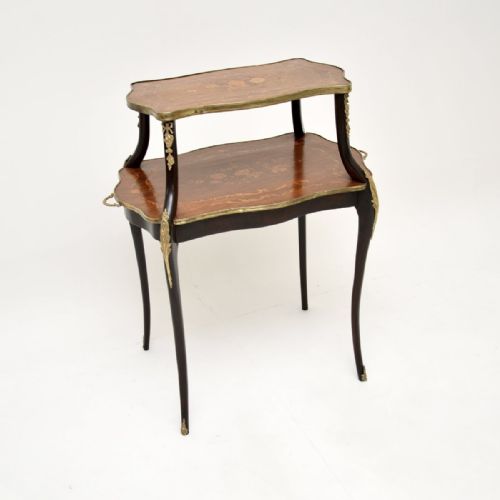
French furniture brass mounts define a tradition of cabinetry where cast metal embellishments accent structural forms like commodes, side tables, and vitrines. These pieces span periods from the nineteenth century into the early twentieth century, showing revival styles including Louis XV, Louis XVI, and Empire.
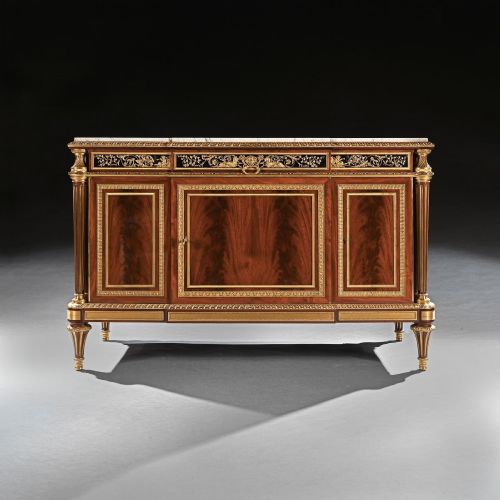
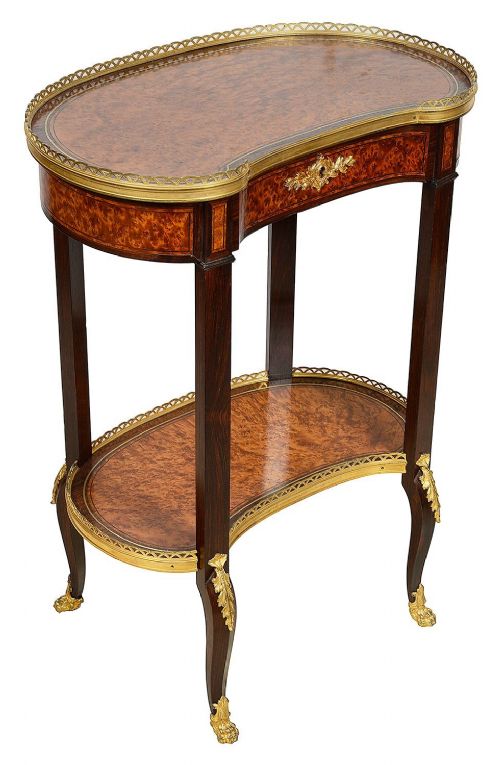
Buyers encountering this selection will frequently find tables, chests of drawers, and cabinets constructed from mahogany, walnut, rosewood, and kingwood. The brass and ormolu mounts frame drawer fronts, corners, and legs, highlighting the curvilinear or geometric contours of the woodwork.
How they were made
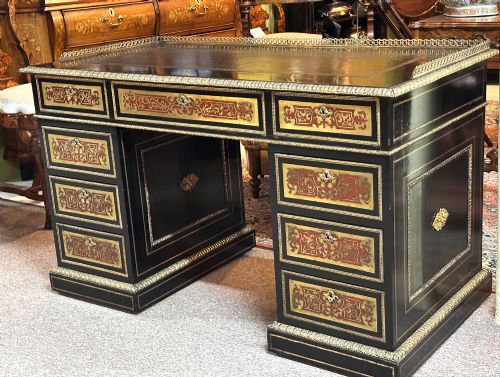
Cabinetmakers built foundational carcasses using native and exotic timbers such as mahogany, walnut, kingwood, and rosewood, often applying intricate marquetry or boulle work in brass and tortoiseshell across the surfaces. Tops frequently incorporate marble or onyx inserts fitted precisely to the wooden frame.
The decorative mounts are cast in brass or gilded bronze, known as ormolu, then chased by hand to sharpen the surface details before being fixed to the timber with screws or pins. This combination of dense hardwood and metalwork requires precise joinery to allow for natural wood movement without loosening the mounts.
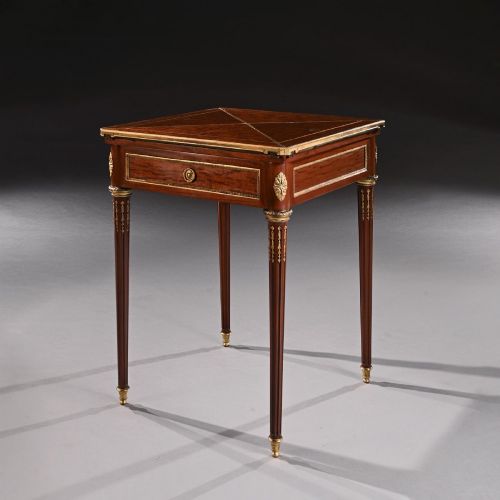
Envelope card tables fold out through a clever rotating mechanism, hiding the green baize surface until needed for evening games.
What varies in quality
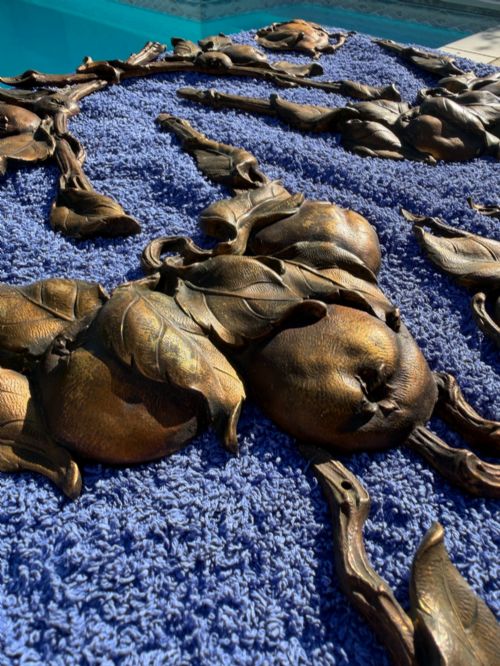
Quality rests upon the crispness of the metal chasing and the depth of the casting in the brass and ormolu mounts, where superior examples show sharp relief and careful hand-finishing. Lesser pieces display softer, shallower cast details that lack definition in the foliage or scrollwork.
The standard of the underlying cabinetwork, from the tightness of the marquetry inlay to the selection of figured veneers like kingwood and rosewood, separates standard production from exceptional pieces. Maker attribution to known workshops such as François Linke or Maison Millet also distinguishes the upper tier of execution.
Poix Blin·Maison Millet·Henry Dasson·Antoine Lampre·François Linke
The French Furniture Brass Mounts Glossary
- Ormolu
- Gilded bronze used for decorative mounts on furniture. The technique involves applying a gold amalgam to cast bronze before heating to drive off the mercury.
- Marquetry
- Inlay work using various coloured wood veneers to create pictorial or geometric patterns on furniture surfaces. It requires precise cutting of thin wood sections to fit tightly together.
- Boulle work
- A form of marquetry developed by André-Charles Boulle using tortoiseshell and brass inlay. The contrasting materials create intricate patterns across cabinets and desks.
- Vitrine
- A glass-fronted display cabinet designed to showcase porcelain or small objects. These pieces often feature extensive brass mounts framing the glass panels.
French Furniture Brass Mounts: Frequently Asked Questions
How do I clean brass mounts?
Maintenance requires only a soft cloth to remove dust from the crevices of the metalwork without disturbing the underlying timber or finish.
Harsh metal polishes should be avoided entirely because they can strip the original gilding or stain the surrounding wood veneers.
What is ormolu?
Ormolu refers to gilded bronze mounts applied to furniture for decorative effect during the eighteenth and nineteenth centuries.
The term derives from the French for milled gold, describing the surface finish achieved through historical mercury gilding methods.
Are marble tops original?
Many commodes and side tables retain their original inset marble or onyx tops, which were selected to complement the wood and brass decoration.
Slight variations in edge profiling and stone thickness help confirm whether a top belongs to the original period of manufacture.
How do I identify Louis XVI style?
Louis XVI style pieces favour straight lines, symmetrical forms, and classical motifs such as fluted columns and acanthus leaves.
This aesthetic contrasts with the earlier curved and asymmetric lines typical of the Louis XV revival pieces.