



French Folding Screen
A french folding screen organises space or tempers a hearth, shifting from grand giltwood panels to articulated brass fans.
French Folding Screen
A french folding screen divides a room or shields a hearth, appearing across nineteenth-century variants from multi-fold wooden dividers to concertina brass fire guards. These pieces function as architectural partitions, vanity shields, and decorative barriers within domestic interiors.
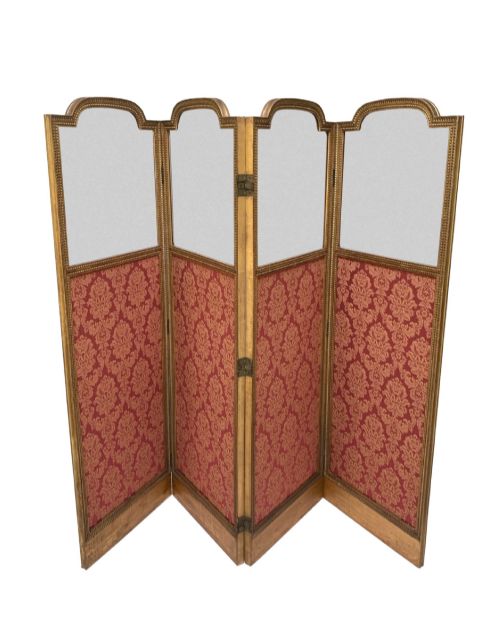
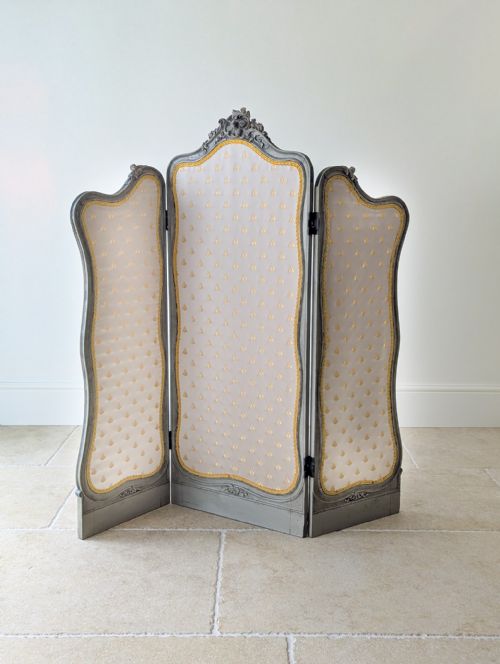
The selections span grand walnut and giltwood room dividers alongside smaller brass fire screens and modesty guards. Folding mechanisms utilise hinges to connect multiple panels, ranging from three-fold structures to expansive six-panel screens.
Origins trace through revival aesthetics and nineteenth-century craftsmanship, capturing periods from the mid-nineteenth century onward. Forms vary between substantial privacy screens and delicate fan shapes designed for domestic hearths.
Materials and Construction
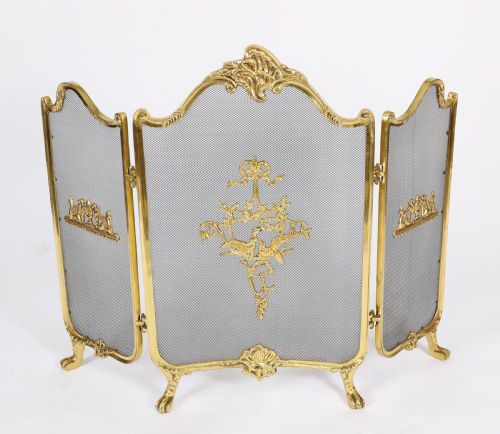
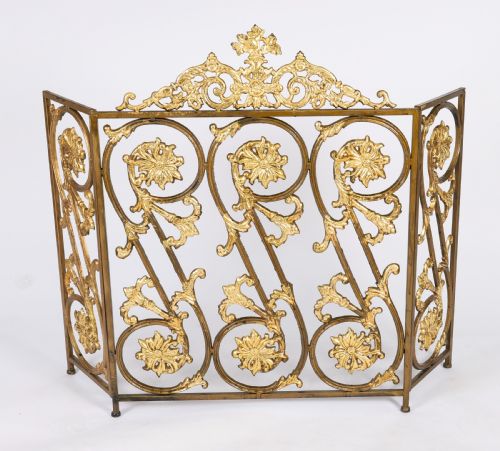
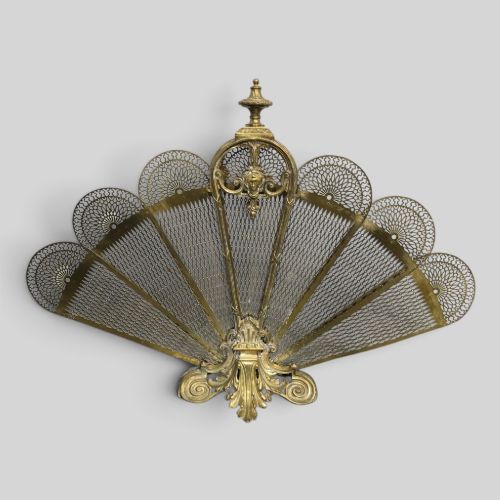
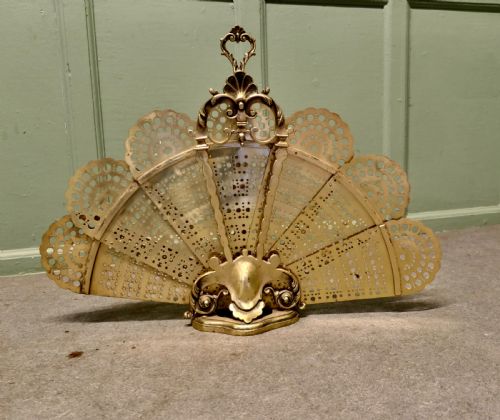
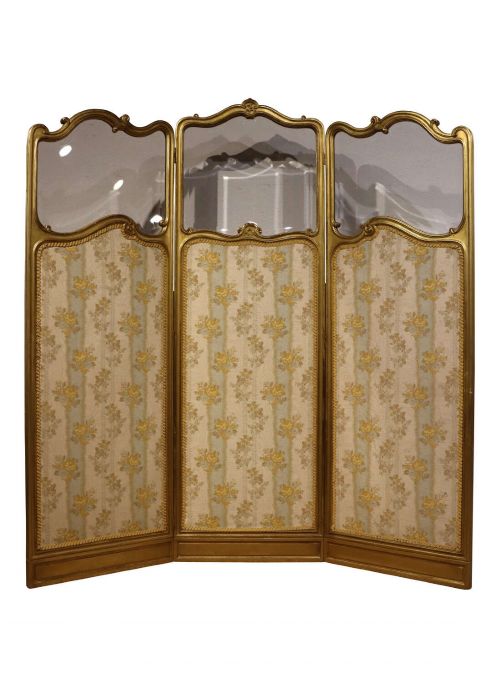
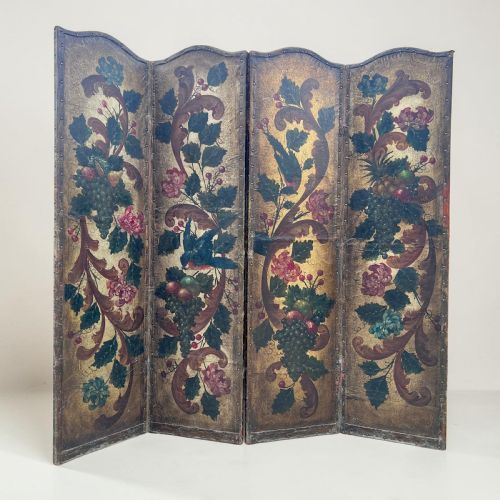
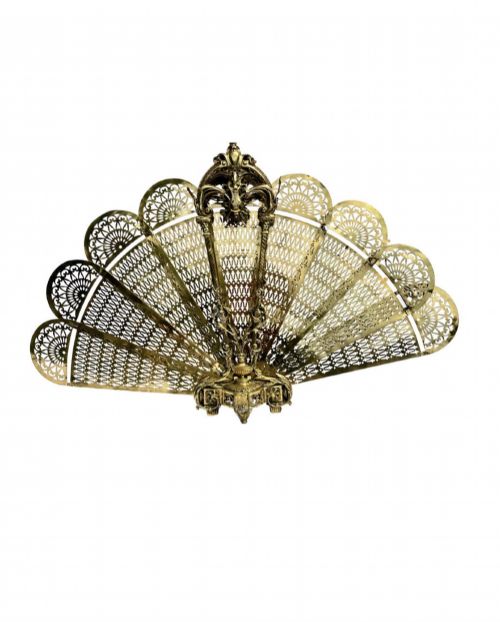
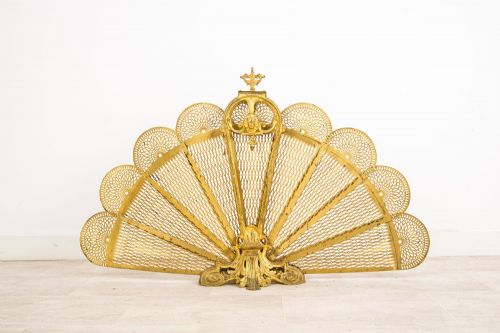
Makers utilised structural hardwoods like walnut and carved giltwood to construct heavy multi-fold frames, often incorporating bevelled glass, silk panels, needlepoint, and painted canvas. Brass and gilt bronze formed articulating fire screens, notably the expanding peacock fan designs.
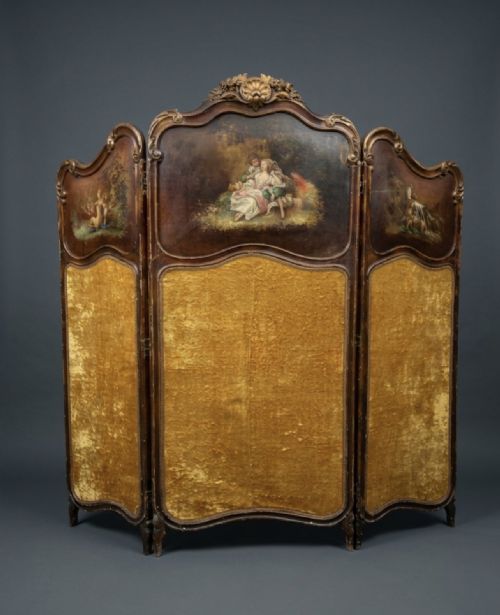
Surface decoration involved hand-painted pastoral scenes, oil paint on canvas, and gilded bronze mounts. Leather panels received intricate hand painting, while metalwork relied on casting and jointed brass folding frames.
The inventory records two primary forms: tall multi-fold room dividers and compact brass fan fire screens.
Evaluating Craftsmanship
Quality rests in the precision of the joinery and the execution of carved giltwood or cast brass mounts. Superior examples demonstrate fluid articulation across hinges and refined hand-painted detail on leather, canvas, or silk panels.
Depth of carving and the integration of specialised elements like bevelled glass or Aubusson tapestry distinguish finer workshop output from standard domestic furniture. The weight and durability of the brass frames indicate higher grade production.
Paul Sormani
The French Folding Screen Glossary
- Giltwood
- Wood coated with gold leaf or a gilt finish. This technique highlights carved ornamentation on nineteenth-century frames.
- Ormolu
- Gilded bronze applied to furniture mounts and decorative hardware. It provides a bright metallic finish on French revival pieces.
- Aubusson
- Tapestry woven in the French town of Aubusson, frequently utilised for upholstered screen panels. These textiles display pastoral or floral designs.
- Peacock Screen
- A folding brass fire screen with radiating blades that open like a fan. It guards hearths when extended and contracts when stored.
- Modesty Screen
- A small portable screen used to shield a person from heat or gaze. These items often feature painted panels.
French Folding Screen: Frequently Asked Questions
How do I use a french folding screen at home?
Position multi-fold wooden screens to segment open plan rooms or create secluded corners in a bedroom. Smaller brass variations serve as hearth guards in front of active fireplaces.
Ensure panels are angled correctly to maintain stability, particularly with taller four or six-fold room dividers.
What is the difference between a room divider and a fire screen?
Room dividers are tall multi-fold structures made from wood, leather, or fabric designed to partition interior space. Fire screens are typically lower, constructed from brass or gilt bronze, and placed before a fireplace.
Brass fan screens expand outward to block sparks, whereas room dividers remain rigid in their vertical configuration.
How do I identify the period of a screen?
Examine the materials, hinge construction, and stylistic revival motifs such as Louis XIV or Napoleon III details. Nineteenth-century pieces frequently employ walnut, hand-painted canvas, and heavy brass castings.
Revival styles draw inspiration from earlier French aesthetics, making construction techniques and hardware key indicators of true age.
How do I care for painted leather and fabric panels?
Keep painted leather and fabric panels away from direct sunlight to prevent fading and cracking. Dust wooden frames gently with a dry cloth and avoid liquid cleaners on painted surfaces.
Ensure brass components are lightly dusted without abrasive polishes to preserve any original patina.