



French Floral Armchairs
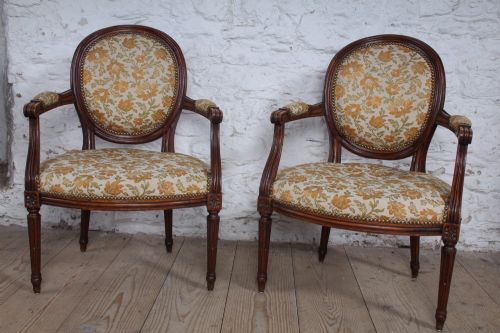
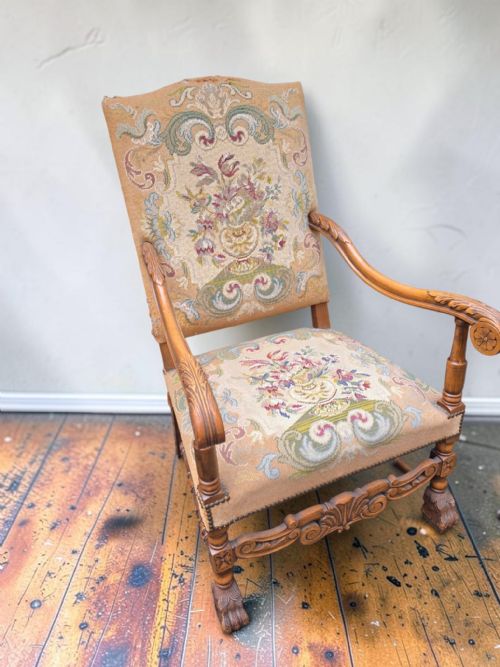
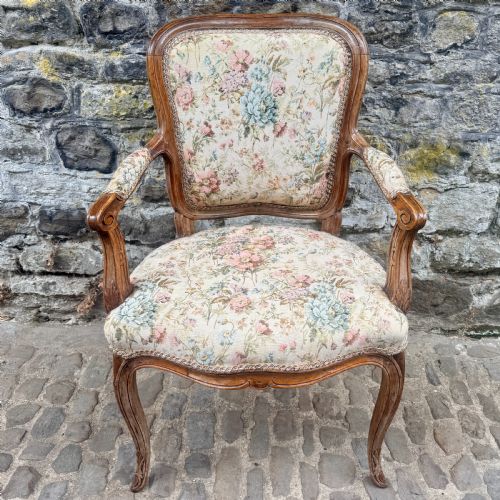
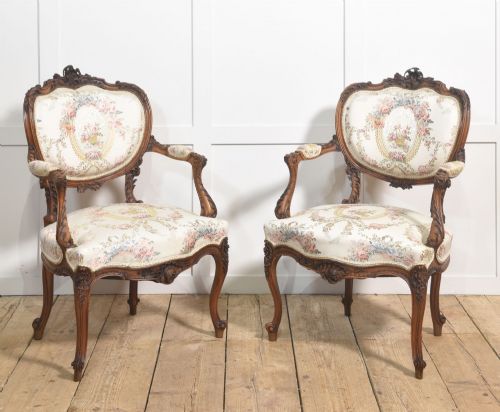
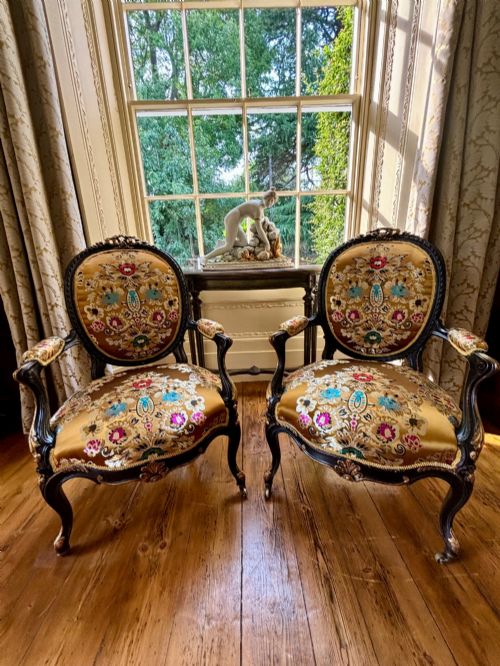
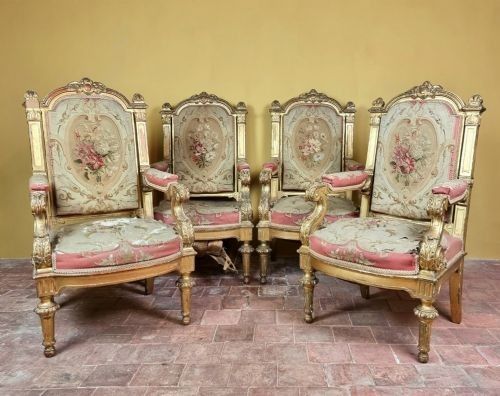
French floral armchairs bring character to a room through carved woodwork and textile upholstery.
French Floral Armchairs
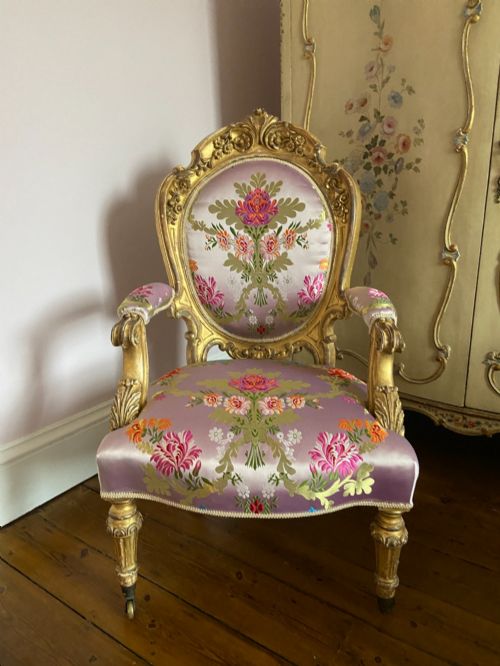
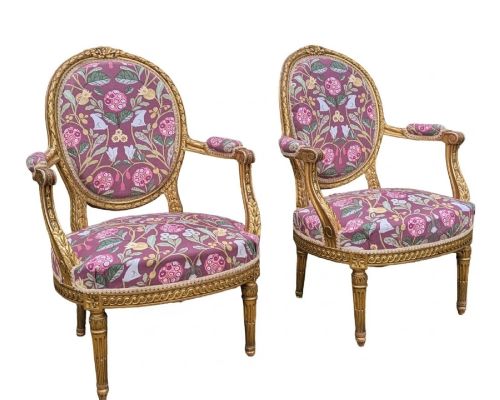
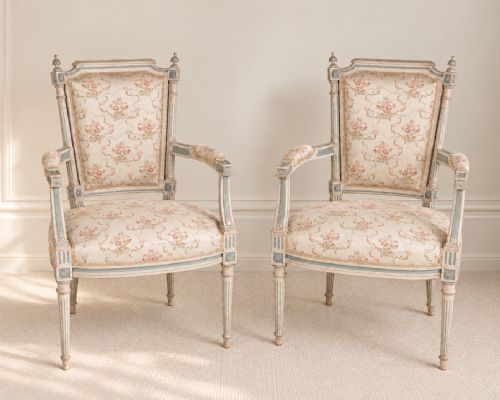
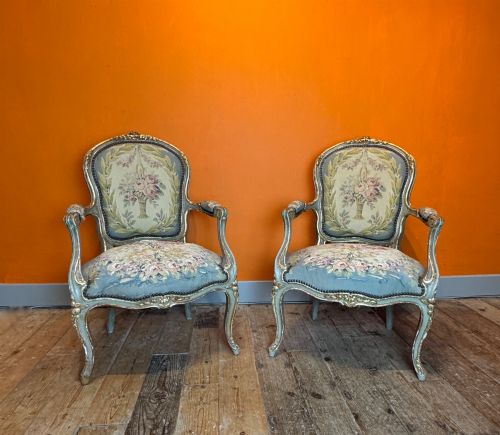
French floral armchairs encompass seating pieces from the eighteenth century onwards, including revived styles like Louis XV, Louis XVI, and Rococo. These chairs often appear in pairs or sets, shaped by provincial traditions or grander chateau aesthetics.
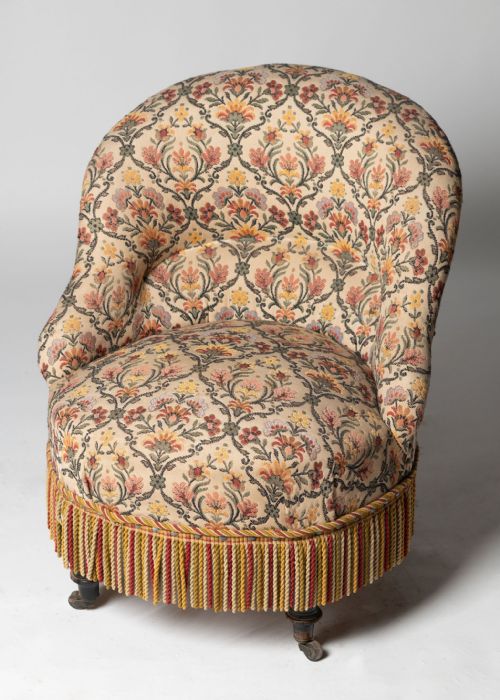
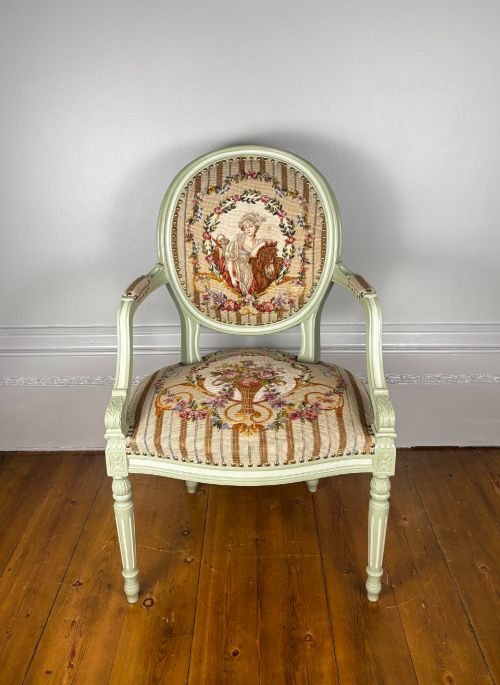
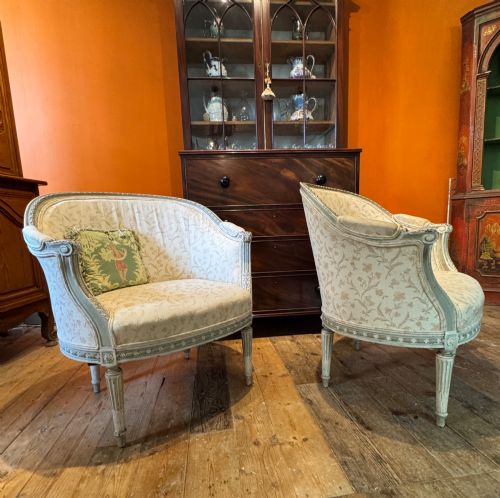
Buyers browsing this selection frequently encounter walnut, giltwood, and painted frames paired with woven textiles. Open armchairs and bergere tub designs dominate the offerings, spanning the nineteenth century alongside earlier provincial works.
Materials and construction methods
Frames are constructed from solid timbers such as walnut, beech, mahogany, and rosewood, alongside gilded or painted surfaces. Carvers shaped the wood into scroll backs and cabriole contours reflecting classical revivals.
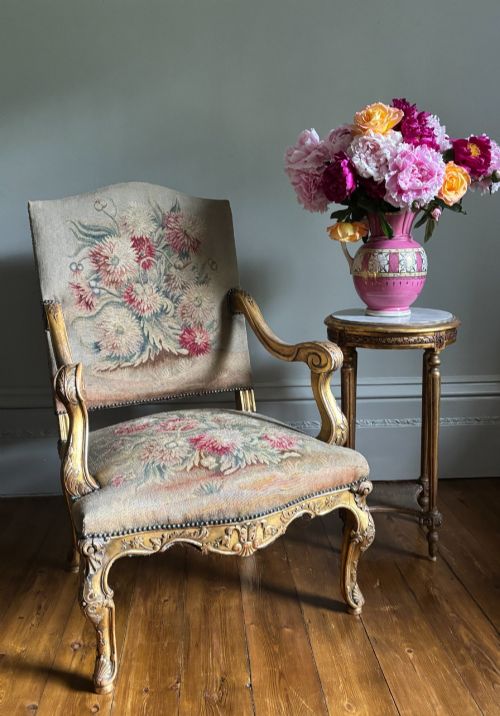
Upholstery relies on heavy tapestry, needlepoint panels, and velvet. Artisans secured these textiles directly to the open and enclosed chair structures using brass tacks and traditional stuffing methods.
French Floral Armchairs Retail Price Guide 2026
Typical asking prices for french floral armchairs among the pieces listed under this phrase on Sellingantiques today, from the lower quarter to the upper quarter. They describe what is for sale here now, not the wider market.
Listings feature walnut, giltwood, beech, rosewood, and mahogany frames upholstered in tapestry, needlepoint, and velvet across nineteenth-century styles.
Judging the standard of workmanship
Quality rests upon the depth and crispness of the hand-carved woodwork across the frame. Superior examples display fluid lines and well-defined floral motifs rather than flat or mechanical carving.
The integrity of the textile upholstery influences the piece. Original or finely worked needlepoint panels and tapestries elevate the character of the seating compared to later replacement fabrics.
Holland and Sons·Louis Majorelle
The French Floral Armchairs Glossary
- Bergere
- A closed armchair with upholstered sides and a loose seat cushion. These comfortable seats became popular during the eighteenth century.
- Fauteuil
- An open-arm armchair with wooden armrests and exposed frame construction. The style originates from French court furniture.
- Giltwood
- Timber coated with a thin layer of gold leaf. This finish defines formal salon chairs from various revival periods.
- Needlepoint
- Hand-stitched canvas work utilised for decorative panel inserts. Floral motifs frequently adorn these textile elements.
French Floral Armchairs: Frequently Asked Questions
How do I identify a true period frame?
Examine the timber construction joints and the hand-carved detailing on the arms and legs for signs of traditional craftsmanship. Period pieces show age-appropriate wear and tool marks hidden beneath the upholstery and frame.
Compare the silhouette against established revival styles like Louis XV or Louis XVI to confirm the design matches the recorded era.
Can these chairs be used daily?
Many nineteenth-century and revival armchairs remain sturdy enough for regular seating if the internal webbing and joints are sound. Sitting carefully prevents undue stress on antique frames and delicate needlepoint upholstery.
Positioning them away from direct sunlight protects the painted finishes and tapestries from fading over time.
What is the difference between open and closed arms?
Open armchairs, or fauteuils, feature exposed wooden arms that often include padded elbow rests. They offer an airy silhouette well suited to smaller drawing rooms and parlours.
Closed armchairs, such as bergeres, enclose the sides with upholstery to create a deeper, more enveloping seat designed for relaxation.
How should I care for needlepoint upholstery?
Vacuum the fabric gently using a low-suction attachment with a soft brush guard to remove dust without snagging the threads. Professional textile cleaning is recommended for addressing deeper marks.
Avoid placing the chairs near heat sources or in damp environments to preserve the integrity of the wool and silk fibres.