





French Farmhouse Painting
French farmhouse painting works on any wall because it captures rural life with honest brushwork and genuine warmth.
French Farmhouse Painting
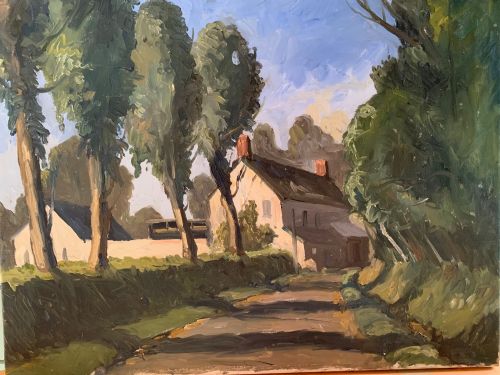
A french farmhouse painting brings the quiet charm of rural landscapes and country courtyards directly into domestic interiors. These works span from the late nineteenth century through to the mid twentieth century, capturing rural scenes in oil on canvas or board. Buyers seeking a french farmhouse painting will find works depicting working horses, sunlit courtyards, and old farm buildings in regions like Provence, Normandy, and Corsica.
The selections range from traditional nineteenth century academic views to later post-impressionist and modernist interpretations. Works often feature rustic farmhouses, haystacks, and regional scenery rendered with expressive brushwork and natural palettes. This variety allows collectors to choose between detailed provincial realism and freer twentieth century colourist visions.
Assessing quality in provincial art
Quality rests in the confidence of the brushwork and the harmony of the composition. Stronger pieces display a clear command of light and atmosphere, turning a simple barn or courtyard into a compelling study. Weaker examples can feel formulaic or heavy-handed in their application of pigment.
The distinction also lies in the nuance of the palette and the structural integrity of the paint layer. Superior works capture a specific sense of place, whether the purple hills of Corsica or the rustic yards of Normandy, through purposeful mark-making.
French Farmhouse Painting Retail Price Guide 2026
Typical asking prices for french farmhouse painting among the pieces listed under this phrase on Sellingantiques today, from the lower quarter to the upper quarter. They describe what is for sale here now, not the wider market.
Listings feature works executed in oil on canvas and oil on board, spanning from the nineteenth century into the mid twentieth century.
Raimond Louis Lecourt·Majorie Hoare·Maurice Dagron
The French Farmhouse Painting Glossary
- Oil on canvas
- Pigment bound in drying oil applied to a woven fabric support. This traditional method allows for rich blending and textured impasto effects.
- Oil on board
- Paint applied to a rigid wooden or composition panel rather than fabric. Boards often present a smooth, stable ground for plein air sketches.
- Post-Impressionism
- A late nineteenth and early twentieth century art movement extending impressionism while rejecting its limitations. Artists prioritised symbolic content and expressive use of colour.
- Colourist
- An artist whose work is characterised by vibrant and expressive use of colour. These painters often prioritise chromatic harmony over strict photographic representation.
- Provincial
- Originating from or characteristic of the regions outside the capital. In art, this describes local scenes and regional schools of painting.
French Farmhouse Painting: Frequently Asked Questions
How do I date a French landscape painting?
Dating relies on stylistic evidence, canvas preparation, and framing details. Mid-nineteenth-century works often show academic precision, while twentieth-century examples embrace looser brushwork.
Signatures, inscriptions on the reverse, and artist biographies provide further chronological markers for placing the work accurately.
Where should I hang a country painting?
These rural scenes suit dining rooms, kitchens, or studies where their warm palettes complement natural wood furniture. Positioning them away from direct sunlight protects the oil pigments over time.
Matching the frame to the surrounding interior helps integrate the artwork into domestic spaces.
What subjects appear in these provincial scenes?
Common subjects include old farmhouses, working horses, coastal views, and agricultural yards in regions like Provence and Normandy. Artists frequently recorded everyday rural routines and Mediterranean landscapes.
These depictions range from documentary views to expressive modernist interpretations of the countryside.
How do I care for oil paintings on canvas?
Maintain stable room temperatures and avoid excessive humidity to prevent the canvas from slackening or the paint from cracking. Dust the surface gently with a soft, dry brush without applying pressure.
Professional conservation is recommended for any deeper cleaning or structural repairs to the canvas.