
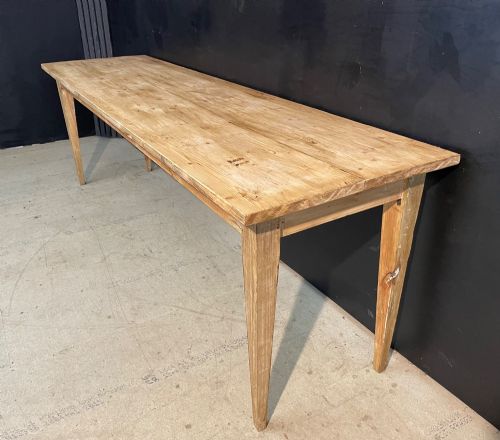
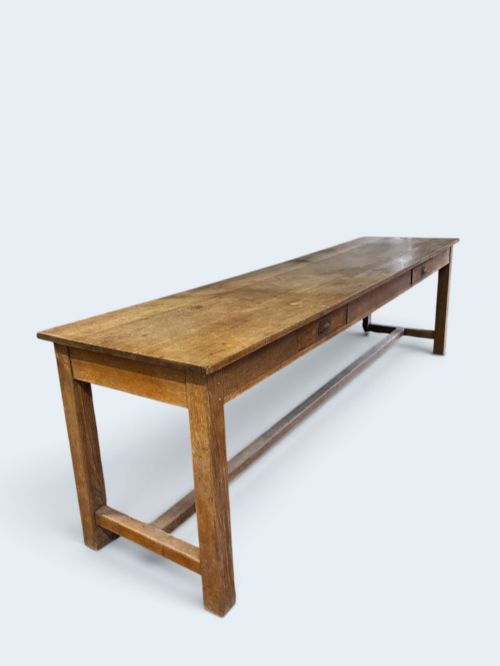
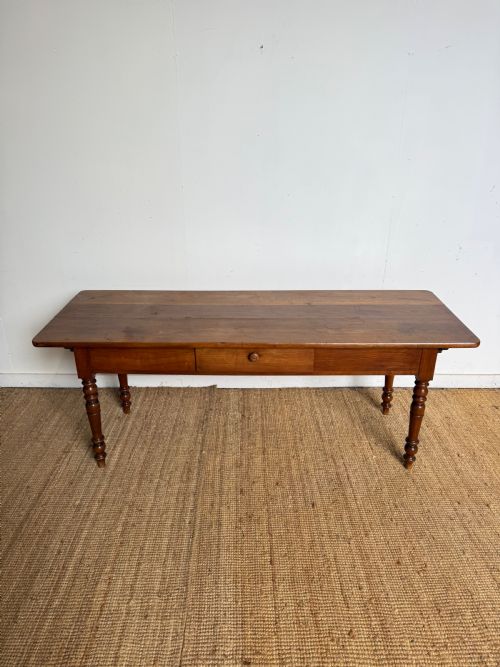
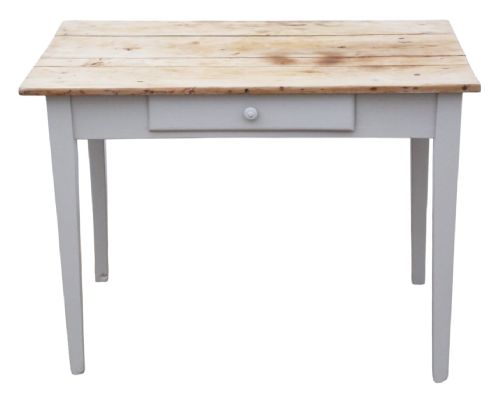


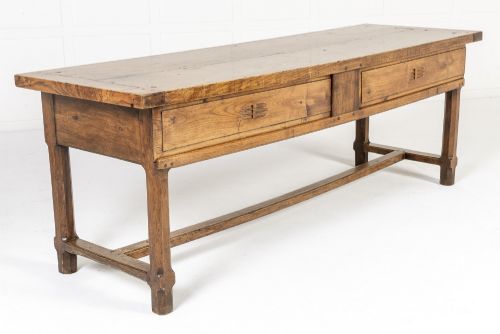


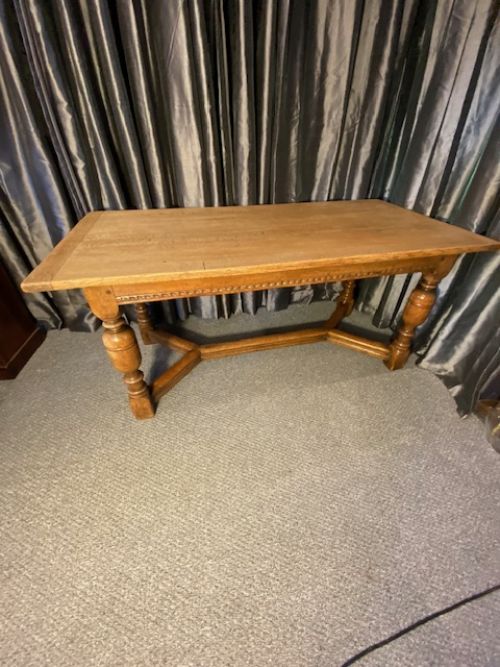


French Farmhouse Console Table
A french farmhouse console table brings robust utility and honest timber warmth directly into a modern hallway or kitchen.
French Farmhouse Console Table
A french farmhouse console table unites the practical forms of rural working furniture with narrow proportions suited for corridors, living spaces, and kitchens. These pieces serve as narrow dining tables, serving counters, prep surfaces, and pot-shelf tables.
The selections span the eighteenth century, the nineteenth century, and early twentieth century periods, reflecting genuine rural provenance. The most common examples appear in pine, oak, cherrywood, and poplar.
Makers designed these items for heavy domestic or agricultural labour, incorporating trestle bases, single or multiple drawers, and generous work surfaces. Their origins trace to regional traditions across France, maintaining functional integrity through generations of use.
Materials and Construction
Workshops relied heavily on regional hardwoods and softwoods like oak, pine, cherrywood, poplar, and sycamore for framing and surfaces. Carpenters utilised solid timber construction joined with traditional methods to withstand daily kitchen and workshop demands.
Surfaces often show the marks of historical scrubbing, bleaching, or original paint finishes left from decades of domestic service. Iron fixings and simple drawer configurations provide structural support without unnecessary ornamentation.
Several heavy work benches retain flour dust deeply embedded in their grain from centuries of rural baking.
Assessing Quality and Character
Quality rests in the proportion of the timber, the integrity of the joints, and the depth of patina accumulated through actual use. Higher grades display thoughtful selection of grain, particularly in oak and cherrywood examples.
Construction details such as original pot-shelves, multiple drawers, and substantial trestle supports elevate certain pieces above standard utility furniture. The balance between the base frame and the top board dictates visual harmony.
The French Farmhouse Console Table Glossary
- Scrub-top
- A wooden tabletop cleaned repeatedly with water and coarse brushes, leaving a pale, textured surface. This finish develops naturally over decades of kitchen use.
- Pot-shelf
- A lower slatted or solid shelf incorporated beneath the main surface. Farmers and cooks utilised this lower tier to store heavy pots and pans.
- Trestle table
- A table structure composed of two or more upright supports connected by a horizontal beam. This design provides maximum legroom and stability.
- Bread prep table
- A heavy-duty work table specifically built for kneading dough and handling baking ingredients. These surfaces often show deep scoring from historical use.
- Patina
- The surface sheen and colour acquired by wood through age, handling, and wear. It indicates the authentic history of the piece.
French Farmhouse Console Table: Frequently Asked Questions
How are these tables used today?
These narrow tables function effectively as hallway consoles, sideboards in dining rooms, or auxiliary prep surfaces in kitchens. Their slim profiles allow them to fit into tighter spaces where standard dining tables prove too wide.
Owners also utilise them as writing desks or display surfaces for ceramics and books. The sturdy construction accommodates everyday domestic items without difficulty.
What woods do these tables use?
Cabinetmakers built these pieces using available regional timbers including oak, pine, cherrywood, poplar, sycamore, and elm. Each wood reacts differently to age, with pine taking on a soft, pale character and oak developing a deeper grain texture.
Some examples feature painted finishes or scrubbed surfaces that expose the natural timber underneath. These variations reflect the local materials accessible to rural carpenters.
How do I care for a scrubbed wood top?
Maintain scrubbed wooden surfaces by dusting with a dry cloth and wiping spills immediately with a damp sponge. Avoid harsh chemical cleaners that strip the natural oils and dry out the historic timber.
Applying a light coat of natural beeswax helps protect the grain without creating an artificial gloss. Regular, gentle maintenance preserves the tactile quality of the aged wood.
How do I distinguish different periods?
Earlier pieces from the eighteenth century display hand-cut joinery, pegged joints, and denser timber selections shaped by manual tools. Nineteenth-century examples often incorporate standardised iron hardware alongside traditional solid wood construction.
Subsequent twentieth-century pieces maintain rustic regional forms while showing lighter framing and alternative softwood construction. Examining the tool marks and construction joints clarifies the manufacturing era.