



French Etagere Side Table
A french etagere side table combines tiered open display with compact mobility, offering a practical surface for lamps or ornaments.
French Etagere Side Table
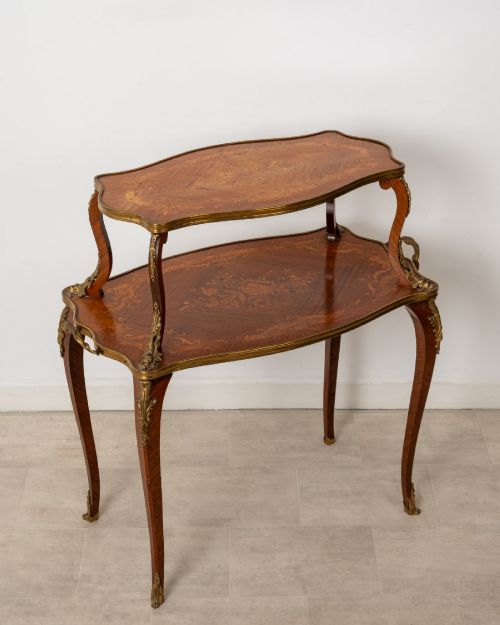
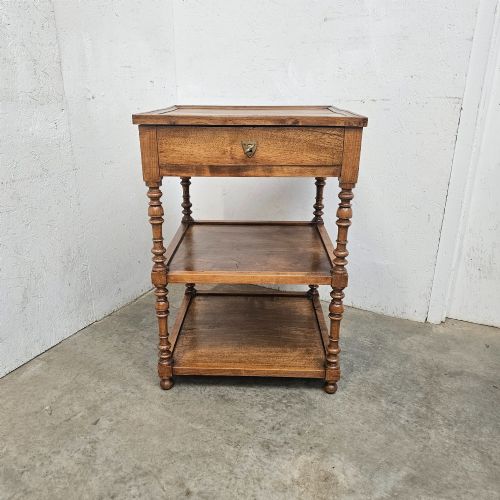
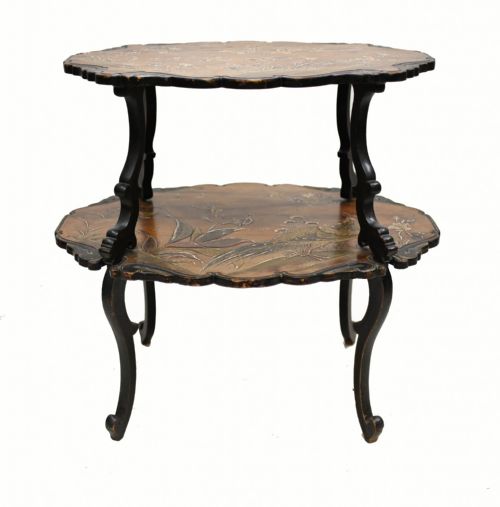
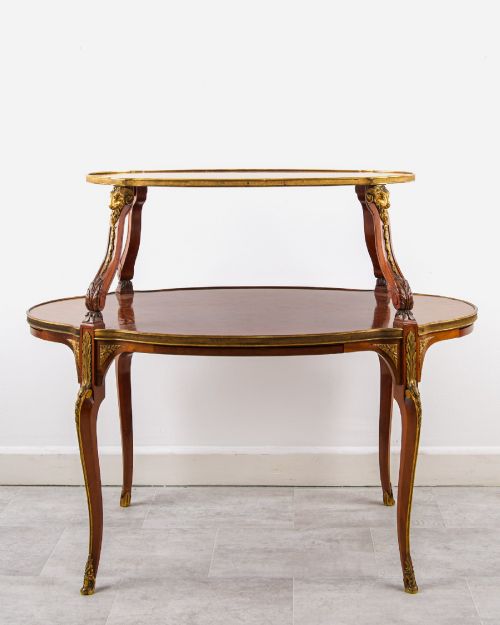
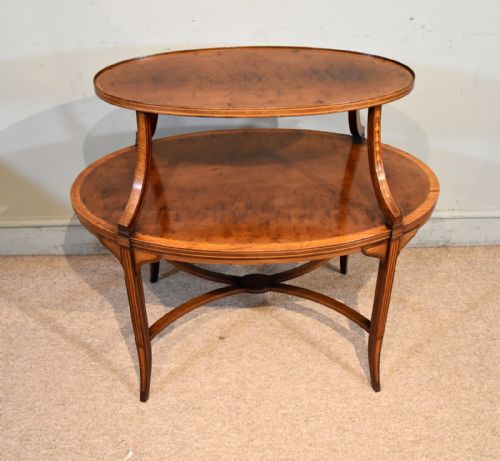
A french etagere side table serves as a multi-tiered stand designed for display and occasional use, drawing on historical forms ranging from the nineteenth century into the Edwardian era. These pieces typically present two or three open shelves supported by slender uprights, functioning equally well as lamp tables, small side tables, or decorative centrepieces.
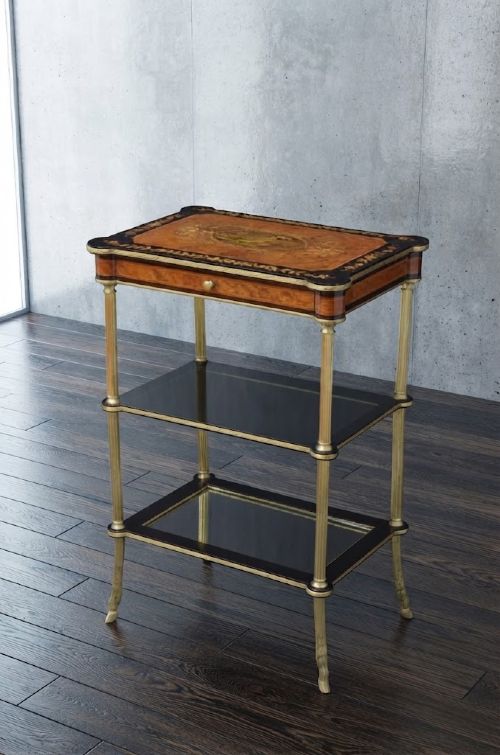
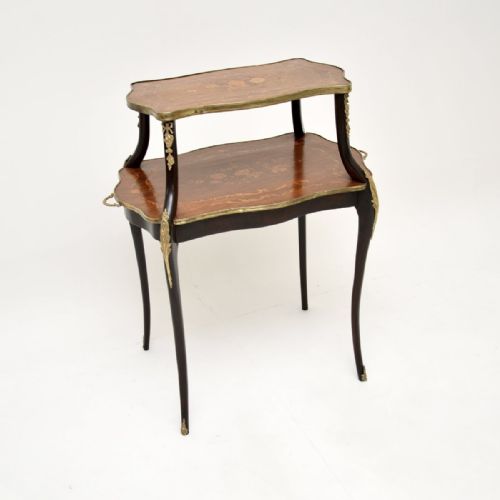
The pieces appearing most frequently on this page adopt classic French revival idioms, including Louis XV and Napoleon III styles, alongside chateau and provincial interpretations. Their forms span from oval and rectangular two-tier tables to taller multi-height display stands and glazed or galleried occasional surfaces.
How They Were Made
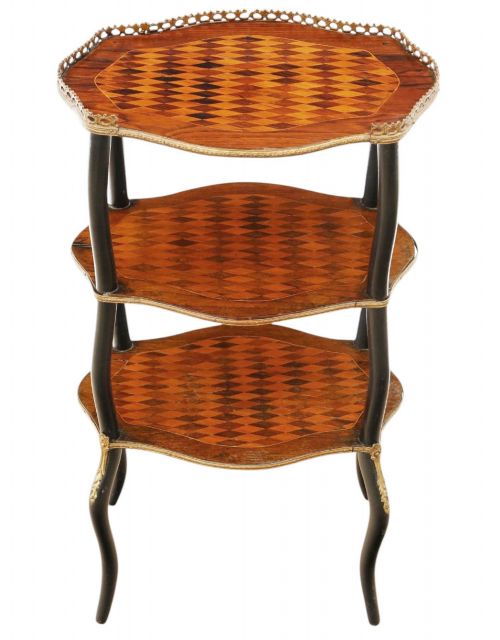
Cabinetmakers utilised a rich palette of timbers, pairing structural woods such as mahogany, walnut, and ebonised wood with decorative veneers like kingwood, amboyna, and burr walnut. Many examples employ intricate marquetry and parquetry inlays to form geometric or floral patterns across the tiers.
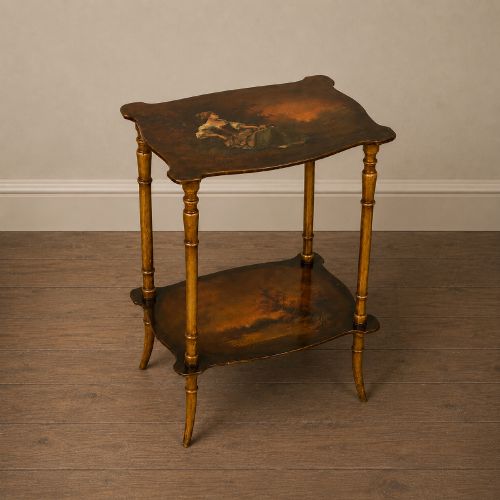
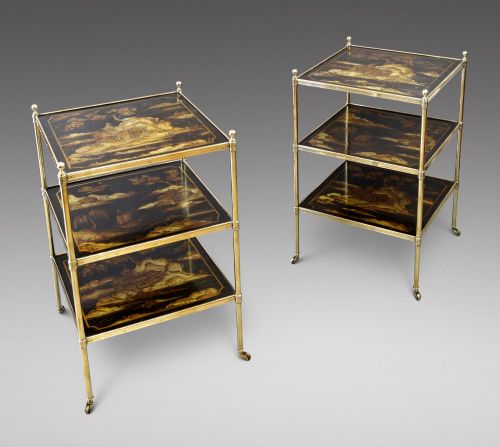
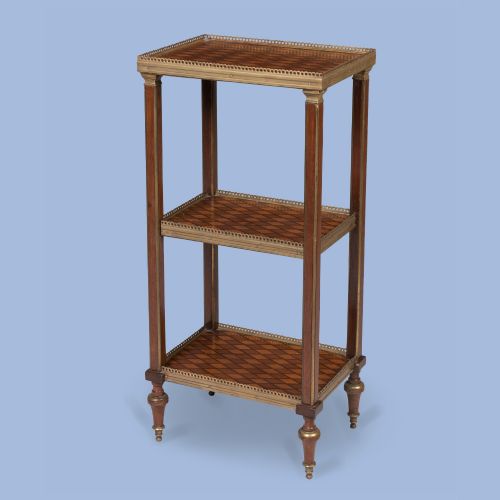
Metal mounts in bronze ormolu and polished brass provide structural framing, corner accents, and protective galleries around the shelf edges. Details such as turned legs, japanning, painted finishes, and mirrored or glass tray inserts complete the construction.
Victorian and Edwardian interpretations dominate the selection alongside mid-nineteenth-century French revival designs.
What Varies in Quality
The distinction between standard examples and the finest pieces lies in the crispness of the bronze or ormolu mounts and the precision of the wood inlay. Superior pieces display finely chased metalwork and meticulously matched timber grains that demonstrate exceptional hand-craftsmanship.
Overall structural integrity and the harmony of proportions separate everyday utility items from exhibition-grade furniture. Finer examples maintain stability across multiple tiers while preserving delicate aesthetic balances in their leg turns and gallery rails.
Edwards & Roberts·Donald Ross·Druce and Co
The French Etagere Side Table Glossary
- Étagère
- A piece of furniture consisting of open shelves for displaying small objects or ornaments. These tiered stands developed in France and became popular side tables during the nineteenth century.
- Marquetry
- Decorative woodwork where pieces of contrasting veneer are fitted into a ground material to form designs. This technique frequently decorates the top and lower tiers of French tables.
- Ormolu
- Gilded bronze mounts applied to furniture for decorative and protective purposes. High-status pieces often feature finely cast ormolu mounts around their legs and shelf edges.
- Parquetry
- Geometric patterns formed by small pieces of wood fitted together on a surface. It differs from marquetry through its strict reliance on angled geometric arrangements.
- Galleries
- Low raised railings of brass or wood running around the edges of table tiers. They prevent items from sliding off the open shelves.
- Japanning
- A European imitation of East Asian lacquerwork applied to furniture surfaces. This finish appears on selected nineteenth-century decorative pieces.
French Etagere Side Table: Frequently Asked Questions
What is a French etagere side table used for?
These pieces function primarily as versatile accent furniture designed to hold small lamps, books, or decorative objects across multiple open tiers. Their compact footprints allow them to fit easily beside seating or in hallways.
Historically, they also served as tea tables, bedside stands, or specialised display surfaces for precious ornaments in nineteenth-century drawing rooms.
How do I distinguish Louis XV style from Napoleon III pieces?
Louis XV style pieces typically feature flowing, asymmetrical rococo curves, cabriole legs, and delicate floral marquetry that emulate eighteenth-century court furniture. They emphasise naturalistic lines and understated elegance.
Napoleon III pieces, dating from the mid-to-late nineteenth century, often combine eclectic historical revivals with heavier use of ebonised wood, elaborate brass inlays, and prominent ormolu mounts.
Are these tables sturdy enough for daily use?
While built with multiple shelves, most antique tiered tables are designed for lighter occasional use rather than heavy loads. The slender uprights and multi-tier construction require careful placement away from heavy traffic areas.
Using them for lamps, small ceramics, or books keeps the structure balanced and safe during everyday living.
How should I care for inlaid wood surfaces?
Inlaid marquetry and delicate veneers benefit from stable indoor environments protected from direct sunlight and extreme humidity fluctuations. Regular dusting with a soft, dry cloth preserves the polished finish.
Mild furniture waxes applied sparingly help nourish older timbers without building up residue on the delicate brass or ormolu mounts.