

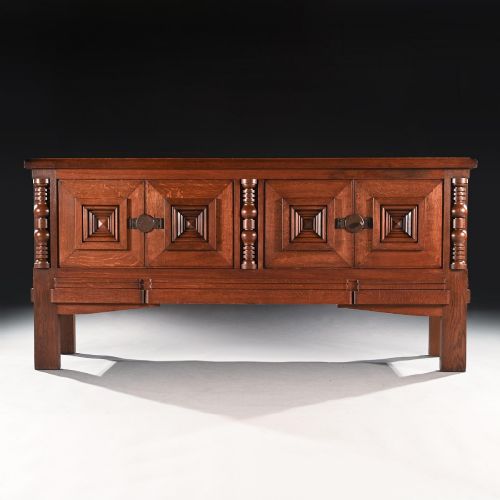
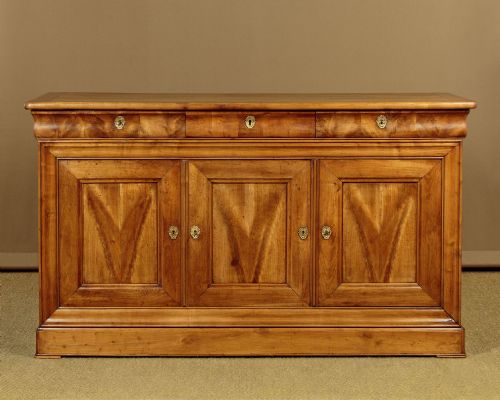
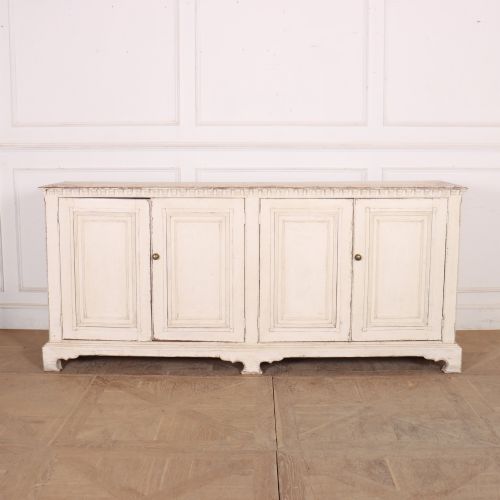


French Enfilade Sideboard
A french enfilade sideboard brings exceptional length and practical storage to a room, offering the timeless presence of provincial and revival craftsmanship.
French Enfilade Sideboard
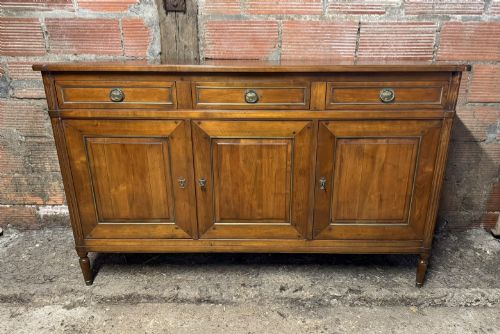
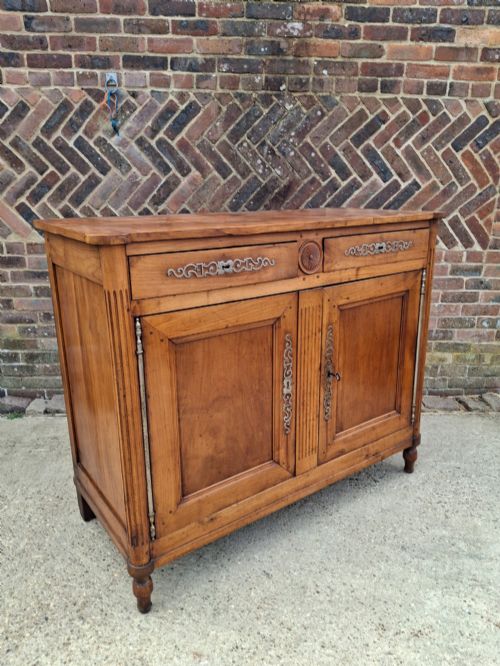
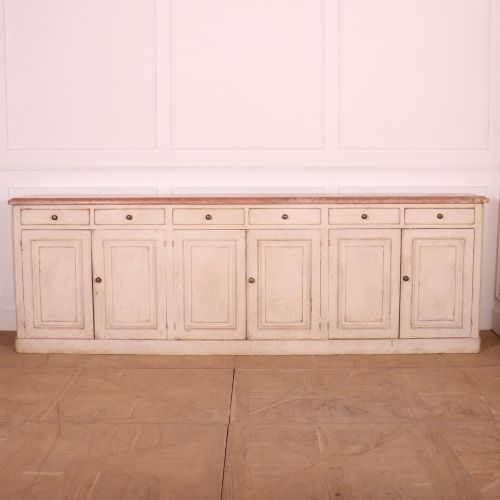
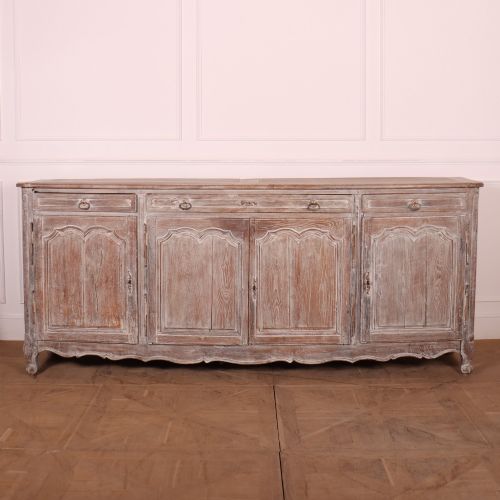
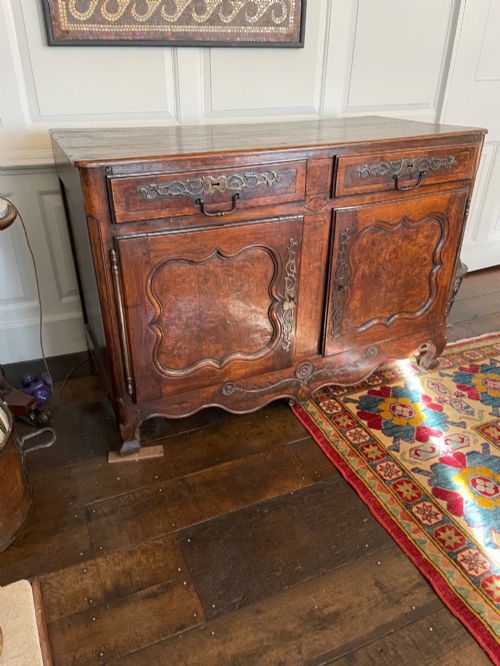
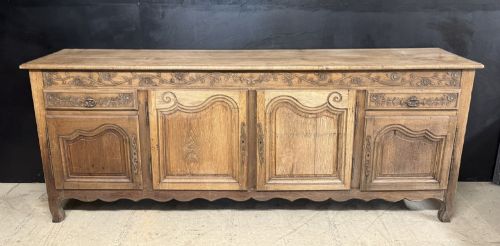
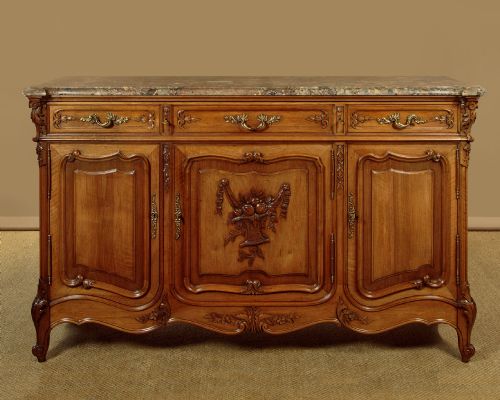
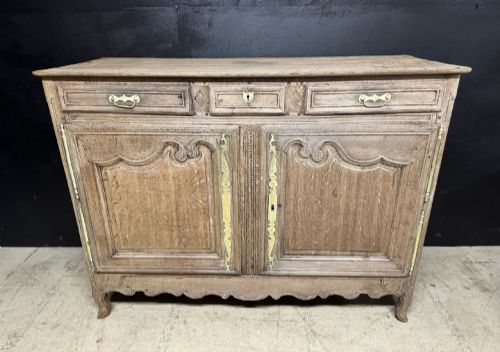
A french enfilade sideboard is a long, low storage cabinet historically designed for dining rooms to hold linen, cutlery, and food. You will encounter these pieces spanning multiple centuries, from rustic 18th century examples to 1930s art deco iterations.
The form typically presents multiple doors and drawers arranged in a linear fashion along the front facade. Oak, walnut, and cherrywood dominate the listings, frequently topped with marble or detailed with parquetry.
Regional variations extend from simple provincial chestnut and oak pieces to grander Louis XV style revivals and sleek art deco designs. The selection balances early provincial tradition with later twentieth century interpretations.
Materials and construction
Cabinet makers relied primarily on solid timbers such as oak, walnut, cherrywood, and chestnut for the foundational structure and panelled doors. These woods were often joined using traditional framing techniques that allowed the timber to move naturally over time.
Surface ornamentation involved intricate marquetry, parquetry tops, and inlaid details using burr ash, maple, and mahogany. Heavy marble slabs were frequently fitted to the upper surface, whilst brass and iron hardware provided functional closure for the doors and drawers.
French Enfilade Sideboard Retail Price Guide 2026
Typical asking prices for french enfilade sideboard among the pieces listed under this phrase on Sellingantiques today, from the lower quarter to the upper quarter. They describe what is for sale here now, not the wider market.
The selection spans from 18th century provincial pieces to 1940s art deco designs, utilising oak, walnut, cherrywood, and marble.
Assessing quality and craftsmanship
Quality rests on the selection of timber and the precision of the joinery used in the carcass and drawer linings. Finer pieces display carefully matched wood grains, such as burr elm or burr ash, integrated seamlessly into the door panels.
The integration of decorative elements like hand-carved mouldings, marquetry patterns, and fitted marble tops distinguishes superior examples. Cabinetry with well-balanced proportions and original hardware consistently represents the upper tier of the range.
Charles Dudouyt
The French Enfilade Sideboard Glossary
- Enfilade
- A long sideboard or cabinet featuring a continuous line of multiple doors across the front. This form originated in grand European architecture to describe a suite of rooms aligned in a straight row.
- Parquetry
- A geometric mosaic of wood pieces used for decorative effect on furniture surfaces. It is frequently seen on the top boards of 20th century sideboards.
- Marquetry
- The art of applying pieces of veneer to a structure to form decorative patterns and pictures. Makers utilised contrasting timbers like walnut and maple to create detailed pictorial designs.
- Serpentine
- A curved line of furniture fronting that undulates outward and inward. This shape requires advanced woodworking skill to execute smoothly across multiple doors and drawers.
- Provincial
- Denoting furniture made in the regions rather than the capital, often characterised by sturdy local timbers and simpler carving. These pieces reflect regional traditions and practical domestic needs.
French Enfilade Sideboard: Frequently Asked Questions
What is a french enfilade sideboard?
A french enfilade sideboard is an elongated storage cabinet featuring a series of doors and drawers arranged in a continuous line. It provides substantial surface area and internal capacity.
Historically utilised in dining spaces for serving food and storing tableware, these cabinets now serve as statement storage pieces in living rooms and hallways.
How do I date a sideboard?
Dating involves examining the construction methods, timber selection, and stylistic cues present in the piece. 18th century examples often display hand-carved provincial details and solid oak or chestnut construction.
Later pieces from the 1920s and 1930s incorporate art deco geometry, exotic veneers, and occasional marble tops that reflect the design movements of the 20th century.
Are marble tops original?
Marble tops are frequently original to specific styles, particularly grander revival pieces and 1930s sideboards. They provided a durable and elegant surface for serving.
Checking the fit against the wooden frame and observing the edge profile helps confirm whether the stone belongs to the period of the cabinet base.
How do I place one in a room?
Due to their considerable length, these sideboards require a substantial wall to anchor the room visually. They function effectively in large dining areas, spacious hallways, or as low media consoles.
Ensure you measure both the wall space and the depth of the cabinet doors to allow adequate clearance for opening.