


French Empire Style Candlesticks
French empire style candlesticks bring neoclassical drama to a room, combining heavy metal casting with classical motifs.
French Empire Style Candlesticks
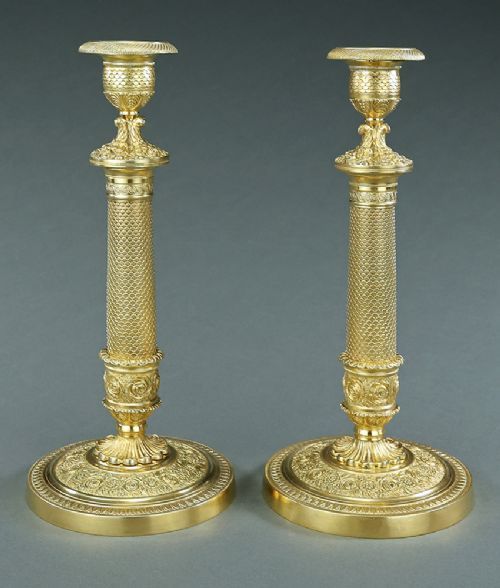
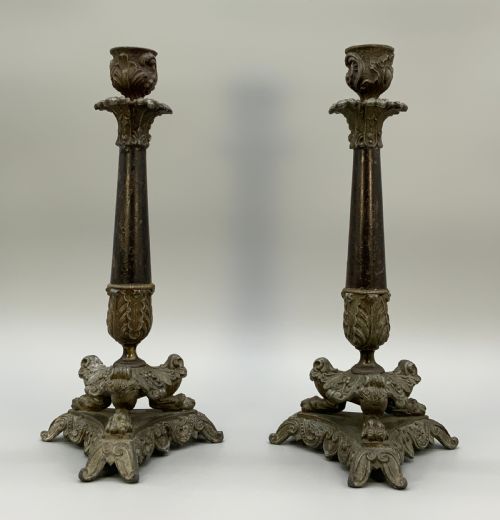
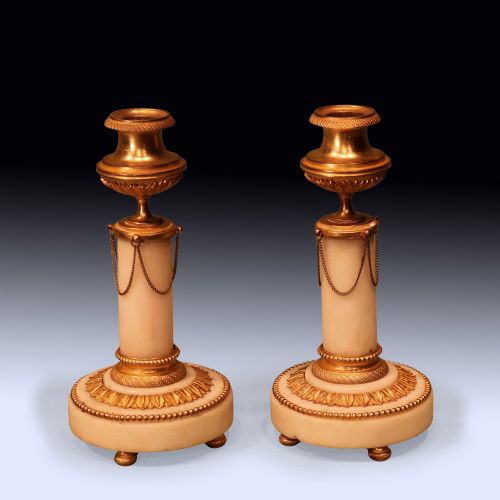
French empire style candlesticks embody the classical revival of the nineteenth century, drawing heavily on ancient Roman and Greek forms. When you search for french empire style candlesticks, you encounter heavily modelled metalwork, often paired with contrasting materials like white marble.
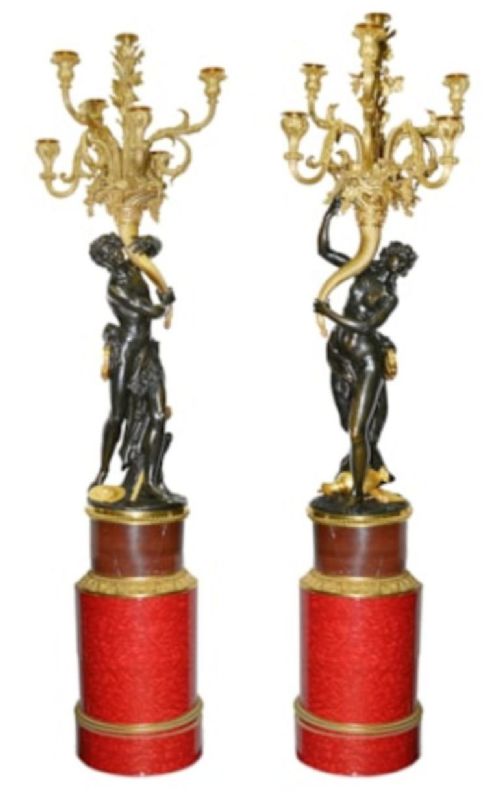
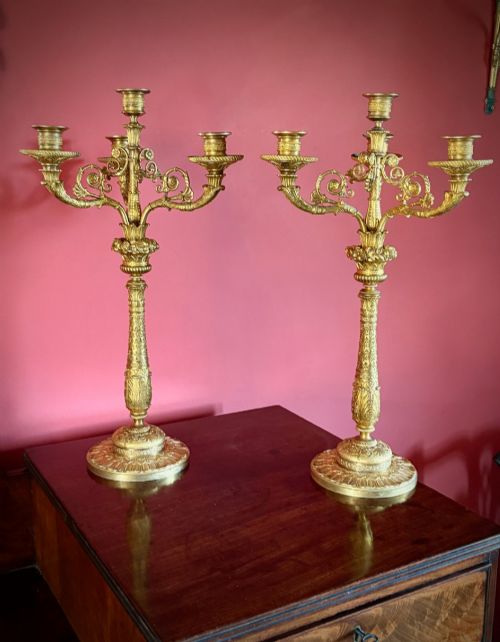
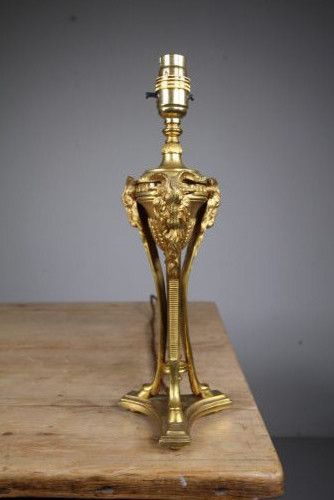
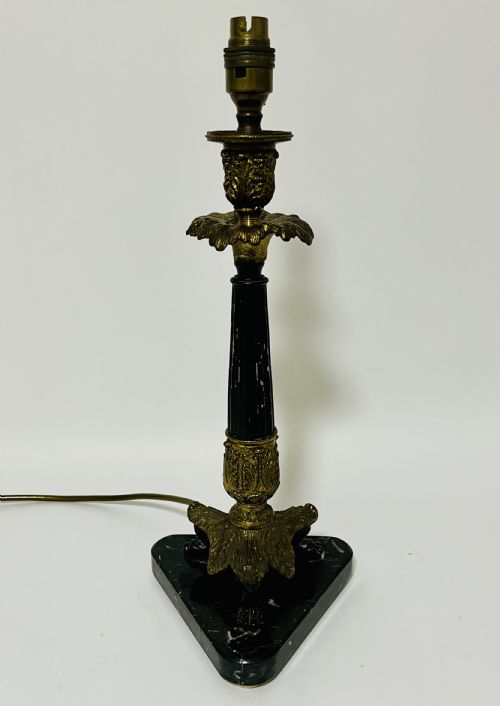
The selections available here range from single desk sticks to grand multi-branch candelabra and converted table lamps. Most pieces originate from the nineteenth century, reflecting periods such as the Regency, Charles X, and French Restoration eras.
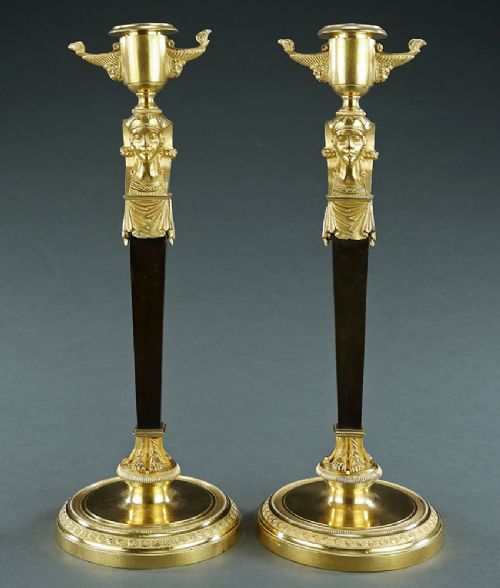
Makers of the period utilised classical iconography, incorporating figures such as caryatids, winged putti, and rams heads into the supporting columns and bases. These objects served to illuminate formal interiors while projecting an air of classical authority.
Judging quality and execution
The integration of mixed materials also signals superior manufacture, particularly where patinated bronze and ormolu meet seamlessly. Better examples maintain a heavy, balanced feel in the hand, indicating substantial metal thickness rather than hollow pressed construction.
Listings feature items from the 1870s, 1880s, 1890s, and the 1920s, alongside Regency and Georgian periods.
The French Empire Style Candlesticks Glossary
- Ormolu
- Gilt bronze produced by applying an amalgam of gold and mercury to a bronze object, then heating it to drive off the mercury. This technique creates a durable, golden surface finish characteristic of high-end nineteenth-century metalwork.
- Candelabra
- A branched candlestick designed to hold multiple tapers or candles simultaneously. They often feature a central shaft flanked by adjustable or fixed arms.
- Patinated Bronze
- Bronze that has been treated chemically or allowed to oxidise naturally to produce a dark, matte surface finish. This dark tone contrasts against bright gilt metal elements.
- Caryatid
- A sculpted female figure serving as an architectural support taking the place of a column or pillar. They frequently appear supporting the drip pans or shafts of classical lighting.
- Retour d'Egypte
- A design style inspired by Napoleon's campaign in Egypt, incorporating pharaonic motifs into European decorative arts. It forms a distinct sub-category within classical lighting design.
French Empire Style Candlesticks: Frequently Asked Questions
How do I clean ormolu safely?
Dust gently with a soft, dry cloth to remove surface particles without abrasive friction. Avoid chemical dips or metal polishes that strip the historic gilt layer.
Keep moisture away from the gilt surface, as water can cause corrosion on the underlying bronze base. Professional conservation is recommended for deeply tarnished surfaces.
How can I tell French work from English?
French production frequently relies on a combination of fire-gilt ormolu and deep patinated bronze with high-precision casting. English Regency pieces often incorporate regional interpretations of classical motifs with distinct base construction.
Documented models or stylistic similarities to known Parisian makers provide further clues regarding continental origins.
What is a Grand Tour souvenir?
Grand Tour items were acquired by wealthy travellers visiting classical antiquities in Italy and France during the nineteenth century. These pieces replicated famous ruins, sculptures, and architectural columns in miniature bronze or marble formats.
They allowed collectors to bring classical aesthetics back to their home interiors.