




French Empire Style Bookcase
These french empire style bookcase pieces bring architectural presence and classical dignity to a room, driven by rich mahogany and gilt mounts.

French Empire Style Bookcase
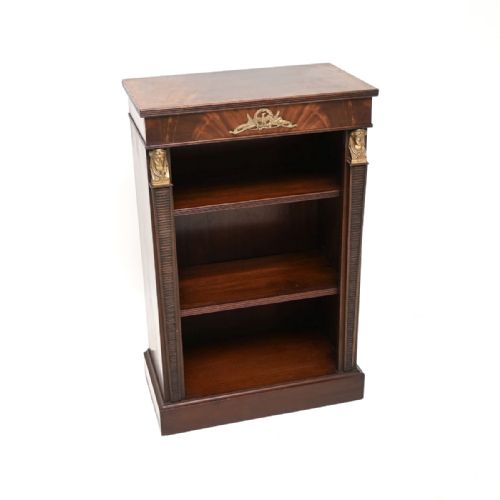
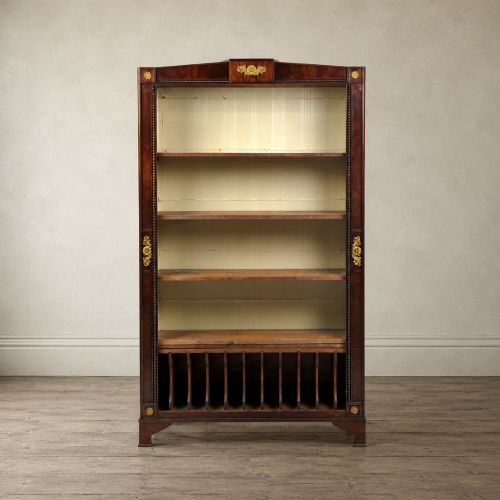
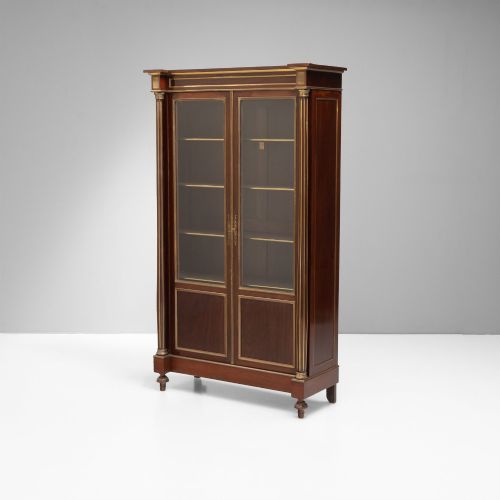
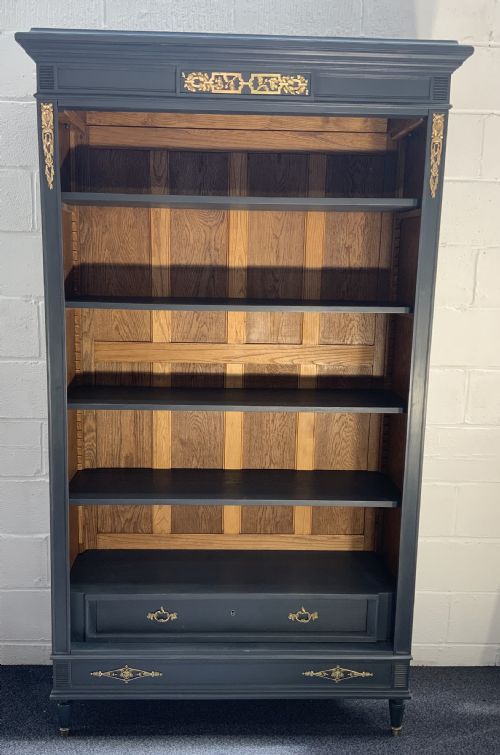
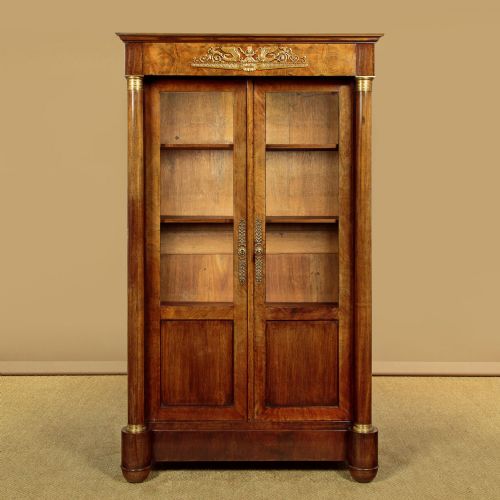
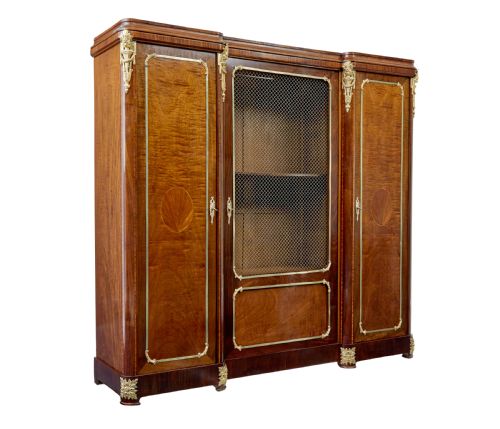
A french empire style bookcase stands as a formal architectural statement, taking forms such as open shelves, glazed cabinets and display vitrines. These pieces frequently appear in nineteenth century interpretations, drawing on earlier neoclassical models with upright proportions and commanding presence.
Buyers encounter open bookcases alongside two-door cabinets and taller display formats. Mahogany provides the dominant timber foundation across these variations, paired with contrasting woods and metallic embellishments.
Materials and construction methods
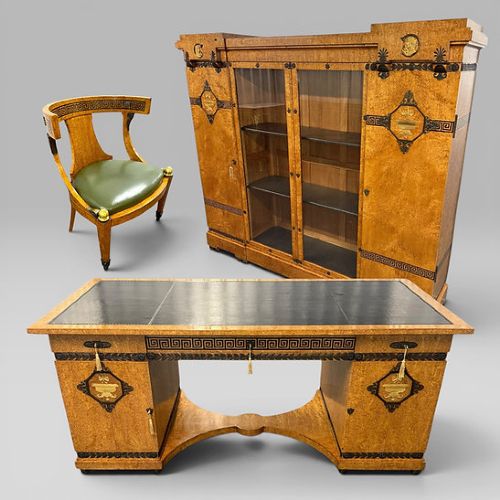
Makers built these pieces primarily using solid mahogany, rosewood, burr maple and satinwood, occasionally applying ebonised finishes to the timber framework. The structural carcasses rely on substantial cabinetmaking techniques to support heavy shelving and glass doors.
Ormolu and gilt metal mounts decorate the architectural facades, securing onto the wood with precision. Glass panels feature within display doors and vitrine sections to protect books while maintaining visibility.
Listings span the nineteenth century up to nineteen thirty, featuring mahogany, rosewood, oak, and ormolu.
Distinguishing quality in execution
Quality rests in the crispness of the cast ormolu mounts and the selection of figured timber veneers such as plum pudding mahogany and burr maple. Superior examples display harmonious proportions where classical brass embellishments integrate cleanly with the wood grain.
The weight of the timber and the rigidity of the cabinet construction separate standard production from superior cabinetmaking. Finer pieces demonstrate careful attention to internal shelving adjustments and door alignment.
Mercier Frères
The French Empire Style Bookcase Glossary
- Ormolu
- Gilt bronze mounts applied to furniture. This technique involves mercury gilding or electroplating bronze to achieve a bright gold finish.
- Empire Style
- A neoclassical design movement originating in nineteenth century France. It draws heavy inspiration from ancient Roman and Greek architectural motifs.
- Vitrines
- Glass-fronted cabinets designed for displaying books or objects. These pieces protect contents while offering visibility from multiple angles.
- Ebonised
- Wood treated to imitate ebony. Cabinetmakers stain or paint timber dark to create a stark contrast against gilt metal mounts.
- Charles X
- A French decorative arts period spanning the early nineteenth century. Furniture from this era often utilises lighter woods and restrained classical ornamentation.
French Empire Style Bookcase: Frequently Asked Questions
What is a french empire style bookcase?
A french empire style bookcase is a heavy architectural storage piece influenced by nineteenth-century classical design. These units often feature dark wood timbers and gilt metal mounts.
They serve as both practical shelving and formal display furniture within a room, combining architectural columns with functional compartments.
How do I date a french empire style bookcase?
Dating relies on timber selection, construction methods, and the style of the brass or ormolu mounts. Pieces range from nineteenth-century originals to later revivals.
Examining the backboards, drawer linings, and hardware provides clear indicators of the manufacturing era.
Are these bookcases suitable for modern rooms?
Their strong vertical lines and dark mahogany tones command attention in contemporary or traditional interiors alike. They anchor large walls and provide substantial storage capacity.
Proper placement involves considering ceiling height and lighting to highlight the gilt mounts and wood grain.
What woods were used in these bookcases?
Makers predominantly utilised mahogany, rosewood, and oak for structural stability and rich colour. Finer examples incorporate burr maple, satinwood, and ebonised timber.
These materials were chosen for their durability and their ability to accept polished finishes.