
French Empire Pedestal
A french empire pedestal brings classical architectural weight and rich timber into a room, anchoring the space with grounded presence.
French Empire Pedestal
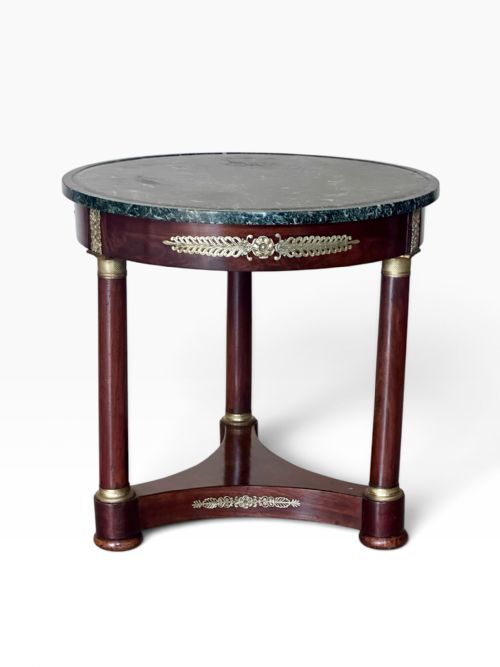
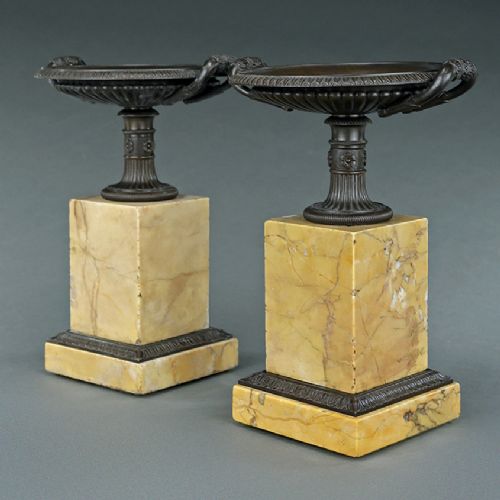
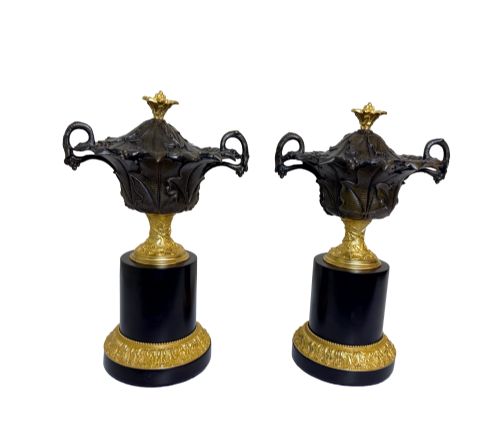
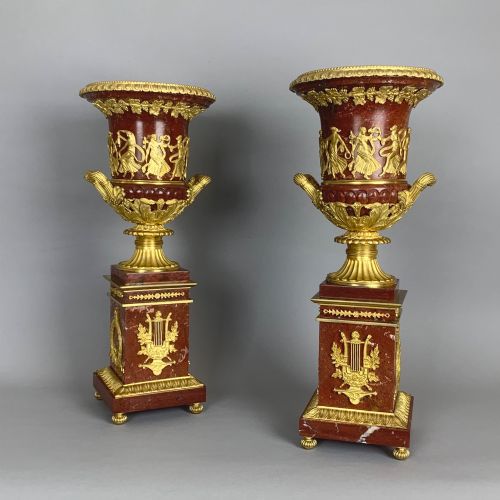
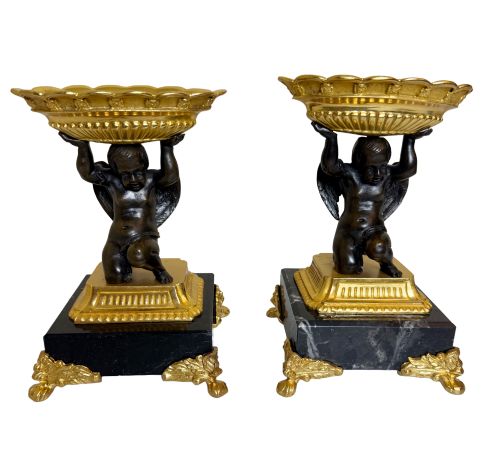
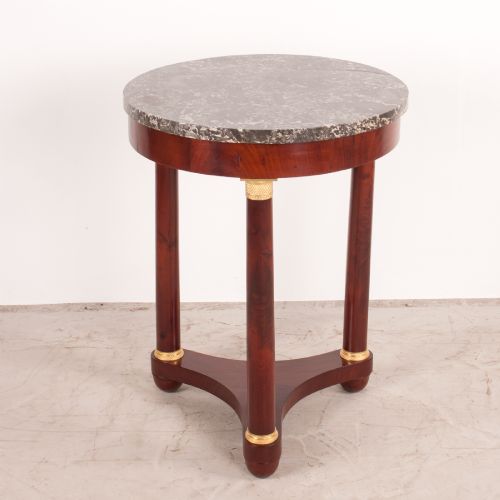
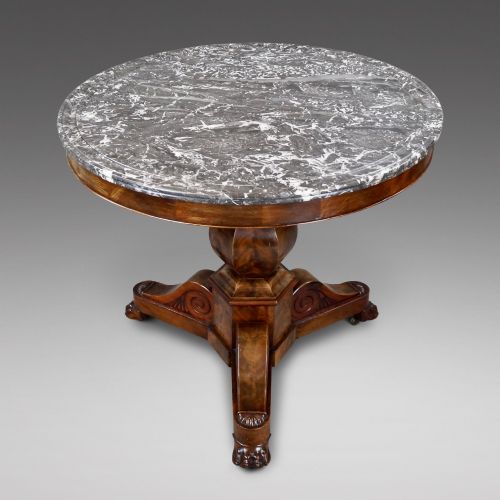
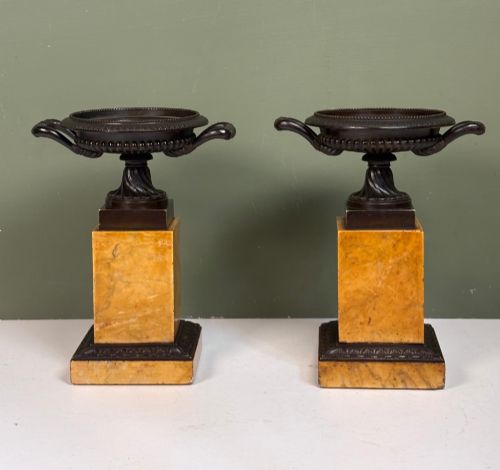
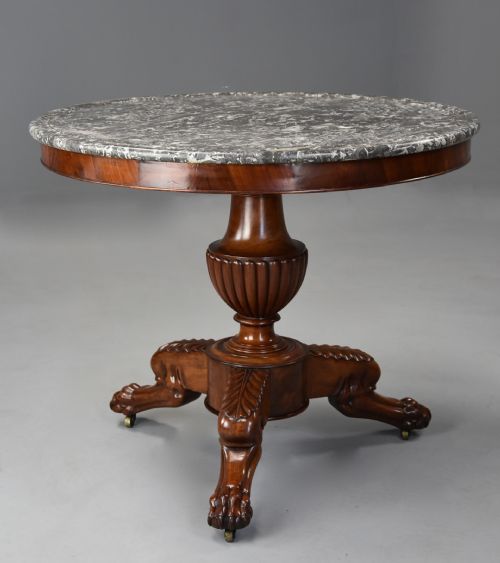
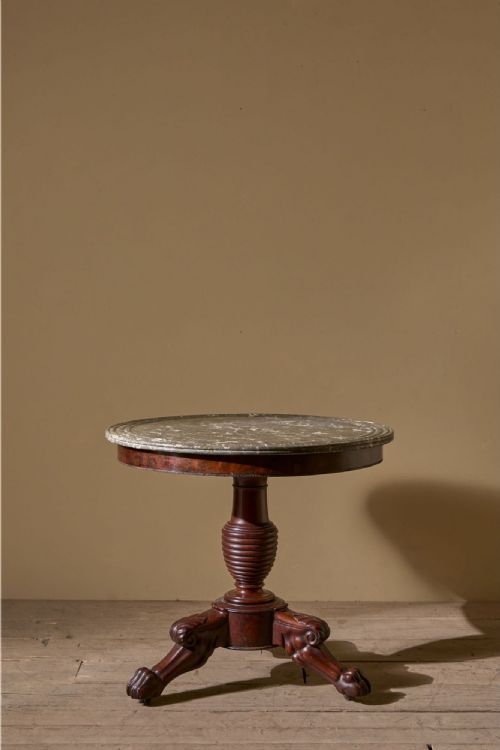
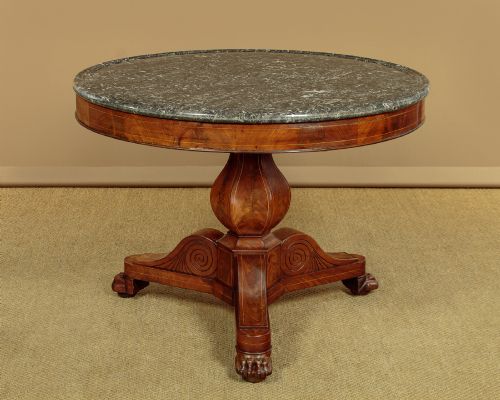
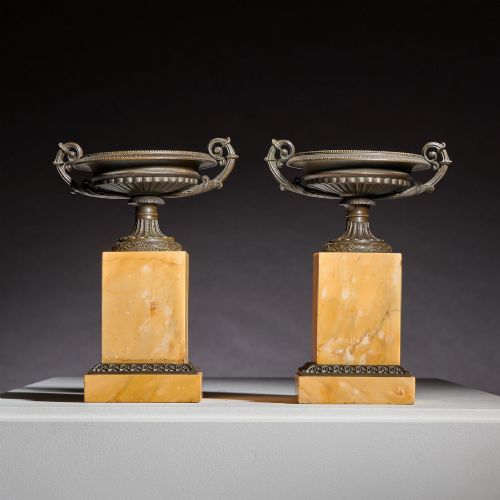
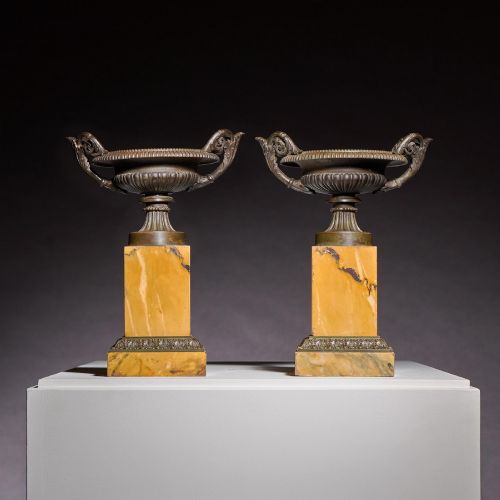
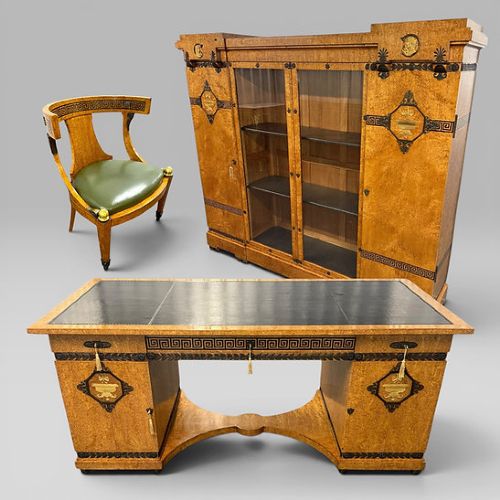
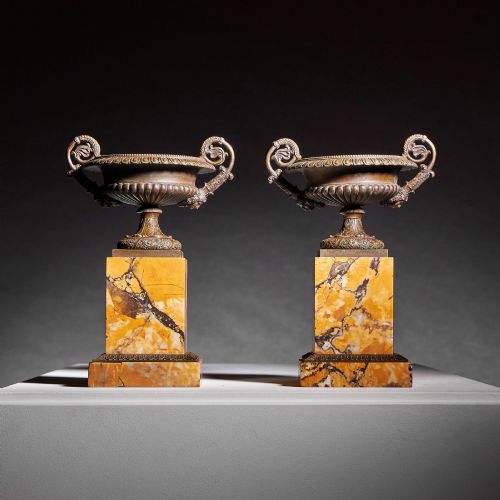
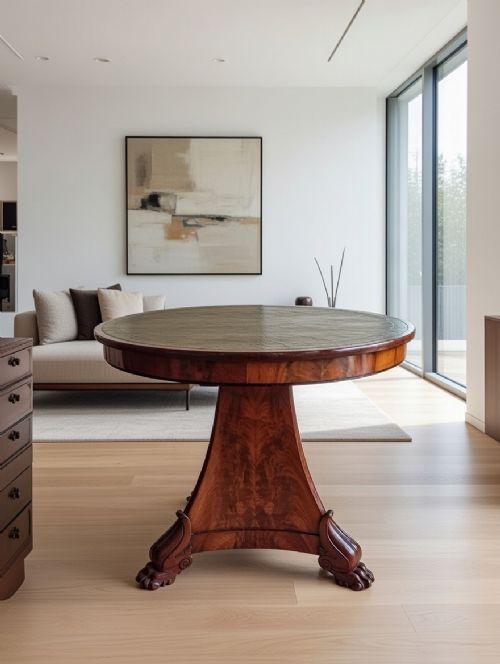
When searching for a french empire pedestal, you encounter items built during the nineteenth century, including the specific years 1800, 1850, 1860, 1870, 1880, 1890, and 1900, alongside revivals spanning into the twentieth century. The selections available here frequently manifest as gueridon centre tables, occasional tables, side tables, desks, and marble-mounted pedestals supporting bronze tazzas, urns, or busts.
The physical evidence demonstrates that these forms derive from French Empire, French Neoclassical, French Restoration, and Regency vocabularies. Many examples pair circular marble tops with solid mahogany, flame mahogany, or burr elm framing.
Beyond tables, the category extends to pedestal cabinets, bureau plat desks, and decorative stands that utilise classical proportions and structural mounts. These configurations provide both surface utility and sculptural architectural presence within interiors.
How they were made
Joiners and cabinet-makers built the foundational carcasses of these pieces using dense hardwoods such as mahogany and burr elm, frequently applying flame mahogany veneers to curved surfaces. Tables and cabinets often incorporate inset surfaces of white, grey, or Siena marble, fitted tightly into timber rims.
Metal ornament was integral to the construction, employing cast bronze, patinated bronze, and ormolu mounts fixed to the wood with pins or screws. Gilt bronze elements were cast and chased to render classical foliage, figures, and geometric borders with sharp definition.
Leather panels also appear as writing surfaces on desks, tooled and fitted to recessed timber tops. Structural stability relied on heavy central pedestals or columns, often resting on tripartite or circular plinth bases.
Napoleon's profile watches over the room from bronze busts perched firmly on cool marble columns.
What varies in quality
The refinement of the cast bronze and ormolu mounts separates standard production from exceptional examples, as sharper chasing and deeper mercury gilding produce crisper detail. The quality of the marble slab, particularly the depth of the veining and the precision of the edge profiling, also marks the tier of the piece.
Timber selection dictates the visual impact of the woodwork, where well-figured flame mahogany or burr elm veneers demonstrate careful book-matching across tabletops and cabinet doors. Structural integrity in the central pedestal column and the weight distribution of the base determine how solidly the form stands.
Emile Guillemin·Mercier Freres
The French Empire Pedestal Glossary
- Gueridon
- A small French table, typically round with a central pillar support, often topped with marble. These pieces served as movable stands for lamps, decorative bowls, or general display.
- Ormolu
- Gilded bronze applied as decorative mounts, feet, and borders on furniture and objects. The technique involves coating cast bronze with a gold amalgam and firing it to bond the metal.
- Bureau Plat
- A flat-topped freestanding writing desk, usually fitted with drawers in the frieze and often ornamented with gilt bronze mounts. These desks were designed to sit away from walls.
- Patinated Bronze
- Bronze that has been chemically treated to alter its surface colour and tone. This finish creates dark brown or greenish hues on sculptural elements and mounts.
French Empire Pedestal: Frequently Asked Questions
What is a french empire pedestal?
A french empire pedestal refers to heavy, classical nineteenth-century furnishings and supports influenced by French imperial design. These include gueridon tables with central pillars, sculpture stands, and pedestal cabinets.
They rely on architectural symmetry, dark timbers, and cast metal mounts to create a formal aesthetic. The forms borrow heavily from ancient Roman and Greek precedents adapted for nineteenth-century interiors.
How were these pedestals used historically?
Historically, these items functioned as functional display surfaces, writing desks, and architectural supports in grand rooms. Tazzas and urns sat upon marble columns to display classical tastes during the Grand Tour period.
Cabinets and pedestal desks provided secure storage while maintaining strict neoclassical symmetry in libraries and studies. Centre tables held lighting or decorative bowls in the middle of reception rooms.
How do I style a gueridon table?
A gueridon table works best as a freestanding centrepiece in an entrance hall or as an occasional surface beside seating. Its round marble top and central column allow it to be viewed from all angles.
Keep the surface styling restrained to let the timber grain and bronze mounts remain the focal point. A single decorative bowl, bronze bust, or lamp complements the classical proportions without cluttering the stone.
How can I tell the period of a piece?
Dating relies on examining the timber construction methods, the crispness of the bronze casting, and the specific material combinations. Early nineteenth-century pieces from 1800 to 1830 often feature tighter neoclassical restraint and heavier mercury-gilded ormolu.
Later nineteenth-century revivals from the 1880s to 1900 sometimes employ softer casting techniques or machine-sawn veneers. Comparing the marble thickness and the style of the timber framing helps separate original Empire production from later revivals.