


French Empire Bronze Clock
A french empire bronze clock brings monumental weight, classical allegory and precise mechanical craft into a room.
French Empire Bronze Clock
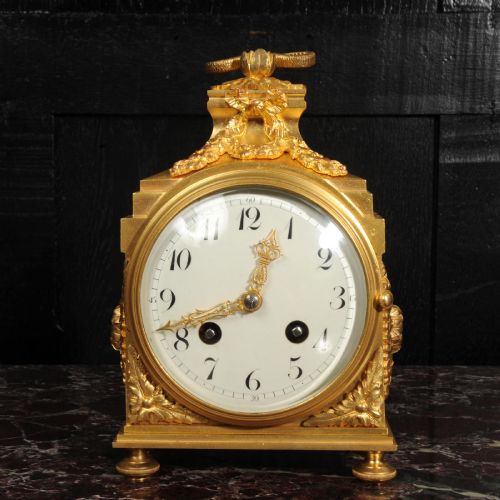
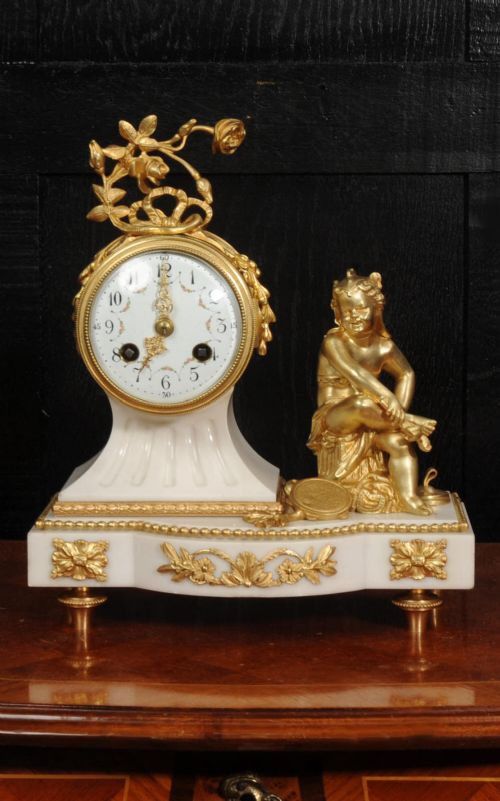
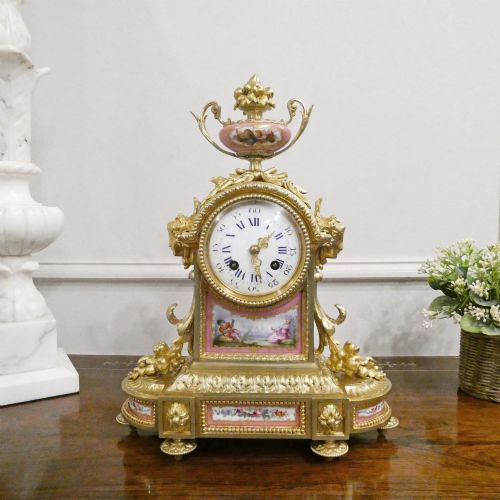
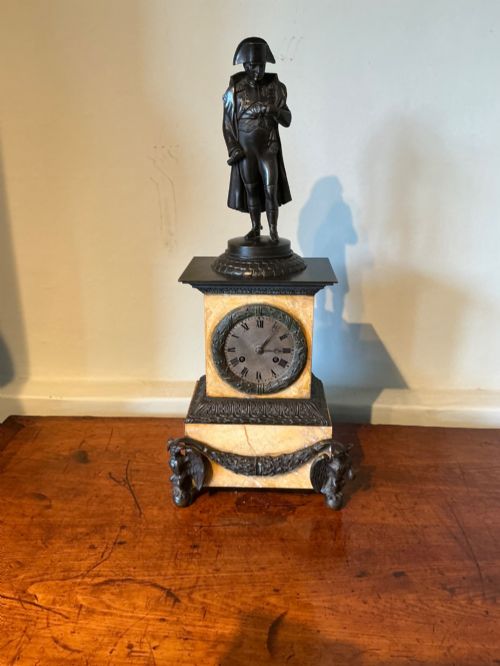
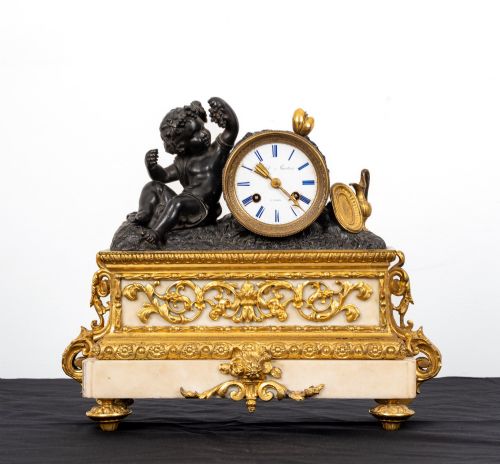
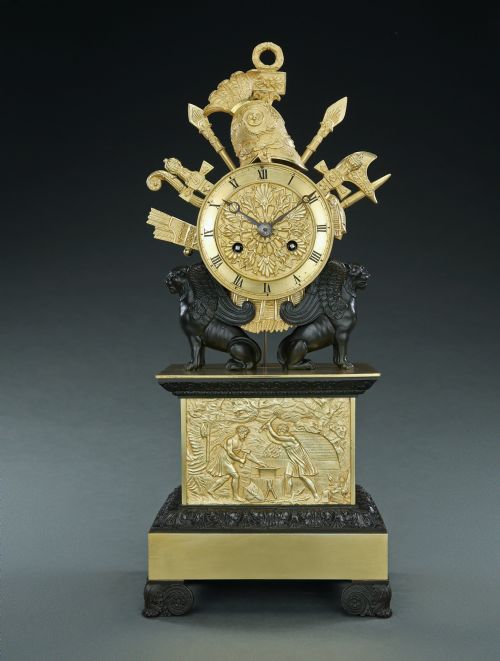
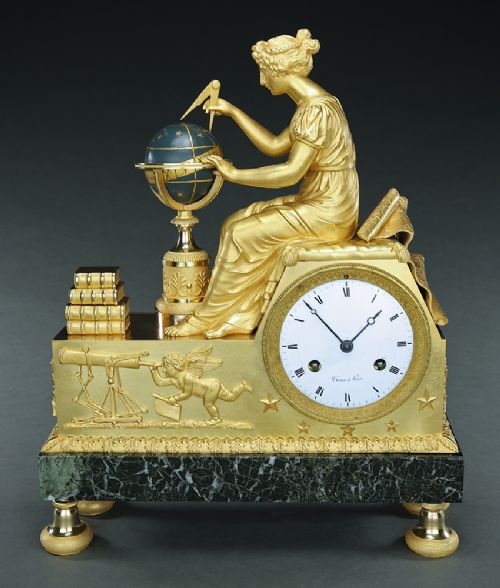
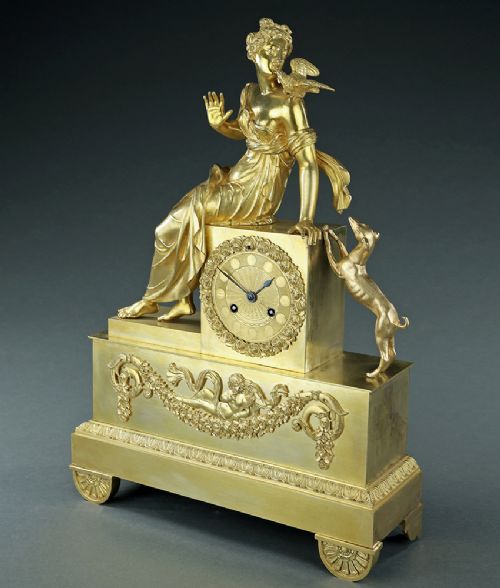
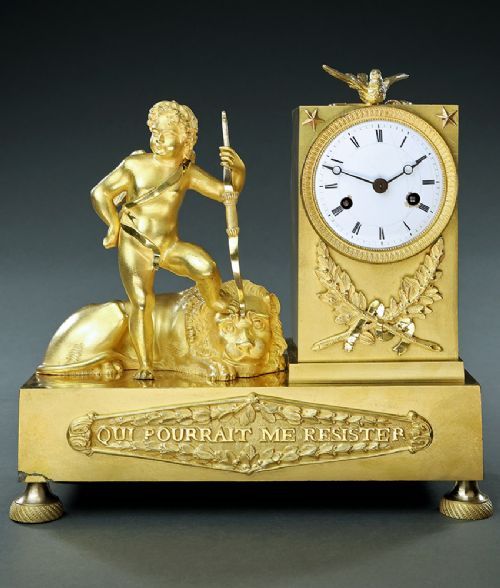
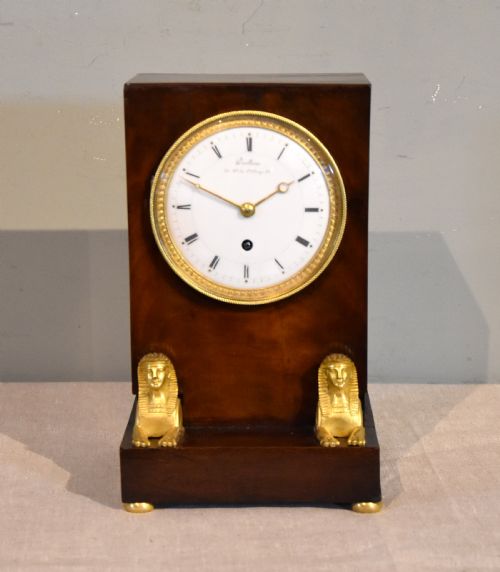
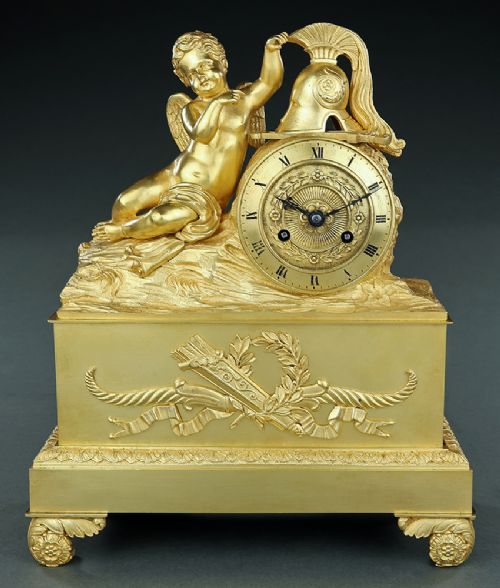
A french empire bronze clock is a heavy mantel timekeeper or portico clock built around neoclassical themes, military trophies, and mythological narratives. These pieces often feature figures like Napoleon, Hermes, or cherubs rendered in patinated bronze against polished gilt mounts.
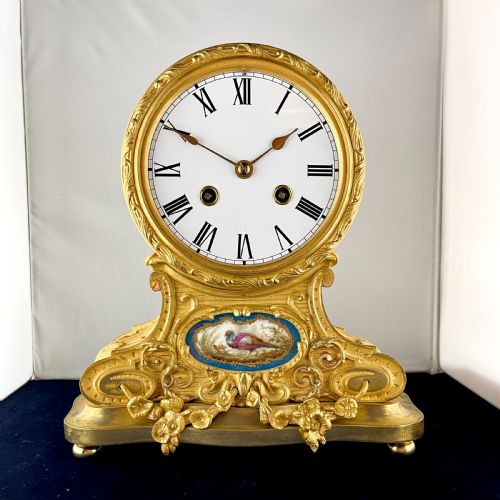
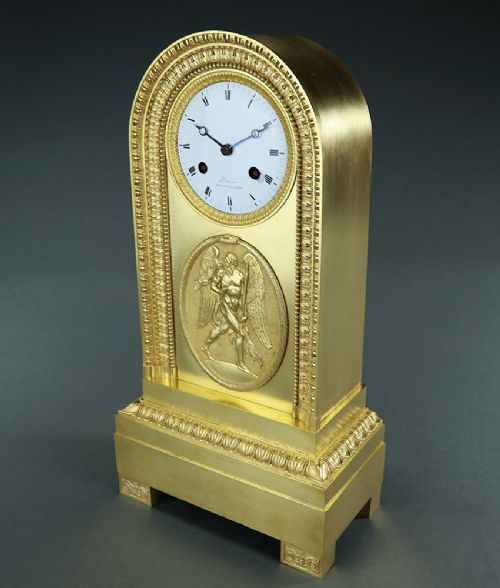
The versions most commonly found here date from the nineteenth century, ranging from severe portico designs with cut crystal columns to elaborate marble and ormolu figural pieces. Many incorporate white enamel dials and house mechanical movements designed to mark the hours with steady precision.
Materials and Construction
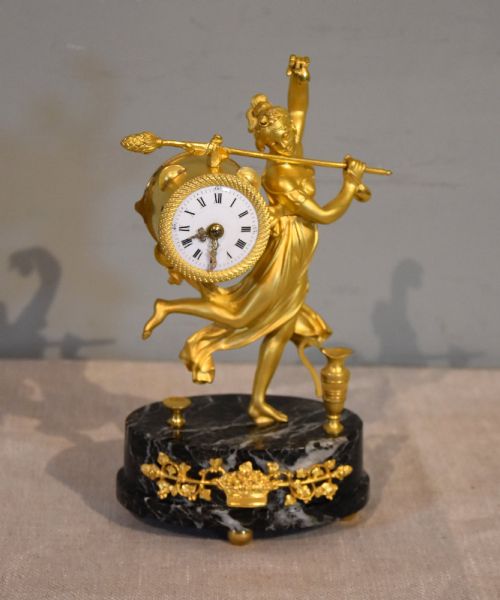
Makers combined cast bronze, patinated dark finishes, and mercury-gilt ormolu to create dramatic contrasts of tone and texture. These metal components were frequently mounted upon white, green, or rouge marble plinths, sometimes framed by glass panels or mahogany woodwork.
The heavy bronze elements required skilled casting and hand-chasing to sharpen the botanical details and figurative drapery. Clock movements utilised brass gears, silk suspension threads or pendulum regulation, and occasionally incorporated musical mechanisms or specialised enamel dials.
Listings feature numerous nineteenth-century French mantel clocks incorporating contrasting green marble, rouge marble, and polished ormolu.
Distinctions in Quality
The standard of a french empire bronze clock rests upon the crispness of the bronze chasing and the depth of the fire-gilding. Superior examples display sharp facial expressions on figures and deeply undercut leaf ornamentation rather than soft, mass-produced surface smoothing.
Integration between the clock case and its marble or mahogany base also marks superior workmanship. Higher quality pieces utilise signed movements by established makers and maintain original fire-gilt surfaces without extensive modern re-plating.
Japy Freres·Reiche·Breguet·Berger Paris·Canaillor of Paris·Siffel and Cartier·Rodier
The French Empire Bronze Clock Glossary
- Ormolu
- A method of applying finely ground gold-mercury amalgam to bronze, creating a rich golden surface through heat treatment. This finish defines the bright metallic highlights seen across nineteenth-century clock mounts.
- Portico clock
- A architectural clock form characterised by a central dial suspended between four supporting columns. These structures often feature mahogany or marble bodies with delicate crystal elements.
- Garniture set
- A matching ensemble consisting of a central clock flanked by matching vases or candelabra. Such sets provide balanced symmetry when placed upon a mantelpiece.
- Silk suspension
- An early method of hanging the pendulum from a fine strip of woven silk within the movement. This delicate mechanism requires careful handling during transport.
French Empire Bronze Clock: Frequently Asked Questions
How do these clocks function?
Most models utilise a spring-driven or weight-driven brass movement controlled by an internal pendulum. Winding keys are used to tension the mainsprings through small holes on the enamel dial.
Many incorporate striking mechanisms that sound the hours and halves on a tuned bell or gong. Regular professional servicing keeps these historical mechanisms running reliably.
Where should a heavy mantel clock be placed?
These pieces require a deep, stable surface such as a heavy sideboard, a sturdy table, or a reinforced mantel shelf. Because the combined weight of bronze and marble is considerable, wall-anchored furniture is often necessary.
Placing the clock away from direct sunlight and damp environments helps preserve the delicate enamel dial and the original bronze patination.
How are portico clocks different from standard mantel clocks?
Portico clocks rely on an open architectural framework featuring vertical columns that support the central drum housing the movement. This airy construction often includes glass panels or visible pendulums swinging between the pillars.
Standard mantel clocks present a solid enclosed block of marble, wood, or cast metal with integrated figural ornamentation rather than an architectural facade.
What indicates an earlier nineteenth-century piece?
Earlier examples from the Empire and Charles X periods feature sharper cast chasing, crisper classical iconography, and silk suspension movements. The use of mercury gilt produces a distinct deep metallic lustre unique to the period.
Later Victorian interpretations often adopt softer casting techniques and incorporate varied revival styles such as Rococo or Louis XVI motifs.