
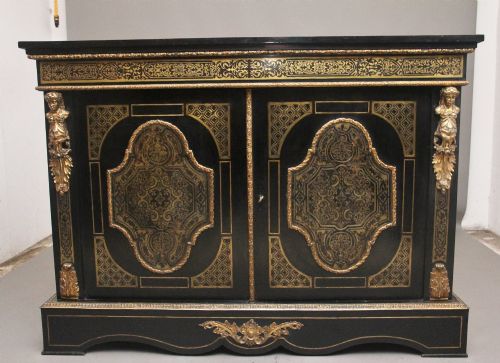
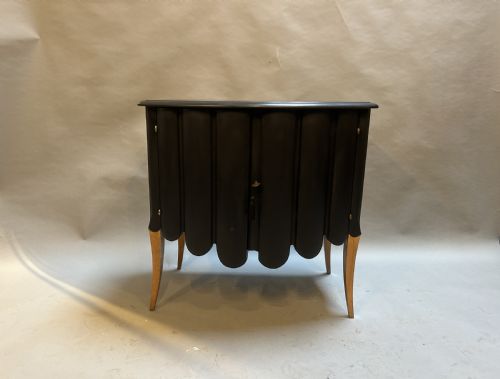


French Ebonised Sideboard
A french ebonised sideboard brings dark elegance and gilt contrast to a room, offering both display space and deep storage.
French Ebonised Sideboard
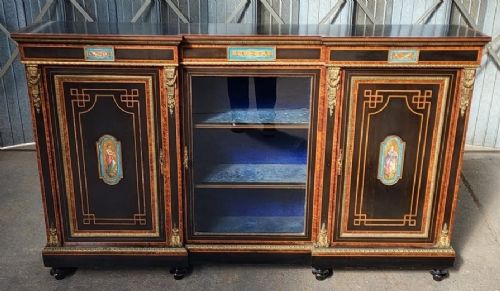
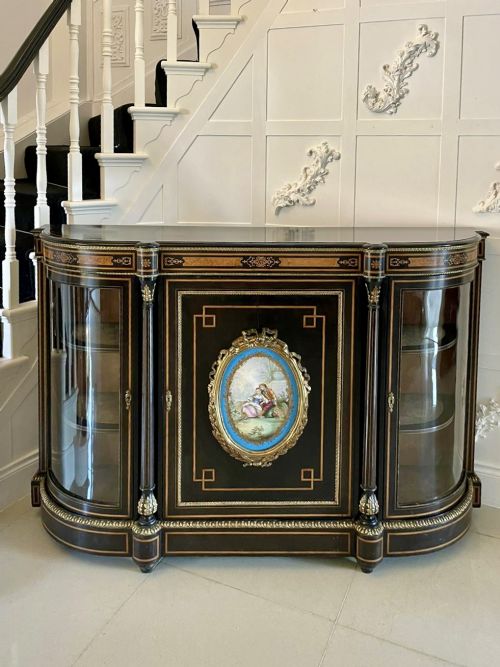
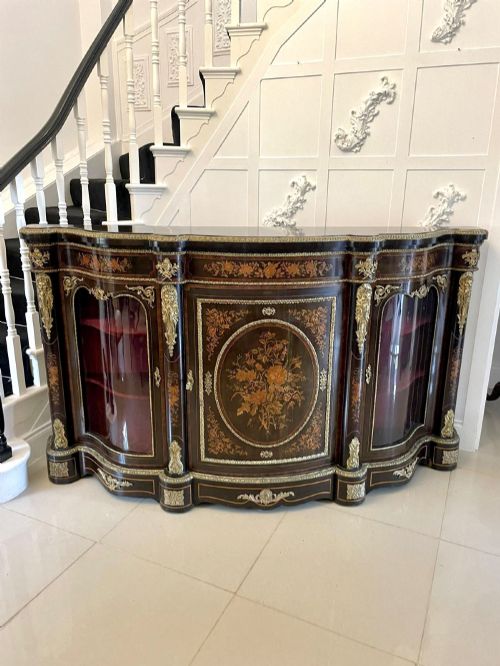
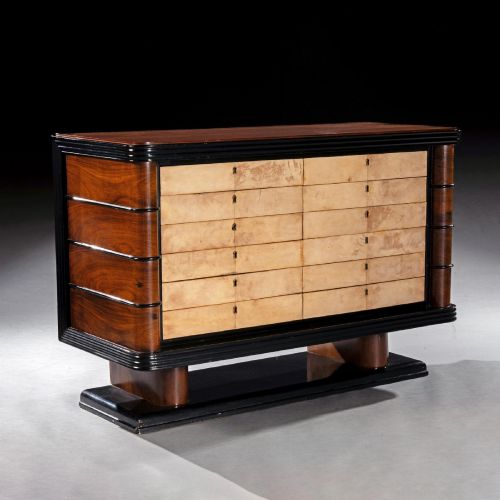
A french ebonised sideboard sits firmly in the nineteenth century, drawing heavily on Victorian, Napoleon III, and later Art Deco movements. These forms span credenzas, pier cabinets, and low side cabinets designed to command a formal interior.
Most examples meet the eye as dark wooden carcasses brightened by metallic mounts, glass panels, or marble surfaces. They function practically as storage cabinets while visually serving as architectural anchors against a wall.
How they were made
Carcasses of ebonised wood or walnut receive careful treatments of marquetry, brass inlay, and tortoiseshell beneath clear finishes. Ormolu mounts and gilt bronze details cast in relief are then secured to frame the doors and corners.
Marble tops, often cut to serpentine shapes, sit squarely upon the timber frames, accompanied by inset porcelain plaques or Pietra Dura panels where the design calls for added colour and texture.
Among the stately sideboards hide diminutive childs credenzas, proving that miniature furniture received the exact same boulle and ormolu treatment.
What varies in quality
The crispness of the cast bronze mounts and the precision of the marquetry inlay determine the tier of craftsmanship. Finer pieces display hand-chased details in the ormolu and tightly fitted veneer work that withstands shifting temperatures.
Materials such as genuine tortoiseshell, Sevres porcelain, and heavy slabs of fitted marble separate standard workshop output from exceptional cabinet work produced during the nineteenth century.
Jacques Adnet
The French Ebonised Sideboard Glossary
- Ebonised
- Wood stained or painted to imitate true ebony, giving a dense, uniform black finish. This technique creates a dramatic dark surface that contrasts sharply with metal mounts.
- Ormolu
- Gilt bronze ornamentation applied to furniture mounts, feet, and key escutcheons. The alloy is cast and hand-chased to produce sharp decorative relief.
- Marquetry
- Veneers of different woods, metals, or shell cut into pictorial or geometric patterns and glued to a carcass. It allows elaborate floral and scroll designs across flat cabinet doors.
- Boulle
- A style of marquetry using brass and tortoiseshell inlaid together in counterchanged patterns. Named after the royal cabinetmaker, it catches the light with metallic and organic warmth.
French Ebonised Sideboard: Frequently Asked Questions
What is a French ebonised sideboard?
A French ebonised sideboard is a nineteenth-century or Art Deco storage cabinet finished in dark black wood and decorated with gilt mounts, marquetry, or marble tops.
These pieces combine display surfaces with enclosed cupboards, originating from cabinetmakers influenced by French revival styles and modernism.
How do I style a credenza at home?
Place a credenza against a flat wall in a dining room, hallway, or living space to use its surface for lamps, ceramics, or art.
The dark ebonised finish pairs well with neutral walls and reflects light from nearby windows or mounted fixtures.
How do I tell Victorian from Napoleon III pieces?
Victorian examples often lean towards heavy marquetry and burr walnut, while Napoleon III pieces frequently embrace boullework and gilt bronze mounts.
Both periods overlap significantly in the middle of the nineteenth century, sharing similar serpentine forms and marble top designs.
How should I care for ebonised wood and marble?
Dust the ebonised wood gently with a soft, dry cloth and avoid harsh chemical polishes that can lift the dark stain.
Keep marble tops clean from acidic liquids by using coasters, as unsealed stone absorbs moisture and stains over time.