



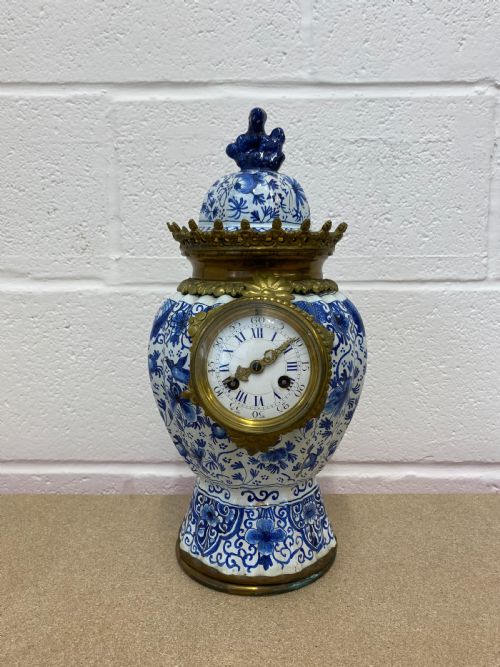

French Earthenware Urn
These french earthenware urn pieces bring centuries of ceramic history into a room, offering tactile glazes and historic forms that anchor any interior scheme.
French Earthenware Urn
A french earthenware urn encompasses a wide variety of historic vessels, ranging from utilitarian olive jars and confit pots to decorative faience vases and jardinieres. When searching for this term, buyers encounter everything from humble nineteenth-century provincial terracotta to elaborate painted tin-glazed earthenware.
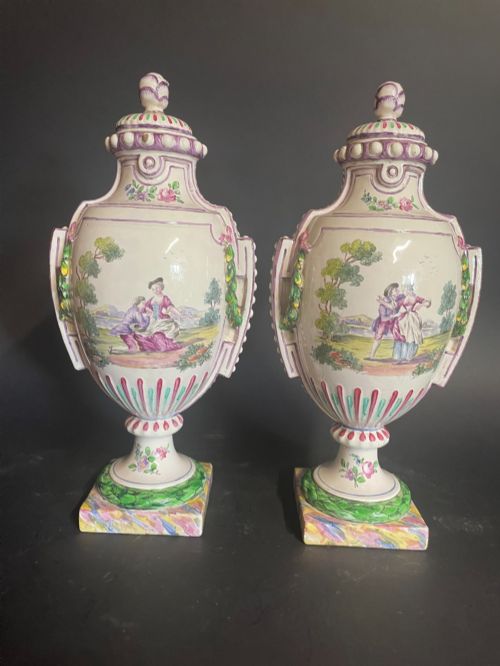
The objects listed span several centuries, with a strong representation of nineteenth-century provincial kitchenware and decorative faience pieces. Alongside traditional confit pots and oil jars, one regularly finds pairs of covered urns and studio pottery vessels.
Originating across different regions of France, these pieces reflect both rural agricultural uses and urban decorative arts. From the green-glazed terracotta of the south to Desvres tin-glazed productions, each object carries distinct regional characteristics.
How they were made
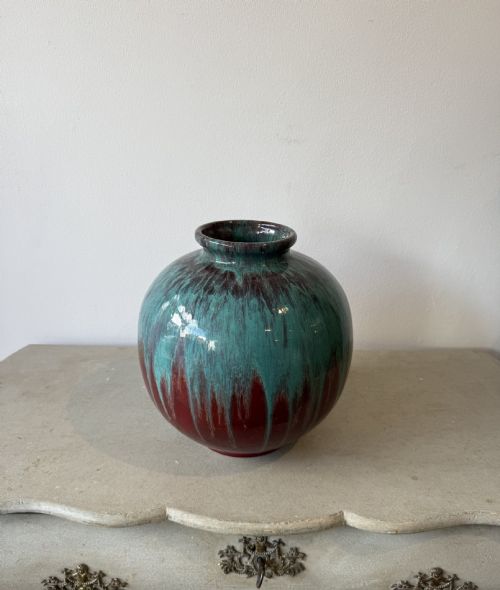
Potters shaped these vessels from local earthenware and terracotta clays, often throwing them on a wheel or forming them by hand for utilitarian storage. These bodies were then coated in various finishes, including tin glazes, lead glazes, and specialised lustre or dribble glazes.
Firing techniques determined the durability and appearance of the surface, with high-temperature kilns setting the cobalt blues of faience and the rich greens of provincial glazes. Brass mounts sometimes complemented the ceramic bodies in later nineteenth-century decorative pieces.
French Earthenware Urn Retail Price Guide 2026
Typical asking prices for french earthenware urn among the pieces listed under this phrase on Sellingantiques today, from the lower quarter to the upper quarter. They describe what is for sale here now, not the wider market.
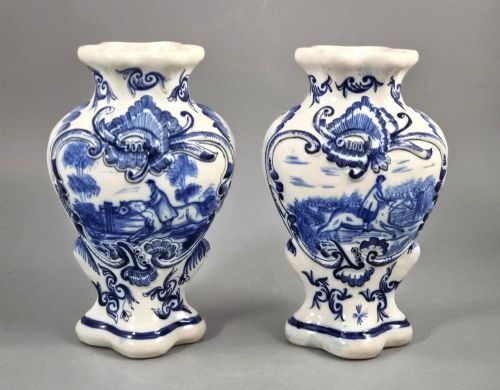
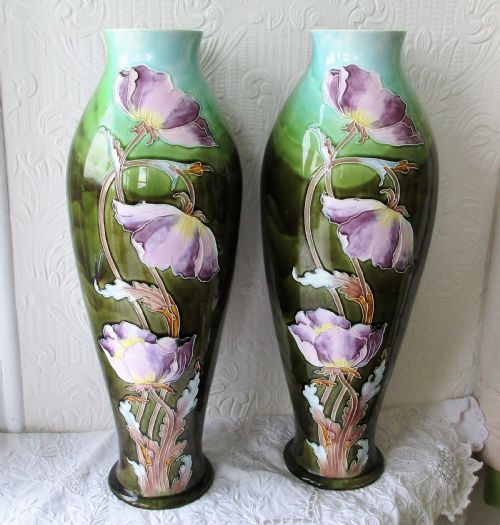
Listings feature nineteenth-century French faience vases, terracotta olive jars, and glazed earthenware confit pots from regional centres like Desvres.
What varies in quality
Quality rests in the precision of the throwing and the depth of the glaze, whether through hand-painted tin-glazed decoration or rich, dripping monochrome surfaces. Pieces by recorded makers such as Fourmaintraux-Courquin or Clement Massier demonstrate superior artistic execution compared to standard utilitarian wares.
The integrity of the ceramic body and the preservation of original surface finishes significantly influence the character of each piece. Intact lids on urns and well-maintained glazes separate standard domestic vessels from exceptional collector examples.
Fourmaintraux-Courquin·Clement Massier·Robert T Lallement·Jules Vieillard
The French Earthenware Urn Glossary
- Faience
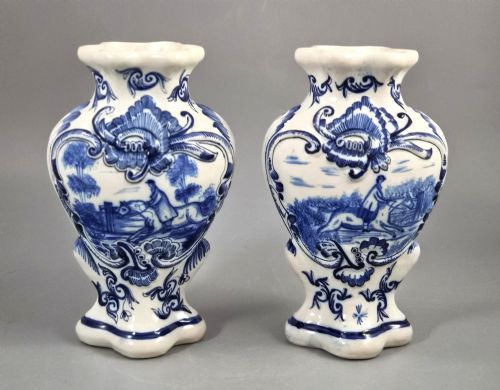
- Tin-glazed earthenware produced in France and other European countries, typically featuring painted decoration over an opaque white enamel. This technique allowed for intricate polychrome and blue-and-white designs.
- Confit Pot
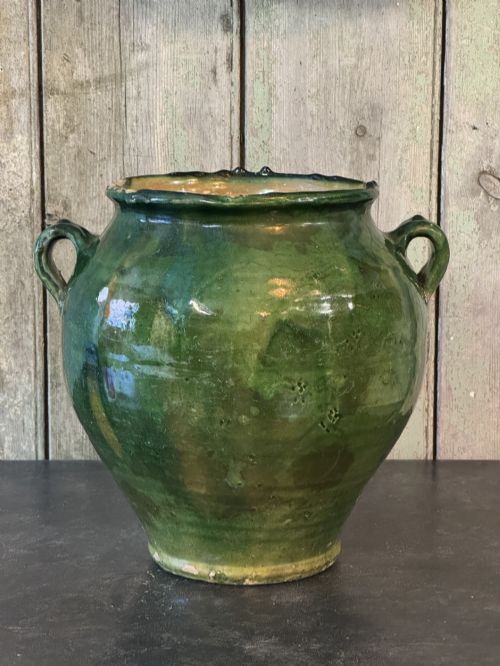
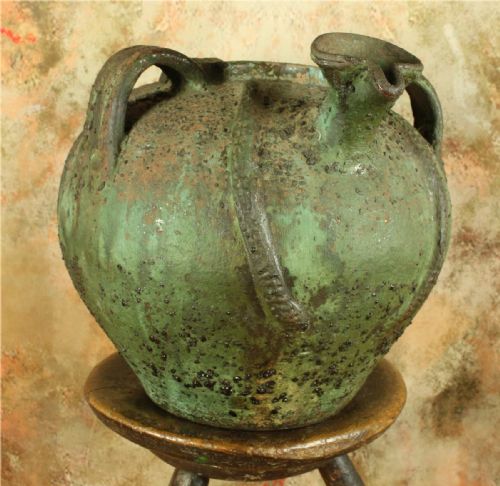
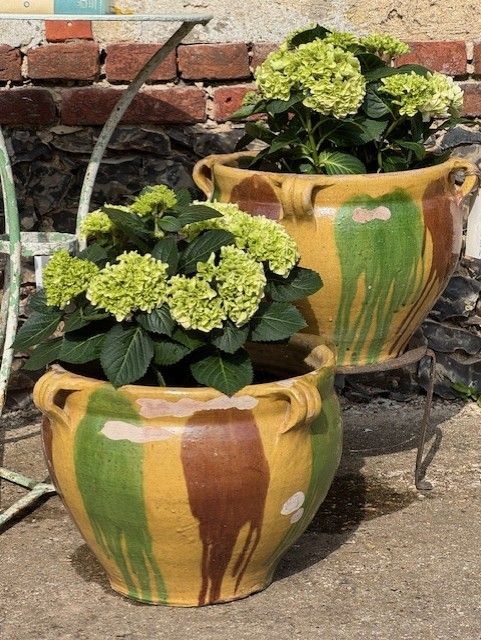
- A traditional French earthenware jar with handles, historically used for preserving meat or storing oil. These utilitarian vessels usually feature a partial or full lead glaze in green or honey tones.
- Terracotta
- Unglazed or glazed fired clay of a brownish-red colour, commonly utilised for garden pots, olive jars, and large agricultural vessels. Its porous nature suited it for holding agricultural goods.
- Lustre Glaze
- A type of ceramic finish that imparts a metallic or iridescent sheen through the reduction of metallic oxides during firing. This technique was notably utilised by makers such as Clement Massier.
- Tin-Glazed Earthenware
- Pottery fired with a lead glaze made opaque by the addition of tin oxide, providing a smooth white background for painted pigments. It forms the basis of traditional faience production.
French Earthenware Urn: Frequently Asked Questions
What were French earthenware urns used for?
Many of these vessels served practical domestic and agricultural purposes, such as storing olive oil, walnuts, or preserved confit meats in French country kitchens. Other examples were purely decorative, designed as vases, jardinieres, or mantel ornaments for nineteenth-century interiors.
Over time, utilitarian jars transitioned from agricultural utility into decorative objects prized for their rustic textures and historic patinas. Today, they function primarily as decorative focal points or garden planters.
How do I identify a confit pot?
Confit pots are typically recognised by their robust earthenware bodies, horizontal handles, and characteristic partial green or honey-coloured lead glazes. They were manufactured in various sizes across rural France for food storage.
Unlike decorative urns, confit pots emphasise functional utility over painted ornament, though their simple thrown forms display considerable regional variation.
What is the difference between terracotta and faience?
Terracotta is a porous, brownish-red fired clay that is often left unglazed or given a simple protective coating, frequently seen in olive jars and garden pots. Faience involves an earthenware body covered in an opaque tin glaze that accepts painted blue-and-white or polychrome decoration.
While terracotta originates largely from rural utilitarian traditions, faience represents a more refined ceramic art form produced in specialised workshops and factories.
How do I live with antique earthenware?
These ceramic vessels integrate easily into contemporary and traditional interiors, serving as standalone decorative objects, floor vases, or garden planters. Their natural earth tones and aged surfaces complement wood, stone, and neutral textiles.
When placing historic earthenware indoors, ensure that unglazed or porous interior surfaces are protected if used to hold water and fresh foliage.