





French Drawer Console
A french drawer console combines functional storage with slender proportions, offering a practical surface for halls and living spaces.
French Drawer Console
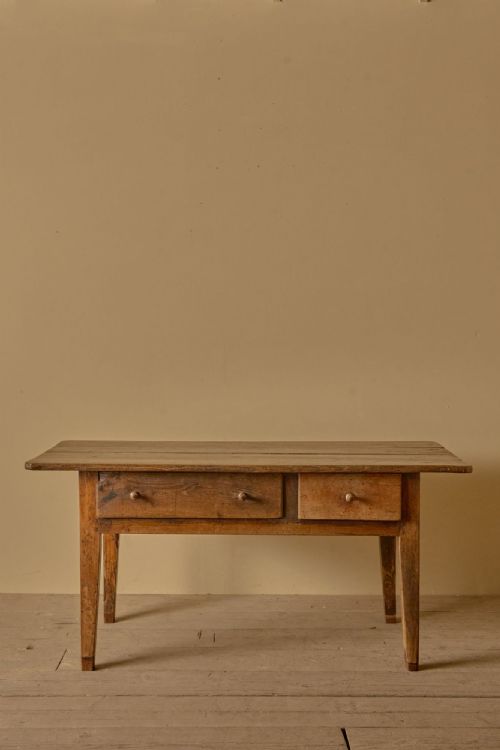
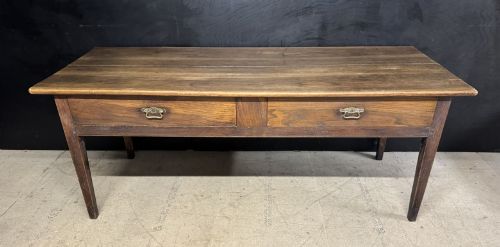
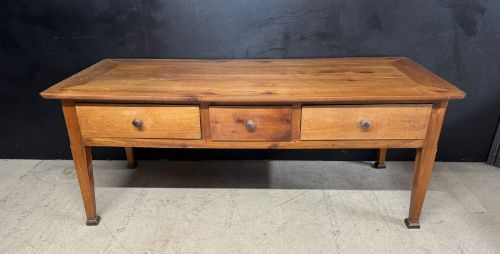
A french drawer console appears across this selection primarily as a side table, serving table, or writing desk equipped with one or more storage drawers. Pieces span the eighteenth and nineteenth centuries, alongside revival pieces from the Victorian era and the early twentieth century.
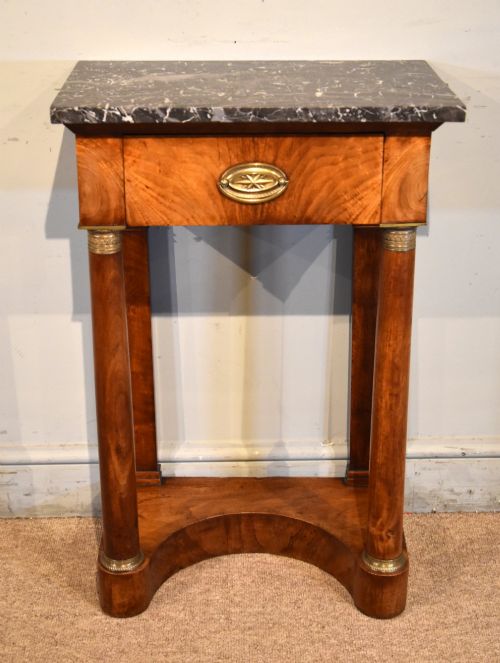
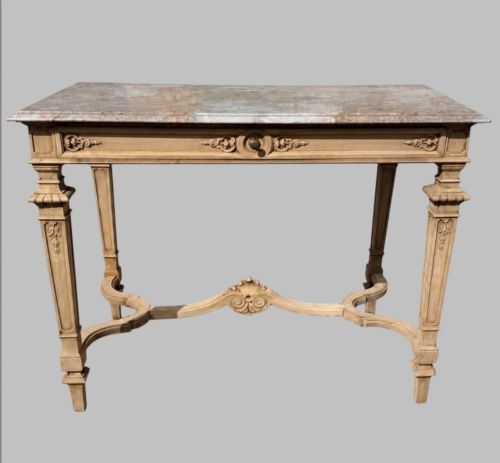
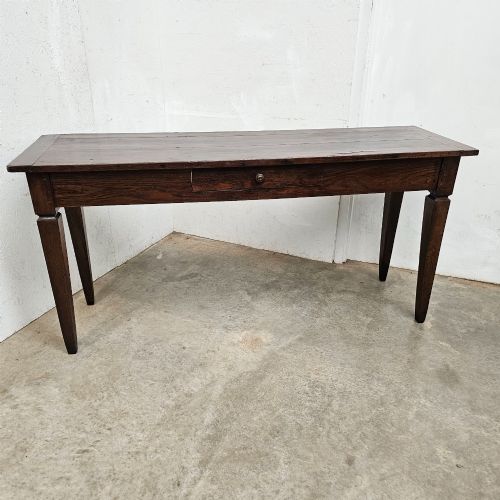
The regional diversity runs from rustic provincial fruitwood and chestnut tables to formal Louis XVI style models featuring marble tops and ormolu mounts. Buyers meet long drapers tables, narrow painted pine boards, and smaller occasional pieces designed for domestic utility.
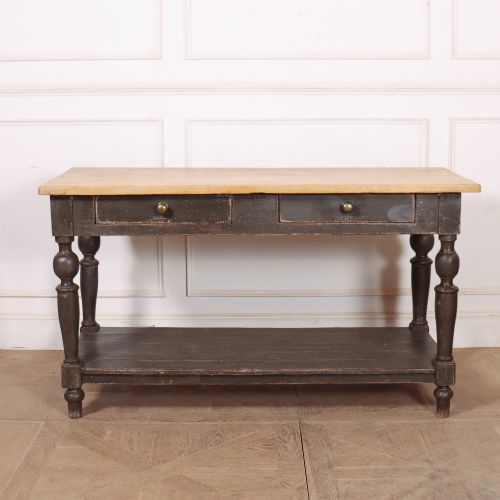
Forms include serpentine fronts, pot-shelf serving tables, and multi-drawer farmhouse consoles originating from specific regions such as Alsace and Bresse. Walnut, cherrywood, and oak dominate the construction, often shaped for narrow hallways or working kitchens.
Materials and Construction
Construction relies heavily on regional timbers like fruitwood, walnut, cherrywood, oak, chestnut, and pine, frequently paired with marble tops or painted finishes. Cabinetmakers utilised solid woods for structural frames and drawer linings, shaping edges with hand planes.
Metal mounts in ormolu and brass provide decorative detail on formal revival pieces, while simpler provincial items depend entirely on timber grain and pegged joints. Painted surfaces use traditional pigments over pine or mixed wood bases, developing natural wear over generations of use.
French Drawer Console Retail Price Guide 2026
Typical asking prices for french drawer console among the pieces listed under this phrase on Sellingantiques today, from the lower quarter to the upper quarter. They describe what is for sale here now, not the wider market.
Periods represented in the selection range from the eighteenth century through the Victorian era up to the 1920s.
Evaluating Quality
Quality rests on the selection of timber, the crispness of hand-carved mouldings, and the integrity of the original construction rather than applied decoration alone. Superior examples display balanced proportions, fine grain figures in walnut or cherrywood, and well-fitted drawer construction.
The presence of period-correct marble tops, original ormolu mounts, or authentic patinated painted finishes distinguishes high-status pieces from utilitarian work tables. Refined joinery and minimal structural alterations elevate an item above standard provincial utility furniture.
The French Drawer Console Glossary
- Ormolu
- Gilded bronze mounts applied to furniture, frequently seen on Louis XVI style and Empire pieces. This technique adds metallic contrast to dark woods.
- Fruitwood
- Timber derived from fruit-bearing trees such as cherry, pear, or apple, commonly used in provincial French cabinetmaking. It yields a warm tone and smooth grain.
- Serpentine
- A furniture front characterised by a wave-like curve, convex in the centre and concave at the sides. This shape requires advanced carpentry skills.
- Drapers Table
- A long, narrow table traditionally utilised for folding cloth, featuring generous length and shallow drawers. These provide ample surface area for narrow rooms.
- Commode
- A low chest of drawers or cabinet on legs, common in French interior design. They serve as decorative storage units in living spaces.
French Drawer Console: Frequently Asked Questions
What rooms suit a french drawer console?
These tables fit narrow hallways, entryways, and reception rooms where floor space is restricted but surface area is required. Their shallow depths allow placement behind sofas or along corridors without blocking movement.
Larger versions function effectively as sideboards in dining areas or as writing desks in studies, combining practical drawer storage with display space.
How do I distinguish eighteenth-century pieces from later revivals?
Examination of construction marks, timber shrinkage, and hand-cut joinery reveals the age of a piece. Eighteenth-century examples display hand-planed surfaces and timber specific to regional workshops.
Later Victorian and twentieth-century revivals often utilise standardised fixings and machine-cut elements while copying earlier Louis XVI or provincial styles.
Were these tables used in kitchens?
Many provincial tables served as kitchen prep tables, work benches, or serving surfaces for food preparation. Sturdy fruitwood and oak constructions with deep drawers accommodated culinary utensils and daily domestic tasks.
Cleaned and waxed over decades, these tables now transition easily into modern living spaces as decorative consoles.
What is the difference between a console and a drapers table?
A console table is typically designed to stand flat against a wall, sometimes fixed in place, featuring decorative legs and a finished front. Drapers tables are elongated, utilitarian work tables with simple rectangular frames and shallow storage.
While consoles often include marble tops and fine veneers, drapers tables rely on honest pine, oak, or fruitwood construction.