



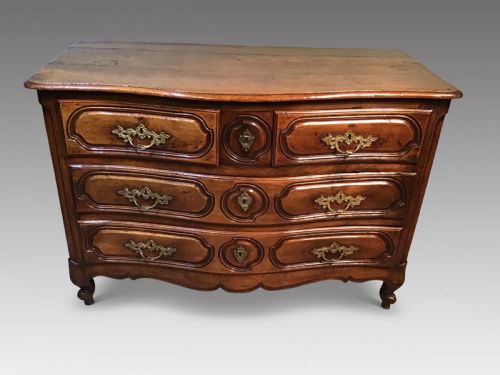
French Curved Front Commode
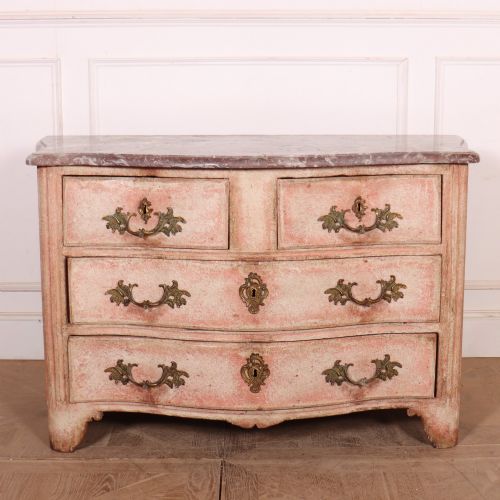
These pieces of french curved front commode offer sweeping profiles and fitted marble tops that bring immediate warmth to any bedroom or hallway.
French Curved Front Commode
A french curved front commode is a substantial storage piece defined by its contoured facade and European origin, serving as both a functional chest of drawers and a focal point. Buyers seeking this phrase encounter items spanning the eighteenth, nineteenth, and early twentieth centuries, reflecting diverse regional tastes from provincial workshops to grander urban centres.
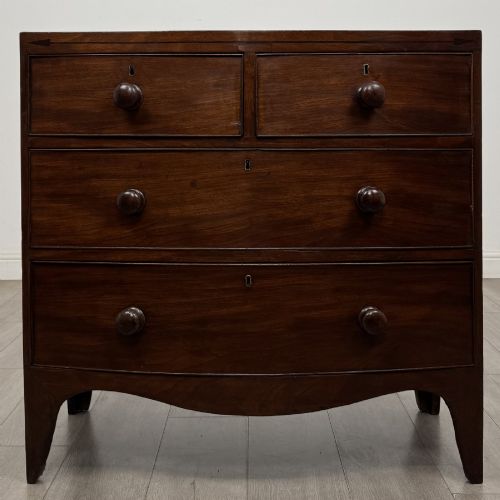
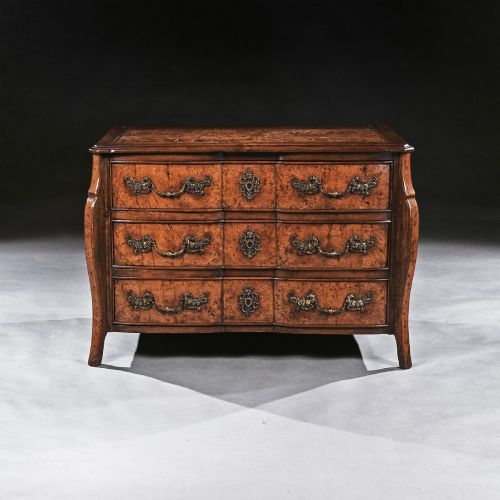
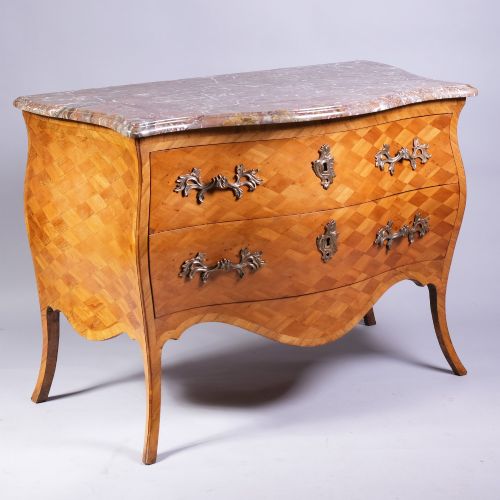
The dominant forms on this page include serpentine chests of drawers and bombe commodes, alongside variations described as sideboards or inlaid marble top cabinets. These pieces utilise woods such as walnut, burr walnut, fruitwood, and mahogany, frequently paired with heavy stone tops.
Originating across different eras, these items range from eighteenth-century provincial pieces to later revival pieces from the nineteenth and early twentieth centuries. Each version displays distinct regional characteristics, whether through simple shaped drawer fronts or elaborate marquetry patterns.
How they were made
Construction relies upon traditional cabinetmaking methods where native and exotic timbers are applied over robust structural carcases to achieve complex swelling shapes. Cabinetmakers shaped solid woods and veneers into serpentine and bombe contours, requiring precise hand-joinery to maintain stability across curved surfaces.
Surfaces are frequently elevated by the integration of marble tops, cast brass or ormolu mounts, and intricate marquetry or inlay work. Metal mounts reinforce corners and frame handles, while contrasting veneers create geometric or pictorial designs across the drawer fronts.
French Curved Front Commode Retail Price Guide 2026
Typical asking prices for french curved front commode among the pieces listed under this phrase on Sellingantiques today, from the lower quarter to the upper quarter. They describe what is for sale here now, not the wider market.
Materials appearing across these chests include brass, bronze, and ormolu mounts, paired frequently with marble tops and marquetry inlay.
What varies in quality
Quality in a french curved front commode is determined by the precision of the timber shaping and the crispness of the applied bronze, brass, or ormolu mounts. Finer examples display seamless veneer matching across difficult curved expanses, whereas lesser pieces show simpler construction and heavier, less refined hardware.
The selection of materials also dictates the tier of the piece, with figured burr walnut and rich marquetry sitting alongside more restrained mahogany and fruitwood versions. Furthermore, the thickness and quality of the fitted marble top contribute significantly to the overall substance and visual weight of the item.
The French Curved Front Commode Glossary
- Serpentine
- A furniture front characterised by a central convex curve flanked by two concave curves, creating a gentle undulating shape. This contour requires skilled woodworking to ensure smooth operation of the drawers.
- Bombe
- A swollen or bulging outward profile typical of continental furniture design. This shape demands complex shaping of both the wooden frame and the drawers behind it.
- Ormolu
- Gilded bronze ornamentation applied to furniture, popular in high-end cabinetmaking. These metal mounts protect corners and add decorative contrast to the timber surface.
- Marquetry
- The art of applying pieces of veneer to a structure to form decorative patterns and pictures. Craftsmen cut different coloured woods to fit together tightly before mounting them to the carcase.
- Provincial
- Denoting regional or country-made furniture that interprets metropolitan styles with simpler local materials and techniques. These items often possess a robust charm distinct from court-commissioned work.
French Curved Front Commode: Frequently Asked Questions
What is a french curved front commode?
A french curved front commode is a decorative storage chest featuring a bowed, serpentine, or bombe facade originating from continental Europe. These pieces typically include fitted stone or marble tops and multiple drawer tiers.
They function primarily as statement furniture in living spaces, hallways, or bedrooms, offering surface display space alongside enclosed storage.
How do I style a commode at home?
Placing a commode against a clear wall allows its curved silhouette and timber grain to act as a visual anchor in the room. A lamp or decorative mirror hung above complements the proportions of the marble top.
Because these pieces have finished fronts and distinctive hardware, they require minimal additional adornment to look settled in a traditional or eclectic interior.
How do I distinguish eighteenth and nineteenth century pieces?
Eighteenth-century examples often display hand-cut joinery and proportions specific to regional workshops like those in Provence. Later nineteenth-century revival items frequently incorporate heavier ormolu mounts and denser burr walnut veneers.
Examining the interior drawer construction and the cut of the timber helps reveal the period in which the cabinet was assembled.
Are these commodes suitable for everyday storage?
These chests provide deep drawers designed originally to hold clothing, linens, or household goods. The sturdy wood construction handles regular daily use when drawers are pulled evenly.
Care should be taken with the polished timber surfaces and marble tops to prevent scratching or staining from moisture during daily placement of objects.