


French Crystal Wall Lights
French crystal wall lights bring a refined illumination to interiors through gilded metal frameworks and cascading glass drops.
French Crystal Wall Lights
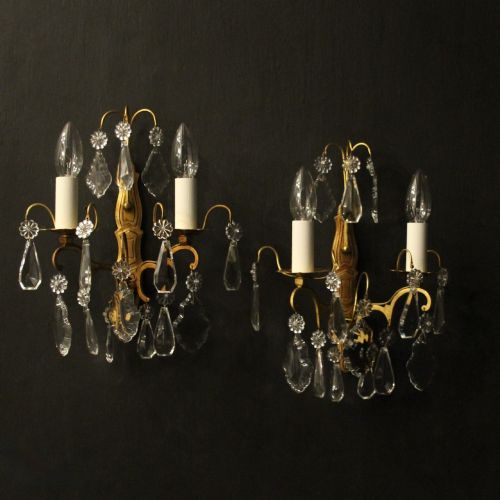
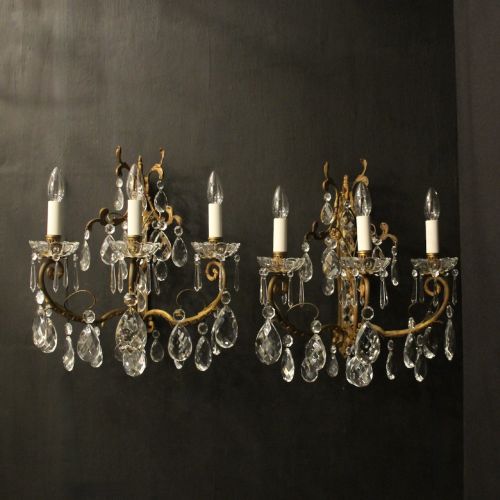
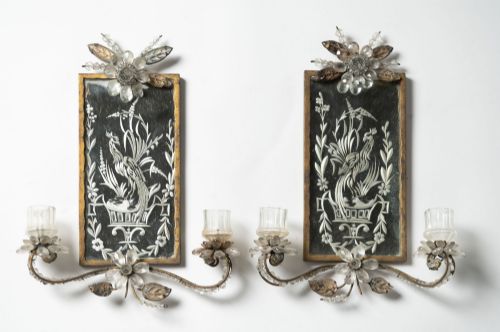
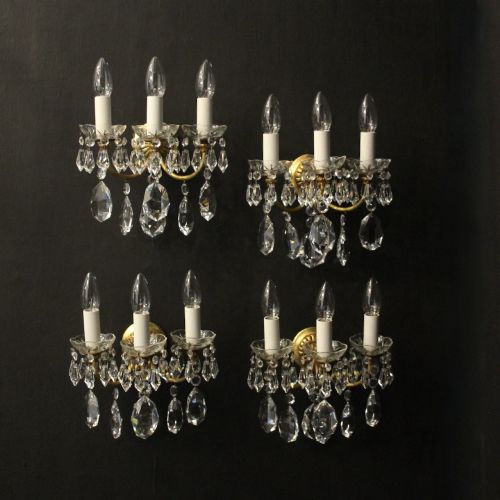
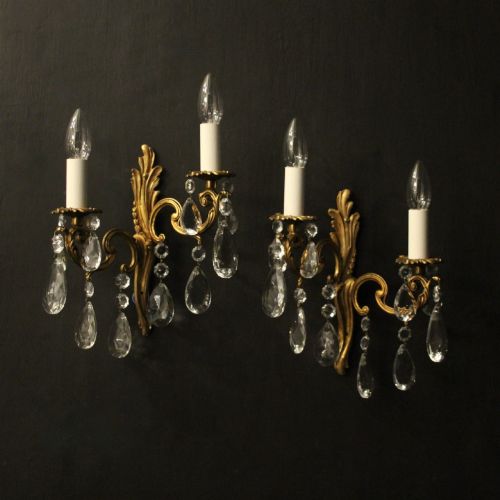
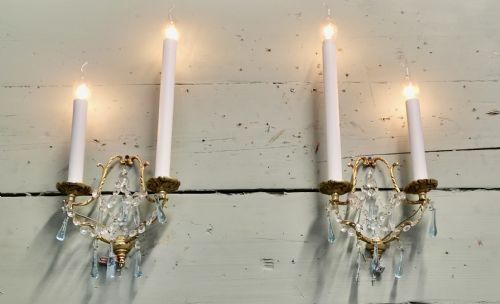
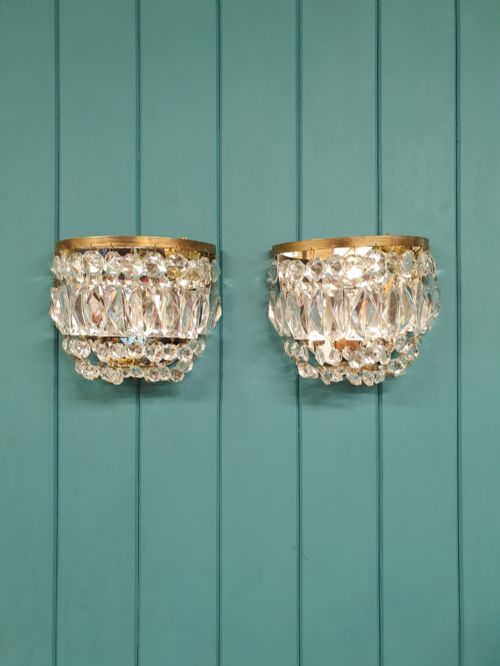
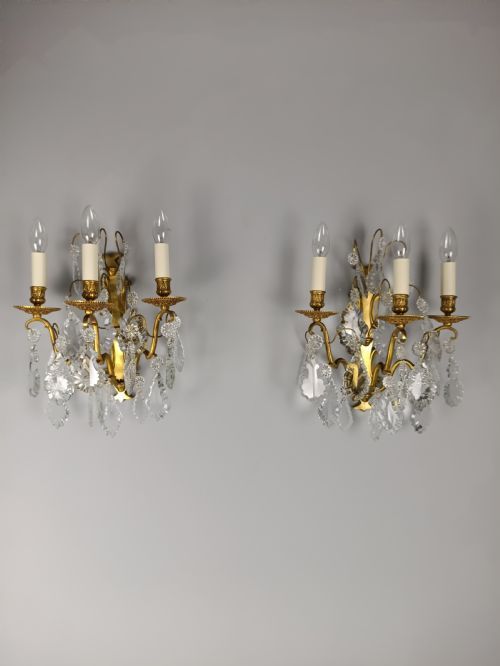
French crystal wall lights encompass decorative lighting fixtures designed to be mounted directly onto interior walls, drawing upon traditional styles such as Rococo, Neoclassical and Baroque. These fixtures frequently appear as pairs or larger sets featuring single, twin, or triple arms designed to hold candles or electric bulbs.
Buyers seeking French crystal wall lights will find that twin and triple-arm configurations dominate the selection, heavily supported by 1920s and 1930s manufacturing alongside earlier 19th-century examples. The forms range from standard girandoles and sconces to elaborate wall-mounted chandeliers and tent-and-bag designs.
Materials and construction
The foundation of these fixtures relies heavily on cast or worked metals, specifically brass, gilt bronze, toleware and wrought iron, which provide structural integrity and decorative backplates. Gilt finishes and silver gilding are frequently applied to enhance the reflective quality of the metal frames.
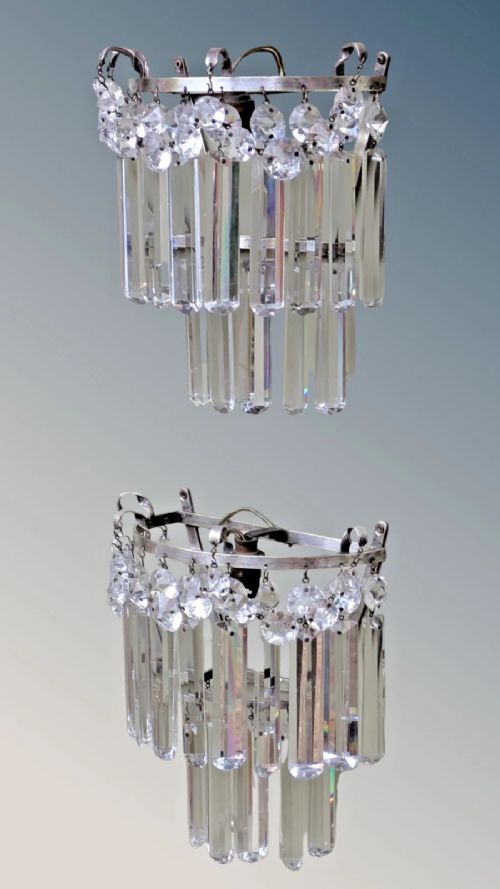
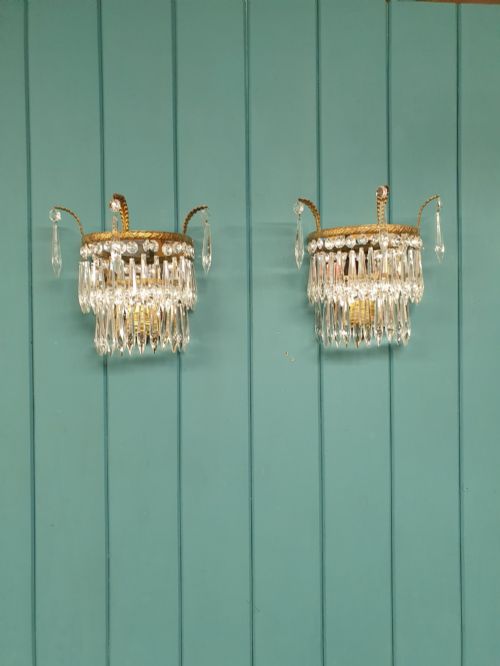
Cut crystal and glass elements are suspended from the metal armatures using wire or pins, catching and refracting the light. Lustres, spear drops and beads are assembled in tent configurations or around central rings to create the characteristic sparkle.
French Crystal Wall Lights Retail Price Guide 2026
Typical asking prices for french crystal wall lights among the pieces listed under this phrase on Sellingantiques today, from the lower quarter to the upper quarter. They describe what is for sale here now, not the wider market.
Listings feature periods spanning from the 1850s through to the 1930s, constructed in brass, gilt bronze, wrought iron and crystal.
Assessing quality and craftsmanship
Quality in these lighting fixtures is rooted in the depth of the metal casting and the precision of the crystal cutting. Finer examples display crisp relief work on the bronze or brass mounts, whilst lesser pieces rely on simpler stamped or less defined metal components.
The integration of the crystal drops also distinguishes the tier of execution, where hand-cut glass with sharp facets creates superior light dispersion compared to machine-pressed alternatives. The weight and rigidity of the supporting arms further indicate the standard of original workshop production.
Maison Baguès·Baccarat
The French Crystal Wall Lights Glossary
- Girandole
- A decorative wall-mounted branched candlestick or light fixture designed with reflective elements. These pieces frequently feature mirrors or crystal drops to amplify the ambient light.
- Sconce
- A wall-mounted lighting fixture affixed directly to a vertical surface without touching the floor or ceiling. They typically project outwards on arms to hold candles or electric lamps.
- Ormolu
- Gilding technique involving the application of a finely ground high-carat gold-mercury amalgam to bronze. This treatment imparts a rich, warm golden lustre to the metal mounts.
- Toleware
- Painted or lacquered sheet metal items produced in imitation of Asian lacquerware. These pieces bring colourful painted surfaces to wall light backplates and arms.
- Montgolfier
- A style of crystal wall light shaped in an upward-tapering dome reminiscent of early hot air balloons. They use concentric rings of glass drops suspended from a central crown.
French Crystal Wall Lights: Frequently Asked Questions
How were these wall lights originally used?
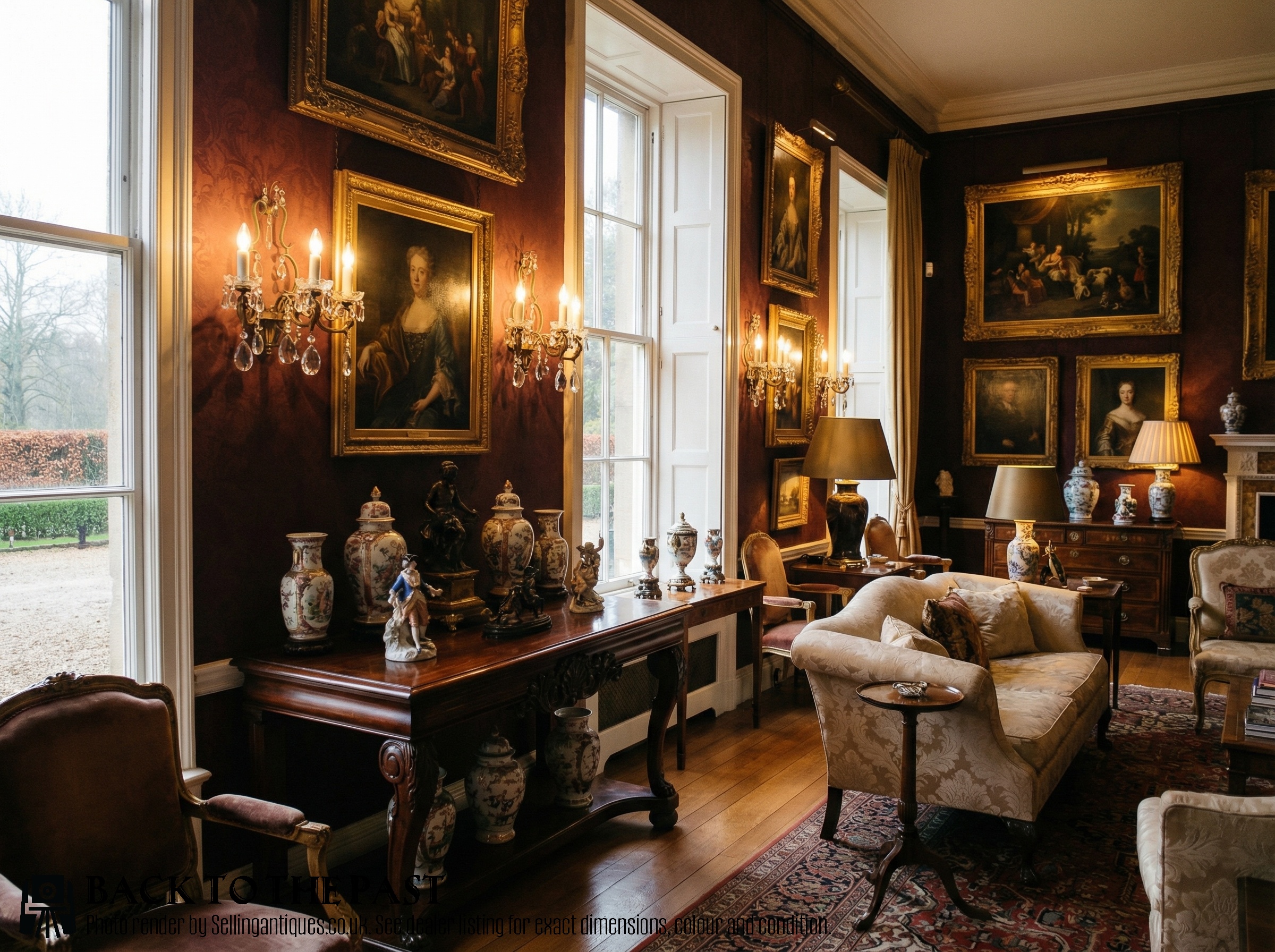
These fixtures were placed in reception rooms and hallways to supplement candle illumination by reflecting light off gilt surfaces and glass drops.
Positioned strategically on walls or flanking mirrors, they maximised the available light within grand domestic interiors.
Are antique wall lights wired for electricity?
Many surviving examples have been rewired for modern electrical standards to allow safe domestic use today.
Original candle-holding sockets are frequently converted to conceal wiring whilst retaining the traditional appearance of the arms.
How do I distinguish 19th-century pieces from 1920s examples?
Nineteenth-century pieces often display heavier cast bronze mounts and hand-finished components tied to specific revivalist movements.
Fixtures from the 1920s and 1930s tend to incorporate stylised Edwardian or art-influenced metalwork alongside standard cut crystal drops.