


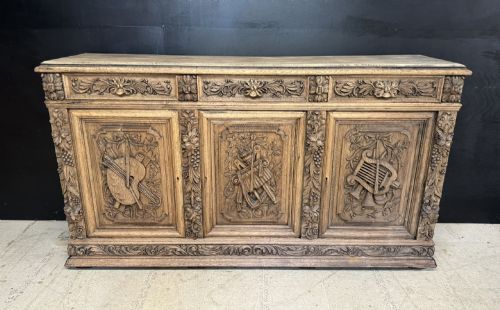
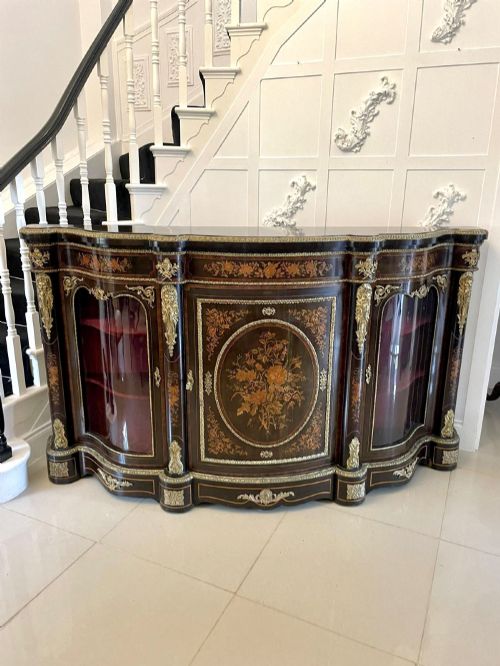
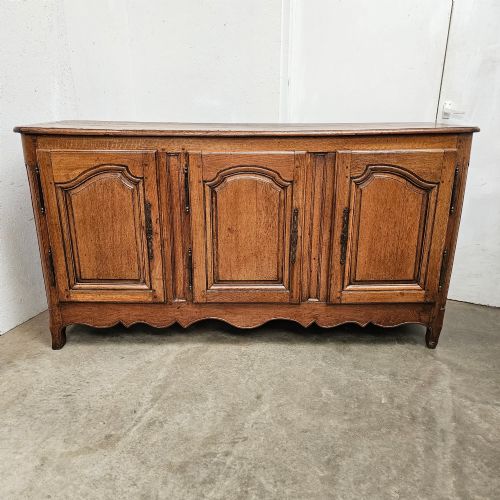
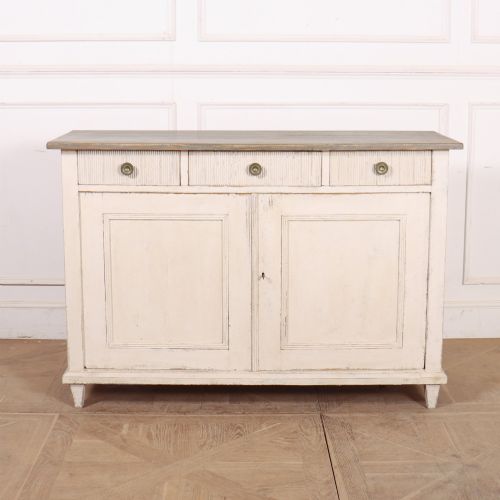
French Credenza Sideboard
A french credenza sideboard brings monumental scale and precise marquetry to a room, offering display space and deep storage in a single statement piece.
French Credenza Sideboard
A french credenza sideboard combines the low profile of a display cabinet with the substantial capacity of a large serving piece. These forms emerge primarily from the nineteenth century, drawing heavily on earlier court aesthetics.
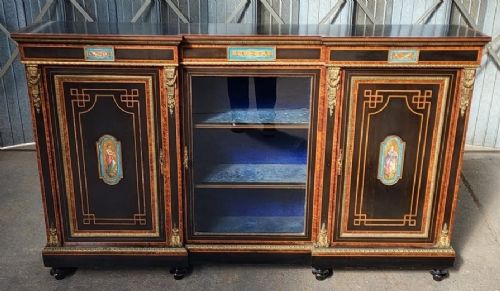
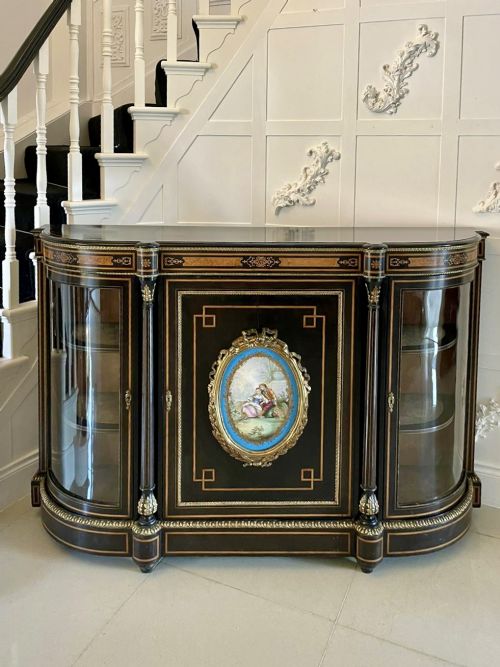
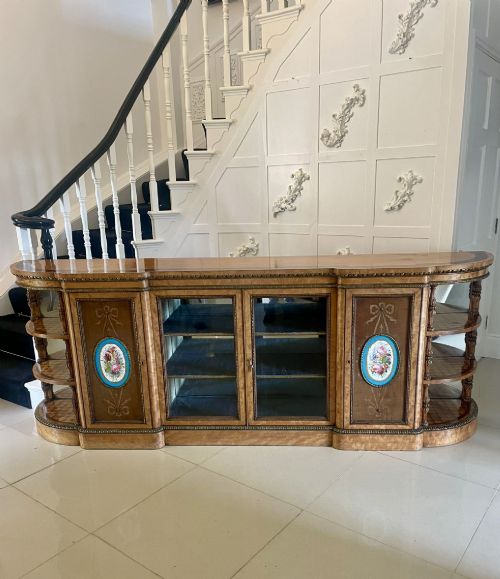
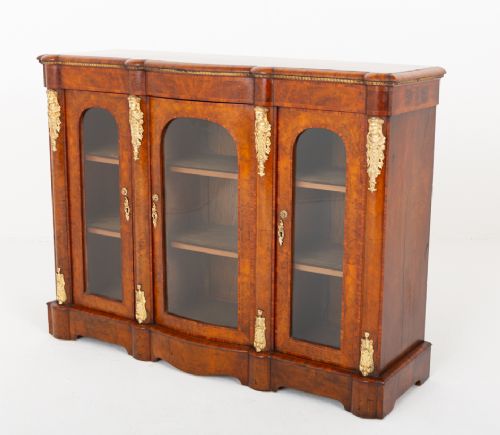
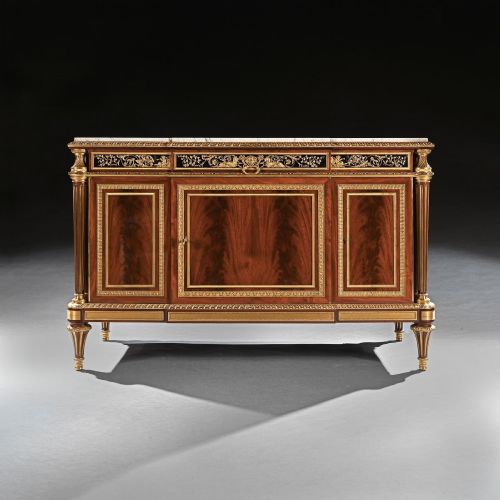
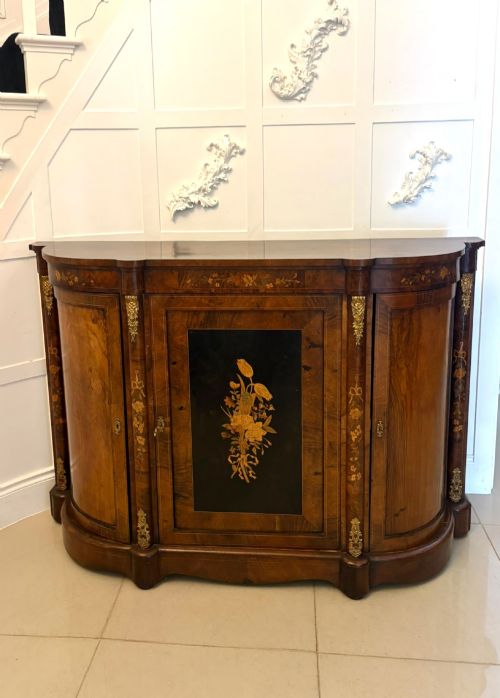
Nineteenth century examples in burr walnut, ebonised wood, and amboyna dominate the selections available. Makers constructed these cabinets with serpentine fronts, inset marble tops, and glazed side compartments designed for porcelain and silver.
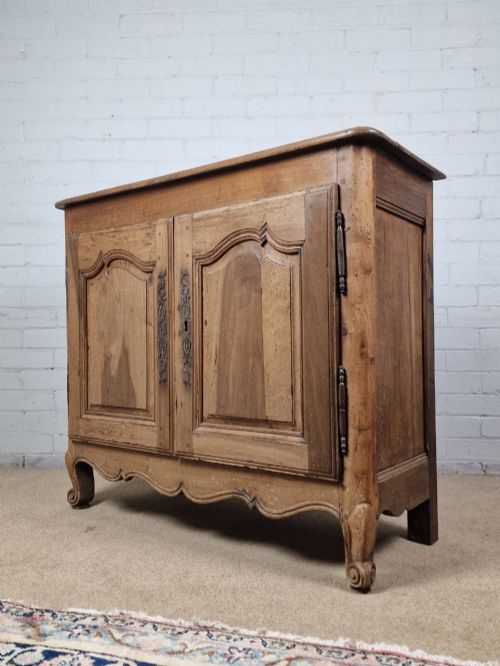
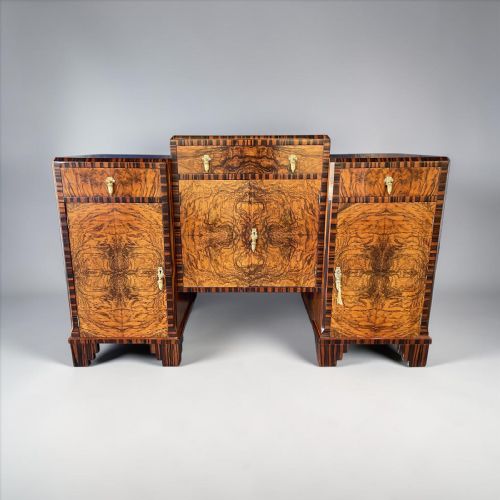
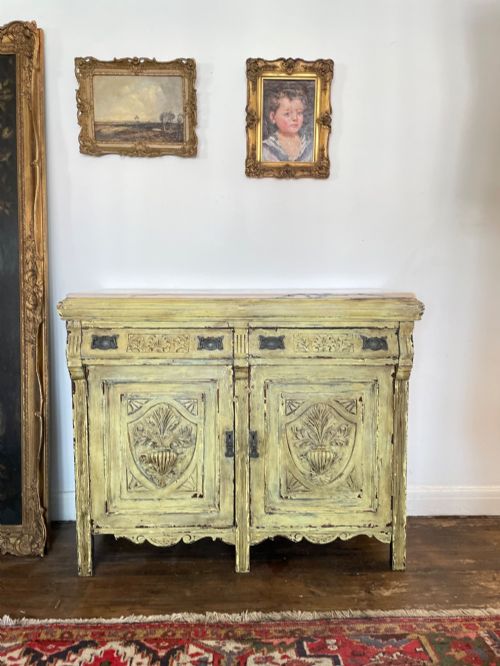
Mid twentieth century pieces introduce geometric art deco lines in oak, palisander, and parchment. Buyers also encounter provincial oak enfilades and painted buffets originating from regional French workshops.
How they were made
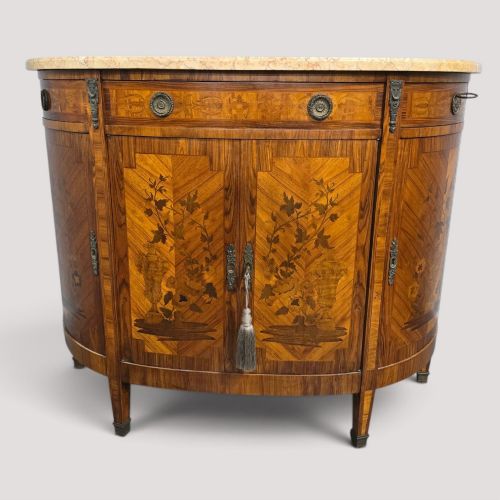
Cabinet makers built carcasses from dense native timbers like oak or walnut, applying veneers of burr walnut, kingwood, rosewood, and amboyna to curved and serpentine surfaces. Marquetry panels incorporate floral motifs and delicate banding using contrasting fruitwoods.
Gilded bronze mounts, known as ormolu, frame panels, corners, and plinths to accentuate the architectural lines. Heavy slab marble tops, cut in white, pink, or dark tones, provide a durable and cool surface finish.
Boulle work appears on ebonised grounds, embedding brass and tortoiseshell into elaborate scrollwork patterns. Joinery relies on traditional mortise and tenon frames combined with hand-cut dovetails for internal drawers.
One unexpected workshop offering arrived straight from a rural barn find complete with a pink marble top.
What varies in quality
The precision of the marquetry and the crispness of the cast ormolu mounts dictate the upper tier of execution. Finer cabinets display hand-chiselled detailing on the bronze mounts rather than uniform machine casting.
Choice of veneer determines visual depth, with dense burr walnut and balanced amboyna commanding attention over plainer timbers. The weight and thickness of the fitted marble top also signal workshop ambition.
Internal secondary timbers and the integrity of the door hinges reveal the original standard of construction. Superior pieces retain original fire-gilt finishes on the metalwork and uninterrupted veneer fields across curved serpentine doors.
Henry Dasson·Weisweiler·Gillows·Maison Gagneau·Charles Dudouyt
The French Credenza Sideboard Glossary
- Credenza
- A low cabinet originally used for displaying fine dishes and storing food. In nineteenth century reception rooms, it evolved into a glazed centrepiece for ornamental objects.
- Ormolu
- Gilded bronze mounts applied to furniture edges, corners, and feet. This decorative hardware protects vulnerable corners and adds high contrast to dark woods.
- Marquetry
- Patterns formed by fitting thin pieces of wood veneer onto a structural carcase. Makers used contrasting timbers like boxwood and fruitwoods to achieve pictorial depth.
- Boulle
- A technique of inlaying brass and tortoiseshell developed by master cabinet makers. The resulting patterns catch light across dark ebonised wooden surfaces.
- Enfilade
- A long sideboard or buffet featuring a row of three or more doors. These pieces originated in grand French dining rooms for serving large meals.
French Credenza Sideboard: Frequently Asked Questions
How do you style a french credenza sideboard today?
Position the piece against a large wall in a dining room or hallway where its horizontal proportions can command the space. Use the marble top to hold heavy lamps, bronze figures, or ceramic bowls without crowding the surface.
Keep surrounding furniture simple to let the intricate marquetry or ormolu mounts remain the visual focus of the room.
Are marble tops original to these sideboards?
Most nineteenth century credenzas and enfilades were manufactured with fitted marble tops designed to withstand heavy use and serving tasks. These stone slabs range from simple white marble to coloured varieties with distinct veining.
Replacement marble is sometimes fitted during restoration, though the thickness and edge profile usually indicate original period manufacture.
How do I identify a nineteenth century piece?
Look for dense secondary timbers such as oak inside drawers, hand-cut dovetail joints, and traditional veneer thicknesses. Stylistic cues include the use of burr walnut, amboyna, and cast ormolu mounts characteristic of the period.
Signatures or stamps on the bronze mounts or timber frames occasionally point directly to the workshop of origin.