




French Country Trumeau
These French country trumeau mirrors bring provincial charm and painted elegance to a room.
French Country Trumeau
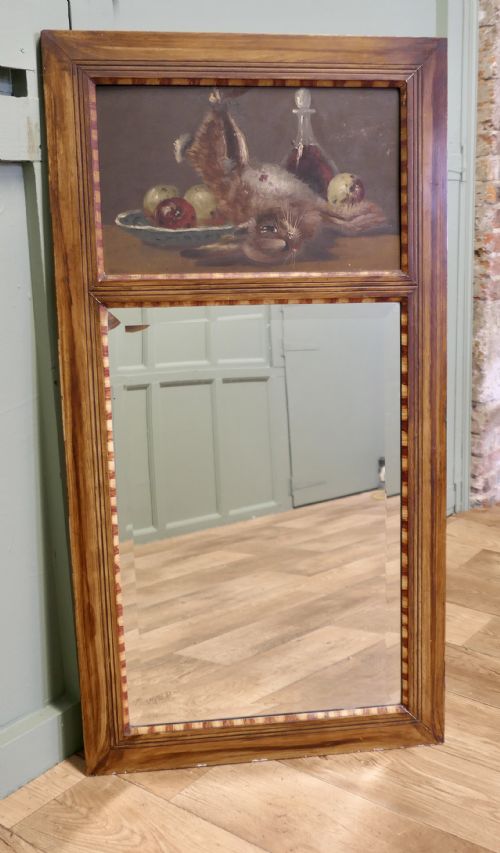
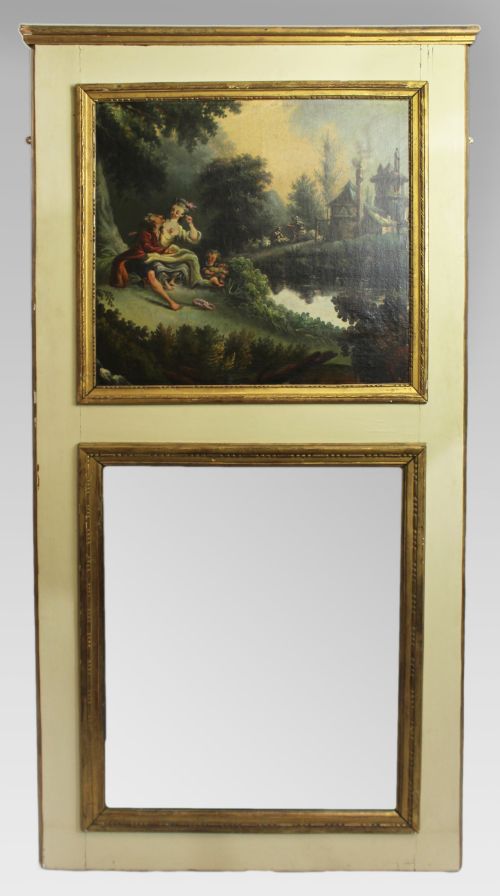
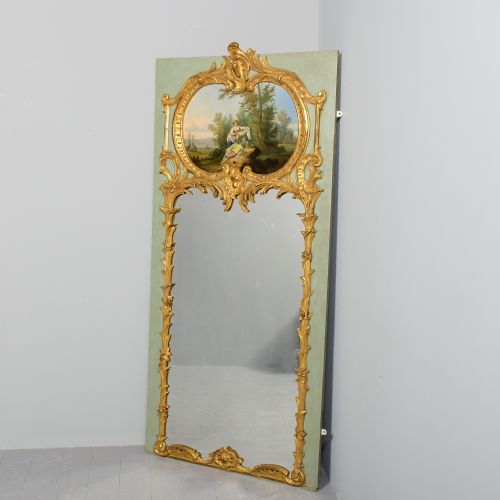
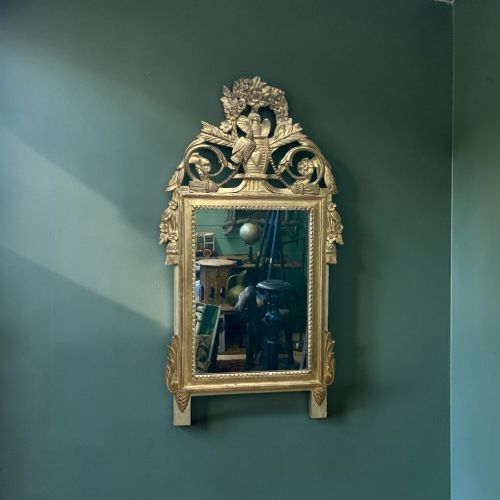
A french country trumeau combines a traditional wall mirror with an integrated decorative panel, frequently featuring an oil painting or a pastoral scene above the glass. These architectural elements originate from grand interiors but translate comfortably into rustic and provincial settings.
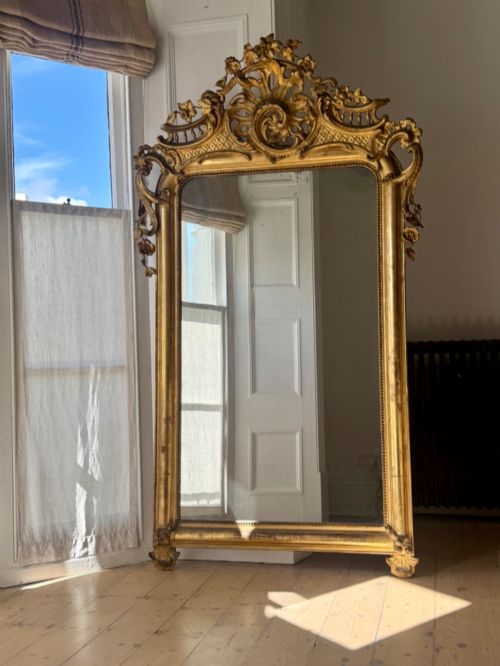
The selections span the eighteenth and nineteenth centuries, taking forms such as pier mirrors, overmantle mirrors, and wall mirrors. Many examples incorporate shaped wooden frames finished with paint, gesso, or giltwood.
How They Were Made
The construction relies heavily on carved wood and gesso frames, often finished with paint or gilt details to highlight the architectural moulding. Artisans integrated oil paintings on canvas or panels directly into the upper section of the framework above the glass.
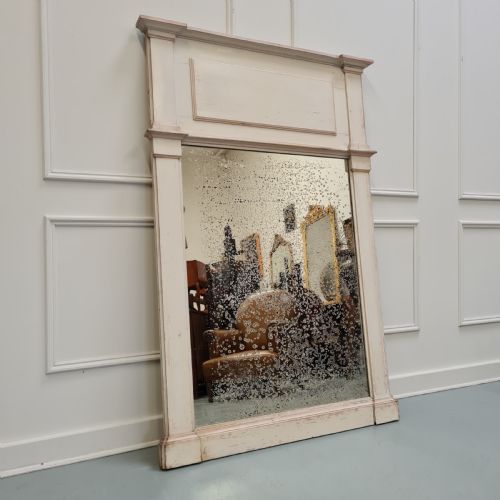
Reflecting period techniques, the glass used is often original mercury glass, which exhibits characteristic spots and ageing. The combination of oil paint, wood, and silvered glass required distinct joinery and framing skills particular to French workshops.
The listings span from the 18th century through to 1900, incorporating materials such as mercury glass, giltwood, gesso, and oil on canvas.
What Varies in Quality
Distinction in quality rests upon the fidelity and execution of the integrated oil painting and the crispness of the carved woodwork and gesso mouldings. Finer examples retain their original painted surfaces and harmonise the proportions between the upper decorative panel and the mirror glass below.
Subtleties in the depth of the carving and the preservation of the original mercury glass separate standard decorative items from superior period pieces.
The French Country Trumeau Glossary
- Trumeau
- A decorative wall mirror featuring an upper panel, often containing an oil painting or carving. This architectural element was originally designed to fit the space between windows.
- Mercury glass
- An early type of silvered glass created by pouring a mercury amalgam between double-walled blown glass. It creates a warm, mottled reflection that differs from modern silvering.
- Gesso
- A plaster-like mixture applied to wood frames to create a smooth surface for gilding or painting. Skilled application allows for sharp, detailed relief mouldings.
- Pier mirror
- A tall mirror specifically built to hang on the narrow wall space between two windows. These pieces often feature integrated consoles or narrow vertical proportions.
- Giltwood
- Timber that has been decorated with a thin layer of gold leaf. It provides a luminous finish that catches ambient room light.
French Country Trumeau: Frequently Asked Questions
Where should I hang a trumeau mirror?
These mirrors suit placement above a fireplace mantelpiece or on a prominent living room wall where their height can be fully appreciated. Their vertical proportions also make them effective between large windows.
Ensure the wall fixings can support the substantial weight of the timber and glass construction.
Are the oil paintings original to the mirrors?
Many examples retain their original oil paintings on canvas or panel, integrated directly into the upper section above the glass. These pastoral scenes or decorative subjects were conceived as part of the initial design.
Examining the relationship between the panel and the surrounding frame helps determine the integrity of the piece.
What is mercury glass?
Mercury glass refers to double-walled blown glass silvered with a liquid mercury amalgam during the nineteenth and eighteenth centuries. This process produces a distinctive speckled reflection with dark patches.
It is a key indicator of age and authenticity in period French mirrors.
How do I date an antique trumeau?
Dating relies on observing the framing styles, such as Louis XV rococo curves or Louis XVI neoclassical straight lines, alongside the composition of the wood and gesso. Eighteenth-century examples typically display hand-carved details and earlier paint layers.
Nineteenth-century interpretations often adopt broader country house aesthetics or revival styles.
What is the difference between a pier mirror and an overmantle mirror?
Pier mirrors are traditionally narrow and tall, designed for the wall space between openings or windows. Overmantle mirrors are proportioned specifically to sit horizontally above a fireplace.
Both formats frequently incorporate the decorative upper panel characteristic of trumeaus.