


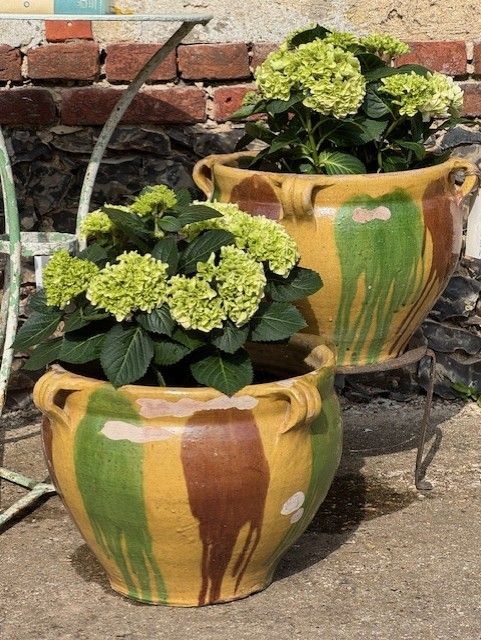


French Country Pottery Jar
These French country pottery jar pieces bring rustic warmth and historic utility to a room, offering authentic provincial charm for daily display.
French Country Pottery Jar
A French country pottery jar encompasses robust utilitarian vessels fashioned for rural life, spanning storage containers like confit pots and oil jugs. Collectors find pieces originating from the eighteenth and nineteenth centuries, reflecting traditional provincial forms.
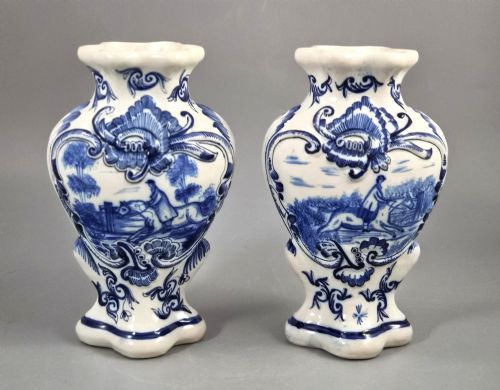
Makers such as Fourmaintraux-Courquin in Desvres produced finer painted faience vases, while anonymous regional potteries supplied the heavy green-glazed and unglazed storage jars essential to domestic life. Buyers encounter everything from tall walnut oil pots to paired provincial vases.
Materials and construction
Potters shaped local clays by hand on a wheel, utilising earthenware and terracotta bodies suited to holding oils, preserves, and vinegars. These porous fabrics required internal or total glazing to render them functional for liquid storage.
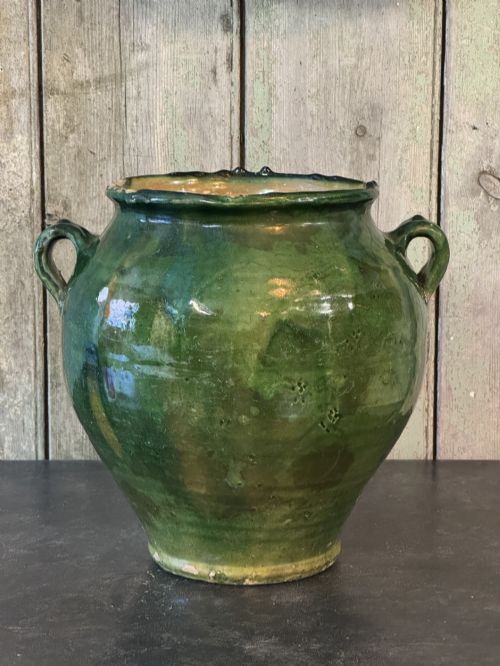
Glazes vary from simple lead-based green applications and salt glazes to tin glazes decorated with polychrome or blue and white pigments. Dribble glaze effects and partial surface coatings reveal the dip-tank and brush methods employed by regional artisans.
French Country Pottery Jar Retail Price Guide 2026
Typical asking prices for french country pottery jar among the pieces listed under this phrase on Sellingantiques today, from the lower quarter to the upper quarter. They describe what is for sale here now, not the wider market.
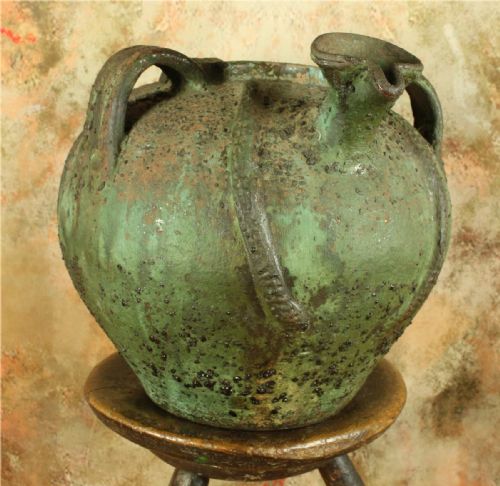
Some historic oil pots required three handles so multiple people could heave the heavy vessel upright when tilting out thick walnut oil.
Assessing quality in provincial ceramics
Quality rests in the heaviness of the thrown body and the rich depth of the glaze, whether a smooth green wash or a complex tin-glazed palette. Heavier, well-balanced throwing demonstrates superior command over large quantities of local clay.
Surface character distinguishes standard utilitarian kitchenware from finer decorative output. Desvres faience pieces show meticulous painted brushwork, whereas confit pots rely on the honest drip and pooling of functional glazes.
Fourmaintraux-Courquin
The French Country Pottery Jar Glossary
- Confit pot
- A traditional French earthenware jar designed for preserving and storing meats or fats. These pots typically feature one or two handles and a partially glazed body.
- Tin-glaze
- A ceramic glaze made by adding tin oxide to a lead glaze, producing an opaque white surface suitable for painting over with polychrome pigments. This technique defines much of traditional European faience.
- Salt glaze
- A vitreous coating formed by throwing common salt into the kiln during high-temperature firing, creating an orange-peel texture on stoneware. This finish provides durable resistance to acids and liquids.
- Earthenware
- Porous pottery fired at lower temperatures, requiring a glaze to hold liquids. It forms the primary body for the majority of rustic provincial storage vessels.
French Country Pottery Jar: Frequently Asked Questions
What were French country jars used for?
These vessels served practical functions in rural households, primarily storing food staples like confit meats, olive oil, and vinegar. Larger pots kept provisions secure in cool cellars or pantries.
Over time, many lost their original utility roles and transitioned into decorative garden planters or interior display pieces.
How do I date an old confit pot?
Dating relies on observing the throwing marks, clay composition, and the consistency of the glaze. Eighteenth-century examples often display heavier, hand-formed asymmetry compared to later nineteenth-century output.
Makers' marks or specific regional glazing traits, such as dribble glazes or full green coverings, also help narrow down the period.
Are these jars waterproof?
Fully glazed interior surfaces on pieces like confit pots and vinegar barrels generally hold water safely. However, porous earthenware bodies without complete interior glazing can slowly seep moisture.
Collectors should test individual pieces before using them to display fresh flowers or holding liquids on sensitive wooden surfaces.
Where should I place these in my home?
Their rustic forms suit kitchens, hallways, and living spaces, either grouped on open shelving or used independently as floor vases. Smaller oil jugs and polychrome pieces work well on tabletops.
In outdoor settings or conservatories, sturdy terracotta and earthenware planters integrate naturally with plants.