




French Country Glass Light
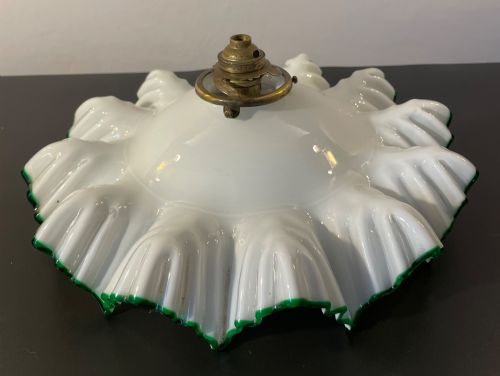
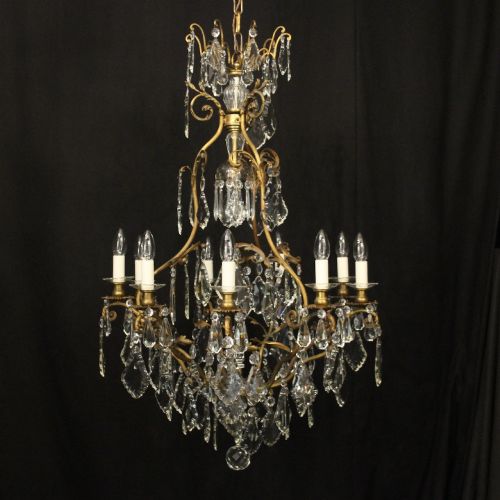
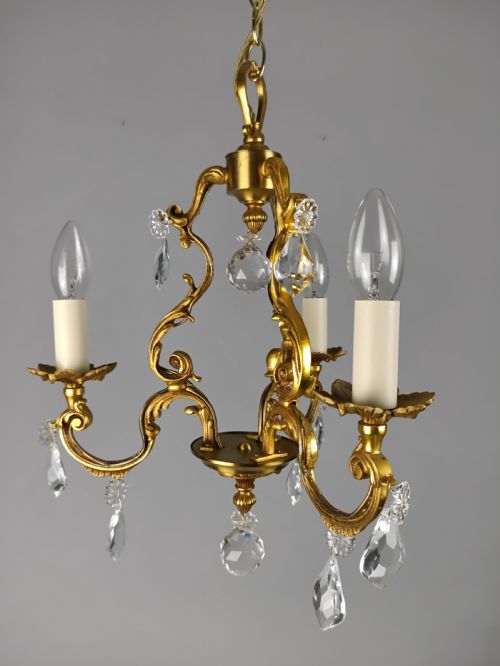
These french country glass light pieces combine brass, crystal and iron in chandeliers, lanterns and lamps that illuminate rooms with provincial character.
French Country Glass Light
A french country glass light brings together domestic illumination and traditional metalwork across forms such as chandeliers, hall lanterns and table lamps. Buyers seek these objects to introduce period atmosphere into living spaces.
The selections here span the nineteenth century through the nineteen-thirties, incorporating styles from French provincial to Napoleon III and Rococo Revival. Most examples on this page date from the early twentieth century and the eighteen-fifties to eighteen-nineties.
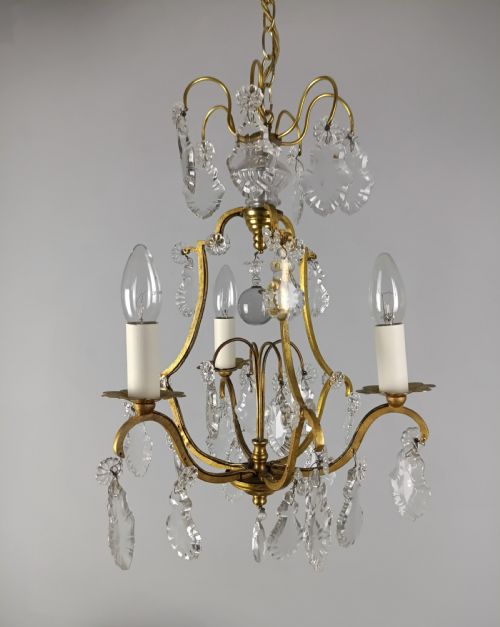
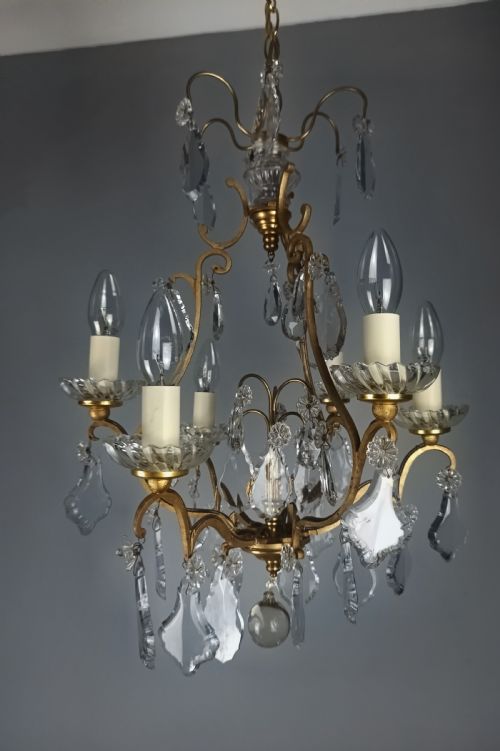
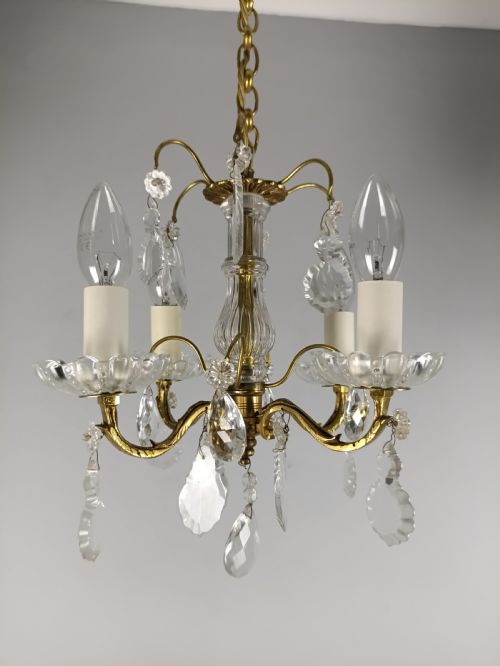
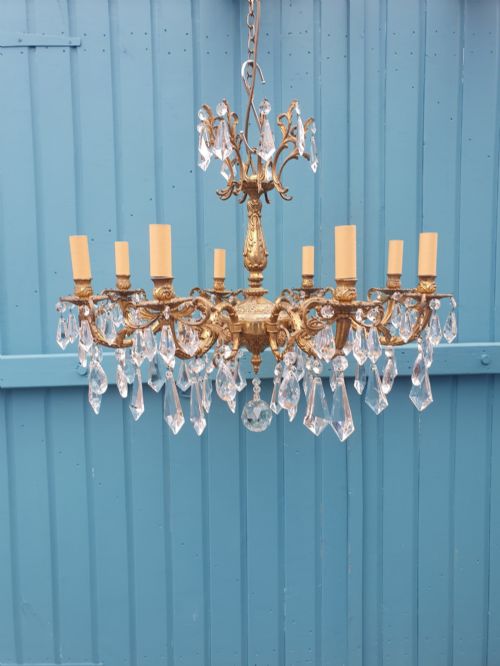
Lighting formats range from multi-arm birdcage chandeliers and convex hall lanterns to glass lampshades and candlesticks. These fixtures utilise materials like gilt brass, wrought iron and cut glass.
Materials and Construction
Metal structures rely on brass, gilt bronze, iron, and tolewear to form the arms and frames of chandeliers and lanterns. These metals are cast, forged or gilded to create durable supports for glass components.
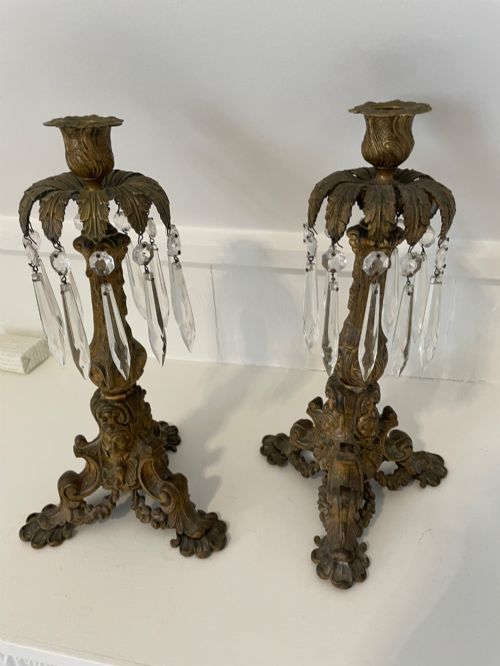
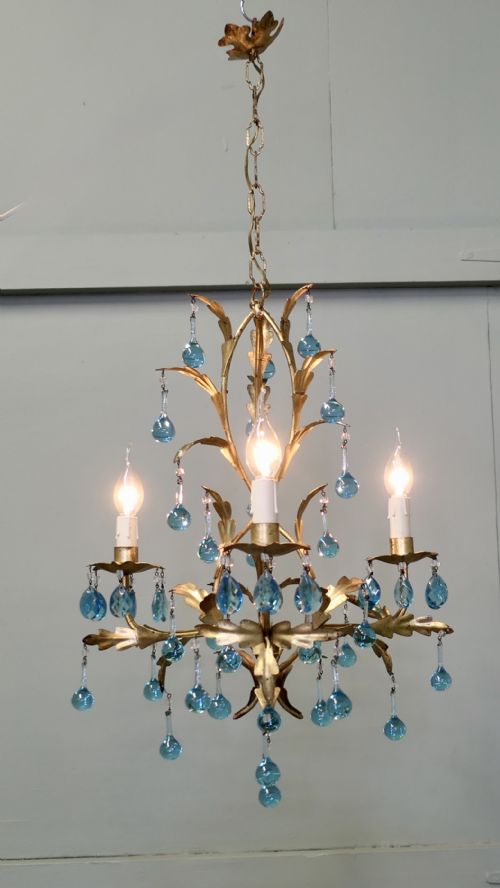
Glass elements include moulded shades, cut glass drops, and decorative fruits such as grapes, apples and pears in amber, mauve, turquoise and green. Crystal components are suspended from metal frames using wire or pins to catch and reflect light.
French Country Glass Light Retail Price Guide 2026
Typical asking prices for french country glass light among the pieces listed under this phrase on Sellingantiques today, from the lower quarter to the upper quarter. They describe what is for sale here now, not the wider market.
Listings feature items from the nineteenth century, eighteen-eighties, eighteen-nineties, nineteen-twenties and nineteen-thirties.
Assessing Quality in Period Lighting
The standard of a french country glass light rests on the weight of its metal framework and the clarity of its glass or crystal drops. Heavier brass, bronze and iron castings provide structural stability and finer detailing.
Quality also shows in the complexity of the design, such as multi-arm configurations, birdcage frames and specialised glass drops like coloured fruit clusters. Finer pieces demonstrate careful integration between metal mounts and glass elements.
The French Country Glass Light Glossary
- Birdcage chandelier
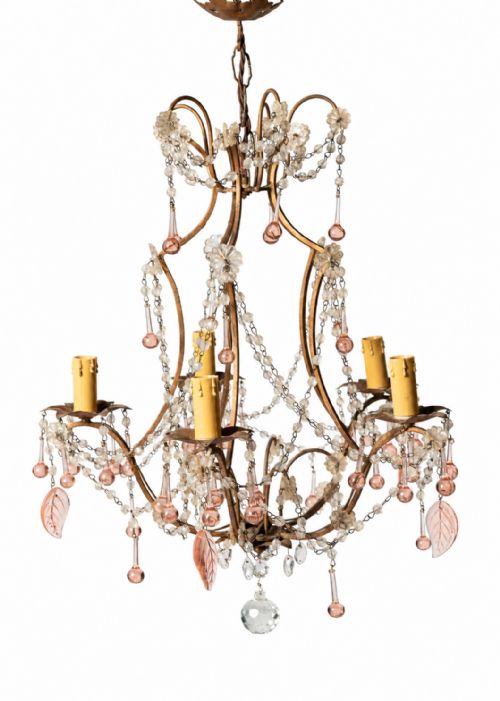
- A chandelier style featuring a curved metal framework resembling a birdcage, enclosed by crystal drops and central lights.
- Ormolu
- Gilded brass or bronze mounts applied to decorative objects and lighting fixtures during the nineteenth century.
- Hall lantern
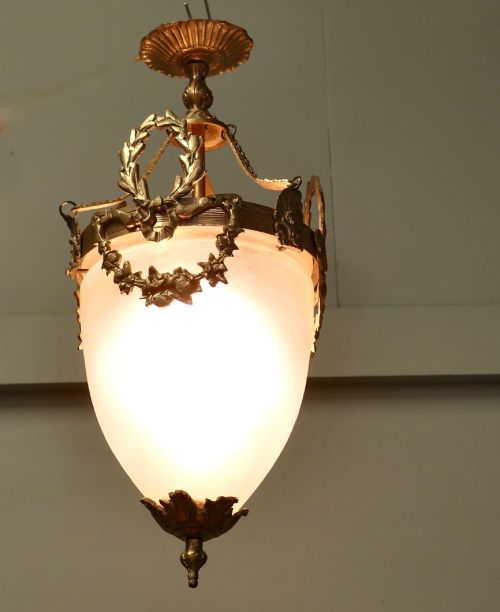
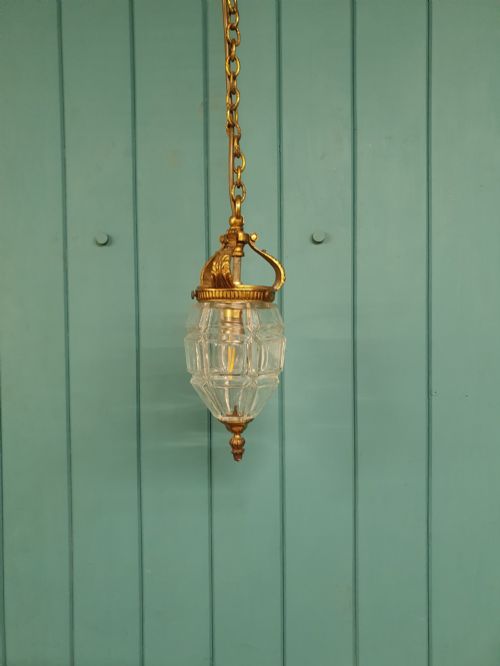
- An enclosed hanging light designed for corridors or entranceways, often featuring convex glass panels within a brass or iron frame.
- Tolewear
- Painted or lacquered sheet metal used for decorative components on lighting fixtures.
- Cut glass
- Glass that has been shaped and faceted by grinding and polishing to increase light refraction.
French Country Glass Light: Frequently Asked Questions
What rooms suit a hall lantern?
Enclosed hall lanterns provide focused overhead illumination suited to narrow entranceways, corridors and stairwells where a large chandelier would obstruct passage.
Their compact brass or iron frames contain light while directing it outward through glass panels.
How do cage chandeliers differ?
Cage chandeliers utilise a distinctive curved metal skeleton wrapped in crystal strands and drops, creating a rounded silhouette that distinguishes them from standard arm chandeliers.
This framework supports multiple internal lights and distributes weight evenly across the fixture.
What periods do these lights cover?
The lighting fixtures span from the mid-nineteenth century through the nineteen-thirties, encompassing styles like Napoleon III and French provincial.
Earlier pieces often feature heavy bronze or iron work, while nineteen-twenties and thirties examples incorporate coloured crystal fruits and moulded glass.
How are coloured crystal fruits used?
Coloured glass grapes, apples and pears are hung as decorative clusters from the arms and centres of nineteenth and twentieth-century chandeliers.
These elements add visual variety and colour when light passes through the tinted glass.