


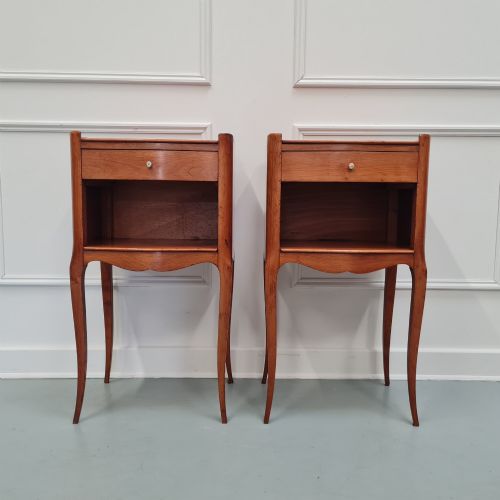
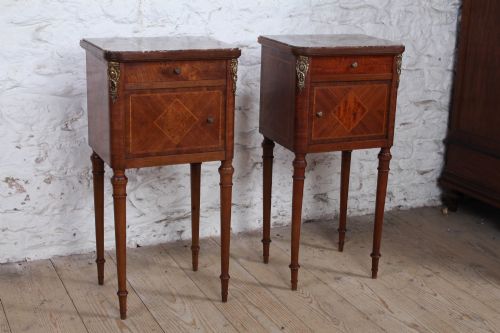


French Country Bedsides
French country bedsides bring practical bedside storage and provincial character to a bedroom, combining timber frames with marble tops.
French Country Bedsides
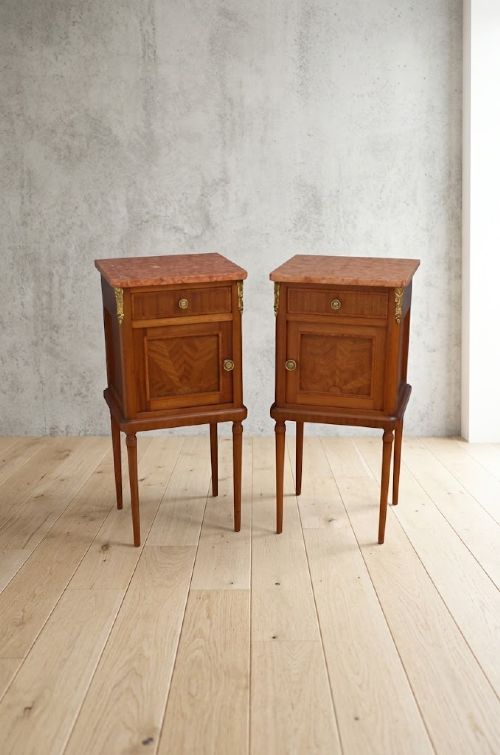
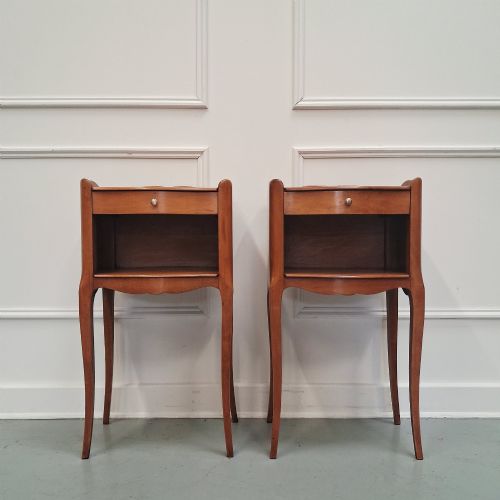
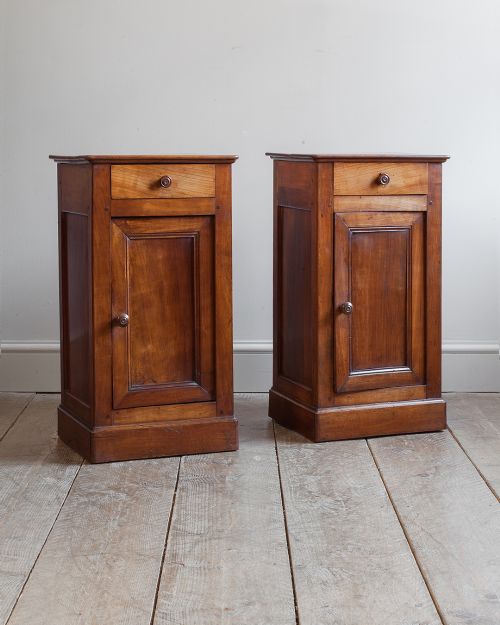
French country bedsides comprise compact cabinets, cupboards and tables designed to sit beside a bed for night-time storage. The forms on this page span the nineteenth century and the early decades of the twentieth century, reflecting provincial and chateau tastes.
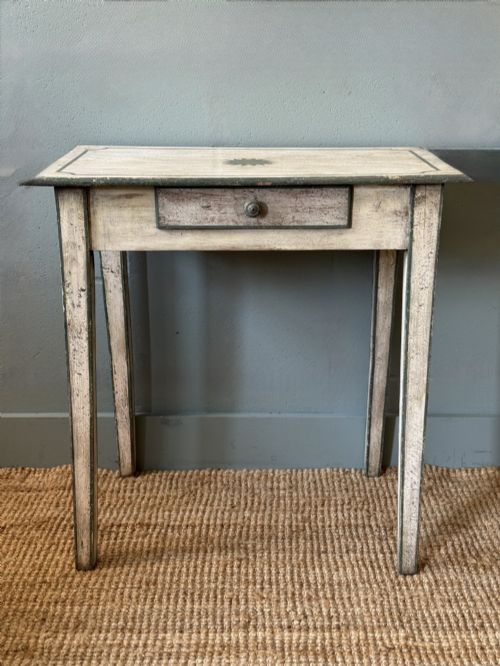
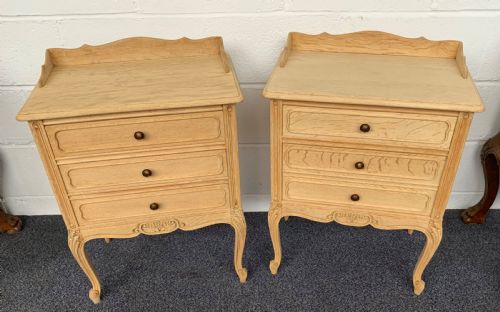
Buyers will encounter pairs and single pieces executed in regional timbers and painted finishes. The selection ranges from simple cherrywood and oak cupboards to marble-topped walnut cabinets influenced by Louis styles.
Materials and construction
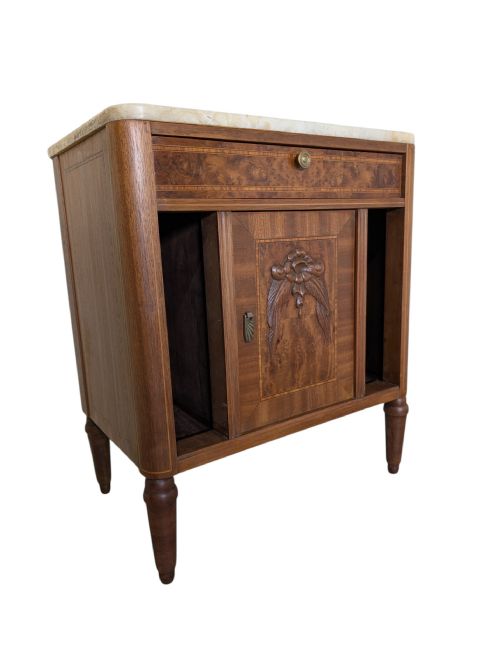
Cabinet makers utilised local hardwoods including oak, cherrywood, fruitwood and walnut, often applying burr veneers to drawer fronts and door panels. Marble slabs provide durable, wipeable surfaces for the tops of many cabinets.
Joinery techniques follow traditional regional methods, incorporating panelled doors, dovetailed drawers and occasional candle shelves. Metal mounts in brass or ormolu appear on select pieces, alongside hand-painted or bleached surface treatments.
The listings span from the mid-eighteenth century to the mid-twentieth century, featuring oak, cherrywood, walnut, and marble.
Judging quality in bedside pieces
Quality rests on the selection of timber, the crispness of any carved detail and the integrity of the marble top. Finely figured walnut or burr elm veneers and well-matched pairs command greater attention than plain utility pieces.
The proportion of the piece, the smoothness of drawer operation and the retention of original hardware or painted surfaces distinguish finer workshop output from more rustic local carpentry.
The French Country Bedsides Glossary
- Commode
- A low chest of drawers or bedside cabinet with enclosed storage. These pieces typically feature multiple drawers or a cupboard door below the top surface.
- Marble top
- A fitted slab of stone set into the upper surface of a bedside cabinet. This provides a cool, moisture-resistant shelf for water jugs and lamps.
- Fruitwood
- Timber milled from fruit-bearing trees such as cherry or pear. Cabinet makers valued these woods for their warm tone and fine grain.
- Louis XV style
- A design movement characterised by curved lines, cabriole legs and organic Rococo ornamentation. Provincial interpretations often simplify these decorative motifs.
- Bombe
- A swollen or bulging contour to the front and sides of a cabinet. This curved shape requires advanced woodworking skill to execute properly.
French Country Bedsides: Frequently Asked Questions
What is the difference between a bedside cabinet and a bedside table?
Bedside cabinets enclose storage behind a door, often incorporating a small internal shelf or drawer. Bedside tables are more open structures, sometimes consisting simply of a top surface supported by legs with an open shelf below.
Cabinets offer more concealed storage for personal items, while tables provide a lighter visual footprint next to the bed.
How do I match mismatched bedside tables?
Mixing different bedside tables works well when they share a common material, such as oak or painted wood, or a similar period aesthetic. Height is the most important measurement to align for practical use.
Pairing pieces of comparable scale prevents one side of the bed from feeling visually heavier than the other, even if the carved details differ.
Are marble tops original to these cabinets?
Many nineteenth and early twentieth-century bedside cabinets were manufactured specifically to receive fitted marble slabs. These stone surfaces protected the wood from water spills caused by washbasins and bedside jugs.
Inspect the edges of the marble and the rebate in the wood to ensure the stone sits flush and matches the age of the cabinet frame.
How do I care for antique wood and marble surfaces?
Dust wood surfaces regularly with a soft cloth and apply occasional natural wax to nourish the grain. Avoid placing damp items directly onto unsealed timber.
Clean marble tops with mild soap and warm water, avoiding acidic household cleaners that can etch or dull the polished stone surface.