




Red Marble Side Cabinet
A red marble side cabinet brings solid weight and striking veining into a room, uniting functional storage with a durable stone surface.
Red Marble Side Cabinet
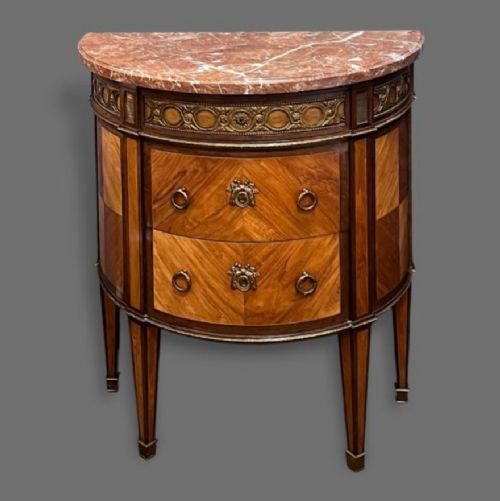
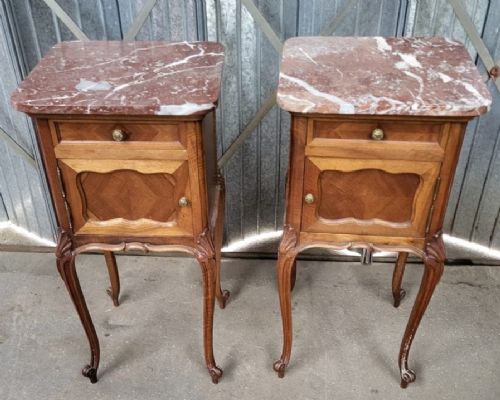
A red marble side cabinet combines fitted timber carcases with polished stone surfaces, appearing across nineteenth-century and early twentieth-century periods. These pieces serve practical storage roles in bedrooms and living spaces while displaying prominent decorative stone tops.
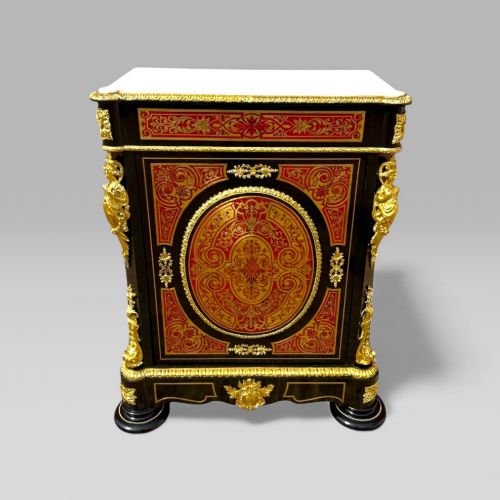
The selection ranges from French walnut and mahogany examples to ebonised pieces and Arts and Crafts washstands. Buyers frequently encounter French styles such as Louis XVI, Napoleon III, and Louis XV alongside Edwardian and Victorian designs.
Form variations span from compact bedside cupboards and pier cabinets to larger commodes, credenzas, and washstands. Each configuration adapts the heavy stone top to specific domestic uses within nineteenth-century interiors.
Materials and construction methods
Cabinet makers utilised dense hardwoods including walnut, mahogany, kingwood, and tulipwood to build stable carcases capable of supporting heavy stone slabs. Secondary woods provide structural integrity while primary veneers display figured grain patterns.
Ornaments of brass, ormolu, and gilt bronze frequently accent the timber frames, particularly on French Napoleon III and Louis XV style pieces. Polished red marble slabs are precision-cut and fitted directly into the timber tops.
Listings feature pieces spanning the nineteenth century through to nineteen-ten, utilising walnut, mahogany, brass, and marble.
Assessing quality and craftsmanship
Quality rests in the depth of timber figure, the precision of brass or ormolu mounts, and the integration of the marble slab. Superior examples feature well-matched veneers and hand-carved details that remain crisp.
The mineral patterns and polish of the red marble top dictate visual impact, with finer pieces showing rich, unbroken stone sections. Structural stability in the joints and original hardware further separate standard domestic items from finer workshop output.
The Red Marble Side Cabinet Glossary
- Ormolu
- Gilded bronze mounts applied to furniture. This technique creates metallic highlights that contrast with dark timber and red marble.
- Commode
- A low decorative chest of drawers or cupboard. These pieces often feature prominent marble tops and refined veneer work.
- Ebonised wood
- Timber stained or treated to imitate ebony. This dark finish provides a stark backdrop for brass inlay and red marble.
- Pier cabinet
- A narrow display or storage cabinet designed for placement between windows. These tall pieces frequently incorporate marble surfaces.
- Demi-lune
- Half-moon or semicircular shape in furniture design. Cabinets with this footprint fit neatly against flat walls.
Red Marble Side Cabinet: Frequently Asked Questions
How are red marble side cabinets cleaned?
Dust timber surfaces regularly with a soft cloth and avoid harsh chemical polishes on the wood.
Clean the marble top using a damp cloth and mild soap, ensuring no acidic liquids remain on the stone.
Are these cabinets purely French in origin?
Many surviving examples originate from French workshops, showing styles like Louis XV, Napoleon III, and Empire.
English pieces also appear, particularly within Victorian and Edwardian domestic furniture traditions.
What rooms suit a side cabinet best?
Bedside versions function well as night tables next to low beds, offering durable stone surfaces for lamps.
Larger credenzas and commodes serve dining rooms or hallways as practical storage with display capacity.
How do I identify a nineteenth-century piece?
Examine the construction methods, dovetail joints, and timber ageing visible inside the drawers and carcase.
Stylistic markers such as brass mounts and specific period veneers help align the piece with Victorian or Edwardian eras.