


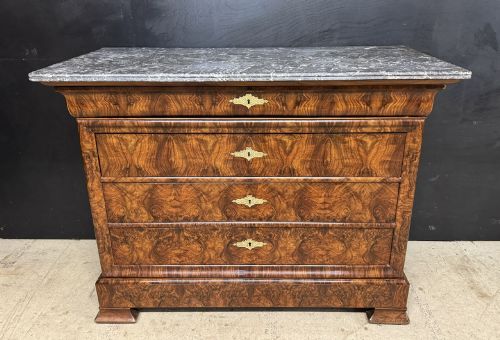
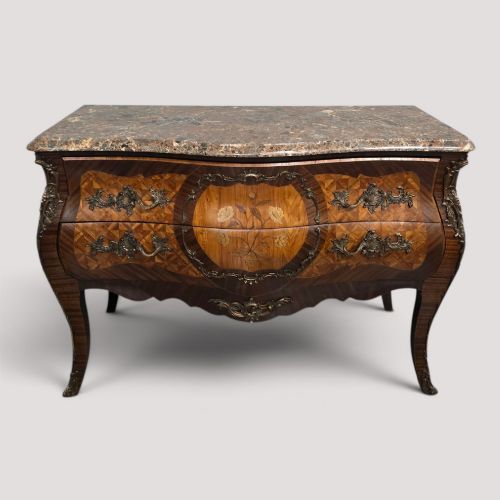
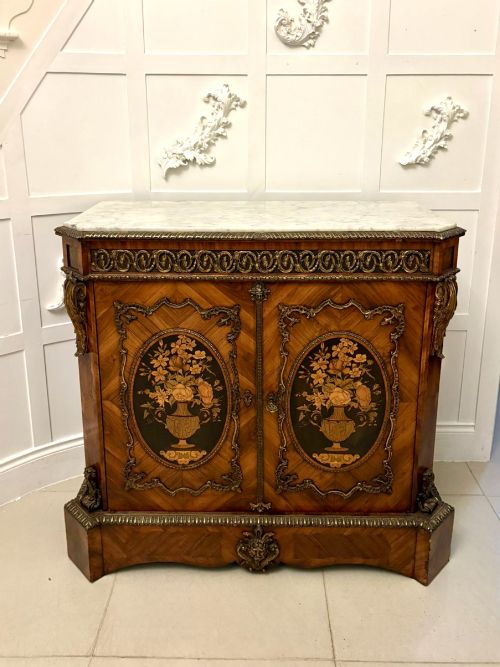
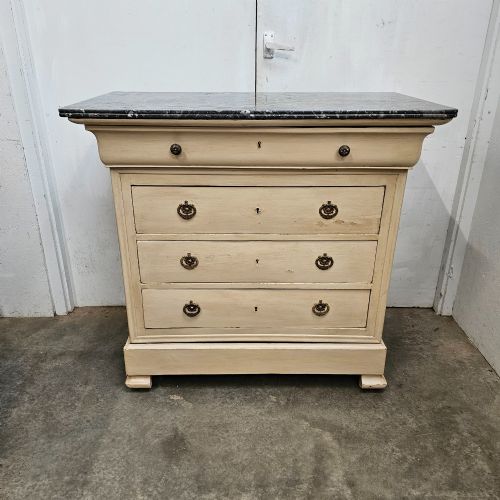
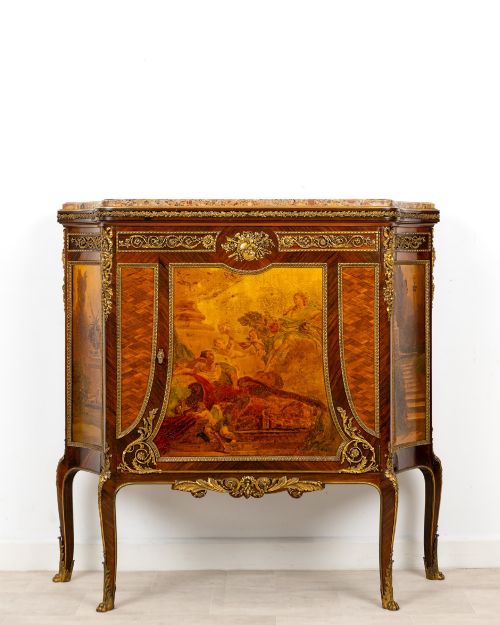
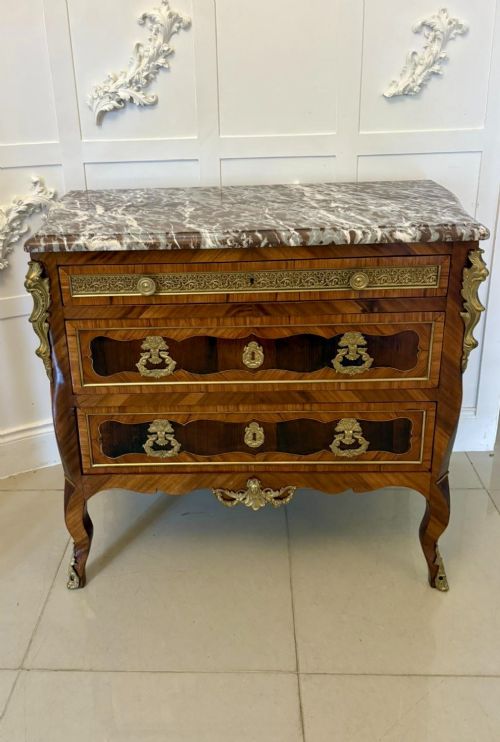
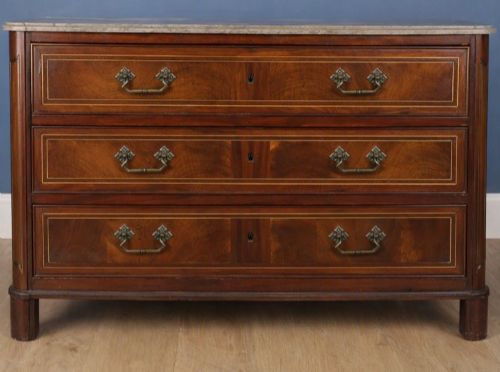
French Commode with Marble
A french commode with marble brings substance and classical proportion to a room, pairing timber drawer chests with heavy stone slabs.
French Commode with Marble
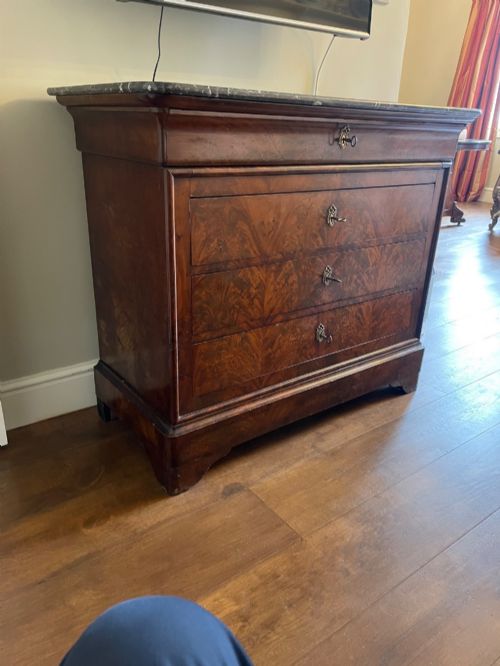
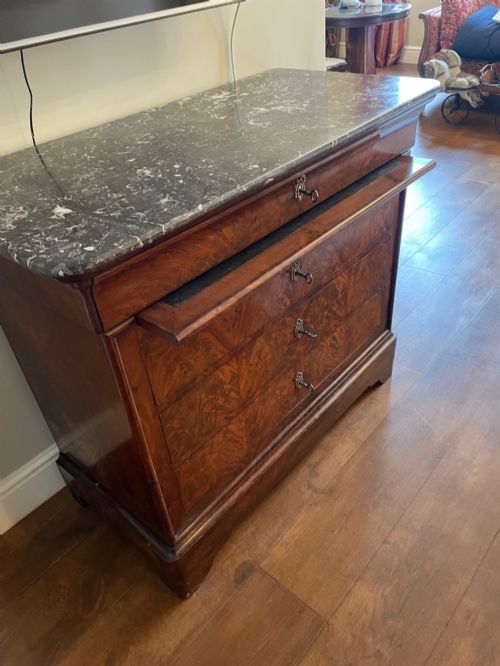
A french commode with marble serves primarily as a decorative storage chest, featuring a solid stone surface fitted squarely over timber drawers or cabinet doors. Buyers search for these pieces to anchor a hallway or bedroom with substantial period weight and stone colour.
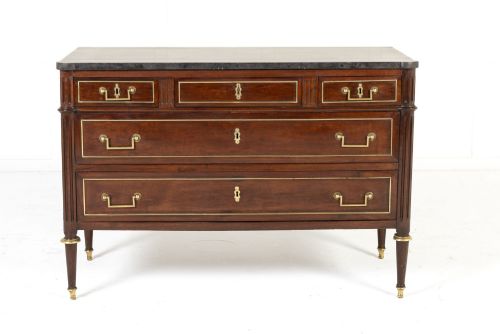
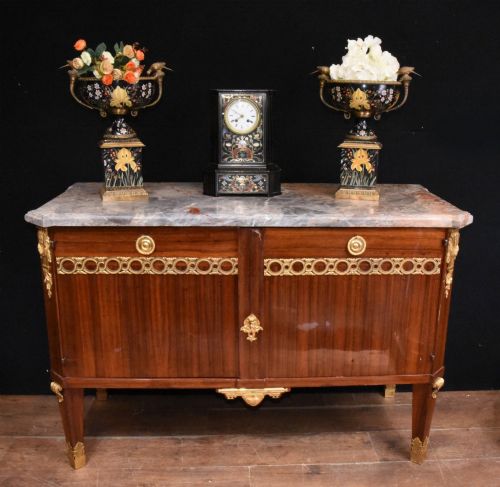
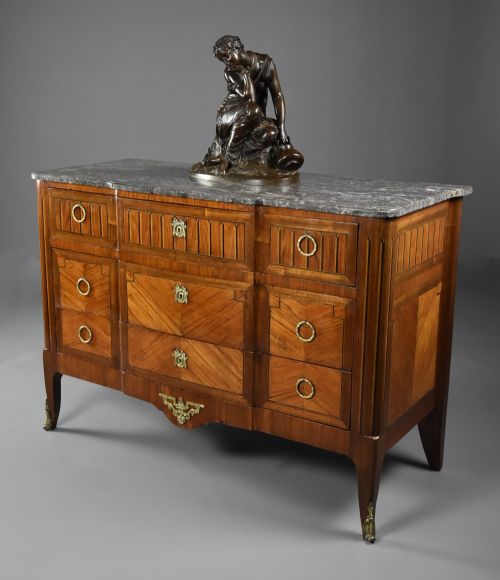
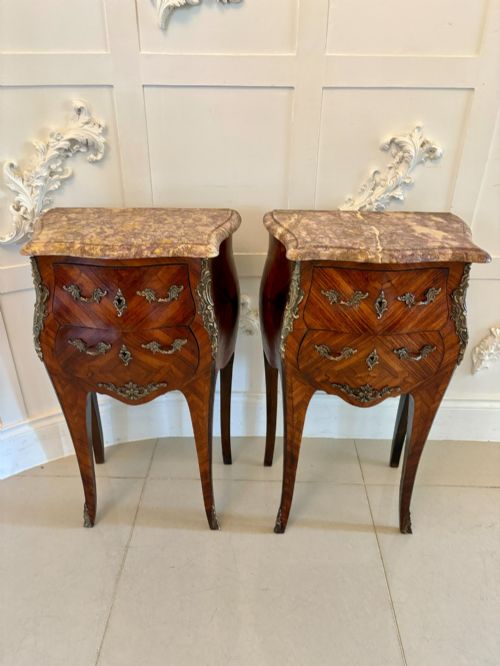
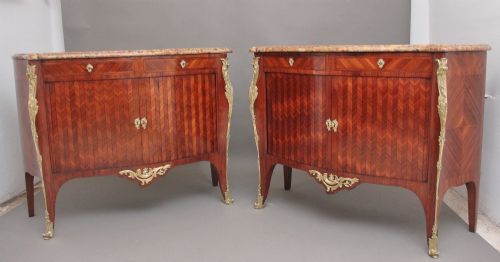
The versions most commonly met on this page date from the eighteenth and nineteenth centuries, running through revival styles like Louis XVI and Louis XV alongside later provincial oak or walnut pieces. Forms range from serpentine fronts and demi-lune shapes to straightforward breakfront chests and bedside cabinets.
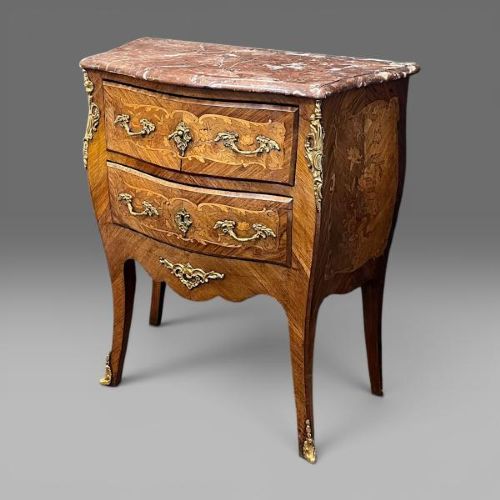
Makers designed these low chests with varying drawer counts, frequently incorporating brass or ormolu mounts to accent the timber carcase. The stone tops themselves display considerable geological variety, from breccia and rouge to carrara and fossil marble.
Materials and construction
Carpenters constructed these carcases using hardwood frameworks veneered with figured timbers such as walnut, mahogany, tulipwood, kingwood, and palisander. Parquetry and floral marquetry patterns appear across drawer fronts, alongside simpler carved oak or fruitwood provincial builds.
Gilt metal and brass ormolu mounts frame corners, aprons, and keyholes, while heavy marble slabs are shaped to match the exact serpentine, oval, or breakfront contours of the timber tops.
French Commode with Marble Retail Price Guide 2026
Typical asking prices for french commode with marble among the pieces listed under this phrase on Sellingantiques today, from the lower quarter to the upper quarter. They describe what is for sale here now, not the wider market.
Several pieces include hidden bedside compartments designed for nineteenth-century chamber pots.
Markers of quality
Quality rests in the precision of the timber matching and the crispness of the floral marquetry or parquetry work across the drawer faces. Superior pieces integrate the stone top seamlessly into the shaped wooden profile without overhang or misalignment.
The calibre of the cast ormolu mounts and the weight of the selected marble slab separate finer examples from standard production. Original stone tops secured to period carcases hold greater authority than later replacements.
The French Commode with Marble Glossary
- Ormolu
- Gilded bronze mounts applied to furniture for decorative enrichment. These cast metal details frequently frame corners and handles on revival pieces.
- Marquetry
- Decorative veneer patterns formed from pieces of contrasting timber fitted together into pictorial or geometric designs. Craftsmen used this technique extensively on eighteenth-century drawer fronts.
- Serpentine
- A furniture front curving outward at the centre and inward at the sides in a gentle wave shape. This contour requires precise stone-cutting for the marble top.
- Demi-lune
- A half-moon shape with a flat back and a curved front, typical of smaller wall-abutting chests. These tables fit narrow hallways and corners.
- Parquetry
- Geometric wood mosaic patterns constructed from small veneer tiles. This technique creates subtle shifts in grain direction and colour.
French Commode with Marble: Frequently Asked Questions
What is a french commode with marble?
It is a low chest of drawers or cabinet originating from France, fitted with a heavy stone slab top. These pieces combine timber cabinetry with classical stone surfaces.
They functioned historically as storage furniture in reception rooms and bedrooms, providing a sturdy display surface.
How do I date a marble top commode?
Dating relies on examining the construction methods of the timber carcase, the wood species used for veneering, and the stylistic details of the brass mounts. Eighteenth-century examples display different joinery and carving traits compared to later nineteenth-century revivals.
Reviewing the hardware, drawer linings, and the cut of the marble helps establish whether a piece belongs to an earlier period or a later revival era.
Are marble tops always original?
Stone tops on older pieces were occasionally replaced due to breakage or wear over centuries of domestic use. Examining how the marble rests on the timber frame reveals whether it was cut specifically for that carcase.
Original slabs match the exact serpentine or breakfront contours of the wood underneath without awkward gaps or overhangs.
How do I care for the marble?
Marble requires gentle cleaning with warm water and a soft cloth, avoiding acidic cleaners that etch the polished stone surface. Using coasters prevents liquid rings from marking vulnerable calcareous stones.
Regular dusting keeps the polished surface clear without needing aggressive chemical polishes.