



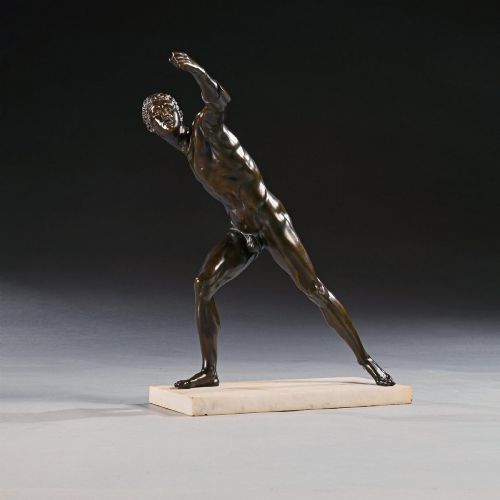
French Classical Bronze Sculpture
French classical bronze sculpture brings mythological figures and historical portraits into interiors through enduring metalwork.
French Classical Bronze Sculpture
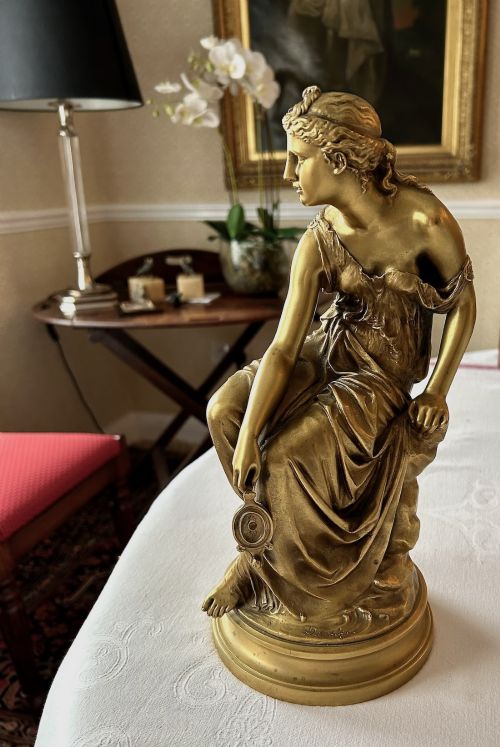
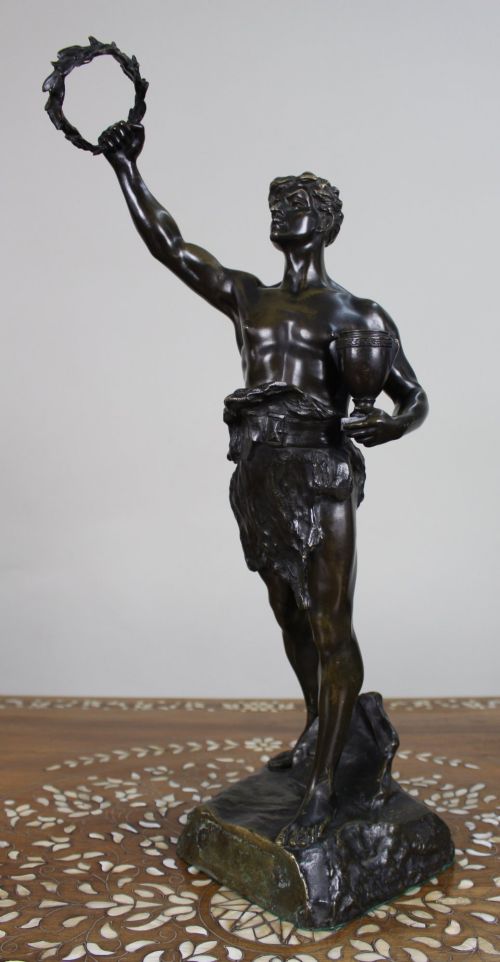
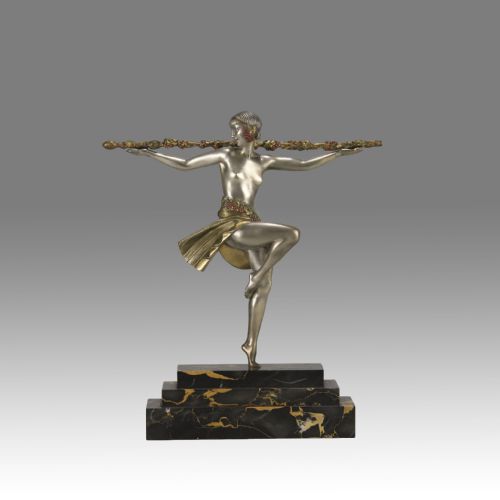
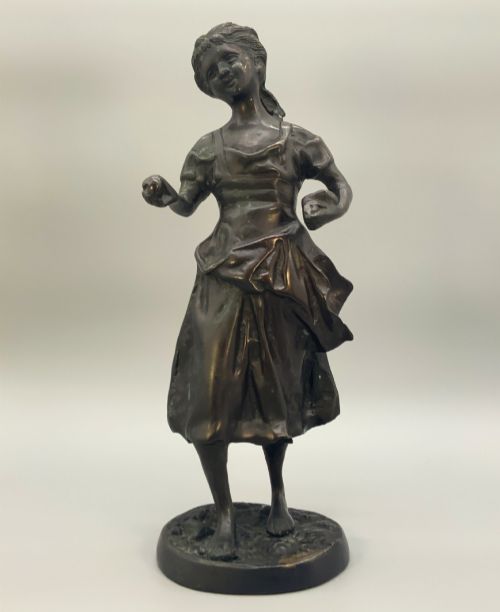
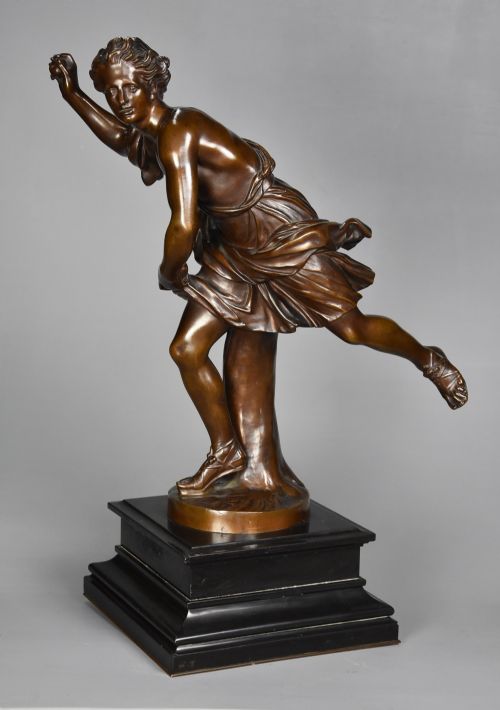
French classical bronze sculpture encompasses figural works, busts, and decorative mounts inspired by antiquity, mythology, and historical personages. Pieces on this page predominantly date from the nineteenth century into the early twentieth century, reflecting enduring neoclassical tastes alongside art nouveau and art deco interpretations.
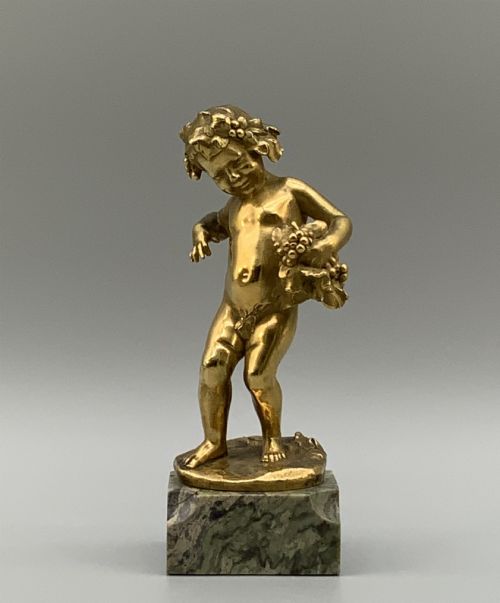
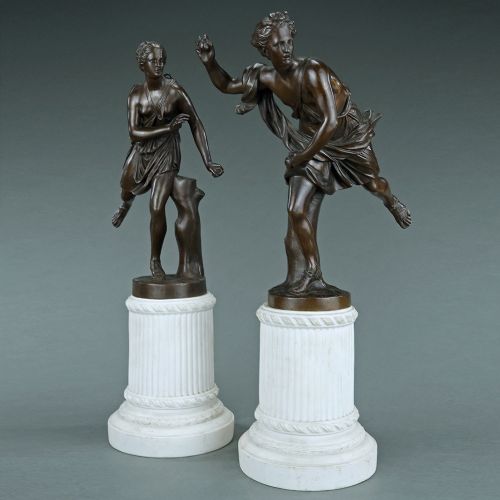
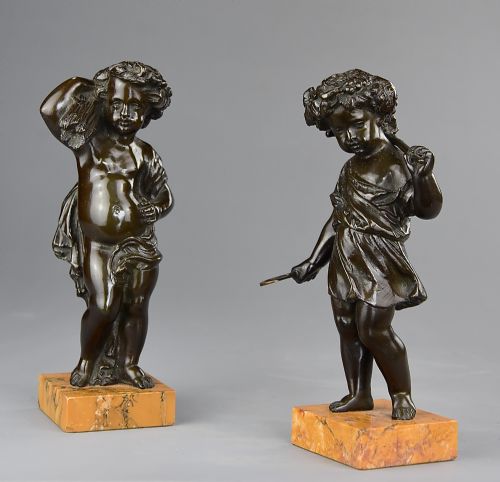
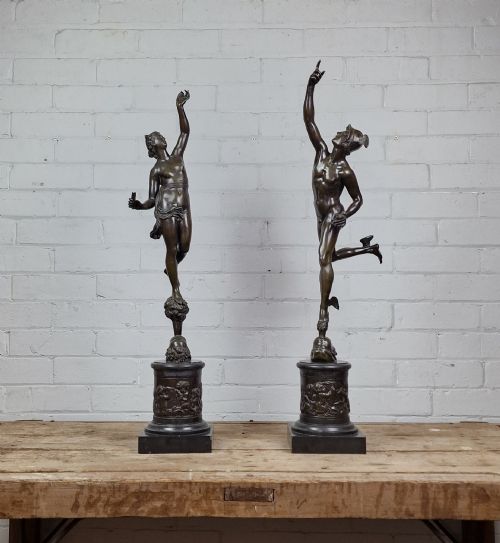
Buyers encounter subjects ranging from mythological deities and putti to dancers, soldiers, and literary heroes. These works often draw directly upon celebrated classical antiquities or Renaissance models associated with sculptors such as Giambologna and Coustou.
Materials and methods
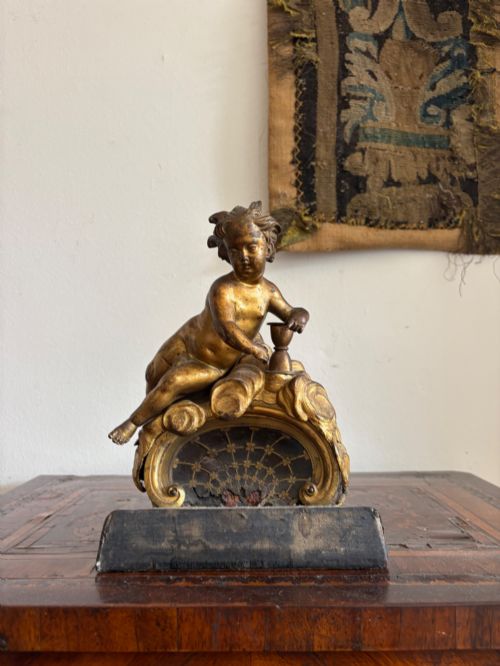
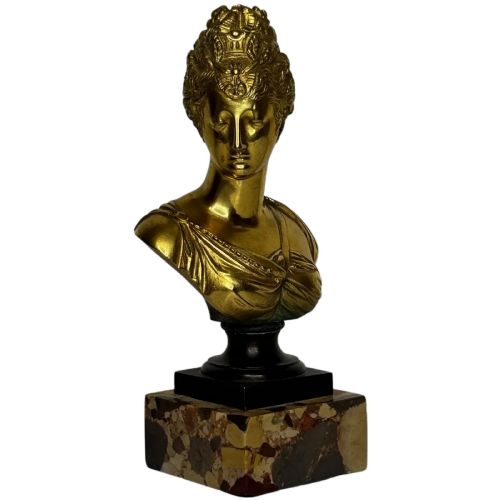
Foundries utilised traditional casting methods to shape molten bronze into intricate figural forms, often finishing the metal with rich patination or gilding. Ormolu and gilt bronze components add contrasting metallic highlights to patinated surfaces.
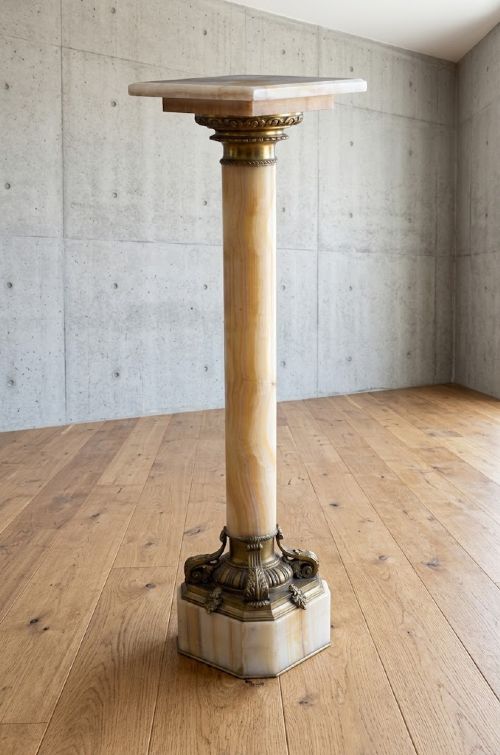
Many sculptures incorporate complementary structural elements such as marble, onyx, or ebonised wood for bases and columns, providing a stable foundation and heightening the visual impact of the metalwork.
Watch for vigilant bronze spaniels guarding tiny winged putto musicians across nineteenth-century allegorical groupings.
Distinguishing quality
Quality rests upon the crispness of the chase work, where skilled artisans refined the cast metal by hand to define facial expressions, drapery folds, and musculature. Superior examples retain precise detail and subtle texture across every surface.
The sophistication of the foundry cast and the depth of the patination differentiate standard production from exceptional pieces. Stronger works demonstrate balanced proportions and confident handling of form, whether depicting a single deity or a complex multi-figure group.
Etienne-Henri Dumaige·Susse Frères·Barbedienne·Pierre le Faguays·Moreau Family·Émile Louis Picault·E.Villanis·Edouard Drouot
The French Classical Bronze Sculpture Glossary
- Patinated bronze
- Bronze treated with chemical solutions to produce a specific surface colour or tone. This finish protects the metal and defines the sculptural contours.
- Ormolu
- Gilding technique involving finely ground gold applied to a bronze base. It provides a bright golden surface frequently seen on decorative mounts and collars.
- Grand Tour
- Cultural journey through Europe undertaken by past travellers who collected classical antiquities and smaller bronzes. These souvenirs heavily influenced later nineteenth-century French foundry production.
- Putto
- Depiction of a small, often winged infant frequently incorporated into mythological and allegorical scenes. These figures appear frequently in classical groupings.
French Classical Bronze Sculpture: Frequently Asked Questions
How do I identify a nineteenth-century casting?
Examine the surface for foundry stamps, signature incisions, and the depth of the hand-chased details. Nineteenth-century works often display heavier bases and distinctive patination formulas unique to French workshops of the period.
Compare the proportions and subject matter with known classical prototypes or foundry catalogues. Material choices like variegated marble or slate bases further help contextualise the production era.
What is the difference between gilt bronze and ormolu?
Gilt bronze and ormolu both describe bronze objects finished with a layer of gold. Historically, ormolu specifically referred to an amalgam of mercury and gold fired onto the metal surface.
In general descriptions, collectors use the terms interchangeably to denote bright golden highlights contrasting against darker patinated bronze areas.
Where should I display a bronze figure?
Place heavier sculptures on sturdy surfaces such as marble columns, wooden pedestals, or stable sideboards capable of supporting considerable weight. Ensure the display area avoids direct sunlight and moisture fluctuations to protect the metal patination.
Position pieces at eye level or slightly below to fully appreciate the fine chasing and three-dimensional contours of the subject.
How do I care for antique bronze?
Dust the sculpture regularly with a soft, dry lint-free cloth to prevent particulate buildup on the surface. Avoid using chemical polishes, oils, or water, which can strip or damage historical patination.
Maintain stable indoor humidity levels to preserve both the bronze metal and any integrated stone or wooden elements.