


French Ceramic Figures Pair
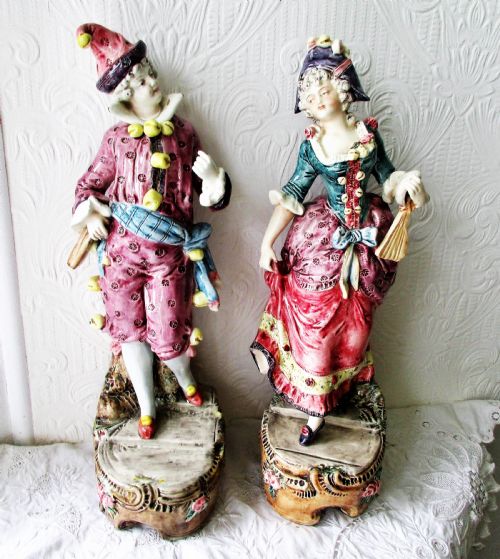
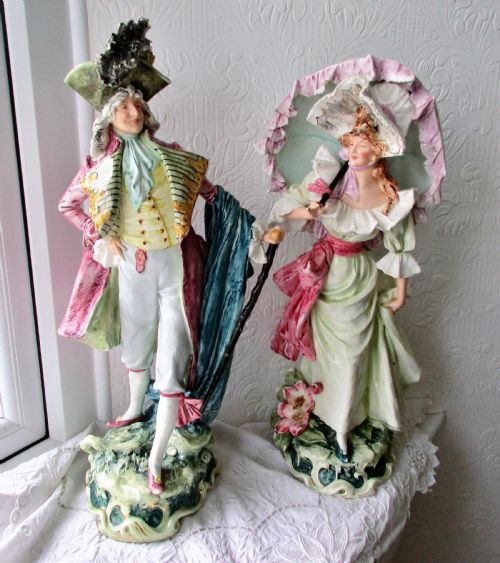
A french ceramic figures pair brings domestic 19th-century charm to a mantelpiece, offering theatrical pairs of musicians, vendors and allegorical figures.
French Ceramic Figures Pair
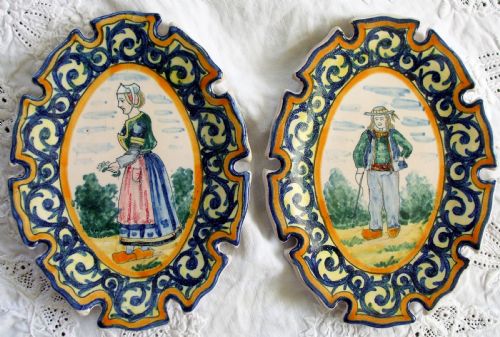
A french ceramic figures pair comprises matching decorative ornaments modelled as human characters, animals or allegorical subjects, originating mainly from the nineteenth century. Buyers seek these matching pairs to dress mantelpieces, sideboards and consoles with balanced theatricality. The selection ranges from robust earthenware and faience pin trays to delicate bisque porcelain shepherdesses and grand hand-painted figures.
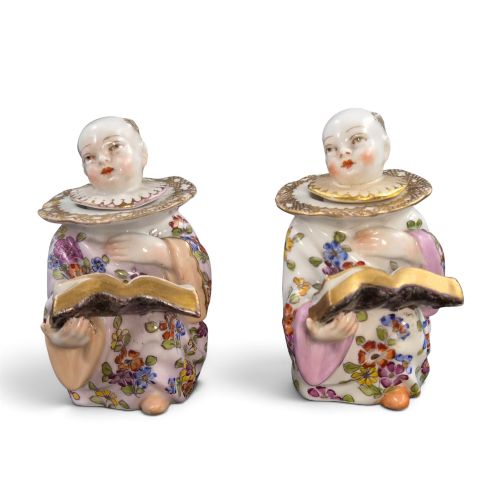
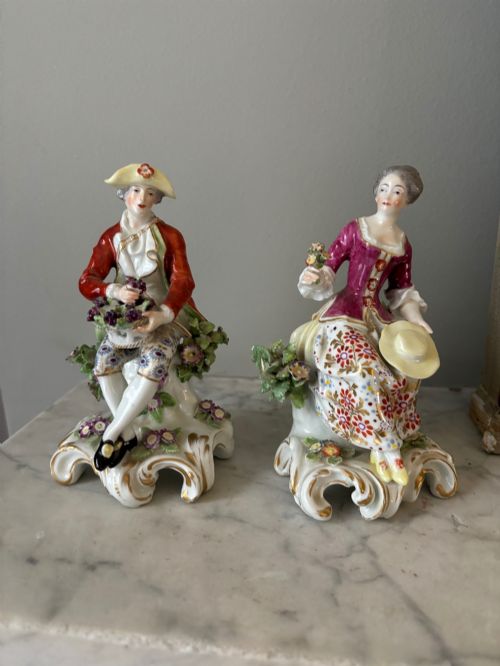
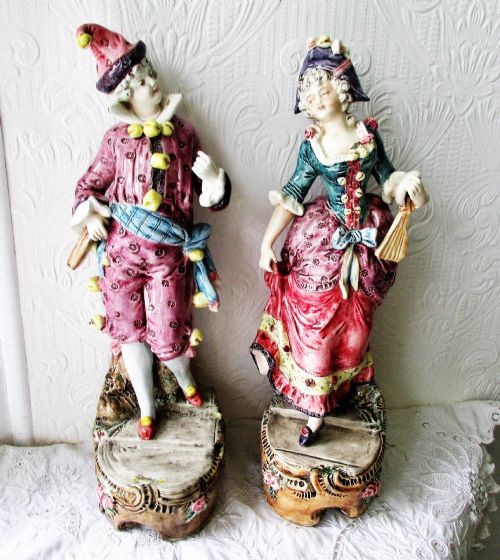
The prevalent formats on this page include nineteenth-century porcelain pairs modelled by Parisian workshops like Samson and Vion & Baury. Subjects span romantic gallants and ladies, street vendors, musicians and mythological pairings after earlier Chelsea or Derby models. Alongside traditional figurines, the category stretches to functional items such as figural inkwells, lamps and wall pockets.
How They Were Made
Potters and modellers shaped these pieces using diverse ceramic bodies including earthenware, faience, terracotta and hard-paste porcelain. Bisque porcelain provided an unglazed, matte surface favoured for detailed sculptural groups, while other figures received glossy glazes and hand-painted enamel decoration. Gilding and gold leaf often highlighted the robes and bases of nineteenth-century Paris porcelain.
Many Parisian works were produced by specialised factories copying earlier eighteenth-century English and continental models, utilising press moulds for repetitive production. Hand-painting added individualized touches to faces, garments and floral bocage backgrounds. Faience items employed traditional tin-glaze techniques typical of regional French potteries.
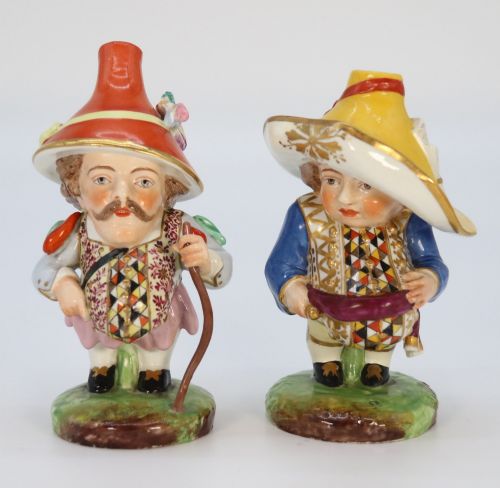
Among the gathering of elegant ladies and gallant courtiers stand a pair of mischievous porcelain dwarves.
What Varies in Quality
The ambition of the composition also dictates the tier of the piece, moving from simple earthenware carnival figures to monumental biscuit porcelain sculptures and complex multi-figure allegorical groups. The retention of original gilding and fragile applied elements like porcelain flowers further distinguishes standard production from finer cabinet works.
Edmé Samson·Vion & Baury·Letu & Mauger·HR Quimper·La Coutille Factory·Chantilly
The French Ceramic Figures Pair Glossary
- Bisque porcelain
- Un-glazed white porcelain fired to a matte, tactile finish resembling marble. It became popular in the nineteenth century for expressive figural sculptures.
- Faience
- Tin-glazed earthenware produced across French regional potteries. It provides an opaque white ground suitable for hand-painted decoration.
- Bocage
- An ornamental background of applied ceramic leaves and flowers framing a figural group. It derives from eighteenth-century English prototypes.
- Paris porcelain
- Hard-paste porcelain manufactured by numerous independent workshops operating in and around Paris during the eighteenth and nineteenth centuries. These houses often imitated Meissen or Chelsea styles.
- Gold leaf
- Thin beaten gold applied to ceramic surfaces for decorative accents. It was frequently used to enrich the bases and garments of nineteenth-century figures.
French Ceramic Figures Pair: Frequently Asked Questions
What subjects do french ceramic figures pair depict?
These pairs commonly portray romantic couples, street vendors, musicians and allegorical representations of the seasons. Figures of shepherds and shepherdesses also recur frequently.
Many designs draw inspiration from earlier eighteenth-century Chelsea, Derby or continental prototypes, reinterpreted by nineteenth-century Parisian workshops.
Where were these figures made?
The majority originate from nineteenth-century France, particularly Parisian porcelain factories and studios. Regional potteries also contributed earthenware and faience production.
Prominent workshops in Paris produced extensive decorative lines for domestic and export markets.
How do I identify a reproduction?
Examining the ceramic body, glaze consistency and wear patterns helps determine the period. Nineteenth-century pieces often bear period factory marks or characteristic hand-painting styles.
Later copies tend to lack the crisp detail in the modelling and the subtle enamel palette of nineteenth-century originals.
How should I display them?
Matching pairs look best displayed symmetrically on mantelpieces, sideboards or consoles. Their balanced composition creates a focal point in a room.
Placing them away from direct sunlight and high-traffic edges protects fragile applied elements like porcelain flowers and delicate fingers.