


French Catholic Medal
A french catholic medal carries centuries of devotion in gold, worn close to the heart as a personal talisman of faith.
French Catholic Medal
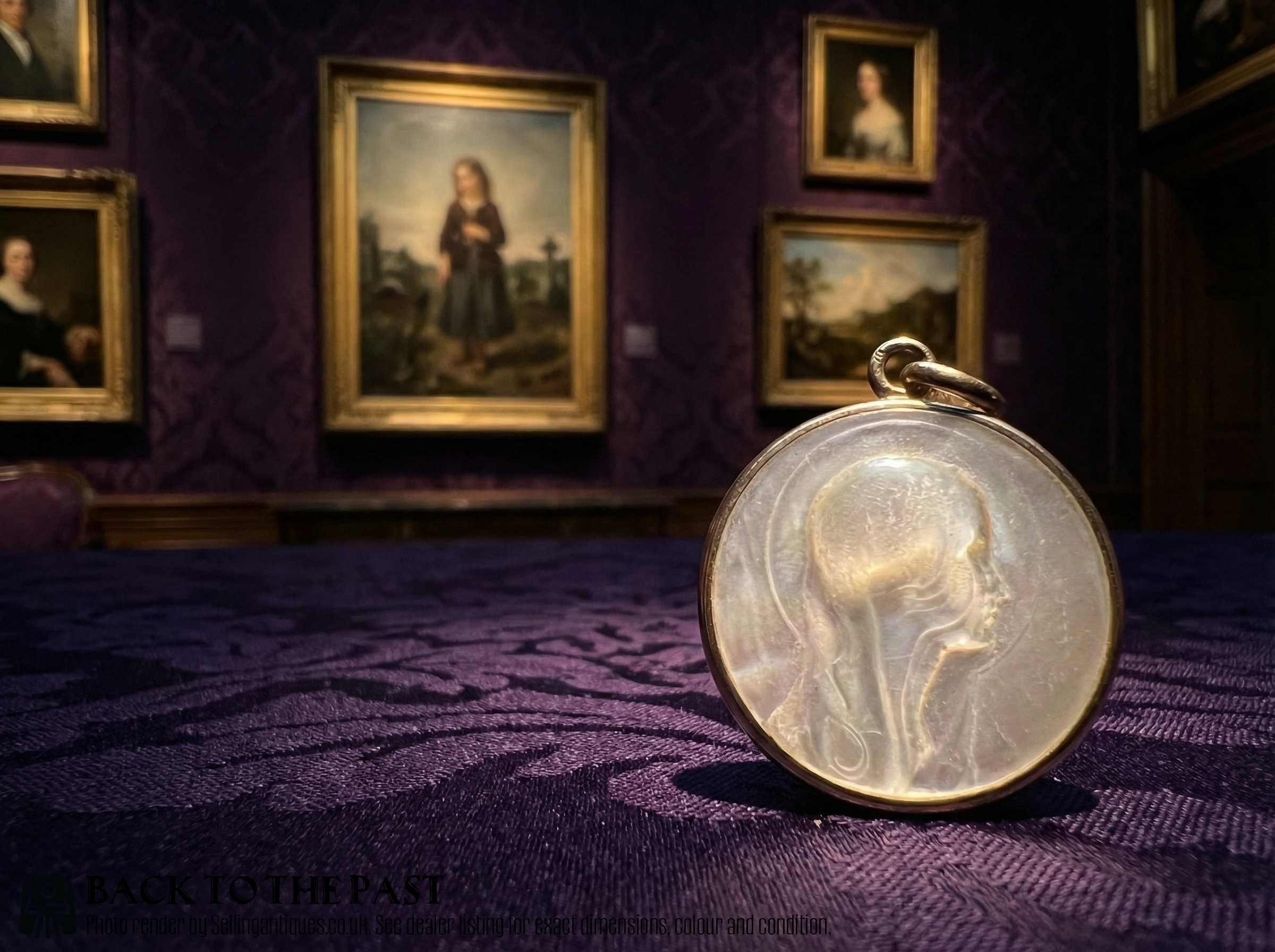
When searching for a french catholic medal, collectors encounter pendants and charms fashioned in gold from the late nineteenth century through the mid-twentieth century. The selection on this page centres heavily on pieces dated around nineteen-ten, alongside examples from eighteen-ninety up to nineteen-fifty.
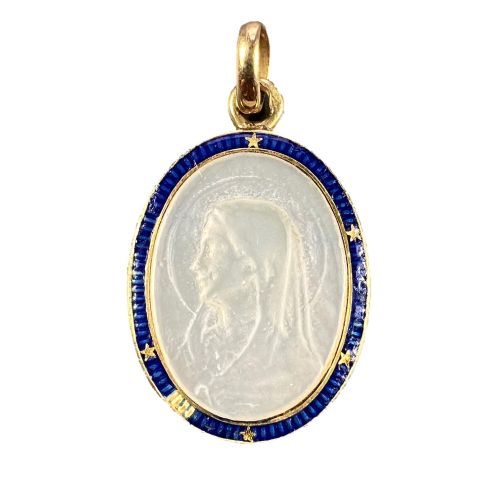
The commonest form is an oval pendant or charm depicting the Virgin Mary, the Madonna and Child, or figures such as Saint Christopher and Saint John the Baptist. These items frequently appear as religious medals and pendant necklaces created within French devotional and Art Nouveau traditions.
Materials and Technique
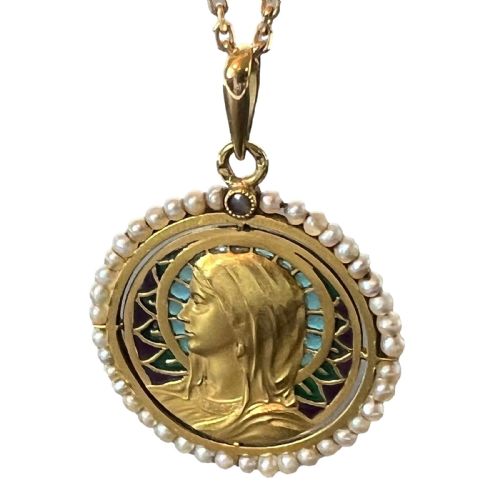
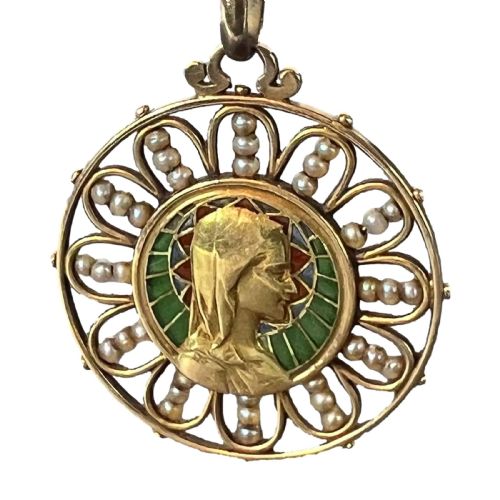
These pieces are principally forged from eighteen-carat yellow, rose, and white gold, often combined with luminous mother of pearl backgrounds. Artisans applied delicate enamel work, including plique-à-jour techniques that allow light to pass through translucent coloured glass sections like stained glass.
Surface decoration relies on fine hand engraving, seed pearl accents, and pierced metalwork to frame sacred iconography. The integration of transparent enamel with solid gold requires exceptional skill, producing miniature works of wearable art.
French Catholic Medal Retail Price Guide 2026
Typical asking prices for french catholic medal among the pieces listed under this phrase on Sellingantiques today, from the lower quarter to the upper quarter. They describe what is for sale here now, not the wider market.
The listed items originate across seven distinct decades stretching from eighteen-ninety to nineteen-fifty.
Craftsmanship and Detail
Quality separates by the crispness of the medallist's strike and the precision of hand-engraved details on the facial expressions of the figures. Softer, worn contours indicate a weaker cast or heavy polishing, whereas superior items retain sharp relief.
The complexity of the surrounding ornamentation dictates upper tiers of workmanship, particularly where intact plique-à-jour enamel or well-matched seed pearls are present. Pieces bearing signatures from known medallists exhibit superior artistic composition and structural finishing.
Emile Monier·Mazzoni·Pageli Perriat·Dropsy·Guilbert·Vernon·Sellier·Tairac·Pageri Perroud·Becker
The French Catholic Medal Glossary
- Plique-a-jour
- An enamelling technique where the enamel is applied without a backing, resembling miniature stained glass. This lets light shine directly through the translucent coloured cells.
- Miraculous Medal
- A particular devotional medal depicting the Blessed Virgin Mary, commissioned following reported apparitions in Paris. It remains one of the most widely recognised Catholic medallion designs.
- Mother of Pearl
- The iridescent internal layer of mollusc shells used as a shimmering background material behind gold relief figures. It adds depth and natural luminescence to the pendant face.
- Seed Pearl
- Tiny, naturally occurring small pearls utilised to embellish the bezels and borders of religious pendants. Their delicate scale complements intricate gold wirework.
- Medallion
- A large metal coin-like pendant struck or cast with religious imagery, designed to be worn on a chain around the neck. They serve as physical expressions of prayer and protection.
French Catholic Medal: Frequently Asked Questions
How were these medals worn?
These pieces were typically suspended from gold chains to rest against the chest as pendant necklaces or carried as charms on bracelets. Their construction includes small suspension loops designed for daily wear.
Because they were intended to be kept close to the body, many exhibit smooth reverse sides or intricate engraved dedications left by their original owners.
How do I care for gold and enamel pendants?
Gold and enamel medals require gentle handling to protect delicate translucent enamel cells and seed pearl settings from sharp impacts. Cleaning should be restricted to soft cloths without harsh chemical dips that might damage the metal or enamel.
Storing them individually prevents scratching against other pieces of jewellery in a collection.
How can I tell the period of a medal?
Dating relies on stylistic markers such as flowing Art Nouveau floral motifs from nineteen-hundred versus cleaner mid-century geometric framing. Maker signatures and French gold hallmarks stamped onto the metal also provide clear chronological indicators.
Comparing the manufacturing technique, such as the application of plique-à-jour, helps narrow the timeframe to specific active decades.