




French Carved Oak Wardrobe
A french carved oak wardrobe is a substantial storage piece built to last generations, offering deep timber character and traditional craftsmanship for any bedroom.
French Carved Oak Wardrobe
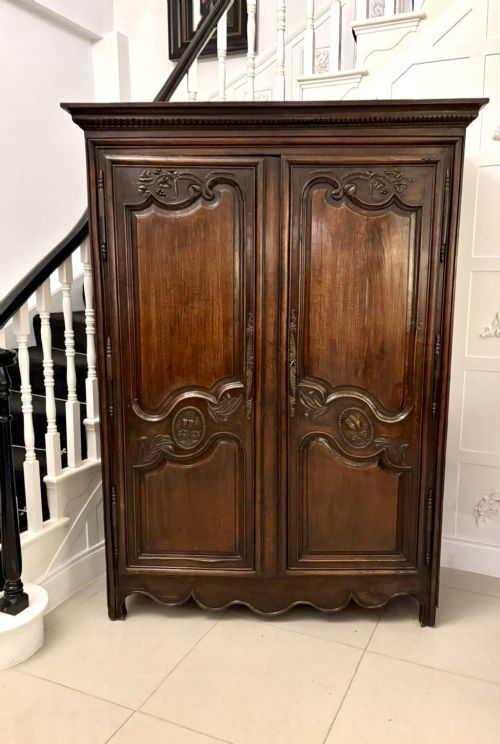
When you search for a french carved oak wardrobe, you encounter heavy timber storage furniture originating from various periods including the seventeenth, eighteenth, and nineteenth centuries. These pieces function primarily as tall cupboards or armoires, designed to store garments or house household linens in grand style.
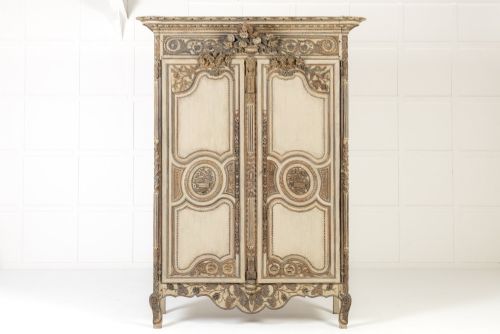
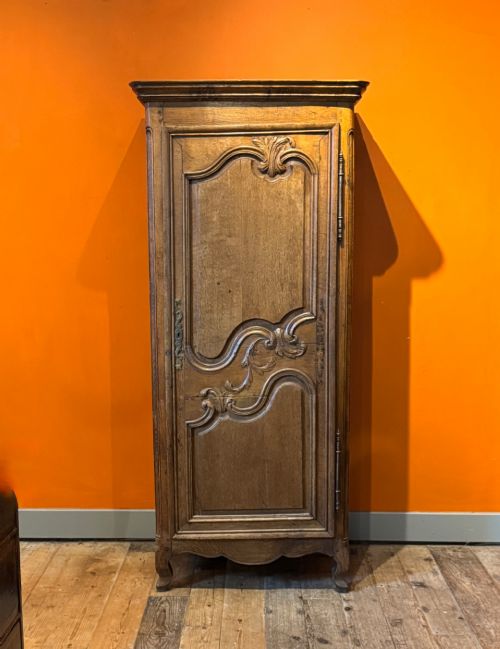
The most common examples on this page are eighteenth and nineteenth-century armoires, often reflecting regional French Provincial tastes or the ornate curves of the Louis XV style. You also encounter specialist variants like the single door bonnetiere or wide triple door formats built to handle larger spaces.
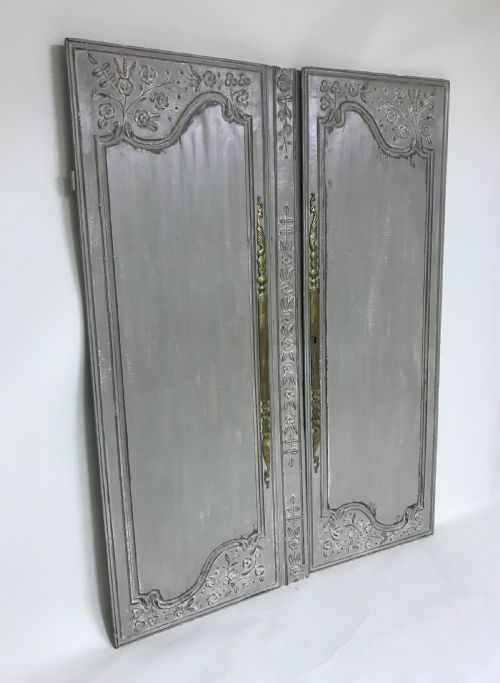
Makers historically produced these sturdy cabinets in native oak, sometimes incorporating painted finishes or later bleached treatments to alter the visual weight of the timber. Their internal configurations typically transition from original hanging space or deep shelving to modern utility while retaining their external period presence.
Materials and construction methods
Cabinet makers relied principally on solid oak, selected for its density and durable grain structure, complemented by brass and iron hardware for hinges, escutcheons, and locking mechanisms. Panels were traditionally hand-carved with floral motifs, scrolls, or asymmetrical provincial detailing.
Joinery involved sturdy frame and panel construction designed to accommodate seasonal wood movement without splitting the primary structure. Some pieces incorporate glass panels or painted surfaces alongside the raw timber.
Regional styles represented on this page include Louis XV taste, French Provincial, and Breton cupboard designs.
Assessing quality in antique armoires
Quality rests heavily on the depth and crispness of the hand carving, where skilled carvers achieved clean relief work on the doors and crown moulding rather than shallow, mechanical stamping. The proportion of the piece, particularly the balance between height and width across single, double, or triple door formats, dictates its architectural elegance.
The integrity of the original timber and hardware elevates a piece, as does the survival of period hinges, locks, and internal shelving arrangements. Later alterations, such as aggressive surface bleaching or reconstructed bases, shift a cabinet away from its original state.
The French Carved Oak Wardrobe Glossary
- Armoire
- A large upright cupboard or wardrobe used traditionally for storing clothes. These tall cabinets often feature double doors and heavy crown mouldings.
- Bonnetiere
- A single door tall cupboard originally designed to store women's bonnets. They offer a narrow footprint suited to smaller rooms.
- Louis XV taste
- A design style characterised by asymmetrical curves, cabriole legs where applicable, and naturalistic scrollwork. It originated during the eighteenth century.
- French Provincial
- Furniture styles created in the provinces rather than Paris, combining rural practicality with local decorative carving traditions. These pieces often exhibit robust proportions.
- Bleached oak
- Timber treated with chemical agents to lighten its natural dark tone. This finish appears frequently on twentieth-century interpretations.
French Carved Oak Wardrobe: Frequently Asked Questions
How do I fit shelves inside an armoire?
Many armoires feature internal timber fixed mounts or adjustable wooden supports designed to hold heavy boards. You can easily insert custom-cut timber shelves to convert hanging space into linen storage.
Ensure any added shelving respects the depth of the cabinet doors and allows them to close flush against the frame without putting pressure on the internal fittings.
How should I clean bleached oak surfaces?
Maintain bleached oak by dusting regularly with a dry, soft cloth to prevent particulate buildup in the textured grain. Avoid harsh chemical cleaners that can strip the pale finish.
If conditioning is necessary, apply a microcrystalline wax sparingly with a lint-free cloth to protect the wood against ambient moisture changes in modern homes.
What is the difference between an armoire and a wardrobe?
In historical terms, an armoire is a movable cupboard originally built for arms or clothing, whereas a wardrobe specifically denotes a tall closet for hanging garments. In modern usage across these listings, the terms often overlap.
Traditional armoires frequently emphasise shelving and deep cabinet space, while subsequent iterations introduced internal hanging rails to match changing fashion requirements.