
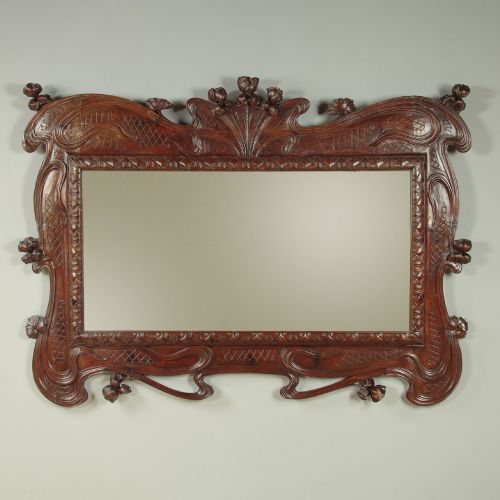

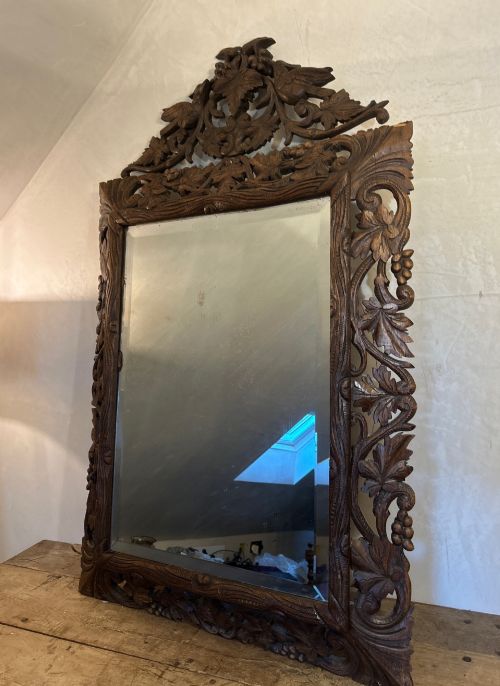
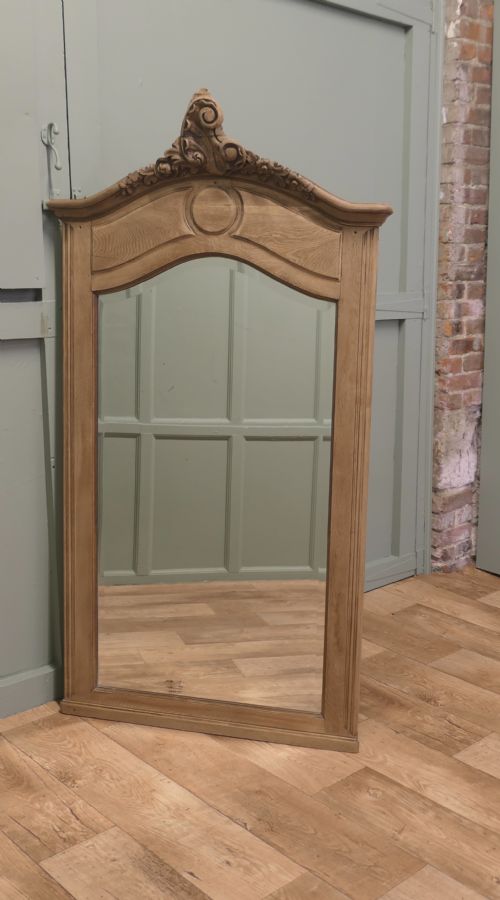

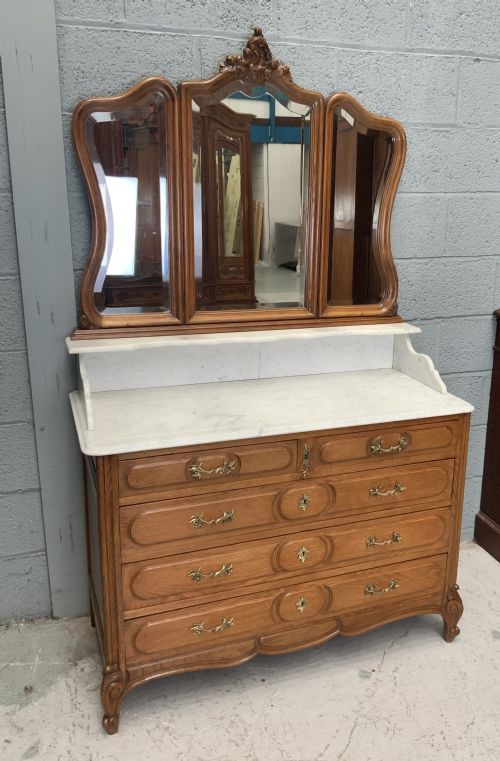


French Carved Oak Mirror
A french carved oak mirror brings rustic warmth and robust joinery to an interior, combining deep timber relief with functional reflective glass.
French Carved Oak Mirror
A french carved oak mirror is a decorative wall hanging or overmantel piece built from solid timber with hand-chiselled details. These items span various periods from the eighteenth century through to the early twentieth century, reflecting shifting tastes in domestic decoration.
The version most commonly met on this page is a nineteenth-century wall-mounted piece featuring regional vernacular detailing or revived historic motifs. Such items include scrubbed surfaces, cushion frames, and architectural side columns suited to traditional and modern rooms alike.
Beyond standard wall mirrors, the broader selection incorporates related furniture forms sharing identical timber traditions, including armoires, dressing tables, and washstands. These complementary pieces provide a cohesive vocabulary of carved oak craftsmanship across multiple household functions.
What varies in quality
The distinction between tiers rests upon the depth, crispness, and individual character of the timber carving. Superior examples display fluent, undercut botanical or architectural relief executed by skilled hands, whereas simpler items rely on shallow, repetitive machine routing or plain mouldings.
Materials and finishes also dictate distinction, with select pieces retaining original mercury glass, genuine parcel-gilt gesso, or specialist treatments like bleached and scrubbed oak surfaces. The integrity of the original frame construction relative to the heavy weight of the glass determines long-term stability.
Several mirrors arrive with stubborn traces of old French farmhouse paint hiding beneath decades of wax and dust.
The French Carved Oak Mirror Glossary
- Bleached oak
- Timber treated to lighten its natural tone, producing a pale, neutral finish favoured in nineteenth-century French provincial design. This process softens the visual weight of heavy wood.
- Gesso
- A plaster-based mixture applied to wooden frames as a smooth base for gilding or paint. It allows for crisp ornamental details to be moulded onto the mirror surround.
- Mercury glass
- An early type of mirror plate produced by pouring a mercury and tin amalgam behind glass panes. It yields a characteristic speckled reflection with soft depth.
- Overmantel mirror
- A large horizontal mirror designed to sit directly above a fireplace mantelpiece. These pieces often feature architectural cresting or shaped tops.
- Cushion frame
- A convex, outwardly curved wooden moulding that surrounds the mirror plate. This profile draws the eye inward toward the reflective surface.
French Carved Oak Mirror: Frequently Asked Questions
How do I hang a heavy oak mirror safely?
Heavy carved timber frames require robust fixings screwed directly into wall studs or masonry anchors. Due to the substantial weight of old oak and thick glass, wire hangers alone are rarely sufficient.
Professional mirror cleats or heavy-duty strap brackets distributed evenly across the back frame ensure the piece remains secure against the wall surface.
What is French provincial style?
French provincial style refers to domestic furniture and decorative items made in the regions outside Paris during the eighteenth and nineteenth centuries. These designs interpret fashionable metropolitan court styles through a simpler, more rustic lens.
Carvings on these pieces often feature local flora, ribbons, and baskets of flowers executed in solid regional hardwoods like oak.
How do I clean antique mirror glass?
Antique mirror glass should be cleaned gently using a soft, lint-free cloth and a mild, ammonia-free glass cleaner applied to the cloth rather than directly onto the plate. This prevents moisture from seeping behind the silvering or damaging the wooden rabbet.
Old mirror plates frequently exhibit foxing or dark spots, which are stable signs of age that should be preserved rather than scrubbed away.
How can I tell the period of a carved oak frame?
Dating relies on examining the joinery, tool marks on the reverse timber, and the specific revival style of the carving. Eighteenth-century pieces display hand-riven wood and pegged joints, while nineteenth-century items often incorporate machine-sawn backing boards alongside Gothic or Rococo revival motifs.
The character of the glass, whether mercury plate or later float glass, provides an additional chronological indicator.