
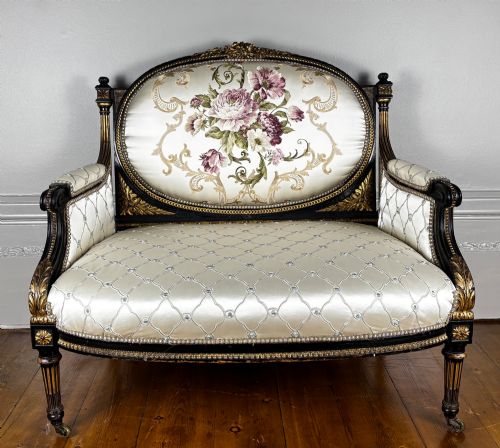


French Carved Canape
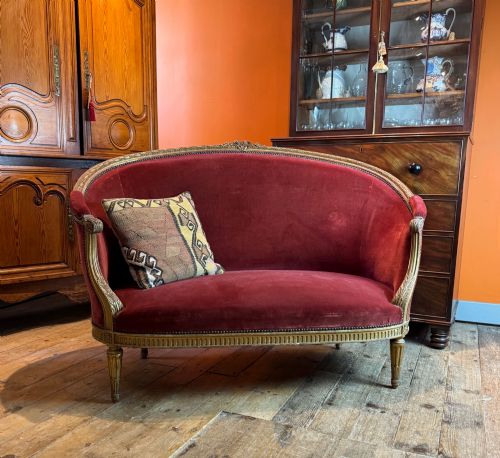
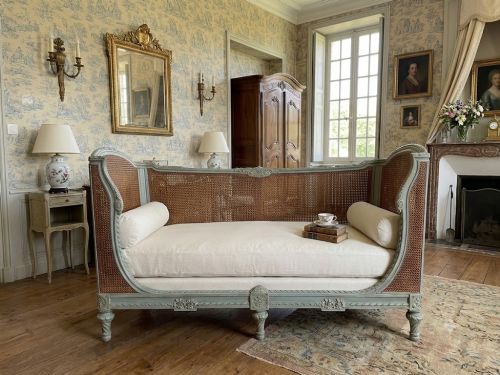
A French carved canapé brings salon elegance to a room with its sweeping wooden curves and generous two-seat proportions.
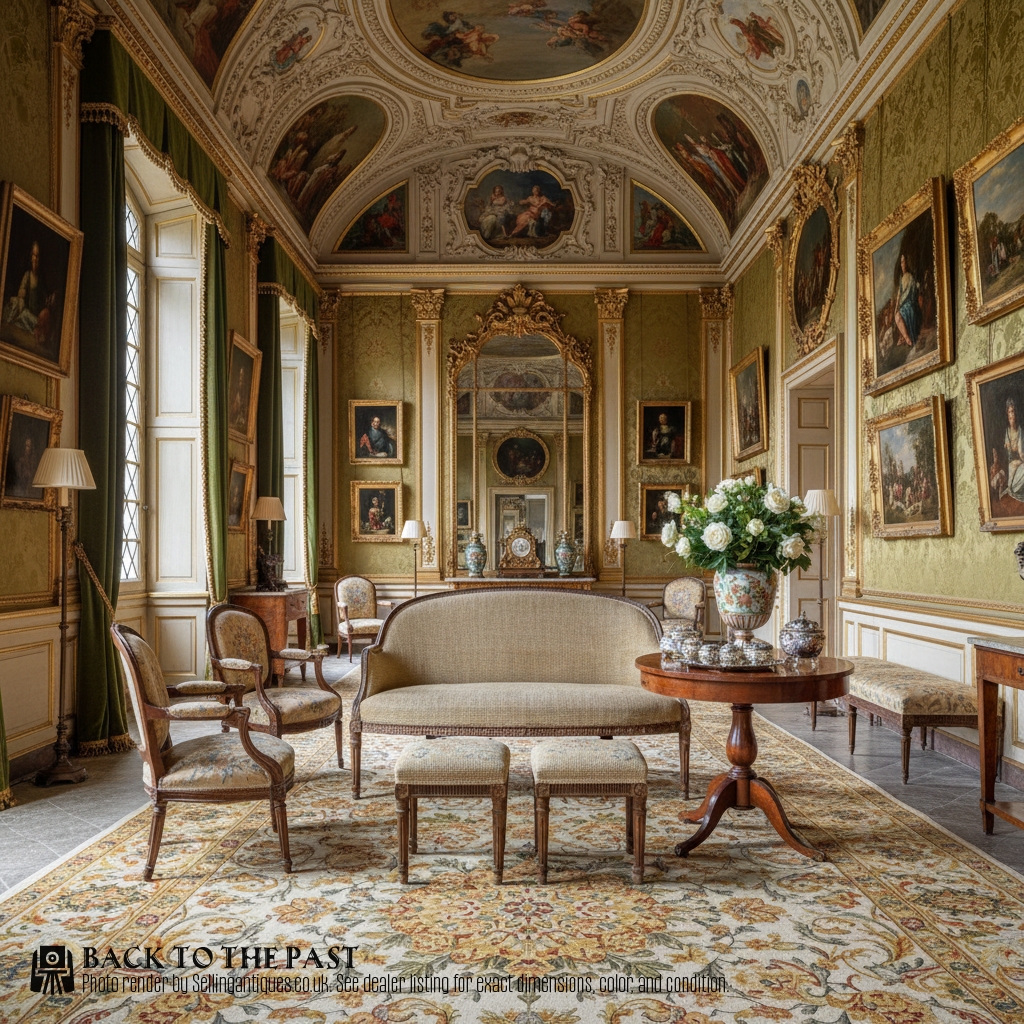
French Carved Canape
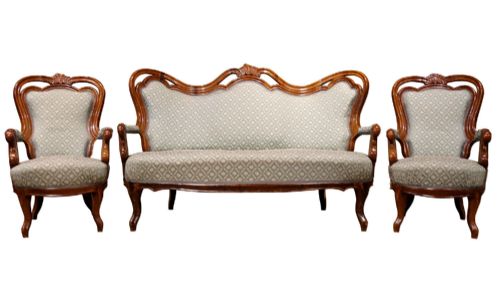
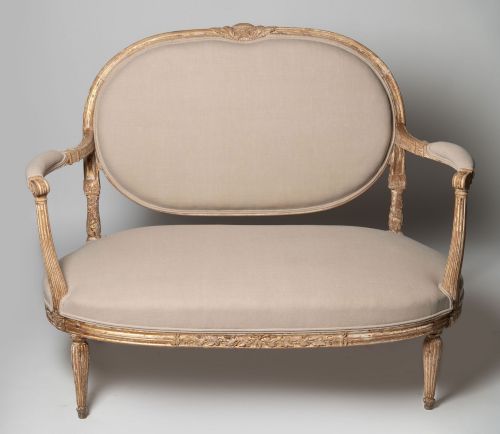
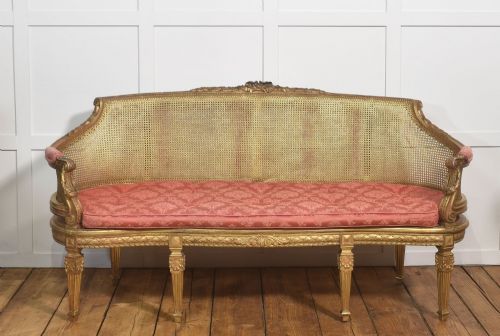
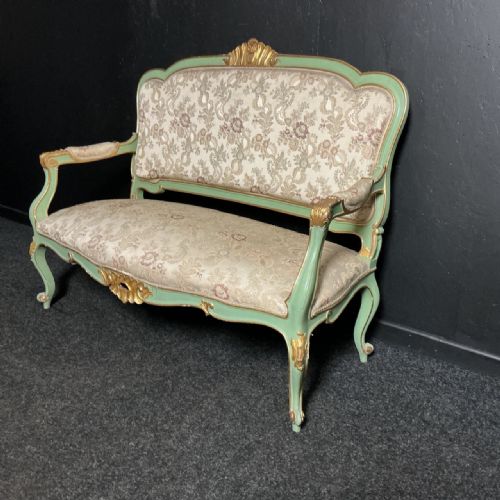
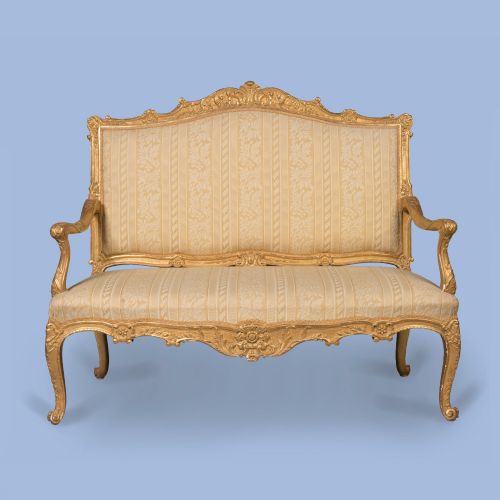
A French carved canapé is an upholstered or caned settee designed for formal seating, appearing frequently in nineteenth-century and early twentieth-century iterations. Buyers typically encounter pieces reflecting Louis XV and Louis XVI revivals, alongside Rococo and Baroque tastes.
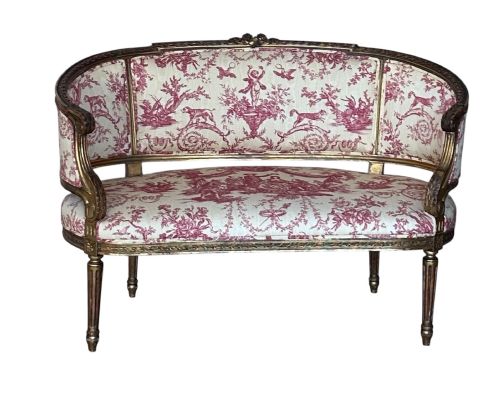
Forms range from compact two-seat love seats and corbeille daybeds to grand salon suites incorporating matching armchairs. The primary function remains decorative reception seating, bridging the gap between utilitarian furniture and sculptural art.
Origins span Parisian workshops and regional continental makers adopting court aesthetics for domestic interiors. Surviving examples demonstrate how historic seating adapts to modern drawing rooms and bedrooms.
Materials and construction methods
Frames rely on hardwoods such as beech and walnut, chosen for their capacity to hold crisp hand-carved details along the crest rails and cabriole legs. Giltwood surfaces feature a layer of gold leaf applied over gesso, while painted finishes utilise muted tones or parcel gilt highlights.
Upholstery techniques involve traditional stuffing secured over webbed bases, paired with woven cane panels on lighter frames. Textile choices span heavy silk velvets, patterned damasks and traditional tapestries fixed with individual decorative tacks.
Listings demonstrate a strong preference for giltwood and walnut frames, dominated by nineteenth-century revivals of Louis XV and Louis XVI aesthetics.
Indicators of refinement
Quality rests primarily in the depth and sharpness of the hand carving along the wooden frame, where crisp floral motifs distinguish superior work from shallow mechanical shaping. The integration of structural joints into the decorative scheme also marks the hand of a skilled maker.
The choice of primary wood and the integrity of original gilding or paint layers determine long-term value. Pieces retaining their early cane panels and robust frame construction without excessive reinforcement sit firmly at the upper tier.
The French Carved Canape Glossary
- Giltwood
- Timber treated with a thin layer of gold leaf over a prepared ground. This finish was favoured for formal salon furniture to catch candlelight.
- Corbeille
- A basket-shaped furniture form featuring a rounded, enveloping back and sides. This design offers a particularly intimate and enclosed seating posture.
- Cabriole leg
- A furniture leg that curves outward in a convex arc and then bends inward in a concave arc, ending in a pad or scroll foot. It is a defining feature of Louis XV style pieces.
- Ormolu
- Gilded bronze mounts applied to furniture for decorative effect. They protect vulnerable corners and enhance the visual richness of the piece.
French Carved Canape: Frequently Asked Questions
How do I clean a giltwood frame?
Dust the gilded surfaces gently with a soft, dry brush to prevent accumulation without disturbing the delicate gold leaf.
Avoid liquid cleaners entirely, as moisture can lift the underlying gesso and cause irreparable damage to the antique finish.
Can I replace the upholstery fabric?
Upholstery can be updated to suit modern interiors while preserving the internal webbing and traditional padding methods.
Working with a specialist restorer ensures the fragile wooden frame remains protected during the reupholstery process.
What is the difference between Louis XV and Louis XVI styles?
Louis XV pieces feature asymmetrical curves, flowing rocaille motifs and characteristic cabriole legs.
Louis XVI furniture introduces neoclassical restraint, straight fluted legs, symmetry and geometric ribbon or leaf carvings.
Are these settees comfortable for daily use?
Historic settees were built for upright formal posture rather than lounging, offering firm support rather than deep sink-in comfort.
Adding a discreet feather cushion can improve everyday usability while maintaining the historical silhouette.