


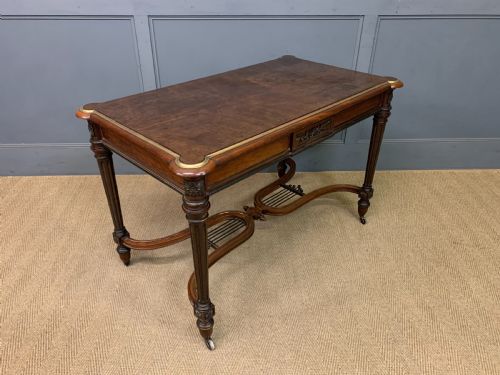


French Carved Bureau
A French carved bureau brings continental elegance to a room, offering practical workspace housed within finely detailed cabinetry.
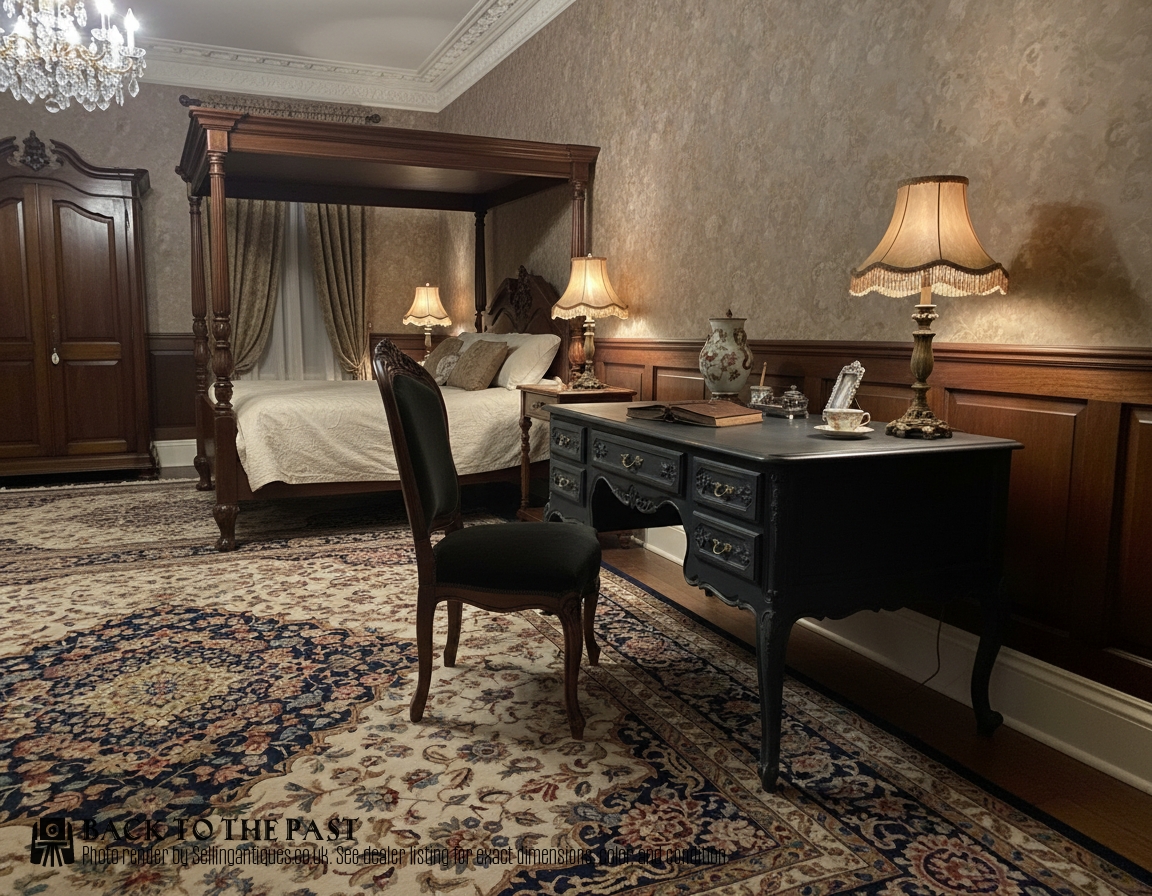
French Carved Bureau
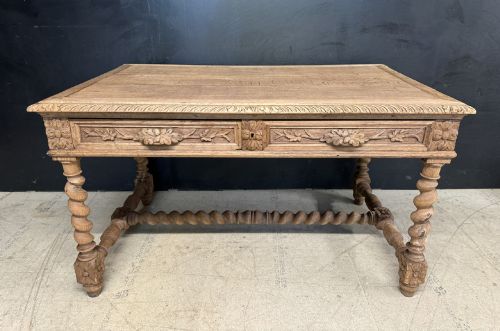
A french carved bureau combines writing surfaces with concealed compartments or drawers, shaped by revivalist cabinet-making traditions. These pieces predominantly date from the nineteenth century, reflecting periods like Louis XV and Louis XVI revivals.
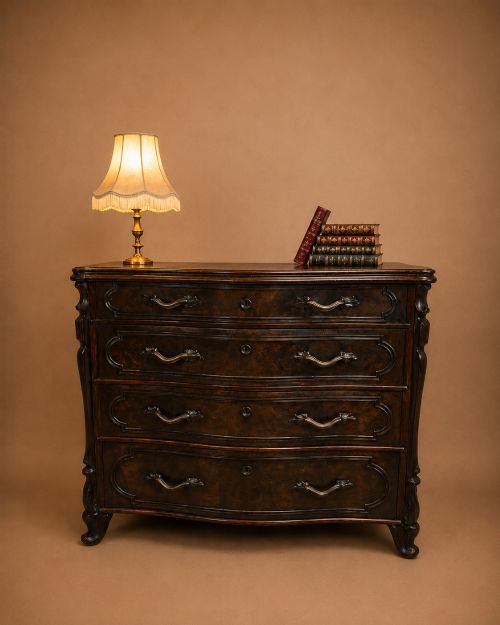
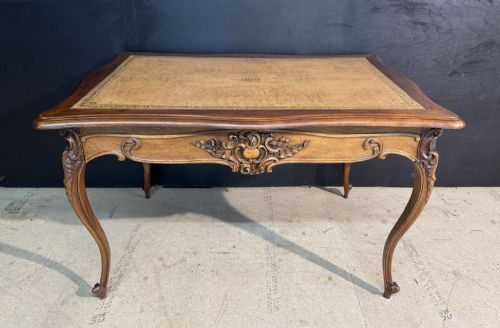
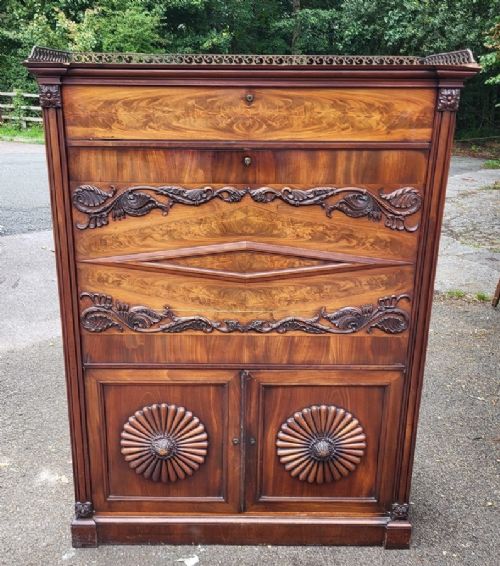
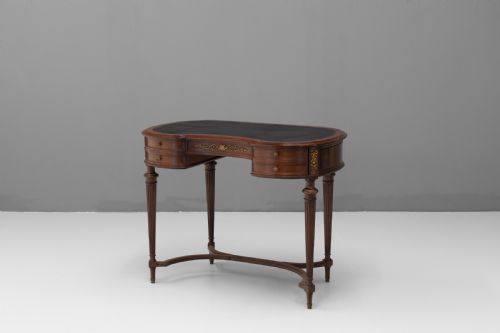
Buyers encountering this search phrase will regularly find writing desks, secretaires, and bonheur du jour cabinets. Mahogany, walnut, and burr walnut dominate the forms, often paired with leather writing inserts and decorative brass mounts.
The aesthetic leans heavily into continental tastes, showcasing serpentine fronts, marquetry inlay, and carved woodwork. Such desks served both formal reception spaces and private chambers for correspondence.
How they were made
Cabinet-makers relied on solid hardwoods like mahogany and walnut, frequently applying figured veneers such as burr walnut or flame mahogany to principal surfaces. Marquetry inlay introduced contrasting timbers, creating intricate geometric or floral patterns across drawers and lids.
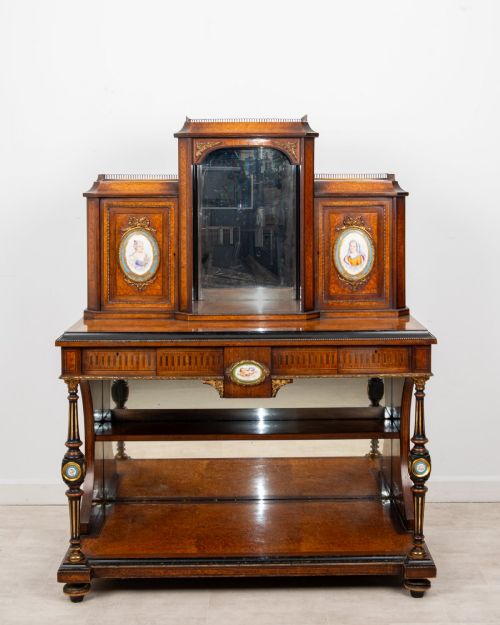
Structural elements incorporated brass for handles, escutcheons, and decorative ormolu mounts that accented the carved contours. Leather inserts provided a durable writing surface, while glass and porcelain plaques occasionally embellished more elaborate bonheur du jour tables.
Listings feature nineteenth-century walnut and mahogany alongside earlier eighteenth-century examples and twentieth-century art deco desks.
What varies in quality
The depth and crispness of the hand-carved ornamentation separate standard pieces from exceptional examples. Fine execution shows sharp detail in foliage and scrolls without softening from subsequent sanding or wear.
Selection of timber grain dictates visual impact, with matched veneers and expressive flame mahogany or burr walnut elevating the piece. The integration of secondary materials, such as fire-gilt ormolu and hand-tooled leather, demonstrates the maker's commitment to finish.
Edwards and Roberts·Étienne Kohlmann
The French Carved Bureau Glossary
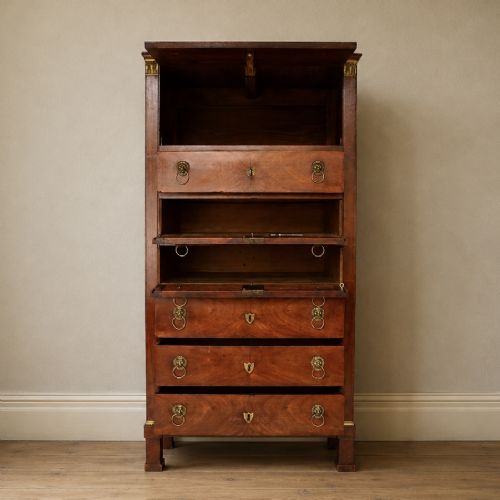
- Secrétaire à abattant
- A tall vertical cabinet featuring a drop-front writing flap that conceals a fitted interior of small drawers and pigeonholes. This form maximises workspace while maintaining a compact footprint in a room.
- Bonheur du jour
- A light lady's writing desk usually fitted with a small cabinet, shelves, or drawers upon the upper surface. It emerged in mid-eighteenth-century France and remained popular through nineteenth-century revivals.
- Marquetry
- The art of applying decorative pieces of veneer to a structure to form intricate designs or pictures. Craftsmen cut contrasting woods to fit precisely together before gluing them to the carcass.
- Ormolu
- Gilded bronze mounts applied to furniture to accent corners, feet, and keyholes. The technique involves treating metal with a mixture of gold and mercury to achieve a rich lustre.
French Carved Bureau: Frequently Asked Questions
Where were these desks placed?
These pieces sat in principal reception rooms, libraries, or private chambers depending on their scale and ornamentation.
Larger library tables and bureau plats stood centrally, while smaller writing desks and bonheur du jour cabinets occupied perimeter walls near natural light.
How do I care for leather inserts?
Leather writing surfaces require gentle cleaning with a slightly damp cloth followed by a neutral wax conditioner.
Avoid chemical solvents or excessive moisture to preserve the gold tooling and supple texture of the hide.
How do I distinguish revival styles?
Louis XV revival pieces emphasise asymmetrical curves, naturalistic carving, and serpentine outlines. Louis XVI revival items favor symmetry, straight tapered legs, and classical architectural motifs.
Nineteenth-century makers reinterpreted these historical French vocabularies with Victorian domestic requirements in mind.
Were these used for letters?
Writing desks and secretaires served primarily for correspondence, keeping stationery, ink, and seals organised within fitted interior compartments.
The drop-front or sliding surfaces provided a dedicated space for letter writing before the widespread use of postal services.