







French Cabriole Leg Ottoman
A french cabriole leg ottoman brings curvilinear elegance to a room, offering low seating or a place to rest feet.
French Cabriole Leg Ottoman
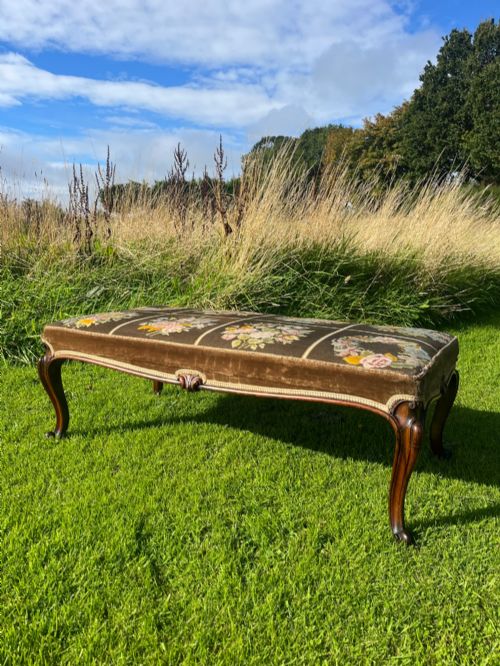
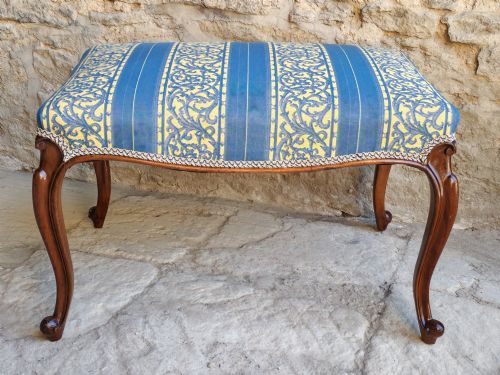
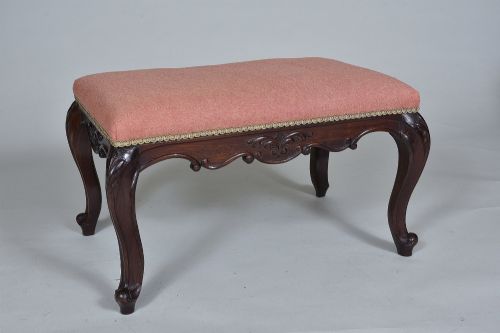
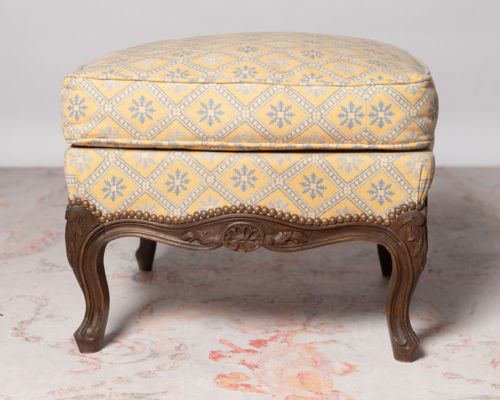
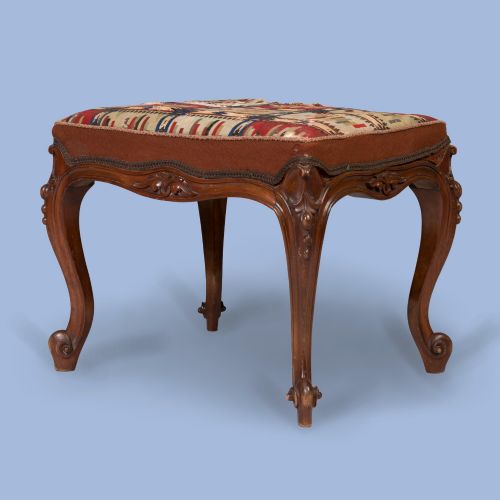
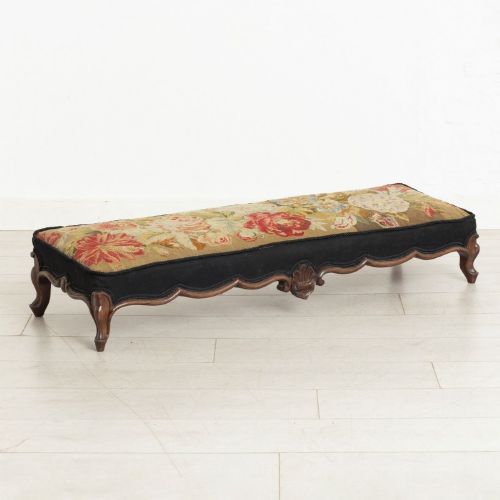
A french cabriole leg ottoman typically takes the form of a low stool, footstool, or window seat resting on distinctive curving supports. These seating pieces appear across nineteenth-century and early twentieth-century periods, drawing on Regency, Victorian, and revival designs.
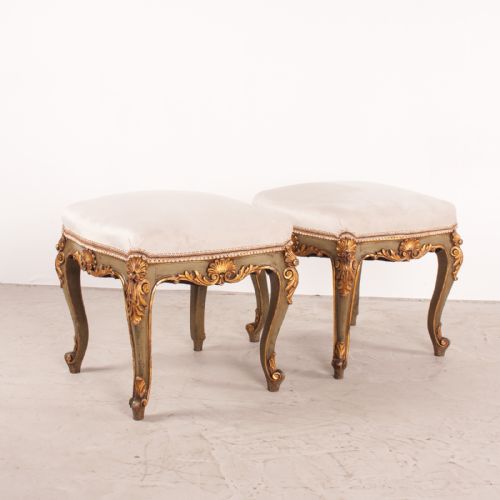
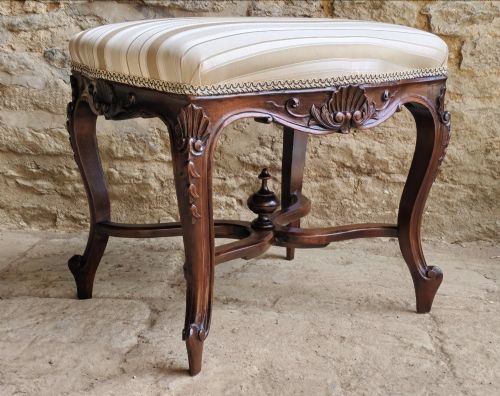
The most common examples on this page are walnut, mahogany, or painted wood stools featuring carved details and upholstered tops. Buyers find both single statement pieces and matched pairs designed for salons, drawing rooms, and bedrooms.
How they were made
Cabinetmakers shaped the frames from hardwoods such as walnut, mahogany, rosewood, and oak, often finishing the timber with paint, gilding, or polished clear coats. Carved ornamentation on the knees and feet required skilled hand-chiselling before assembly.
Upholstery involved webbing, stuffing, and textile coverings secured with tacks, ranging from plain fabric and velvet to decorative needlework and buttoned treatments. Some pieces retain their original upholstery textiles while others arrive ready for new fabric.
French Cabriole Leg Ottoman Retail Price Guide 2026
Typical asking prices for french cabriole leg ottoman among the pieces listed under this phrase on Sellingantiques today, from the lower quarter to the upper quarter. They describe what is for sale here now, not the wider market.
Listings feature walnut, mahogany, rosewood, and oak frames paired with velvet, needlework, and plain textile upholstery.
What varies in quality
The standard of carving determines much of the visual distinction, with crisp, deeply undercut foliage and scrollwork separating superior work from simpler moulded execution. The weight and choice of primary timber also dictate the structural integrity of the frame.
Original surface treatments, such as period gilding or authentic painted finishes, hold greater appeal than later re-paintings. The retention of period textile coverings or needlework adds another layer of historical completeness.
Loidrault Freres Paris
The French Cabriole Leg Ottoman Glossary
- Cabriole leg
- A furniture support that curves out at the knee and tapers inward to an ankle, inspired by animal limbs. This form became a defining feature of eighteenth-century design and later revival periods.
- Giltwood
- Timber coated with a thin layer of gold leaf or gilt composition. This finish appears on decorative salon furniture from the nineteenth century.
- Needlework
- Hand-stitched textile work using yarn or thread on a canvas mesh. Such covers frequently adorn the tops of period footstools.
- Window seat
- A long, narrow form of stool or bench designed to fit into a bay or recess. These pieces often feature carved frames and upholstered tops.
- Rococo revival
- A nineteenth-century design movement that resurrected the flowing, asymmetrical curves and shell motifs of the mid-eighteenth century. Furniture from this style employs exuberant carving on walnut and mahogany.
French Cabriole Leg Ottoman: Frequently Asked Questions
Where should I place a french cabriole leg ottoman?
These low seats function well at the end of a bed, beneath a window, or beside a fireside armchair. Their compact footprint allows them to tuck easily into living spaces without blocking sightlines.
They also serve as flexible footrests or impromptu perches when hosting guests in a drawing room or salon.
How do I care for the wooden frame?
Dust the carved woodwork regularly with a soft, dry cloth to prevent dirt accumulation in the crevices of the legs. Avoid placing the piece near direct heat sources or strong sunlight, which can dry out timber and crack painted or gilded finishes.
Apply a microcrystalline wax sparingly if the polished wood requires nourishment, taking care to avoid any exposed upholstery fabric.
Can I replace the upholstery fabric?
Many antique stools feature traditional stuffing and webbing that can be re-covered to match modern interiors. Some pieces are sold explicitly ready for new upholstery, allowing you to select a textile of your choice.
Consult a professional restorer who understands traditional springing and tacking methods to preserve the integrity of the wooden frame.
How do I distinguish a Victorian piece from a Regency one?
Regency examples generally display restrained classical lines, drawing on ancient Greek and Roman influences with simpler turning or carved detail. Victorian pieces tend toward heavier proportions and more exuberant floral carving, particularly within revival styles.
Examining the wood species, construction joints, and any secondary timbers helps clarify the decade of manufacture.