



French Burr Walnut Desk
A french burr walnut desk brings rich timber figures and gilt ormolu mounts together for an elegant writing space.
French Burr Walnut Desk
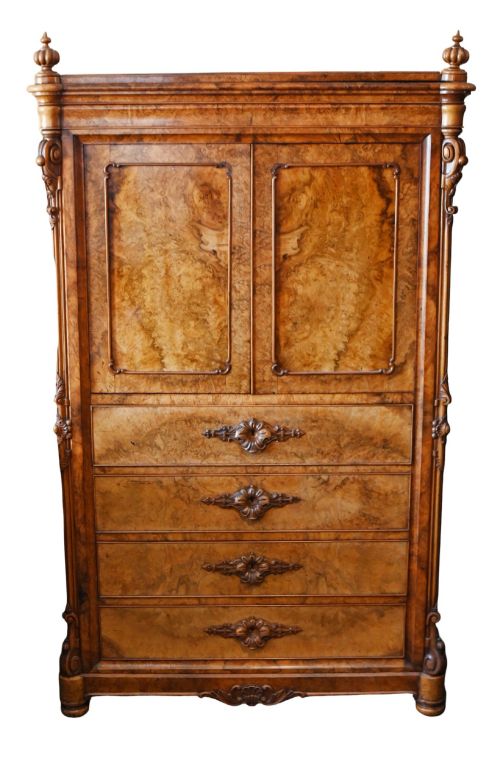
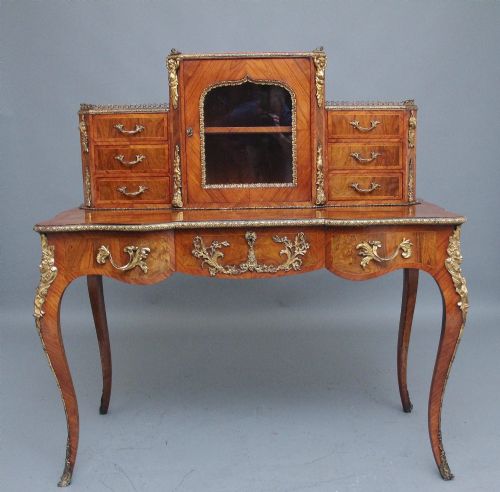
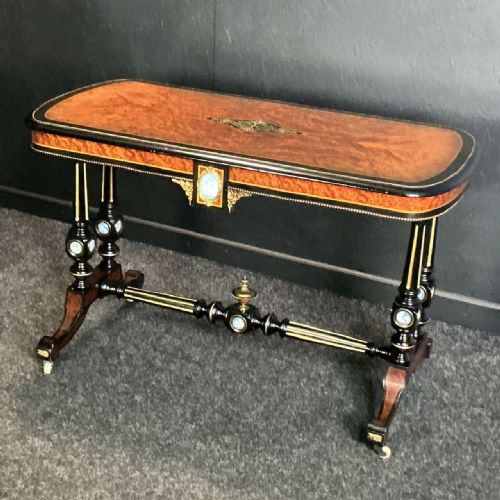
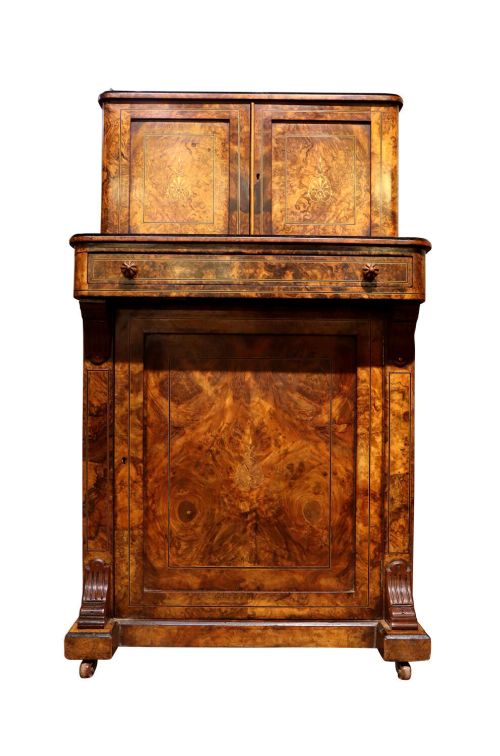
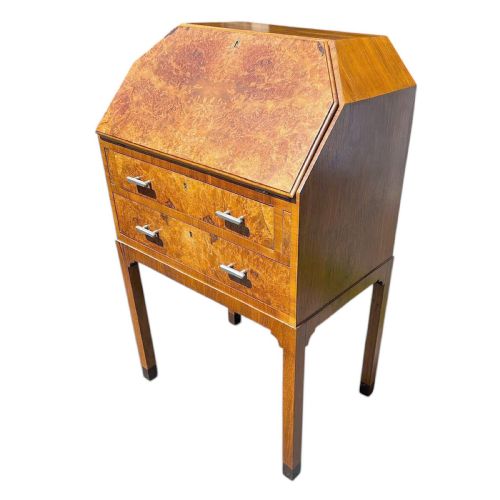
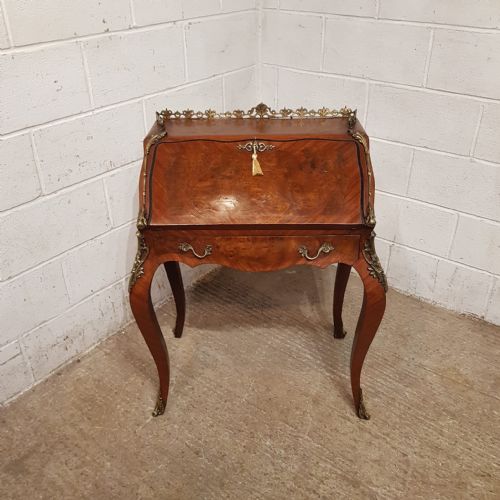
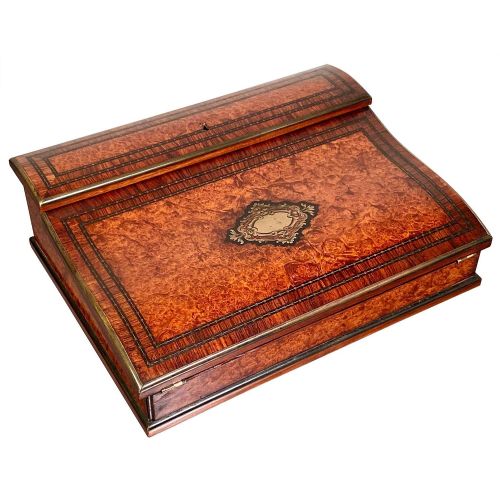
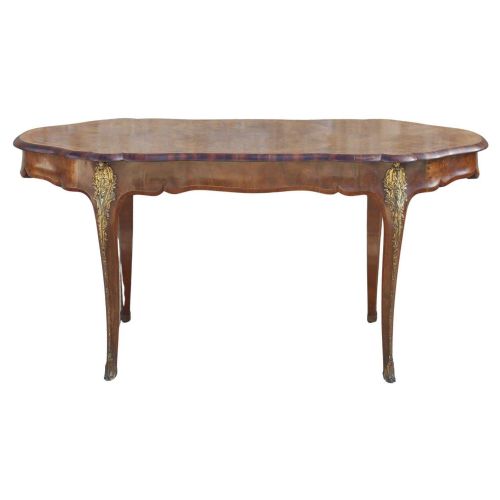
A french burr walnut desk is defined by its striking veneer work, utilising the knotted growths of walnut to create swirling, highly decorative grain patterns across the writing surface and drawers. These pieces frequently appear in forms such as the compact bureau de dame, the refined bonheur du jour, and the freestanding bureau plat.
The pieces on this page span the Victorian era and the nineteenth century, alongside later revivals from the early twentieth century. Most examples adopt Louis XV styles or French revival aesthetics, showcasing serpentine shapes, cabriole legs, and elaborate brass or ormolu mounts.
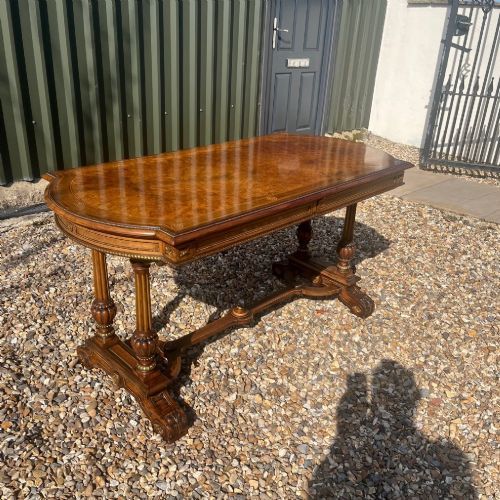
The selection ranges from smaller ladies writing desks with fitted compartments to larger library tables and pedestal desks intended for central room placement. This variety reflects both domestic study use and formal reception rooms where the back of the desk needed to look as polished as the front.
Materials and construction
Cabinet makers selected thin slices of burr walnut veneer, prized for its intricate natural patterns, and laid them over solid secondary timbers using traditional hot animal glues. This technique required careful matching of the grain across drawer fronts and table tops to achieve symmetrical visual balance.
Cast ormolu and gilt bronze mounts were applied to corners, legs, and borders, secured with small pins or screws behind the panels. Leather writing surfaces, often gold-tooled along the perimeter, were inset into the timber frames to provide a durable and smooth plane for daily correspondence.
Materials across these desks combine burr walnut and figured walnut with ormolu mounts, brass inlay, and leather.
Evaluating craftsmanship and proportion
Quality rests in the selection and continuity of the burr walnut veneer, where superior pieces display dense, unblemished swirling patterns that match seamlessly across opening drawers and hinged lids. Lesser examples show mismatched grain directions or heavy repairs where the thin veneer has chipped away over time.
The refinement of the cast ormolu mounts separates standard production from exceptional pieces, with finer desks showing crisp chiselling and deep relief work rather than smooth, factory-cast edges. The structural rigidity of the cabriole legs and the smooth action of internal drawers further indicate the original maker's skill.
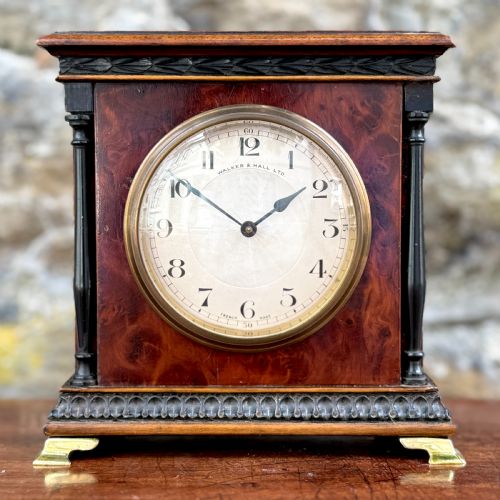
Walker and Hall·Lenzkirch·Holland and Son·Edward and Robert
The French Burr Walnut Desk Glossary
- Burr walnut
- A timber veneer sliced from the knotty growths of walnut trees. It produces highly figured, swirling patterns that decorators prize for tabletops and cabinet doors.
- Bureau de dame
- A small ladies writing desk, often featuring a sloping lid or a superstructure with small drawers and pigeonholes. These pieces became popular during the nineteenth century for personal correspondence.
- Ormolu
- Gilt bronze applied to furniture mounts and clock cases. The technique involves coating cast bronze with a mercury and gold amalgam before heating.
- Bonheur du jour
- A light ladies writing desk featuring a small set of drawers and shelves on top of the writing surface. The name translates from French as daylight joy.
- Bureau plat
- A freestanding flat-topped writing table finished on all sides. It typically stands on slender legs and often incorporates one or more drawers beneath the top.
French Burr Walnut Desk: Frequently Asked Questions
How do I clean the veneer?
Dust the burr walnut surface regularly with a soft, dry cloth to prevent dirt accumulation in the natural grain crevices. Avoid modern silicone sprays and harsh chemical polishes that can damage the old finish.
Apply a traditional beeswax sparingly once or twice a year to nourish the timber. Buff gently with a clean cloth to maintain a soft, natural sheen without creating buildup.
Can I use it for daily writing?
Many of these desks function well for daily tasks, provided you treat the antique leather writing surface with care. Keep modern fountain pens and sharp objects away from unprotected leather to prevent permanent scratches.
Ensure that heavy modern equipment like desktop computers is avoided, as antique drawer structures and slender cabriole legs were built for lighter correspondence rather than heavy loads.
How do I spot a later copy?
Examine the secondary timbers inside the drawers and beneath the top to check for period-appropriate wood species and hand-cut dovetail joints. Machine-cut joints and modern plywood indicate a twentieth-century reproduction.
Look closely at the ormolu mounts and the wear patterns on the veneer. Genuine nineteenth-century pieces display natural age shrinkage in the wood and consistent oxidation around the bronze mounts.
Where should I place the desk?
Freestanding models like the bureau plat look best positioned in the middle of a room where all sides remain visible. Because burr walnut can fade or dry out in direct sunlight, keep the desk away from south-facing windows and active heat sources.
Maintain a stable room temperature and moderate humidity to prevent the thin walnut veneer from lifting or cracking over time.