














French Bronzed Spelter Sculpture
French bronzed spelter sculpture offers an accessible route to decorative figural art, giving interiors the presence of metalwork through cast zinc alloy given a rich dark finish.
French Bronzed Spelter Sculpture
When you search for french bronzed spelter sculpture, you find figures, animal groups, lamp bases, and clock garnitures cast from zinc-based alloys and treated with patination to resemble bronze. The most frequent encounters on this page span the late nineteenth century into the 1930s, moving from Victorian realism and Art Nouveau curves to geometric Art Deco forms.
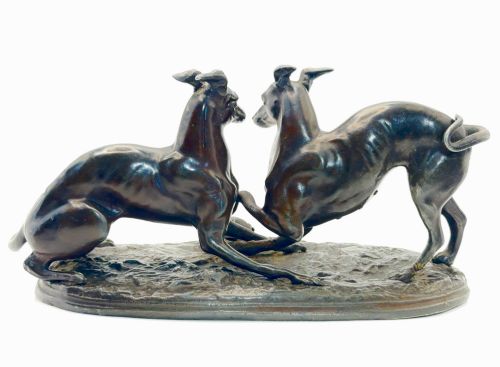
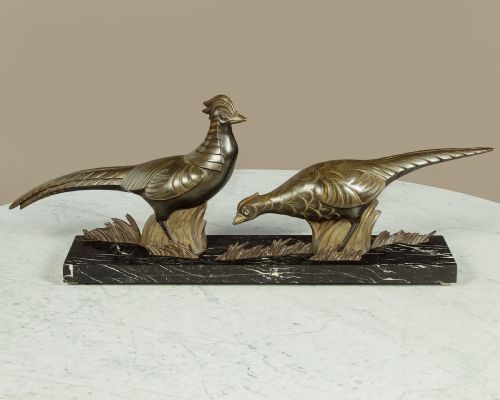
The subjects range from allegorical human figures, agricultural labourers, and dancers to sporting figures, dogs, stags, and panthers. Many pieces incorporate integral bases of marble or onyx, elevating the metalwork and providing weight and stability to the cast figures.
How They Were Made
Spelter, primarily a zinc alloy, is softer and melted at lower temperatures than bronze, making it suitable for commercial metal casting. Foundries poured the molten metal into moulds, finishing the cooled castings with cold-painted or chemical patination treatments designed to imitate bronze surfaces.
Makers mounted these finished metal figures onto heavier natural stones like marble and onyx, or integrated them into functional objects such as mantel clocks and table lamps.
French Bronzed Spelter Sculpture Retail Price Guide 2026
Typical asking prices for french bronzed spelter sculpture among the pieces listed under this phrase on Sellingantiques today, from the lower quarter to the upper quarter. They describe what is for sale here now, not the wider market.
Objects include mantel clocks, bookends, table lamps, and figural groups mounted on marble and onyx bases.
What Varies in Quality
The quality of the mounting base also differentiates the range, with dense veined marble or multi-toned onyx elevating the presentation of the cast metal subject above simpler wooden or unmounted formats.
Jean de Roncourt·Uriano·F. Milliot·P. Sega·C Masson·Geo Maxim·H. Bal·Chiparus·Auguste Moreau
The French Bronzed Spelter Sculpture Glossary
- Spelter
- A zinc alloy commonly utilised as a substitute for bronze in decorative figures and clock cases. It takes patination well to mimic heavier metals.
- Patination
- The surface treatment applied to metal to simulate age and colour. Chemical or painted finishes give spelter its dark bronzed appearance.
- Animalier
- The realistic depiction of animals in sculpture. This style gained popularity across the nineteenth century through works featuring dogs, stags, and big cats.
- Garniture
- A set of decorative objects designed to be displayed together, frequently comprising a mantel clock flanked by matching figures or urns.
French Bronzed Spelter Sculpture: Frequently Asked Questions
What is spelter metal?
Spelter is a zinc-based alloy that served as an economical alternative to bronze for decorative sculptures and household items. Foundries cast it into moulds to produce figures, clock cases, and lamp bases.
Because the metal is softer than bronze, manufacturers applied surface patination to give it the appearance of aged bronze or iron.
How do I identify Art Deco pieces?
Art Deco pieces typically date from the 1920s and 1930s, featuring stylised geometries, streamlined human figures, and animals in motion. Dancers, athletes, and sleek panthers are common motifs from this era.
These sculptures often sit on contrasting geometric bases made of black marble or multi-toned onyx.
Were these sculptures used as lamps?
Yes, many figural casts were adapted to function as table lamps or incorporated directly into electric and oil lighting fixtures. The figures often hold lamp arms, shades, or glass fittings.
These functional pieces combine decorative casting with domestic utility, appearing frequently in clock sets and garnitures.
How should I clean my sculpture?
Dust the surface gently with a soft, dry cloth to prevent the accumulation of grit. Avoid using water, abrasive cleaners, or chemical solvents, which can strip the patination.
Because spelter is a softer alloy, handle the pieces with care and keep them away from humid environments to protect the metal finish.