

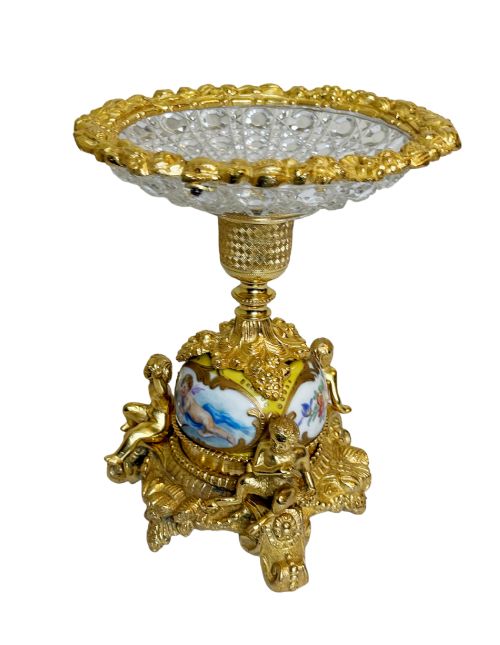
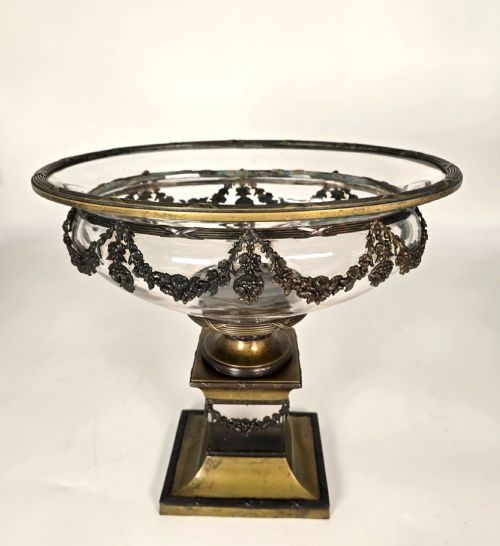
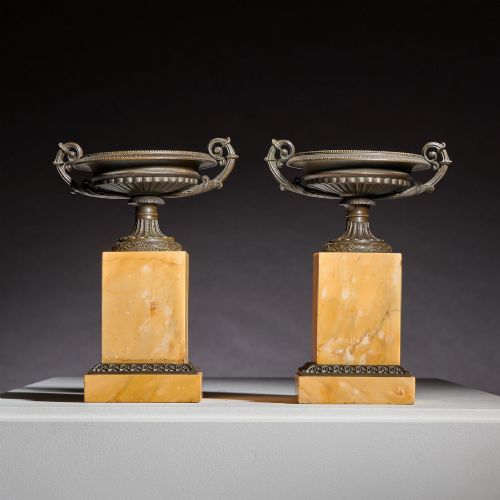
French Bronze Pedestal
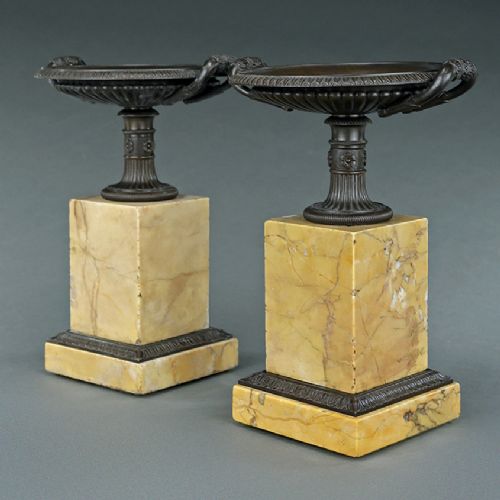
These french bronze pedestal pieces combine cast metal with fine stone to elevate urns, busts and tazzas in classical interiors.
French Bronze Pedestal
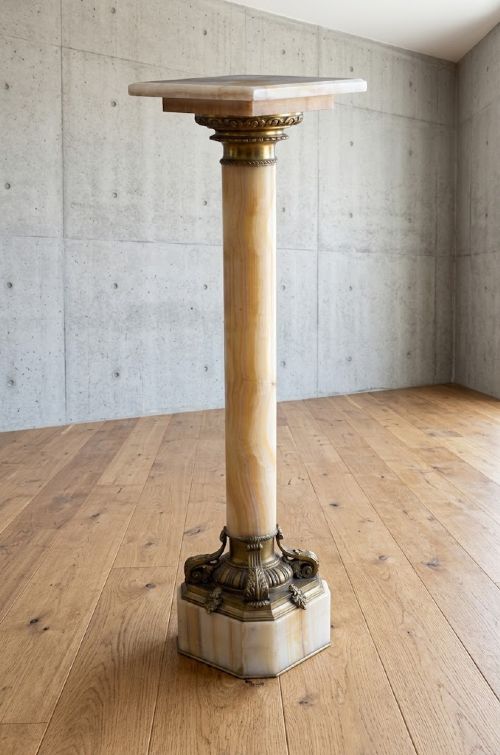
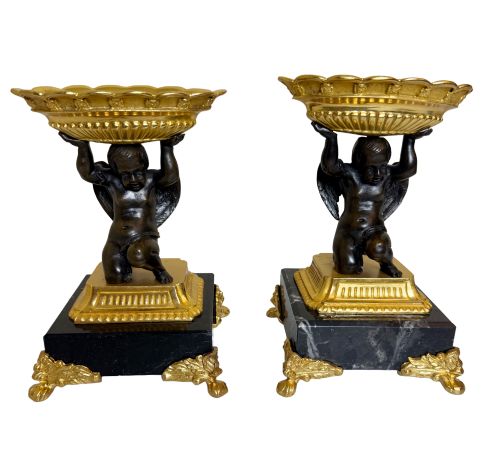
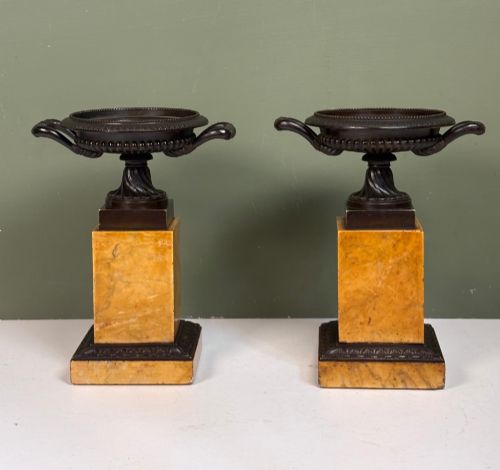
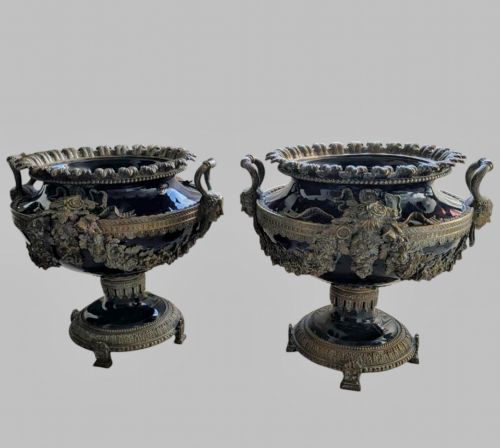
A french bronze pedestal brings together architectural stone columns and cast metal mounts, originating primarily from nineteenth-century workshops influenced by classical antiquity and Grand Tour travels. These supports range from tall marble display columns fitted with ormolu collars to smaller table bases designed for decorative bowls and tazzas.
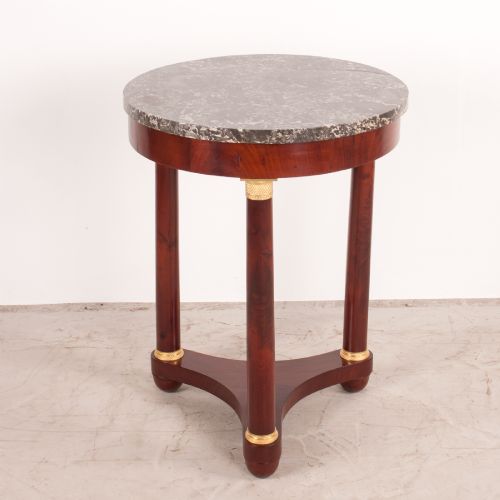
Buyers will frequently encounter nineteenth-century examples drawing on French Empire, Neoclassical and Rococo Revival styles. The inventory here spans columnar stands of onyx and marble alongside bronze-mounted tables and plinths.
Materials and Construction
Foundry casting produced the primary bronze and ormolu components, utilising copper alloys finished with chemical patination or mercury gilding. These metal mounts were then secured to turned or carved sections of marble, onyx, Siena stone and mahogany.
Joinery relied on threaded rods, internal pinned fittings and concealed bronze pins to anchor heavy stone shafts to their decorative collars and plinth bases.
Listings feature 19th-century materials including ormolu, marble, onyx, and mahogany across French Empire and Neoclassical styles.
Evaluating Execution
Quality rests in the crispness of the bronze chasing and the density of the chosen stone, where sharper cast details and heavier marble or onyx indicate superior workshop standards. Finer pieces demonstrate precise fitting between metal mounts and stone surfaces without visible gaps or excessive adhesive.
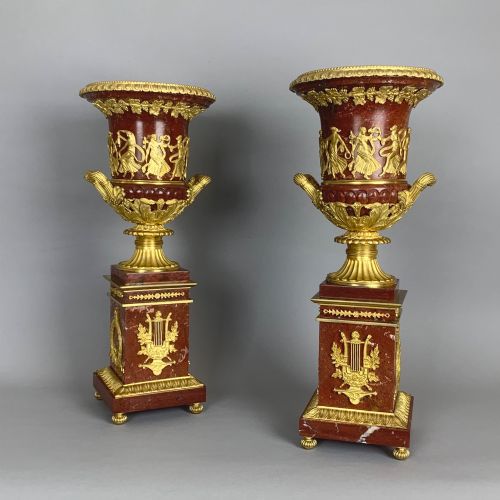
The sophistication of the design dictates value, distinguishing standard production mounts from finely modeled neoclassical friezes and figural ormolu collars executed by skilled founders.
Mercier Frères·Emile Guillemin·Jean Antoine Houdon·A Moreau Paris
The French Bronze Pedestal Glossary
- Ormolu
- Gilded bronze produced by applying a mercury and gold amalgam to a cast bronze base and firing it. This technique creates a durable, golden surface common in nineteenth-century French decorative arts.
- Tazza
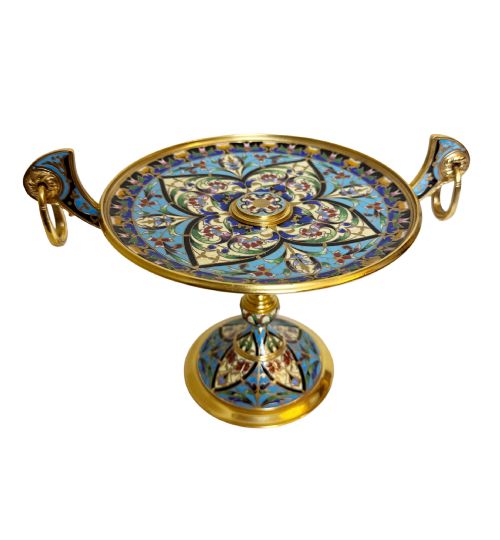
- A shallow bowl or vase elevated on a stem and foot, frequently rendered in bronze and marble. These pieces served as decorative centerpieces or display vessels.
- Grand Tour
- A cultural journey undertaken by wealthy young Europeans to study classical antiquities. Souvenirs from these travels included miniature bronzes, marble columns and pedestal urns.
- Guéridon
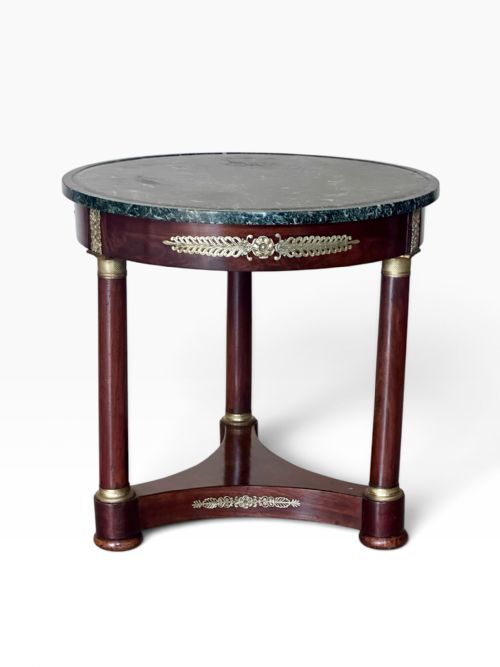
- A small French occasional table supported by a central column or pillar rather than four legs. They often feature marble tops and bronze mounts.
- Spelter
- An alloy of zinc and lead used as a cheaper alternative to bronze. It was frequently painted or bronze-finished to imitate genuine metalwork.
French Bronze Pedestal: Frequently Asked Questions
How were french bronze pedestal stands originally used?
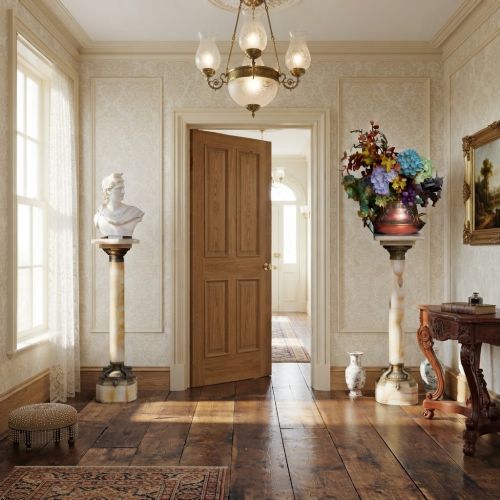
These supports served primarily to elevate decorative urns, portrait busts and tazzas within reception rooms and libraries. They brought eye-level prominence to sculptural works and imported marbles.
In larger houses, taller columns functioned as architectural accents in hallways or drawing rooms, while smaller variations sat atop sideboards and desks.
What is the difference between bronze and ormolu?
Bronze is an alloy of copper and tin used for structural castings and dark-patinated sculptures. Ormolu refers specifically to bronze that has been gilded with a gold amalgam.
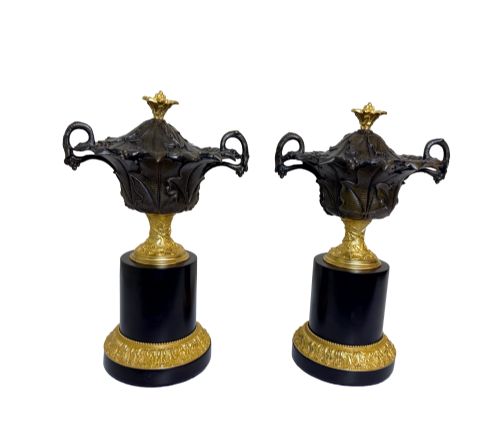
On these pieces, the two materials appear together, where the dark bronze provides contrast against bright gilded bronze mounts.
How do I care for marble and bronze?
Dust surfaces regularly with a soft, dry cloth to prevent particulate buildup on the metal and stone. Avoid chemical cleaners and polishes, which can strip historic patinas or etch polished marble.
Wax can be applied sparingly to unlacquered bronze surfaces, while stone sections require only a damp cloth followed by immediate drying.
How do I distinguish nineteenth-century pieces from later copies?
Examine the construction methods, screw threads and patination of the metal components. Nineteenth-century examples typically employ hand-cut fixings, heavy natural stones, and deep, uneven patination acquired through age.
Later reproductions often feature modern machine-cut screws, lighter manufactured composite stones, and uniform factory finishes.