





French Bronze Mounted Clock
A french bronze mounted clock combines precision timekeeping with ornate metalwork, offering a decorative centrepiece shaped by nineteenth-century revival styles.
French Bronze Mounted Clock
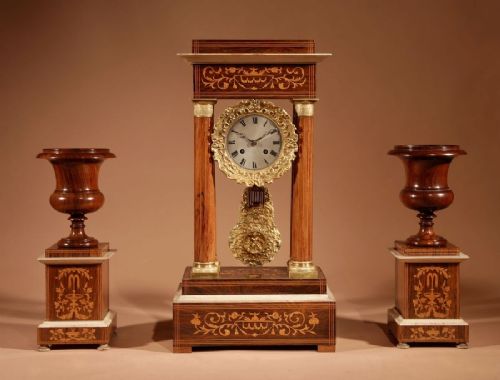
A french bronze mounted clock typically takes the form of a mantel clock, often accompanied by matching garnitures or housed within elaborate architectural cases. These pieces span the eighteenth to the early twentieth century, drawing heavily on historical aesthetics such as Louis XIV, Louis XV, and Louis XVI revivals.
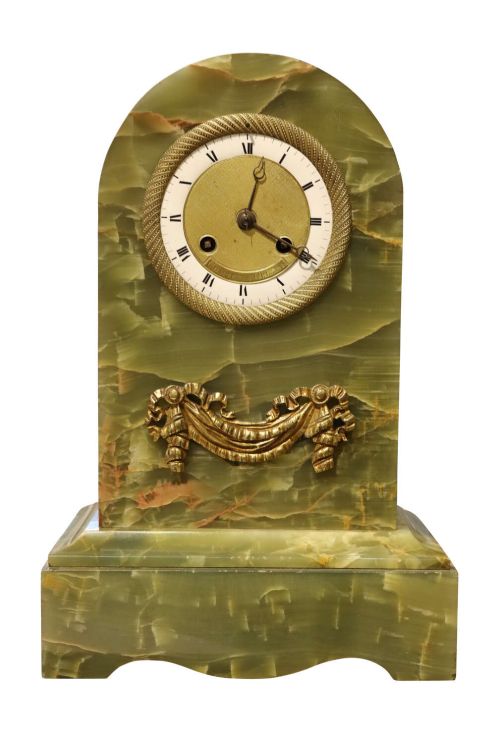
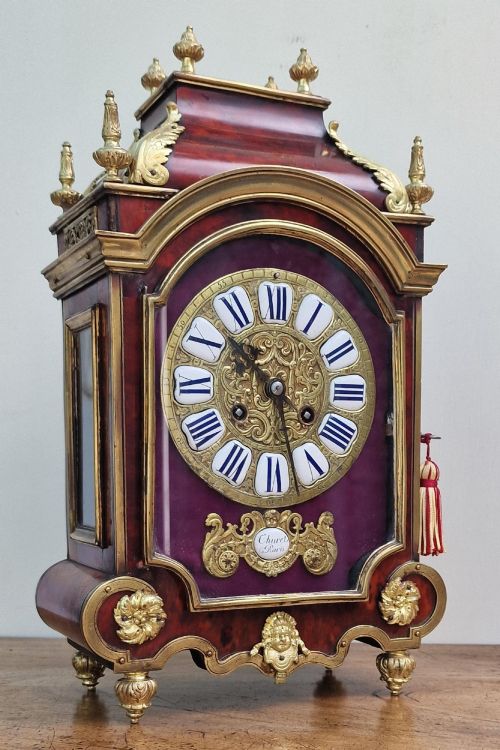
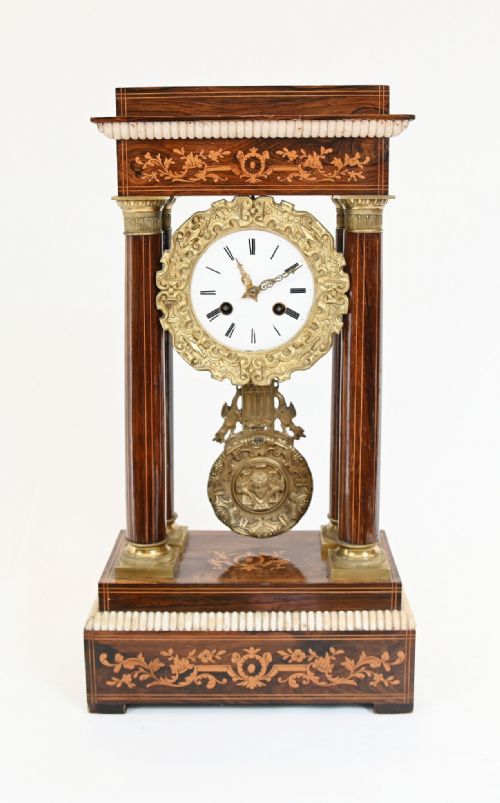
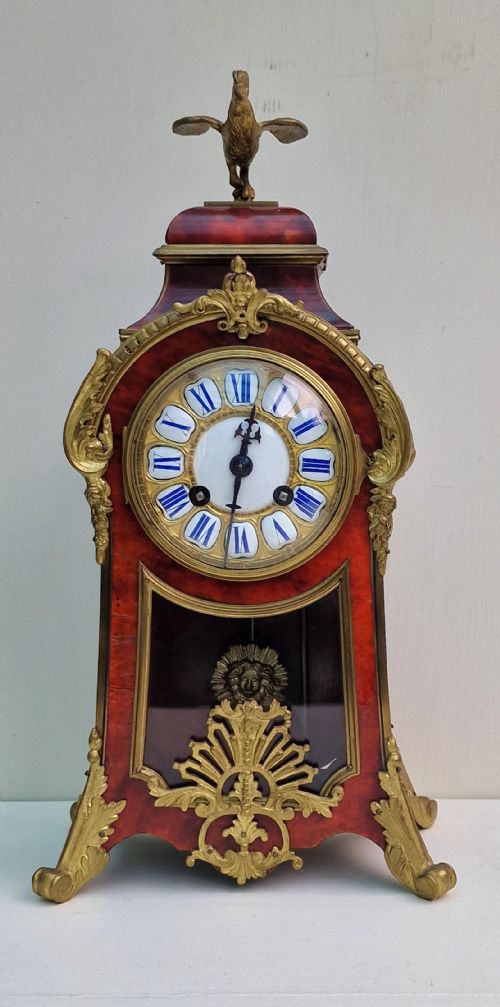
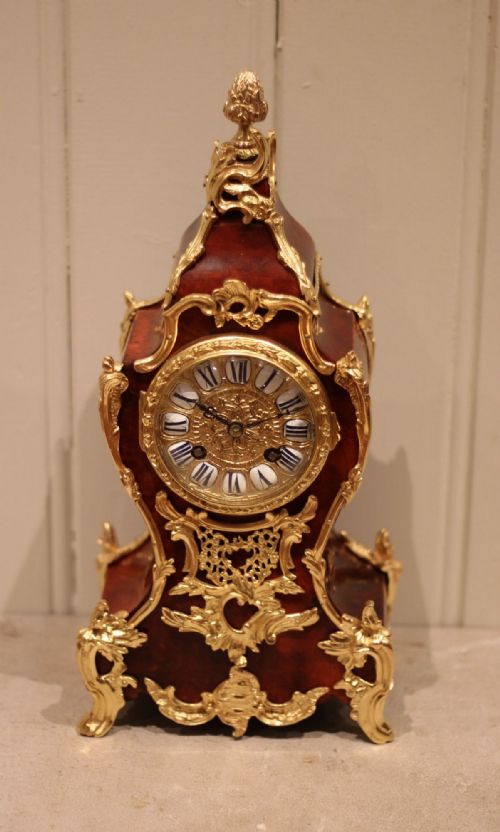
Buyers frequently encounter nineteenth-century examples utilising marble, onyx, or tortoiseshell bodies paired with cast metal mounts. Forms range from classical portico shapes and lyre-inspired silhouettes to dramatic Boulle marquetry bracket clocks.
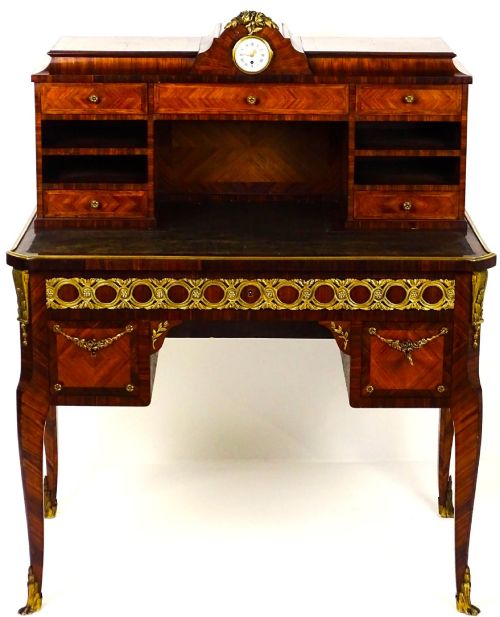
The selection extends beyond standard timepieces to include specialised calendar movements, mystery clocks, and desk accessories featuring decorative metal mounts. These objects reflect diverse nineteenth-century tastes, encompassing ornate rococo flourishes and austere classical symmetry in equal measure.
Materials and construction
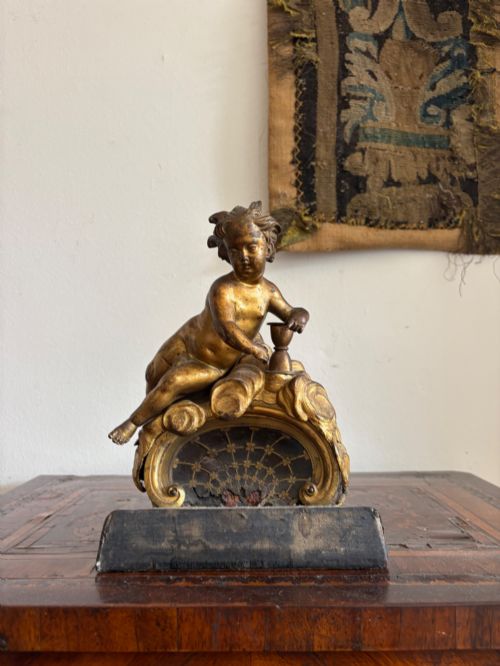
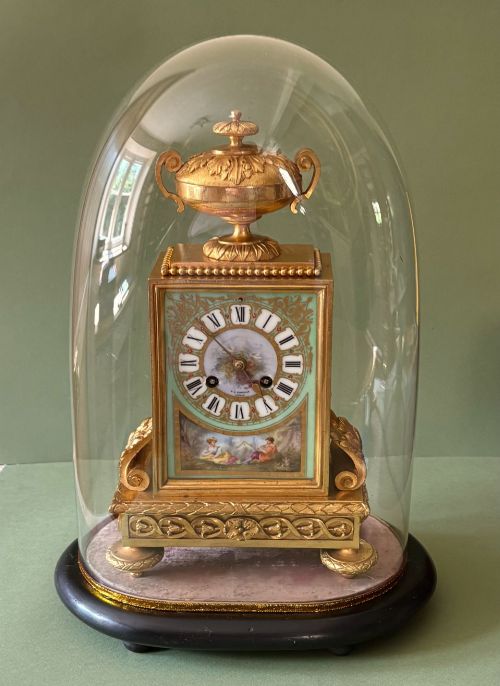
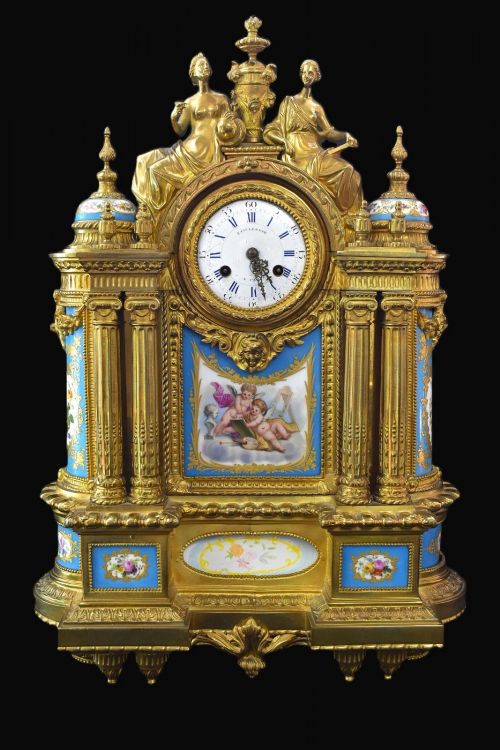
The construction relies on the union of heavy structural bodies made from slate, marble, onyx, or wood veneered in tortoiseshell, paired with cast bronze and ormolu mounts. Ormolu, or gilded bronze, provides the shimmering scrollwork, figures, and finials that define the exterior profile of the clock.
Gilding techniques applied to bronze components create a durable, lustrous surface finish that contrasts against dark slate or polished stone. Dial faces frequently employ painted enamel numerals or individual porcelain cartouches set behind curved glass bezels.
Clockmakers housed mechanical movements within these dense housings, utilising brass gear trains and pendulum regulation. Cabinetmakers constructed intricate Boulle work by inlaying brass and tortoiseshell onto wooden substrates to produce high-contrast geometric and floral patterns.
Architectural forms represented include classic portico frames, symmetrical lyre shapes, and elaborate Boulle marquetry bracket clocks complete with matching wall mounts.
Distinctions in quality
Quality rests upon the crispness of the bronze casting and the depth of the subsequent chasing, where finer examples display sharp relief and delicate hand-finished details on every mount. Heavy, dense marble or meticulously executed tortoiseshell and brass marquetry indicate superior workshop standards.
The reputation of the horologist and the integration of the movement into the decorative case dictate the standing of a piece. Signed dials and movements from recognised makers demonstrate a higher level of clockmaking pedigree than unbranded equivalents.
The preservation of original mercury gilding or fire gilt on the bronze elements preserves the intended visual harmony between metal and stone. Intact enamel dials and matching original brackets or garniture sets complete the integrity of the ensemble.
Charles à Orléans·Paul Sormani·Etienne Lenoir·Lenzkirch·Achille Brocot·JP Delettrez·A.D. Mougin·Miroy Frères
The French Bronze Mounted Clock Glossary
- Ormolu
- Gilded bronze, produced by applying a mercury-gold amalgam to a cast bronze object and heating it until the mercury vaporised. This technique leaves a rich, durable golden coating found on many nineteenth-century mounts.
- Boulle work
- A form of marquetry utilising tortoiseshell and brass inlay, popularized by cabinetmaker André-Charles Boulle. It creates elaborate mirror-image patterns across wooden clock cases and brackets.
- Garniture
- A set of decorative objects designed to be displayed together, typically comprising a central clock flanked by matching vases or candelabra. These sets created a balanced mantelpiece arrangement.
- Portico clock
- A mantel clock featuring a classical architectural frame supported by four columns. This symmetrical style gained popularity during the early nineteenth century.
- Lyre clock
- A timepiece shaped like a classical musical instrument, often constructed from marble or wood with gilt bronze mounts framing the central pendulum aperture.
French Bronze Mounted Clock: Frequently Asked Questions
What is a french bronze mounted clock?
A french bronze mounted clock is a timepiece housed in a decorative case of stone, wood, or metal, adorned with cast bronze or ormolu decorative elements. These clocks emerged in various historical revival styles across the eighteenth and nineteenth centuries.
They served as functional timekeepers and status symbols for domestic interiors, combining mechanical complexity with sculptural artistry.
How do I wind an antique clock?
Most antique mechanical clocks utilise a key inserted into winding holes on the enamel dial to tension the internal springs or weights. Care must be taken not to overwind the mechanism, stopping as soon as resistance is felt.
Ensuring the clock sits on a level surface helps the pendulum beat evenly and keeps the movement running accurately over its designated eight-day or thirty-hour cycle.
How do I tell nineteenth century styles apart?
Nineteenth-century styles draw on distinct historical periods, with Rococo Revival featuring asymmetrical scrolls and naturalistic motifs, while Louis XVI style employs strict symmetry and classical urns. Napoleon III pieces often combine eclectic elements with heavy, ornate gilding and dark marble.
Examining the casting quality, mount designs, and secondary woods helps pinpoint whether a case follows earlier royal aesthetics or Victorian interpretations.
Where should I place my clock?
These clocks are traditionally displayed on mantelpieces, consoles, or specialised wall brackets designed to support their substantial weight. Placement should avoid direct sunlight, dampness, and extreme temperature fluctuations to protect the delicate veneers and gilding.
Pairing the clock with matching garniture vases or candelabras recreates the intended historical display arrangement for a room.