
French Bronze Mantel Urns
French bronze mantel urns bring classical proportion and rich gilding to a chimneypiece.
French Bronze Mantel Urns
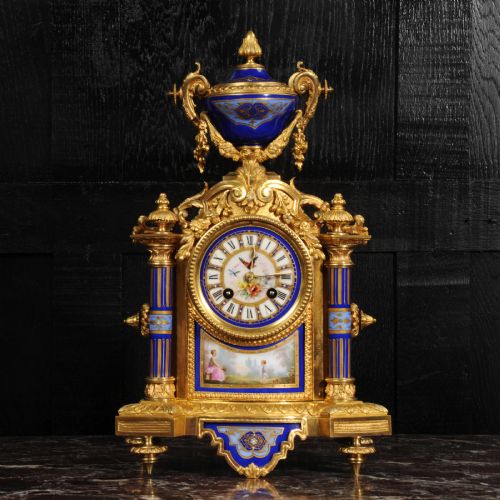
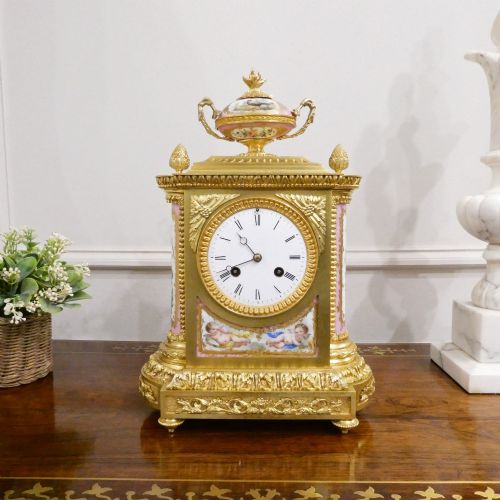
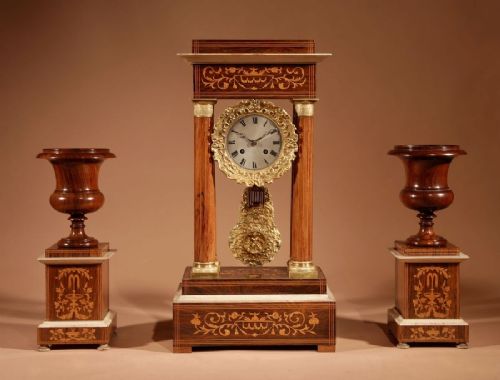
French bronze mantel urns and their accompanying garniture pieces emerge from nineteenth-century workshops spanning the Victorian era and the decades around eighteen-eighty. Buyers searching this phrase encounter ornamental urns, tazzas, and vases often paired as garnitures alongside mantel clocks.
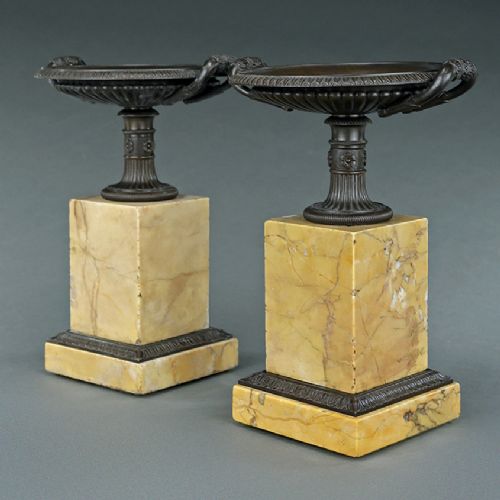
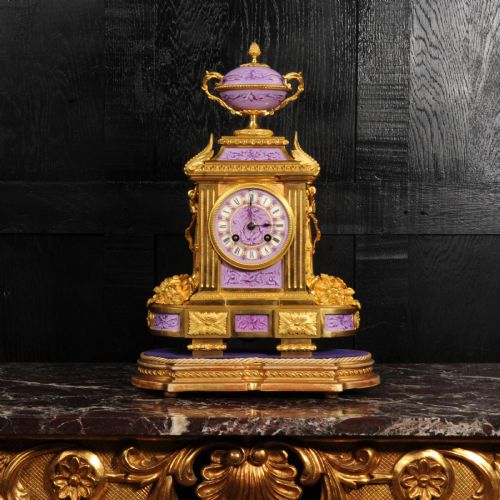
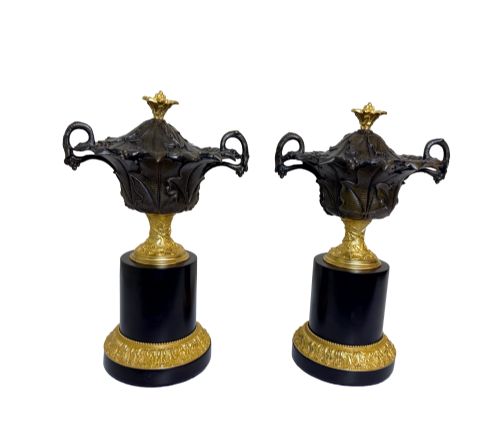
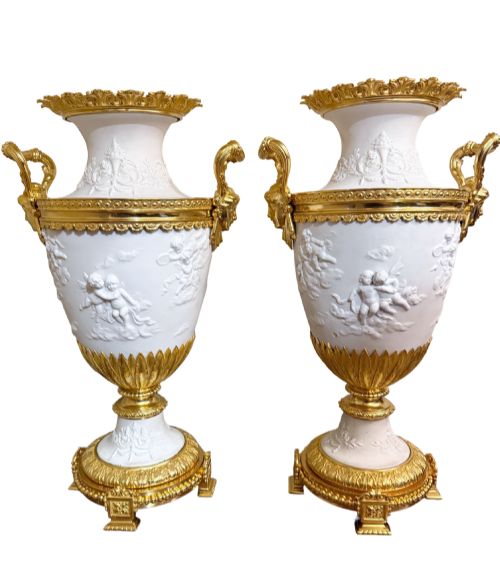
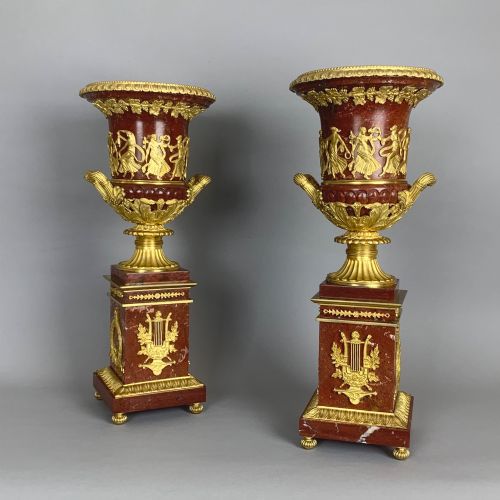
The prevalent forms draw upon Louis XVI revival, French Empire, and Neoclassical styles, frequently set upon marble or onyx bases. Materials such as gilt bronze, ormolu, champleve enamel, and porcelain combine to create symmetrical decorative focal points designed for a mantelpiece.
How they were made
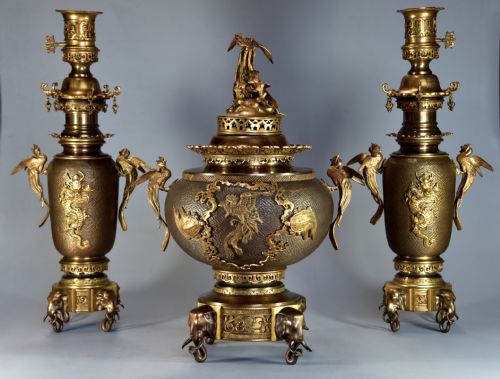
Foundries utilised cast bronze and spelter, applying fire gilding or ormolu finishes to create metallic brilliance. Artisans combined these metal elements with turned marble, onyx bases, and inset porcelain or glass components.
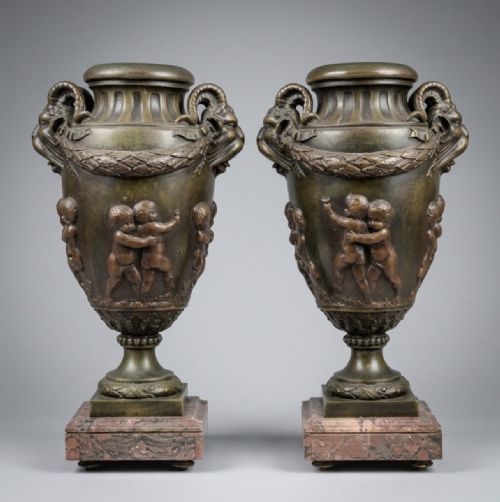
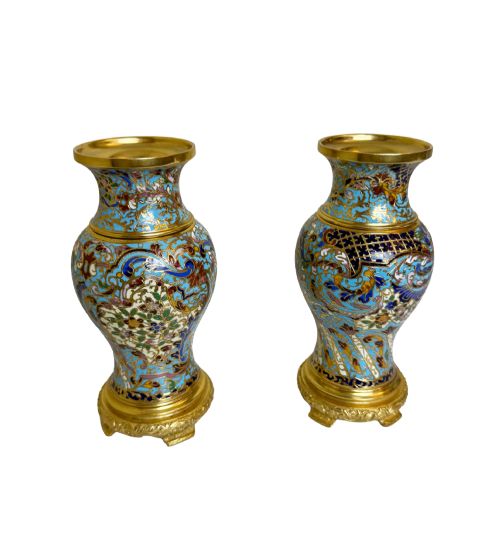
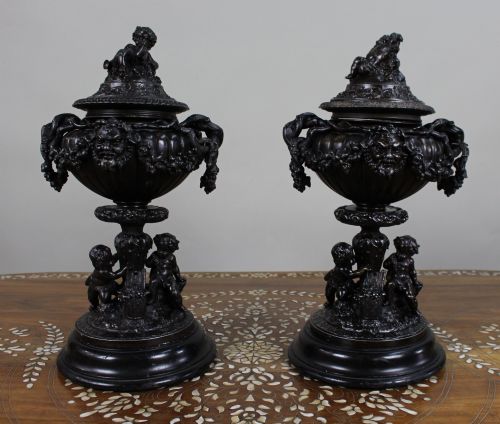
Detailed ornamentation involved champleve enamel work, applied patination, and cast decorative motifs such as bacchic masks, putti, and classical foliage.
Bacchic masks and mischievous putti frequently peer out from the handles, reminding us that nineteenth-century mantelpieces knew how to party.
What varies in quality
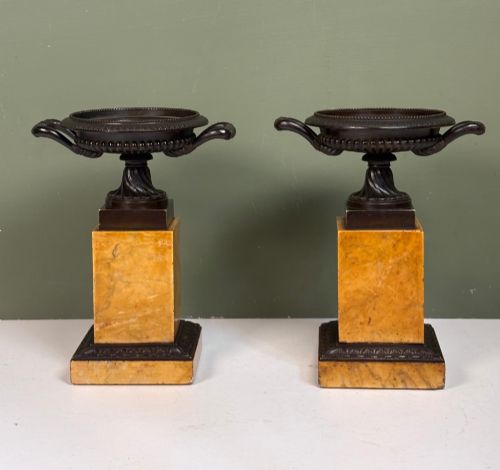
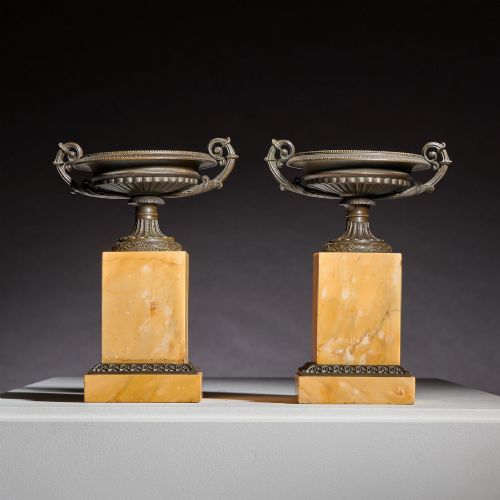
The selection of materials creates divergence across the range, with solid gilt bronze and heavy Siena or rouge marble marking superior output compared to lighter spelter and substitute stones.
Japy Freres·Jean-Baptiste Delettrez·Achille Brocot·Samuel Marti·Louis Goret
The French Bronze Mantel Urns Glossary
- Ormolu
- Gilt bronze produced by applying a mercury-gold amalgam to a bronze base and heating it until the mercury evaporates. This technique creates a durable golden finish characteristic of French decorative arts.
- Garniture
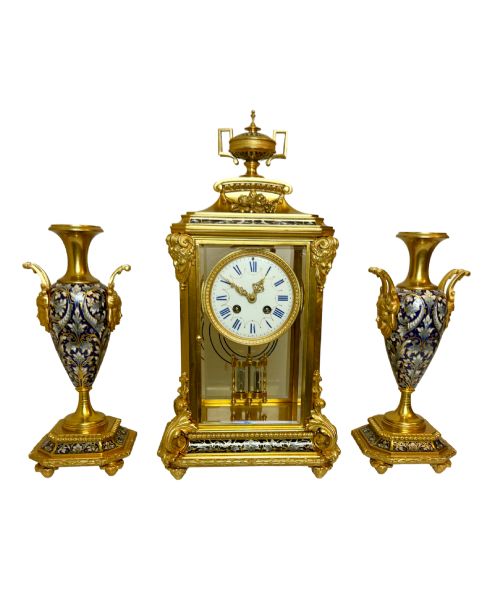
- A set of three or more matching ornamental objects, typically a central clock flanked by two urns or vases. These sets balanced decorative schemes on nineteenth-century mantelpieces.
- Tazza
- A shallow bowl or vase raised on a slender stem and footed base, frequently cast in bronze and mounted on marble. They derive their form from classical drinking vessels.
- Champleve
- An enamelling technique where troughs are gouged into the metal surface and filled with vitreous enamel powder before firing. The resulting coloured patterns contrast with the metal outlines.
French Bronze Mantel Urns: Frequently Asked Questions
What is a clock garniture?
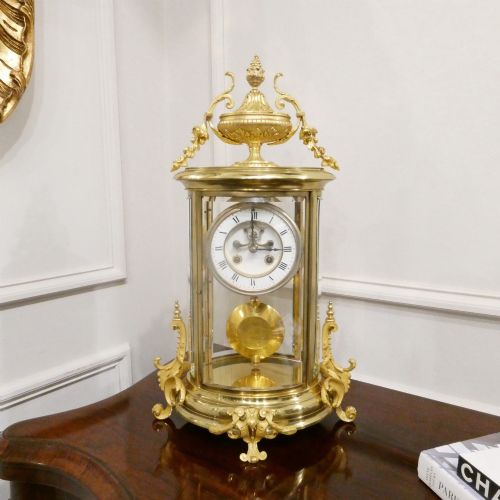
A clock garniture is a matched set consisting of a central mantel clock accompanied by two matching side pieces, usually urns, vases, or candelabras. These three items were designed to sit together on a fireplace mantel to create a balanced decorative arrangement.
Such sets became popular during the nineteenth century in France and Britain. They united timekeeping with classical ornamentation.
How do I style these urns?
These decorative objects work best centered on a mantelpiece, sideboard, or pier table where their classical proportions can be seen from multiple angles. They pair naturally with architectural woodwork and traditional interiors.
When placed as a pair, they frame larger central items like mirrors or clocks. Their marble and gilt surfaces reflect natural light effectively in reception rooms.
What is the difference between bronze and spelter?
Bronze is a durable alloy of copper and tin that takes fine detail and heavy gilding exceptionally well. Spelter is a softer zinc-based metal alloy that was frequently used as a less expensive alternative for nineteenth-century decorative urns and figures.
Pieces cast in bronze generally feel heavier and retain sharper chased details than spelter equivalents. Magnets and weight tests often help distinguish between the two metals.
How do I identify Neoclassical revival pieces?
Neoclassical revival pieces draw inspiration from ancient Greek and Roman art, featuring symmetrical designs, urn forms, and strict geometric proportions. Look for motifs such as acanthus leaves, classical columns, and architectural bases.
This style gained prominence during the nineteenth century as part of a broader revival of historic French design aesthetics. The inclusion of Siena or white marble pedestals often signals this classical influence.