
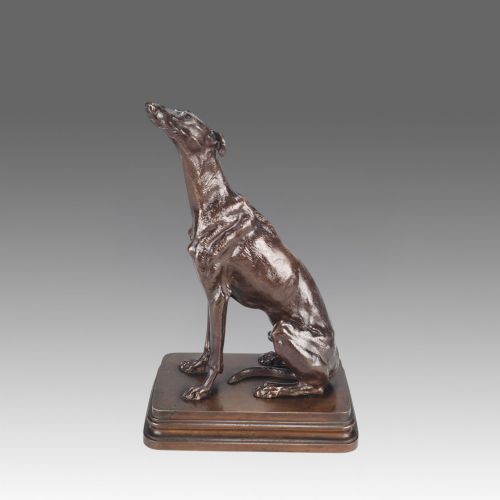
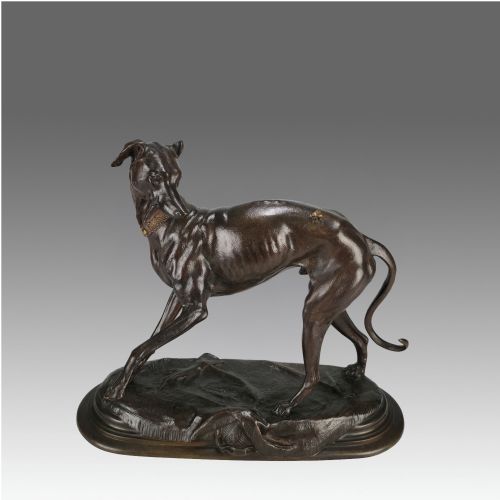
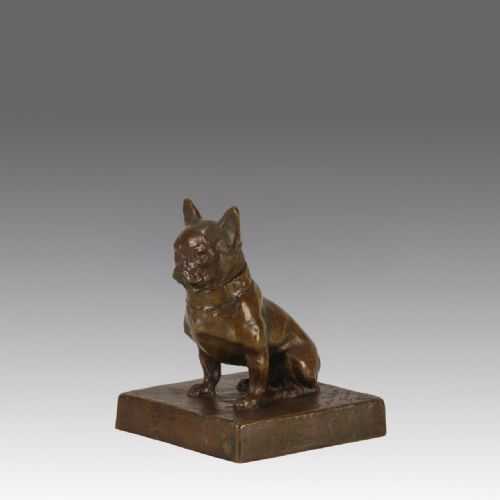
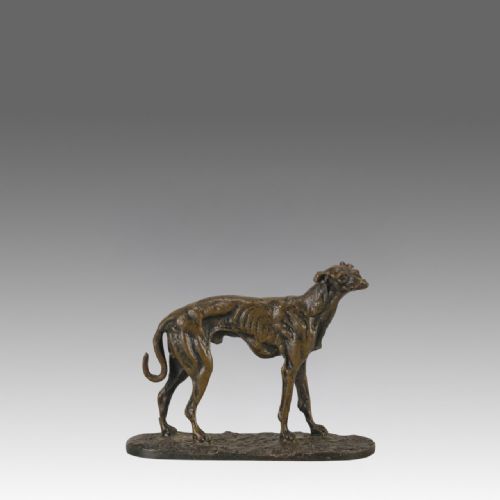
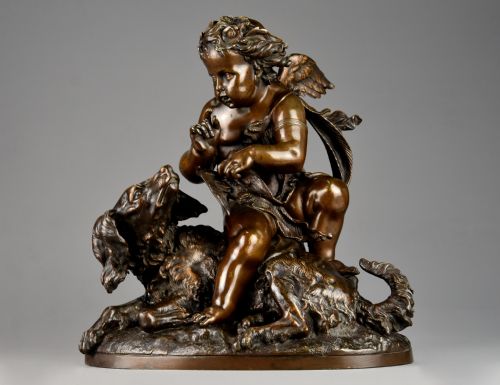


French Bronze Dog Figurine
A french bronze dog figurine captures the raw energy and anatomy of hounds, gundogs and companions through the keen eye of nineteenth and twentieth-century animal sculptors.
French Bronze Dog Figurine
A french bronze dog figurine sits within the Animalier tradition, representing breeds from greyhounds and setters to poodles and bulldogs with close attention to natural posture.
Makers cast these pieces in bronze, gilt bronze and patinated bronze, occasionally mounting them upon marble or onyx bases alongside figures, birds or game.
The selections span the nineteenth century through the Art Deco era, encompassing table lamps, paperweights, night lights and sculptural groups.
How They Were Made
Foundries utilised the lost-wax casting method to capture fine anatomical details in bronze, patinated bronze and gilt bronze.
Some sculptures incorporated cold-painted polychrome surfaces or rested upon carved marble and onyx plinths.
Alternative compositions appeared in spelter during the later Art Deco period.
Listings feature periods spanning from the early nineteenth century through the Art Deco era, utilising bronze, spelter, marble and onyx.
What Varies in Quality
The clarity of the chase work and the subtlety of the patina dictate the definition of muscle, fur and expression.
Later posthumous recasts or substitute metals like spelter yield softer contours than original period casts produced by established foundries.
Alfred Dubucand·Alfred Barye·P J Mêne·Prosper Lecourtier·Jules Moigniez·Louis Riche·Antoine Louis Barye·Alexandre Kelety·Arthur Waagen·Geo Maxim
The French Bronze Dog Figurine Glossary
- Animalier
- A nineteenth-century artistic movement dedicated to the realistic portrayal of animals. Sculptors focused heavily on wildlife and domestic dogs in motion or repose.
- Patina
- The surface coloration and sheen developed naturally over time or applied chemically by the foundry. It enhances the depth of the metal work.
- Spelter
- A zinc alloy utilised as an economical alternative to bronze during the Art Deco period. It often received a bronze-effect finish.
- Cold-painted
- A technique where paint is applied to cold metal without subsequent firing. This finish appears frequently on smaller decorative figures and novelty items.
French Bronze Dog Figurine: Frequently Asked Questions
What is an animalier bronze dog?
An animalier bronze dog is a nineteenth-century sculpture focused on realistic anatomical representation of canine breeds.
These pieces capture dogs resting, hunting or interacting with game and handlers.
How do I identify a period cast?
Period casts exhibit sharp anatomical detail and distinct foundry markings or signatures in the metal.
Later copies often show softer lines and lack the crisp texture of nineteenth-century work.
What is patinated bronze?
Patinated bronze refers to metal treated with chemical solutions to produce a specific surface colour.
This finish protects the metal and accentuates the musculature of the subject.
How were marble bases used?
Sculptors mounted figures onto marble or onyx plinths to provide stability and visual contrast.
This practice became particularly common in night lights and decorative table pieces.