


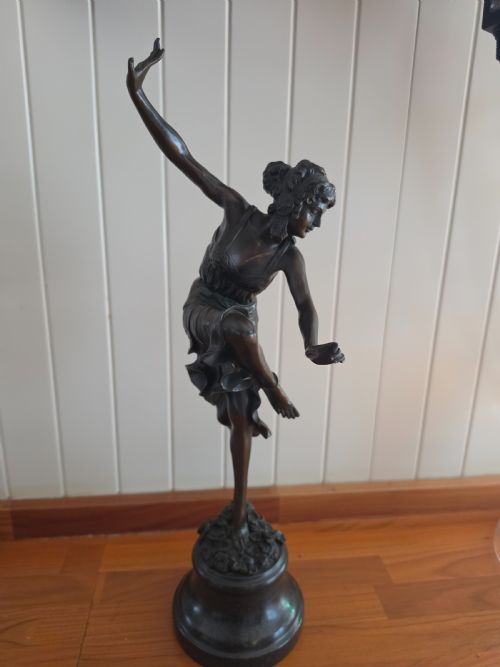


French Bronze Dancer
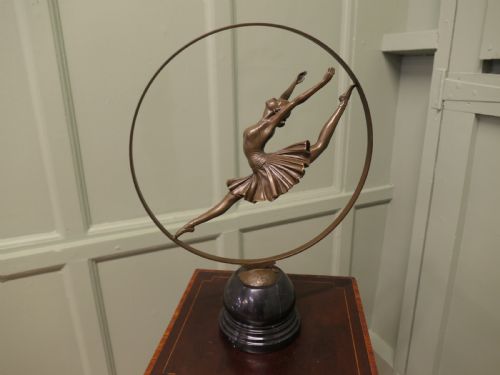
These french bronze dancer figures capture motion in metal, combining the sleek lines of the twentieth century with weighty mineral bases.
French Bronze Dancer
A french bronze dancer typically depicts a female figure caught mid-movement, often drawing on influences from the ballet, theatrical stages, or exotic folk traditions. These works trace their origins primarily through the early decades of the twentieth century, alongside nineteenth-century salon pieces.
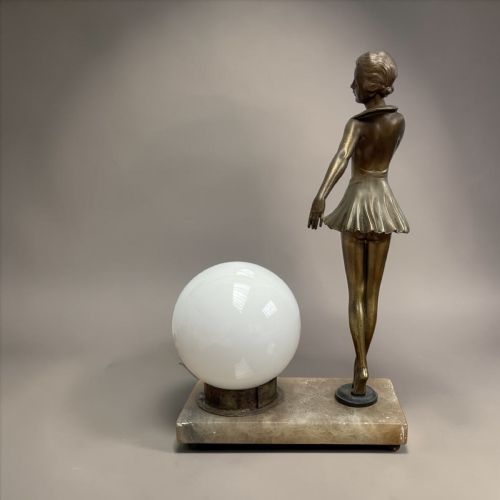
The version most frequently met on this page is the Art Deco figure, which pairs cast metal with bases of marble or onyx. These objects range from small cabinet statuettes to larger table lamps and wall plaques.
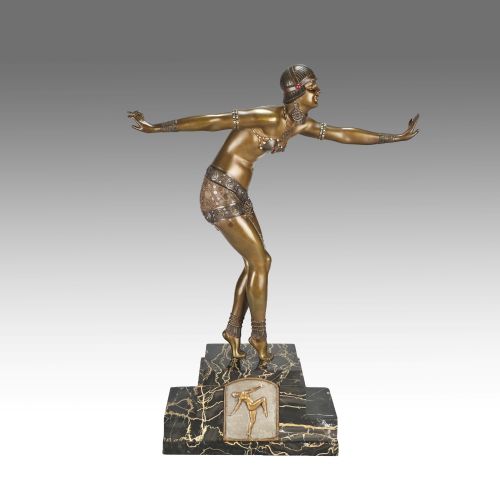
Makers focused heavily on posture and costume, rendering flowing scarves, hoops, and elaborate headdresses in rigid materials. The figures vary from naturalistic nineteenth-century interpretations to the stylised geometry of the interwar period.
Materials and casting methods
Foundries utilised traditional lost-wax casting to capture intricate details in bronze, which was then patinated, silvered, or cold-painted to render skin tones and garments. Spelter appears as a more economical alternative metal in several figures from the period.
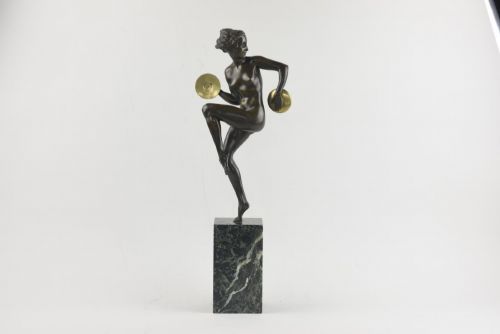
Bases were cut from solid blocks of contrasting stone such as marble or onyx, providing a stable footing for dynamic, cantilevered poses. Selected works also incorporated carved ivory elements in chryselephantine compositions.
Several dancers balance entirely on one pointed toe, trusting a single threaded bolt to defy gravity.
Assessing quality in cast figures
The choice of base materials and the integration between figure and plinth affect overall balance and visual harmony. Signed works attributed to recognised sculptors carry distinct casting signatures that reflect workshop standards.
Pierre le Faguays·Demetre Chiparus·Claire Jeanne Roberte Colinet·Paul Philippe·Marcel Bouraine
The French Bronze Dancer Glossary
- Chryselephantine
- A term describing sculptures combining carved ivory with bronze or other metals. This technique was popular in luxury Art Deco figures to contrast flesh tones with patinated garments.
- Cold-painted
- A method where paint is applied to a metal object without heat firing. Colours tend to show wear over time if handled frequently.
- Spelter
- A zinc alloy utilised as a substitute for bronze. It is lighter and more brittle than true bronze.
- Patination
- The chemical treatment or natural oxidation applied to the surface of bronze. It alters the colour and protects the metal beneath.
- Lost-wax casting
- A metalworking process where a molten metal is poured into a mould that has been created by means of a wax model. The wax is subsequently melted and drained away.
French Bronze Dancer: Frequently Asked Questions
How do I spot a real bronze from spelter?
Bronze is heavier, colder to the touch, and yields a deeper, more resonant sound when tapped gently compared to softer alloy alternatives. Examination of the underside often reveals the darker, warmer tone of aged copper-based metal.
Spelter tends to show a lighter grey metal beneath any surface chips in the patination. It also feels noticeably lighter in the hand relative to its physical volume.
Were these figures mounted on stone bases originally?
Yes, many figures from the early twentieth century were designed specifically to be secured onto heavy marble or onyx plinths. These stone mounts provided necessary equilibrium for figures posed on one toe or leaning outward.
The base material often matches the architectural tastes of the period, utilising contrasting veined marbles to frame the metallic subject.
How should I clean my bronze dancer?
Dust the surface regularly with a soft, dry brush to prevent particulate buildup in the crevices of the casting. Avoid liquid cleaners or abrasives that strip away the original patination.
A light application of microcrystalline wax can protect historical bronze surfaces from atmospheric moisture. Professional conservation is recommended for any deeper restoration.
What distinguishes Art Deco dancers from older pieces?
Art Deco dancers rely on geometric abstraction, sharp angles, and streamlined drapery that reflects modernism and jazz-age performance. Their poses emphasise dynamic movement and theatricality.
Older nineteenth-century pieces adhere more closely to classical anatomical proportions and realistic narrative subjects. They often feature softer transitions and traditional salon patinas.