

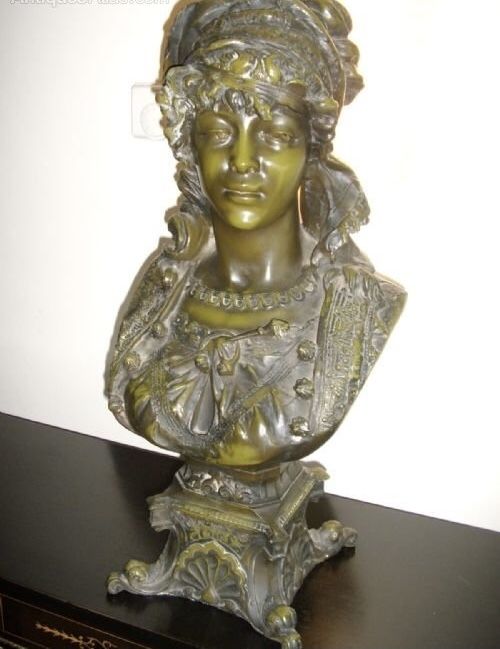

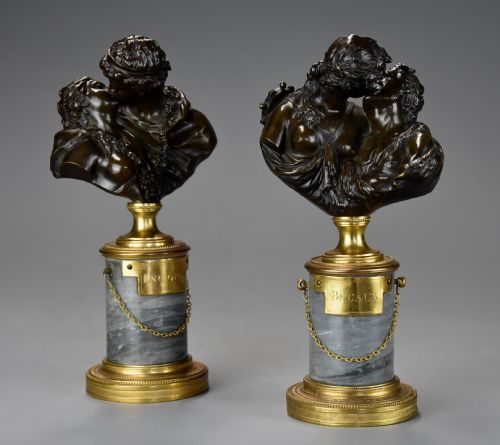


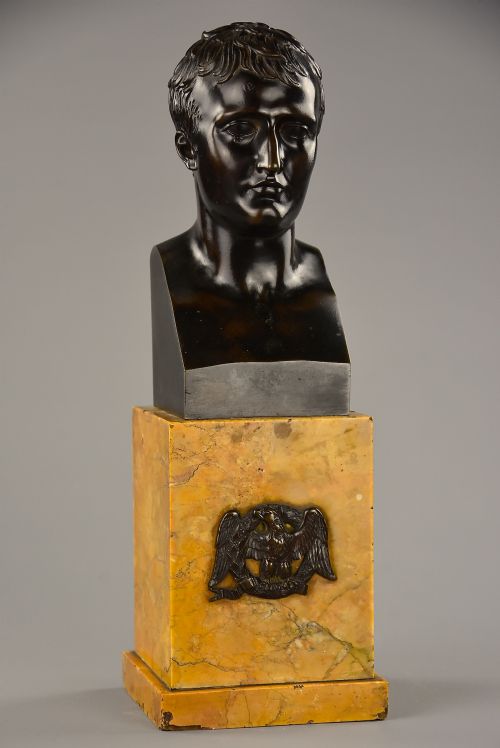


French Bronze Bust Statue
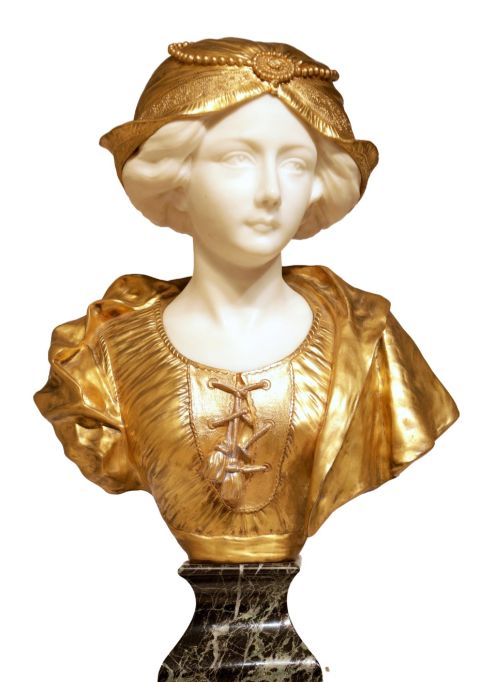
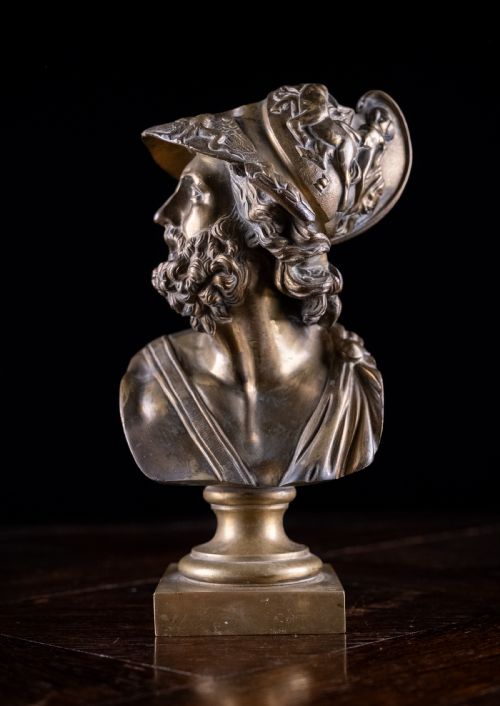
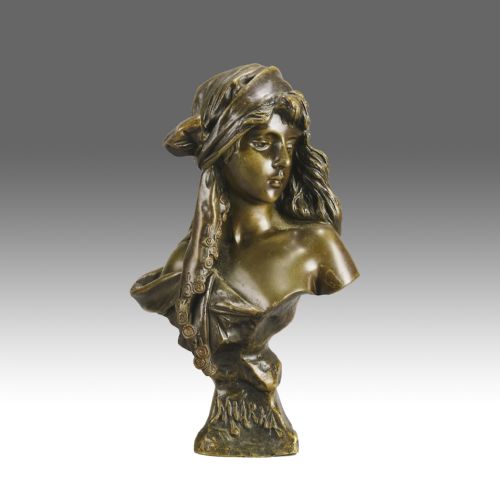
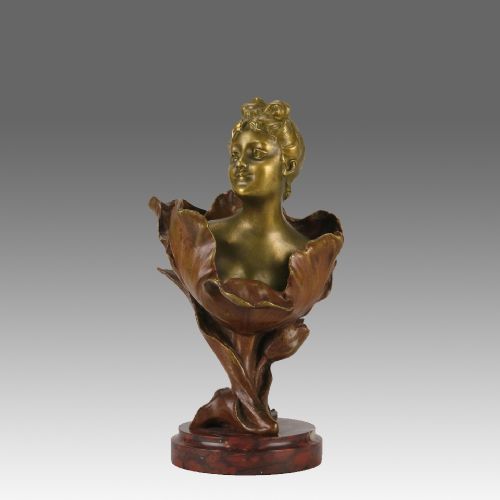
A french bronze bust statue captures character and portraiture through metalwork, bringing nineteenth-century foundry craft directly into a room.
French Bronze Bust Statue
A french bronze bust statue focuses on the head and shoulders of historical figures, literary characters, classical deities, and idealized female forms. These sculptures emerge primarily from nineteenth-century and early twentieth-century French foundries, spanning Victorian, Art Nouveau, and Art Deco aesthetics.
The objects take many forms, from cabinet-sized portrait sculptures to large decorative display pieces mounted upon heavy stone plinths. Subjects range from classical heroes and Roman emperors to allegorical maidens and contemporary literary heroines.
Makers utilise distinctive styles associated with the Paris salons, employing sweeping organic lines during the Art Nouveau period or severe classical proportions in Neoclassical works. Most examples combine metal sculpture with supporting bases constructed from marble or alabaster.
Materials and casting methods
Foundries cast these portrait sculptures using bronze, patinated bronze, gilt bronze, and ormolu, while alternative examples employ spelter or terracotta for figurative work. Metal elements receive surface treatments through chemical patination, cold painting, or fire-gilding to achieve rich tonal variations.
Sculptors mount finished metal busts onto heavy bases fashioned from marble and alabaster, securing them with threaded pins or internal bolts. Many pieces display signatures, foundry stamps, or title plaques cast directly into the metal surface during production.
Among the historical portraits, one late nineteenth-century mannequin once watched over a Parisian lingerie shop.
Distinctions in craftsmanship
Quality rests in the crispness of the chasing and the subtlety of the surface patina, where skilled artisans hand-finish raw castings to define facial expressions and hair texture. Superior pieces exhibit fine anatomical detail and careful integration between the metal portrait and its stone socle.
The reputation of the sculptor and the prestige of the foundry dictate the distinction between mass-produced commercial castings and masterworks signed by established salon artists. Heavier metal gauge, precise chiselling around the eyes and hair, and unblemished marble bases elevate individual examples.
Emmanuel Villanis·Georges Van Der Straeten·Mathurin Moreau·Eutrope Bouret·Affortunato Gory
The French Bronze Bust Statue Glossary
- Patinated bronze
- Bronze treated with chemical solutions to produce a specific surface colour, ranging from deep brown to verdigris. This layer protects the metal and defines the sculptural shadows.
- Ormolu
- Gilded bronze produced by applying a mercury and gold amalgam to the metal surface and heating it until the mercury evaporates. This technique creates a durable, rich golden finish characteristic of decorative French bronzes.
- Spelter
- An alloy of zinc and other metals utilised as a cost-effective alternative to bronze. It accepts patination and paint readily but exhibits a lighter weight and softer structural strength than bronze.
- Socle
- A short plinth or pedestal supporting a bust, typically turned from marble, alabaster, or cast metal. It elevates the portrait and provides visual balance to the composition.
- Chasing
- The manual process of refining a metal casting with chisels and punches to sharpen details and remove surface imperfections. Master chasers execute this work before the final patination.
French Bronze Bust Statue: Frequently Asked Questions
How do I clean a bronze bust?
Dust the surface regularly with a soft, dry microfibre brush to prevent particulate accumulation within recessed areas. Avoid water, abrasive cloths, and chemical polishes, which strip away historical patination.
Apply a microcrystalline wax sparingly if the metal requires protection, buffing it gently with a clean cloth. Stone bases require separate care appropriate for marble or alabaster without touching the adjacent metal.
What is the difference between bronze and spelter?
Bronze is a durable copper alloy that accepts fine detail and develops a deep, stable patina over centuries. Spelter relies on zinc, making it noticeably lighter, softer, and more susceptible to surface bending or fracturing.
Inspect the underside or recessed areas for the characteristic grey colour of zinc, or test the weight and magnetism. Spelter pieces frequently display flaking paint finishes rather than chemical patination.
Are signatures on the metal original?
Foundries cast artist signatures, titles, and foundry marks directly into the bronze during the initial moulding process. These raised or incised letters form an integral part of the metalwork rather than being added later.
Compare signatures against documented examples by makers to verify period authenticity. Cast inscriptions often feature slight irregularities characteristic of hand-carved model patterns.