

French Brass Wall Lights
When choosing french brass wall lights, you select lighting fixtures that illuminate rooms with historical decorative metalwork and traditional candle-arm designs.
French Brass Wall Lights
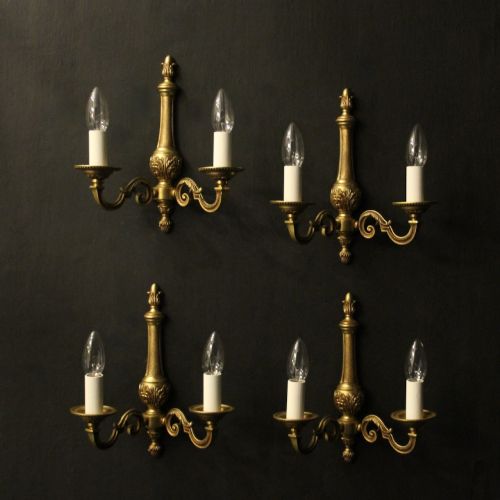
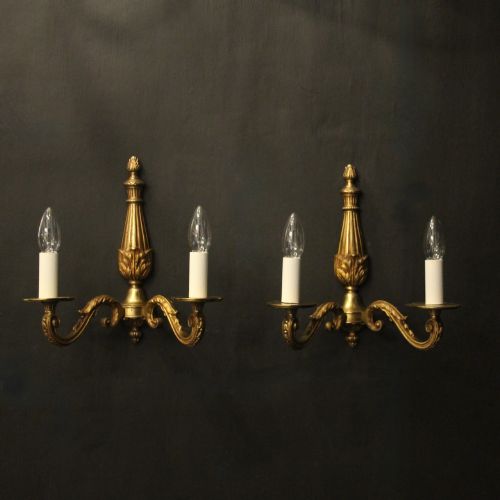
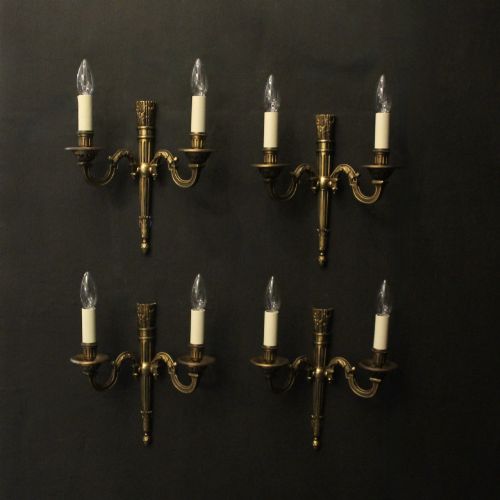
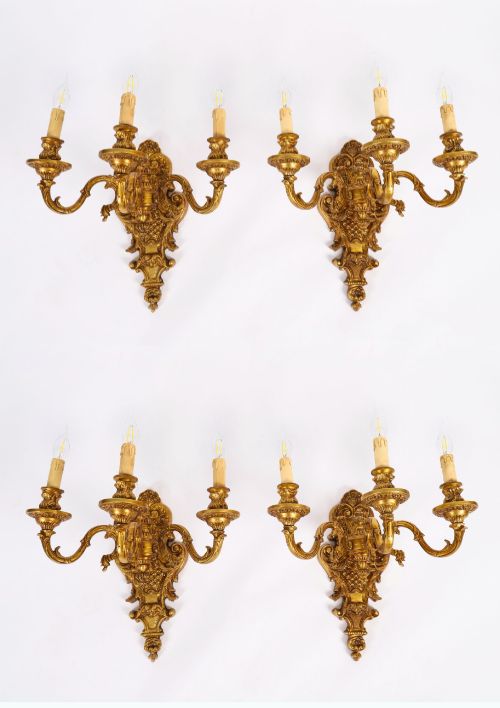
When you search for french brass wall lights, you encounter wall-mounted lighting fixtures designed to hold candles or electric bulbs, predominantly originating from the nineteenth and early twentieth centuries. These pieces manifest as pairs, sets of four, or larger groupings intended to flank mirrors or fireplaces in formal rooms.
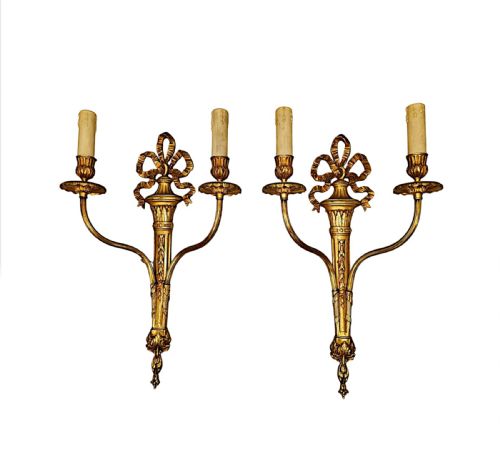
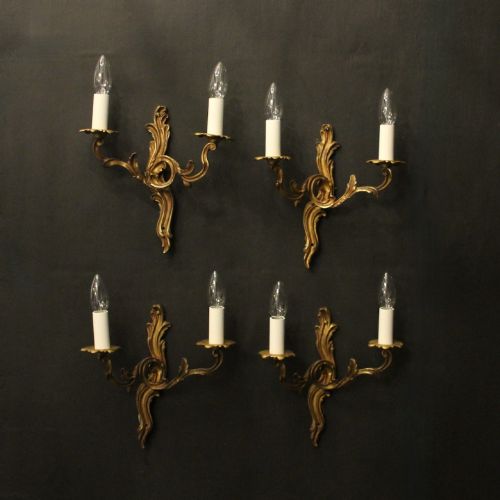
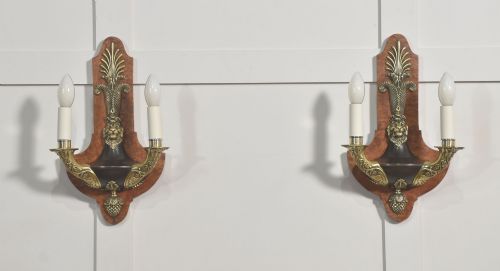
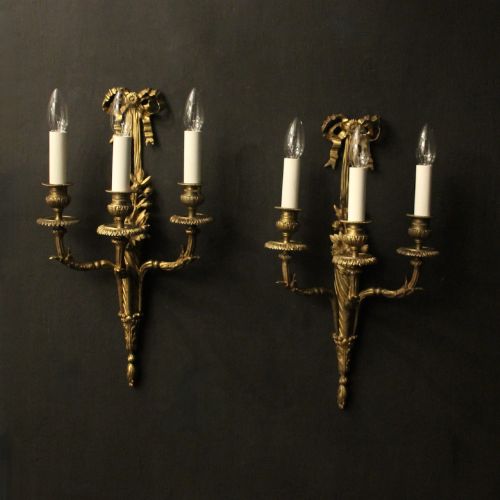
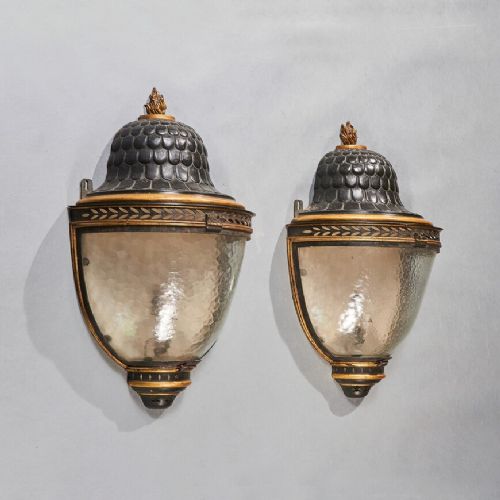
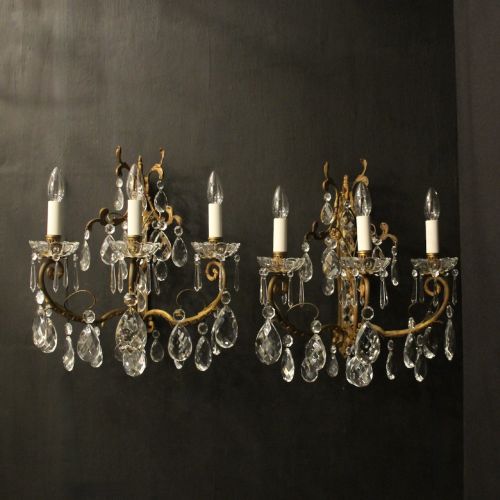
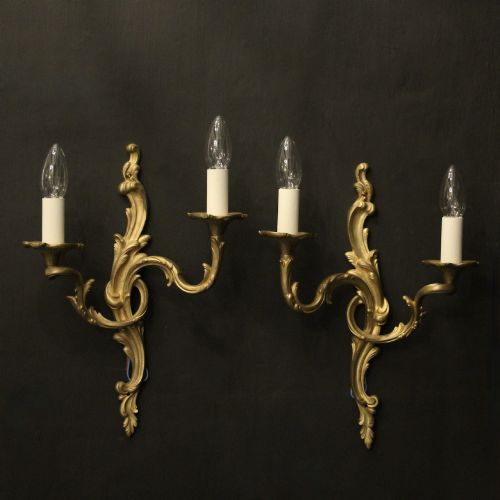
The selections on this page span from simple single-arm brackets to elaborate multi-arm candelabra sconces and half-lanterns. Forms draw heavily on classical and revival vocabularies, including Rococo, Louis XVI, and Empire styles, utilising cast metal frames configured with twin or triple branches.
How They Were Made
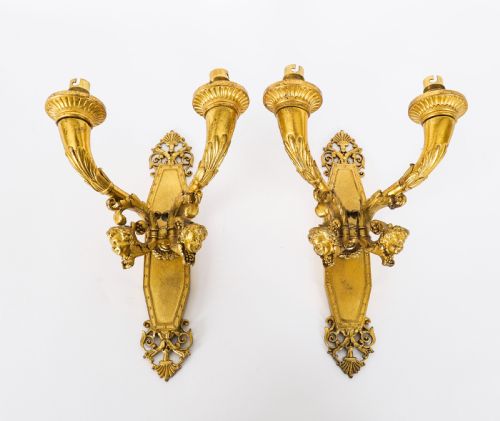
Makers constructed these wall lights using cast brass, bronze, and ormolu, applying fire gilding or surface plating to achieve a rich golden finish. Metal components were shaped through traditional casting and chasing techniques, producing intricate relief work along the backplates and arms.
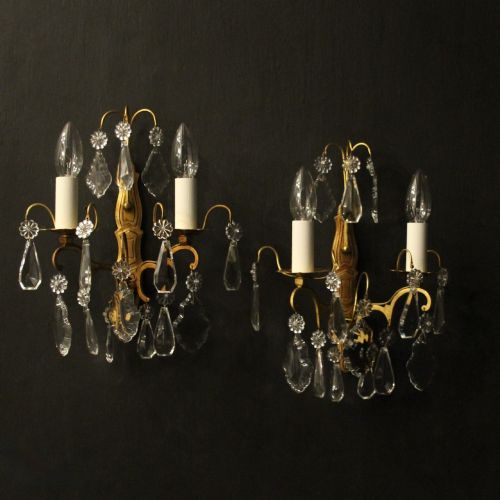
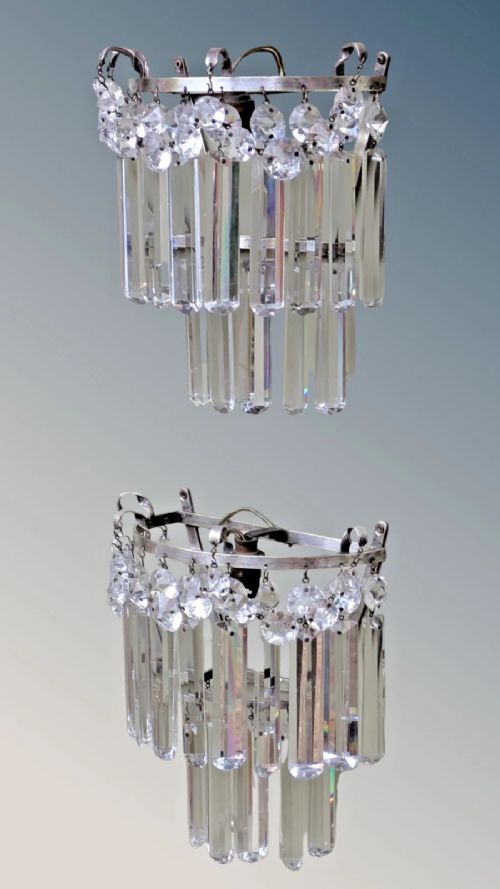
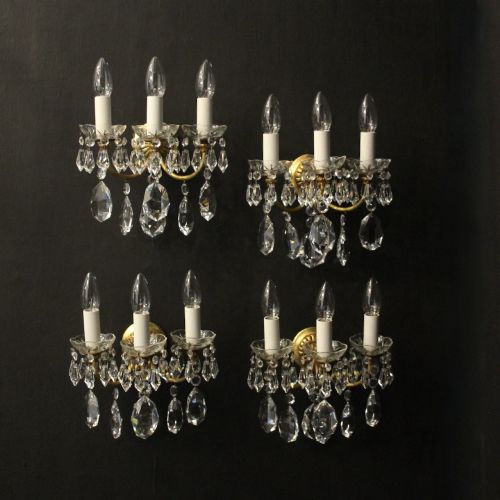
Many examples incorporate glass elements such as cut crystal drops, convex glass lantern panels, or mirror plates that reflect the candlelight. Artisans combined these metallic and vitreous materials to maximise illumination within nineteenth and early twentieth-century interiors.
French Brass Wall Lights Retail Price Guide 2026
Typical asking prices for french brass wall lights among the pieces listed under this phrase on Sellingantiques today, from the lower quarter to the upper quarter. They describe what is for sale here now, not the wider market.
Several wall lights come equipped with delicate ribbon motifs cast in solid brass, proving that even eighteenth-century illumination could wear a bow.
What Varies in Quality
Quality rests primarily in the crispness of the metal casting and the depth of the chased detail across the backplates and arms. Superior pieces exhibit sharp relief, clean leaf motifs, and finely articulated figures or scrollwork without the softening common in secondary castings.
The choice of materials also divides the range, with heavy fire-gilt bronze and ormolu sitting above standard cast brass variants. Heavier gauge metalwork and integrated cut crystal components indicate higher ambition in the original workshop production.
Casier
The French Brass Wall Lights Glossary
- Ormolu
- Finely chopped high-grade brass amalgamated with mercury and fired to leave a gold layer on bronze. This technique creates a distinctive, warm golden surface found on finer antique pieces.
- Sconce
- A wall-mounted lighting fixture designed to project illumination into a space using candles or electric lamps. These fittings often feature decorative backplates and extending arms.
- Candelabra
- A branched candlestick holder designed to support multiple light sources from a single base or wall bracket. Such pieces frequently incorporate two, three, or more arms.
- Girandole
- An ornamental wall bracket carrying candles, typically featuring a mirror attached to the backplate to reflect and multiply the light. These pieces combine reflective glass with decorative metal arms.
- Toleware
- Painted or lacquered sheet metal items produced in various decorative forms. This material appears on specific regional lantern and wall light designs.
French Brass Wall Lights: Frequently Asked Questions
How do I identify French Empire wall lights?
French Empire pieces display strict symmetry, military motifs, and classical architectural details inspired by antiquity. You will notice laurel wreaths, urns, and strict geometric lines defining the metalwork.
These designs contrast sharply with the asymmetrical curves and organic scrollwork typical of earlier Rococo models. Examining the backplate motifs usually reveals the stylistic period immediately.
Were these wall lights originally wired for electricity?
Most nineteenth and early twentieth-century wall lights were built exclusively to hold wax candles. Conversion to electricity occurred later during modernisation or restoration work.
When updating these fixtures, modern wiring is threaded through the existing hollow arms and bobeches. This preserves the historical exterior appearance while meeting contemporary electrical standards.
How do I care for gilded brass surfaces?
Gilded and ormolu surfaces require gentle dusting with a soft, dry cloth to prevent accumulation of grit. Avoid abrasive metal cleaners or chemical polishes that can strip away the historical gold layer.
Preserving the original surface finish maintains both the visual character and the historical integrity of the piece. Regular light maintenance keeps the metal stable without risking damage.
What is the difference between ormolu and gilded brass?
Ormolu involves an amalgamation of mercury and gold applied to a bronze substrate through intense heat firing. This process produces a deep, durable golden lustre characteristic of high-end French decorative art.
Gilded brass typically relies on different application methods for the gold colour over a standard brass base. Both materials offer bright metallic finishes, but bronze ormolu generally indicates heavier, finer production.