


French Brass Vanity Mirror
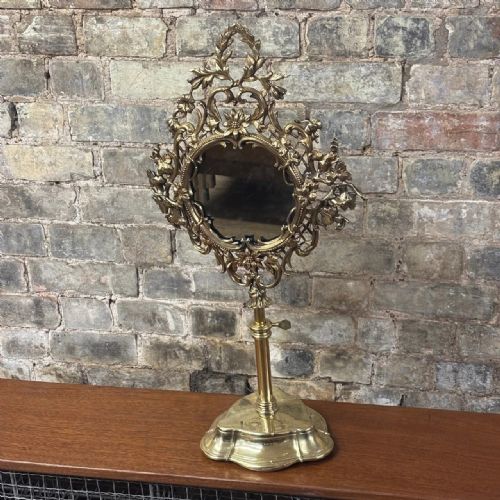
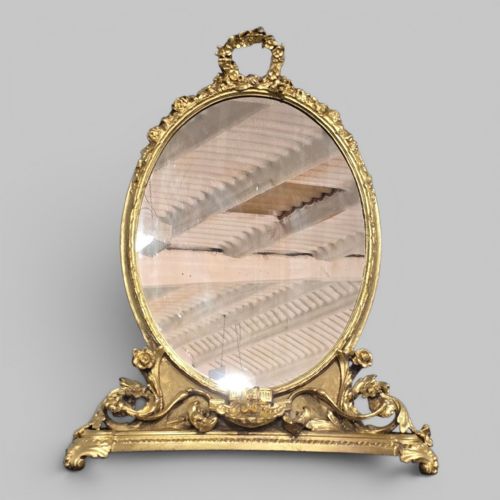
These french brass vanity mirror pieces bring warm reflection to a dressing table, combining cast metalwork and bevelled glass.
French Brass Vanity Mirror
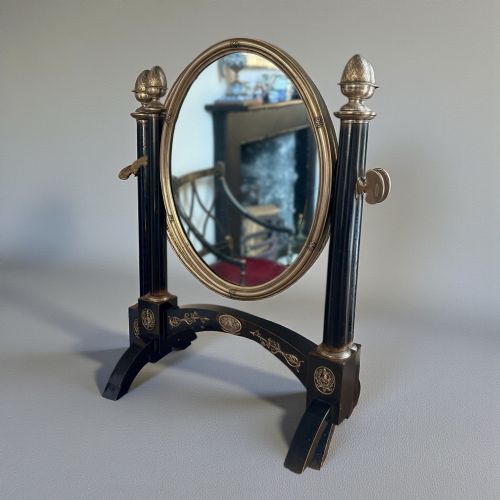
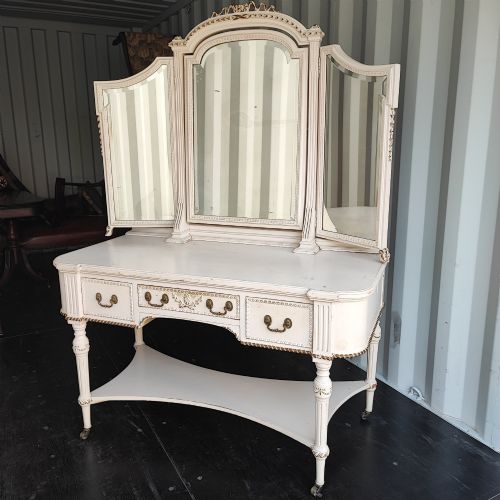
A french brass vanity mirror brings period detail to a dressing space, spanning portable table mirrors, adjustable pedestal pieces and folding designs. These items range from compact boudoir accessories to large dressing table mirrors.
The selection leans heavily into nineteenth-century and early twentieth-century examples, capturing the revival styles popular across France and Britain. Most pieces take the form of table mirrors supported by easel backs or pivoting stands.
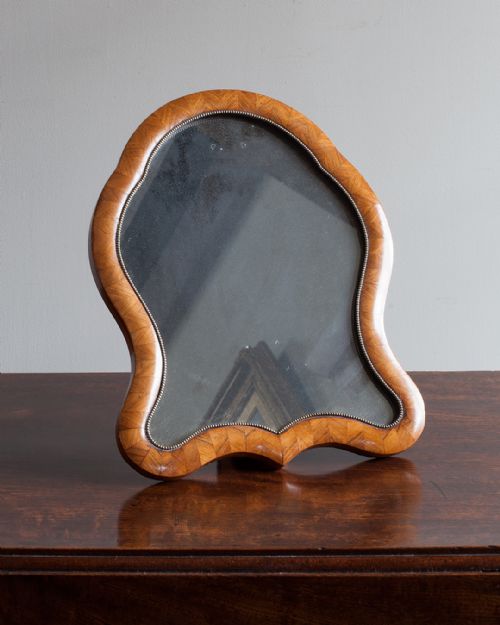
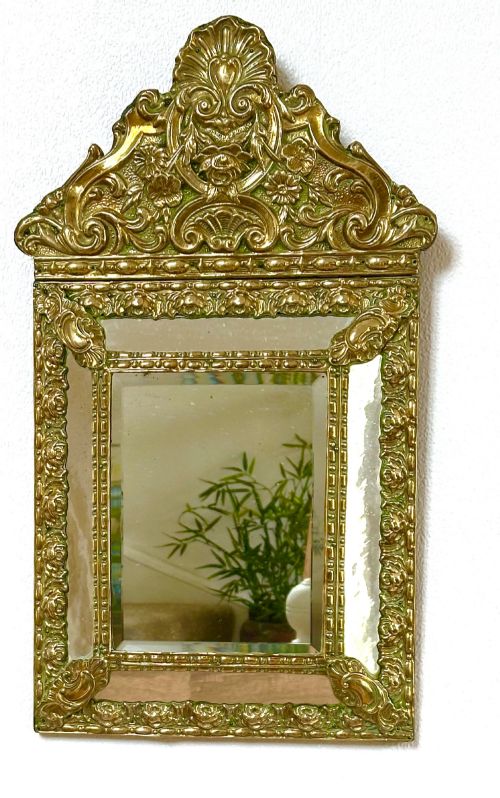
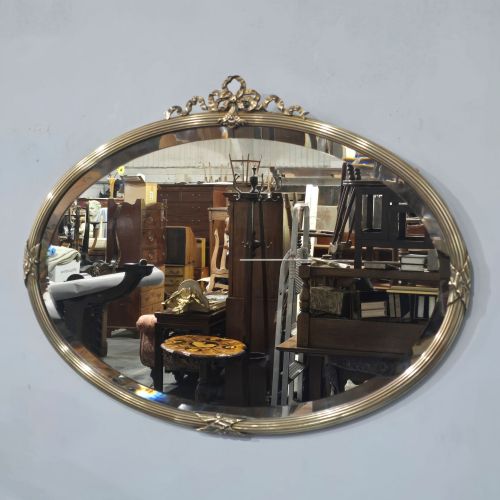
Makers utilised various formats, including oval and cushion shapes, alongside more elaborate wall-mounted alternatives. Buyers encounter everything from simple pressed brass frames to intricate cast ormolu structures.
Distinctions in quality and finish
Quality rests in the crispness of the cast ornamentation and the depth of the metal finishing, whether in gilt bronze, ormolu or polished brass. Superior pieces display finely chased details and robust pivoting mechanisms that hold the glass firmly at any angle.
The integrity of the mirror glass itself matters greatly, with bevelled edges and minimal foxing distinguishing better survivals. Heavier gauge metalwork and signed components or painted Limoges enamel plaques indicate superior workshop production.
Some folding mirrors hide miniature hinges that allow the side panels to wrap around your face like an admiring personal dresser.
Thiebaut Freres·Joseph Meissonnier·F Bienvue
The French Brass Vanity Mirror Glossary
- Ormolu
- Gilded bronze, where a layer of gold is applied to a bronze base using a mercury amalgamation process. This technique gives the metal a rich, warm lustre seen on many finer French vanity mirrors.
- Champleve
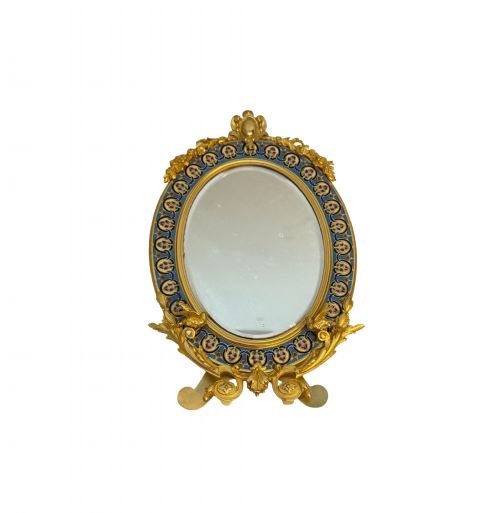
- An enamelling technique where troughs or cells are hollowed out of the metal surface and filled with vitreous enamel before firing. It creates vibrant coloured patterns across the brass or bronze frame.
- Bevelled glass
- Mirror glass with edges cut and polished at an angle to create a framed, prismatic effect. It adds depth and a decorative border to the reflective surface.
- Rococo Revival
- A nineteenth-century design movement inspired by eighteenth-century French rococo style, characterised by asymmetrical scrolls, C-scrolls and naturalistic plant motifs. It dominates the ornamentation of many table mirrors from this era.
French Brass Vanity Mirror: Frequently Asked Questions
How do I date a french brass vanity mirror?
Dating relies on stylistic clues such as the presence of cast Rococo revival scrolls, Neoclassical symmetry or Art Nouveau whiplash lines. Examining the construction of the easel back, the thickness of the brass and the presence of bevelled glass helps narrow the period.
Makers' marks or signatures stamped onto the bronze or brass frame offer a direct link to specific workshops and production decades. Comparing the mounting hardware and hinge types with dated pieces provides further confirmation.
Are these mirrors heavy to place on a dressing table?
Most table mirrors feature sturdy cast brass, bronze or wooden stands designed to support the weight of the glass safely. Smaller examples remain light and portable, while larger pivoting or triple-mirror variants require a stable surface.
Adjustable pedestal designs distribute their weight evenly across a weighted base or sturdy feet. Buyers should check the surface space and the angle of the pivoting mechanism before placement.
How do I care for antique brass and glass?
Cleaning requires a soft, dry cloth to remove dust from the intricate cast metalwork without disturbing the aged patina. Proprietary metal cleaners should be avoided on gilt or ormolu surfaces to prevent wearing away the finish.
Glass can be cleaned with a mild glass cleaner applied to a cloth rather than sprayed directly, preventing moisture from seeping behind the mirror plate. Keeping the piece away from direct dampness preserves both the silvering on the glass and the underlying metal.
What is the difference between a table mirror and a vanity mirror?
Table mirrors generally refer to freestanding pieces designed to sit on a chest of drawers, dressing table or sideboard. Vanity mirrors specifically denote mirrors used for personal grooming, often featuring folding arms, adjustable stands or matching dressing table sets.
Many antique examples serve both functions interchangeably depending on their size and whether they incorporate a pivoting frame. Some designs include small trinket trays or compartments integrated into the base.