
French Brass Travelling Clock
A french brass travelling clock brings portable horology into domestic spaces, offering mechanical precision housed in bevelled glass and polished metal.
French Brass Travelling Clock
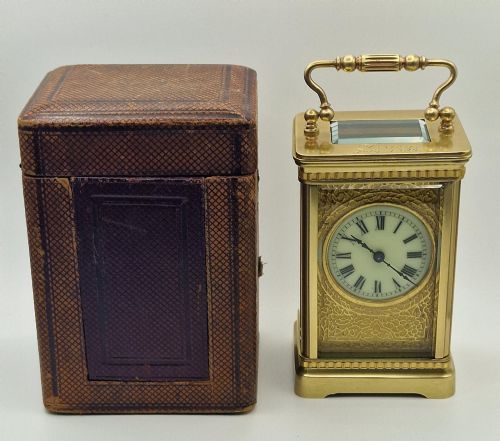
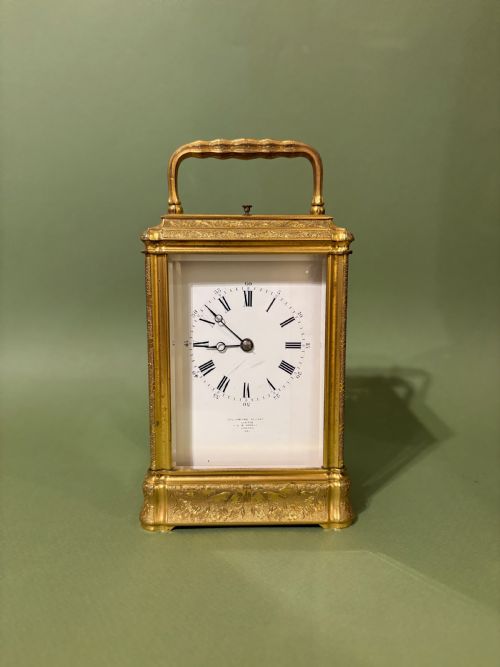
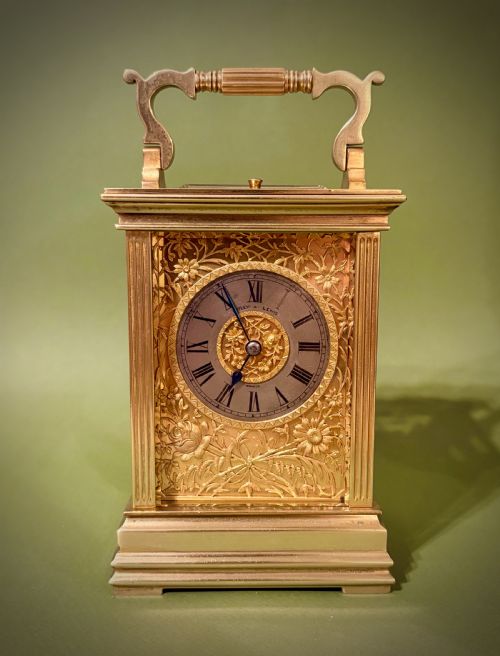
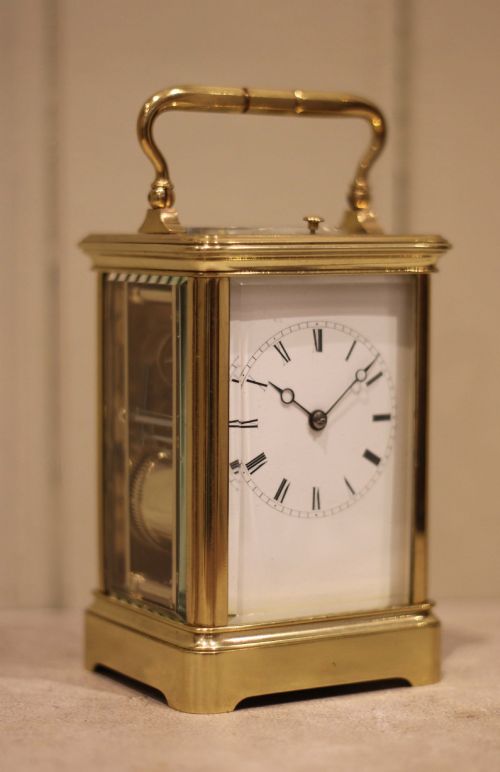
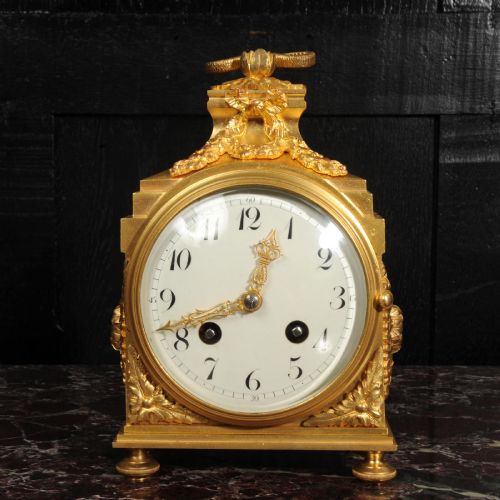
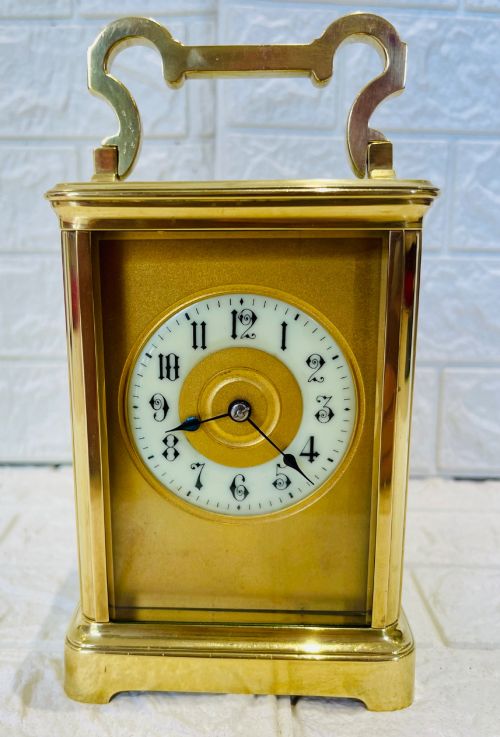
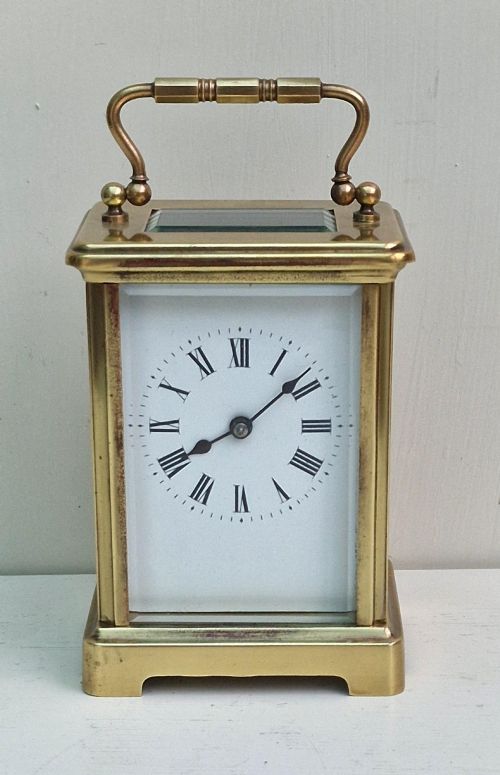
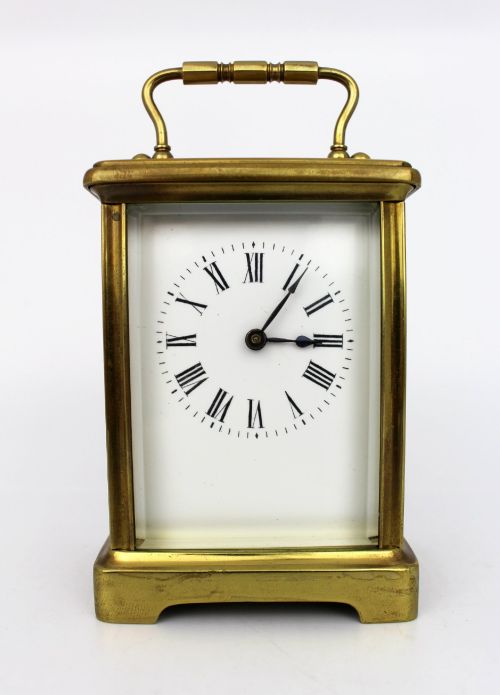
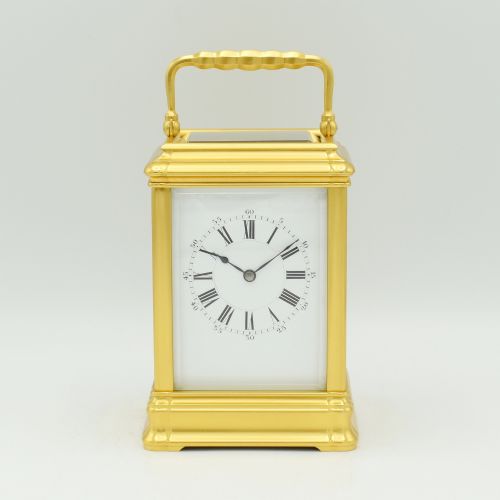
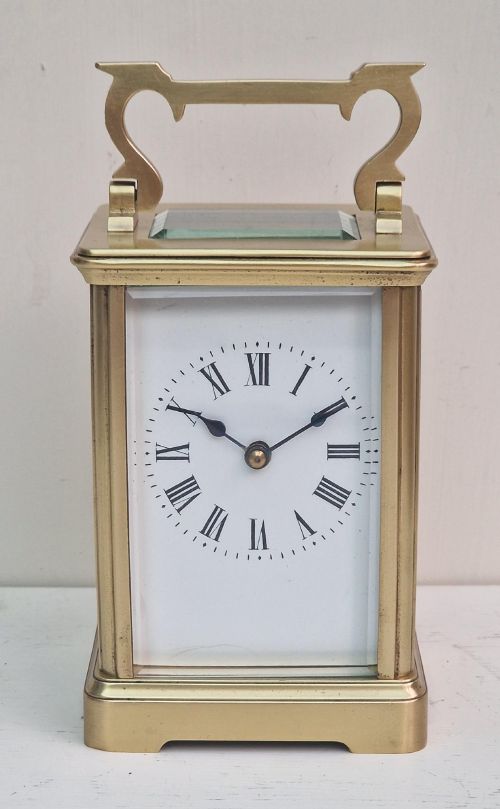
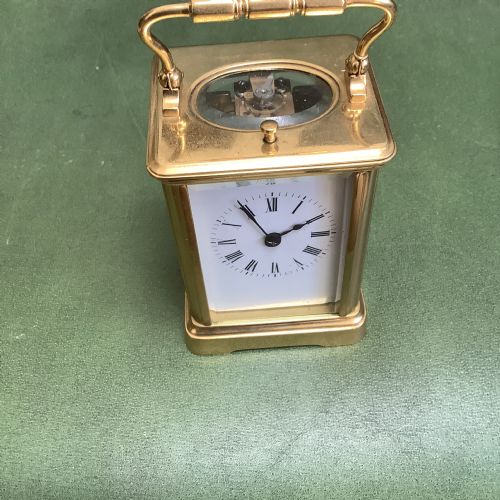
A french brass travelling clock spans the nineteenth century and the Edwardian period, appearing predominantly as carriage clocks and desk clocks. These pieces take the form of heavy brass cases fitted with glass panels that reveal the escapement and gear train within.
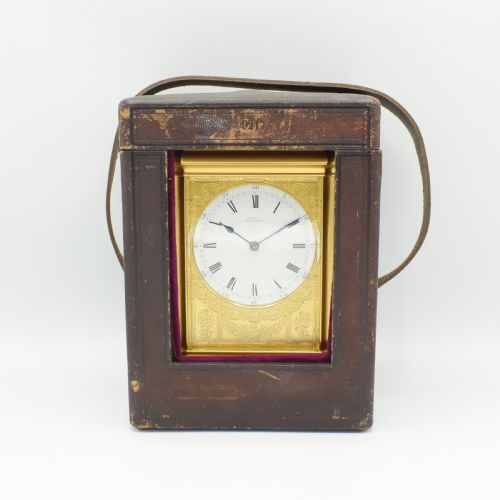
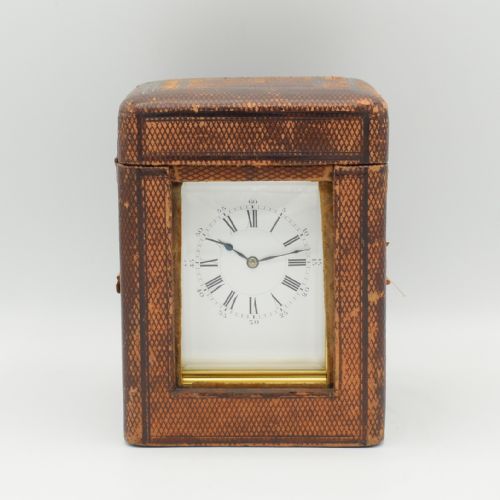
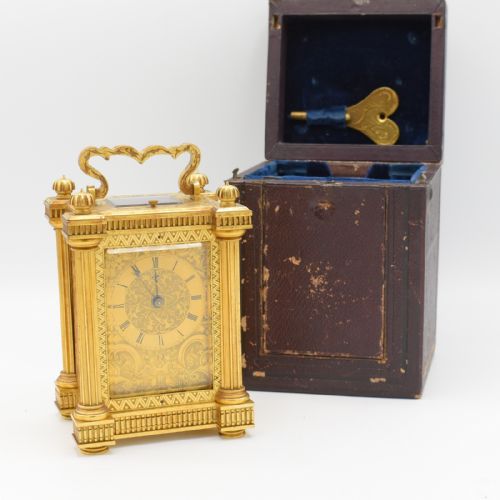
Most examples originate from French workshops or bear London retailer signatures on their white enamel dials, often arriving in fitted leather travel cases. Collectors encounter standard rectangular gorge cases alongside miniature versions and elaborately engraved architectural formats.
Standards of craftsmanship
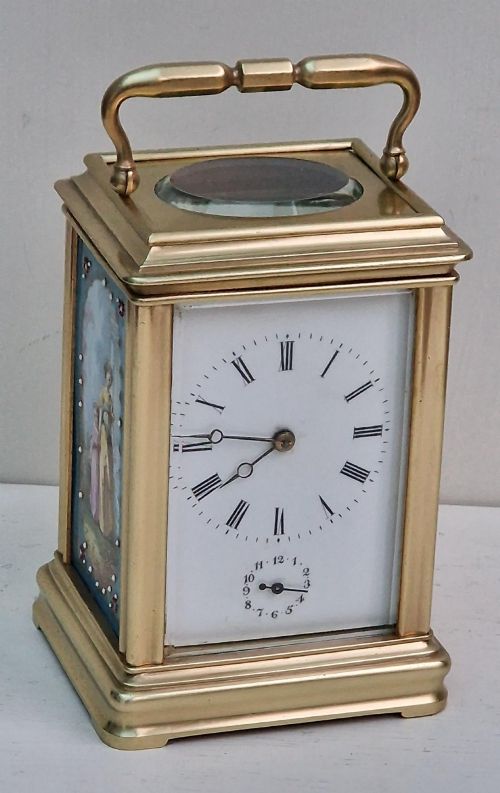
Quality separates simple timepieces from sophisticated striking and repeating complications by the complexity of the internal movement and the crispness of the gear cutting. Master makers integrated alarm functions and repeat mechanisms that demand precise adjustment to operate in harmony.
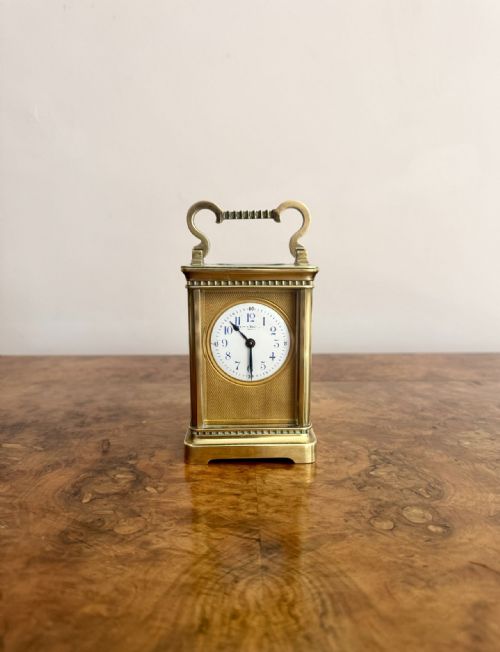
The degree of hand finishing defines the upper tier, visible in deeply engraved gilt brass cases, undamaged painted enamel dials, and signed backplates. Original matched leather travel cases elevate a piece by preserving the object in its complete contemporary context.
Some travel cases include tiny sliding secret doors so owners could wind the clock without removing it from its protective leather home.
Henri Jacot·Drocourt Paris·C. Detouche·Antoine Redier·Margaine
The French Brass Travelling Clock Glossary
- Gorge case
- A distinct rectangular brass case style featuring stepped mouldings to the top and base, typical of nineteenth-century carriage clocks.
- Platform escapement
- The self-contained assembly holding the balance wheel and hairspring, allowing portable clocks to keep time while moving.
- Repeating mechanism
- A complication operated by pressing a button that causes the clock to restrike the last hour and quarters on demand.
- Pendule d'officier
- A military-style officer's travelling clock, generally featuring a more compact form and distinct handle design.
- Enamel panel
- A decorated ceramic insert painted with scenes or floral motifs, fitted into the brass sides or dial of the clock.
French Brass Travelling Clock: Frequently Asked Questions
How do repeating carriage clocks work?
A repeating mechanism sounds the hours and quarters when a plunger or cord is activated on the case, allowing the owner to check the time in darkness.
This complication uses an additional rack system driven by the mainspring barrel to count out the correct strikes independently of the running train.
Are travel cases original to the clocks?
Many surviving pieces retain their fitted leather outer cases, constructed specifically to protect the glass panels and brass handles during journeys.
These cases usually feature velvet or leather linings with sliding apertures for the winding arbours and time-set squares.
How do I wind a french brass travelling clock?
Winding requires a dedicated double-ended key applied to the square arbours located on the underside or backplate of the movement.
Most eight-day movements need weekly winding, while timepieces lacking strike trains may share similar maintenance intervals depending on the mainspring tension.
What is a platform escapement?
The platform escapement mounts the balance wheel, pallet fork, and escape wheel onto a small horizontal brass plate above the movement.
This innovation replaced the pendulum, enabling portable clocks to maintain accurate timekeeping despite being moved from room to room.