




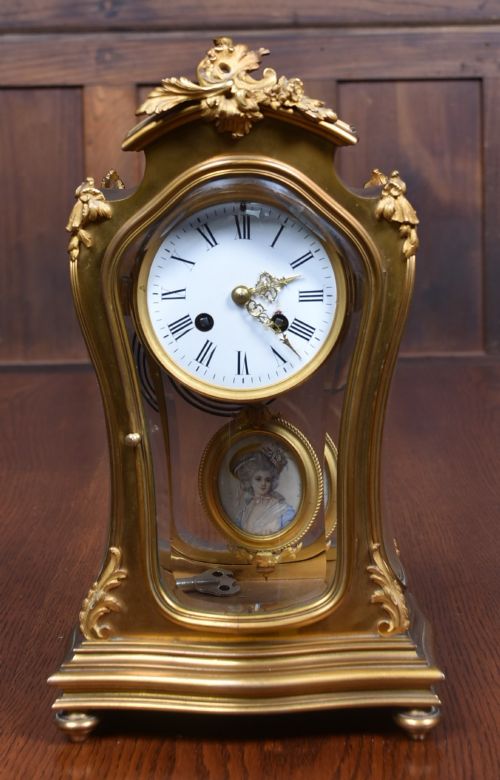


French Brass Pendulum Clock
A french brass pendulum clock brings nineteenth-century precision and ornate metalwork into a room.
French Brass Pendulum Clock
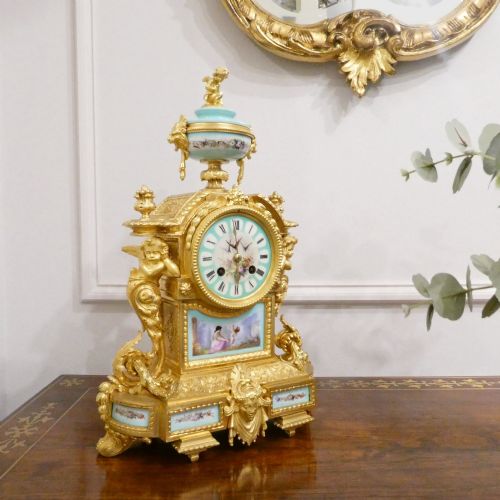
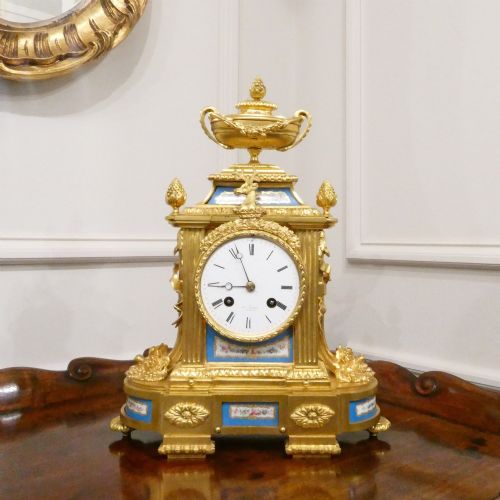
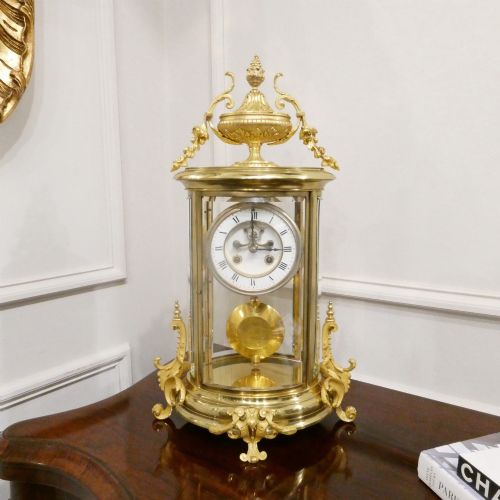
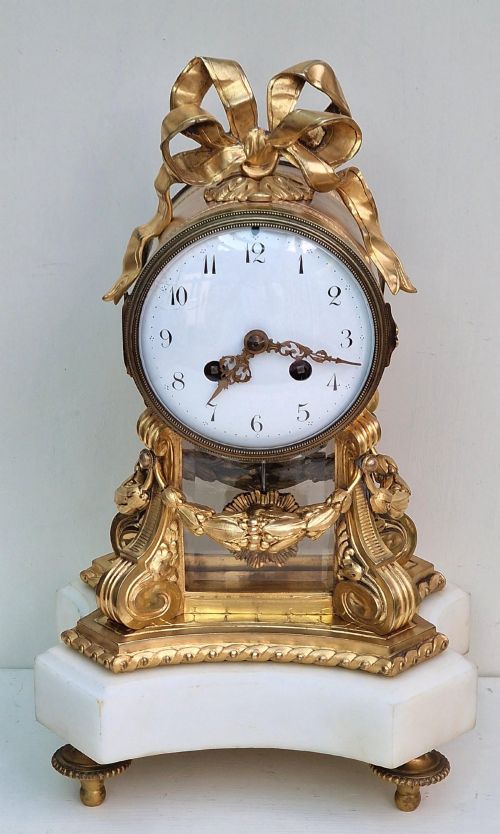
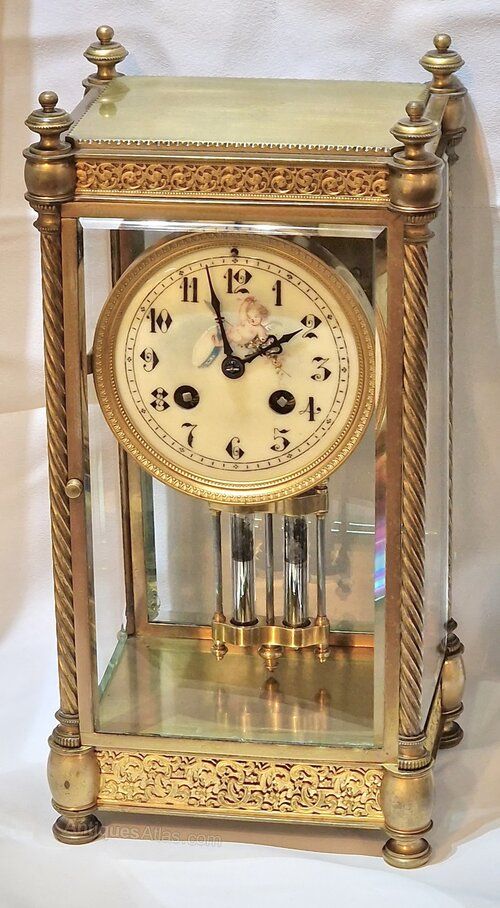
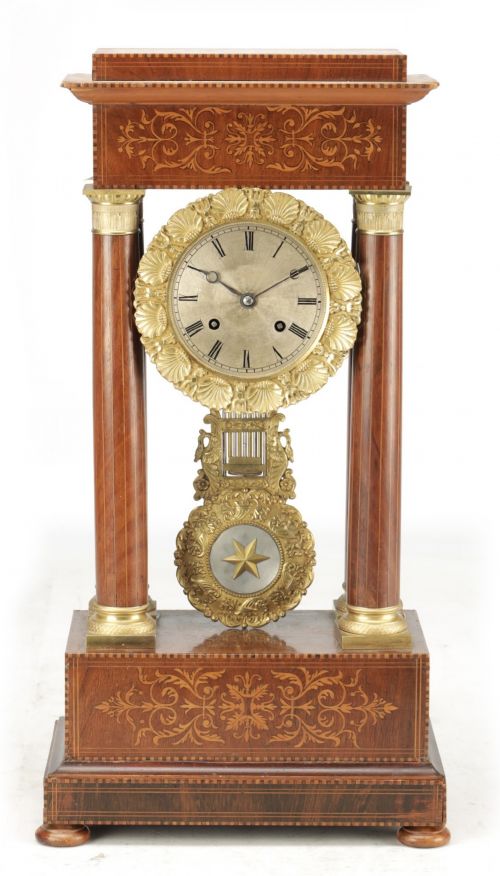
A french brass pendulum clock typically manifests as a mantel clock, a four glass clock, or a portico design rooted in the nineteenth century. Buyers encounter styles spanning Louis XVI revival, Napoleon III, and French rococo, often housing enamel dials and visible mechanisms.
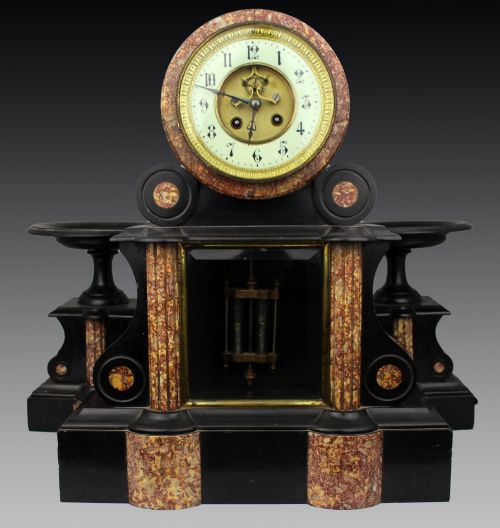
Mantel clocks and four glass variations dominate the selection, frequently incorporating gilt bronze, ormolu, and brass structures alongside porcelain panels or marble bases. These pieces reflect the decorative tastes of the Victorian era and earlier French periods.
Originating predominantly from French workshops, these timepieces range from simple brass timepieces to complex garniture sets and wall clocks. The surviving examples demonstrate the mechanical and artistic output of nineteenth-century European horology.
How They Were Made
Makers utilised cast brass, gilt bronze, and ormolu to form the structural cases and decorative mounts, frequently combining these metals with white marble, black marble, or ebonised wood. Enamel dials with painted numerals provided the primary face for telling time.
Intricate decorative details involved fire-gilding, porcelain plaque insertions, and glass panel construction for four glass models, allowing observers to view the internal pendulum and movement. Skilled artisans also applied mother-of-pearl inlay, metal wire marquetry, and tortoiseshell veneer.
Listings feature brass, gilt bronze, marble, porcelain, and ebonised wood across Victorian and nineteenth-century periods.
What Varies In Quality
Quality rests in the crispness of the bronze casting and the depth of the gilding or ormolu finish, where sharper chisel work distinguishes superior decorative mounts. The presence of signed movements from established makers elevates the standing of a piece.
The complexity of the clockwork, such as mercury-weighted pendulums or striking complications, separates standard timepieces from higher grade examples. Additionally, the integration of materials like hand-painted porcelain panels or cut crystal shapes the overall refinement of the construction.
Henry Marc·Samuel Marti·Maurice and Marcel Moulin Favre-Bulle·Rodier·Le Roy·Delettrez·Tiffany
The French Brass Pendulum Clock Glossary
- Ormolu
- Gilt bronze produced by applying a finely ground high-carat gold-mercury amalgam to a bronze object. This technique creates a rich golden finish seen on many nineteenth-century French clock cases.
- Garniture set
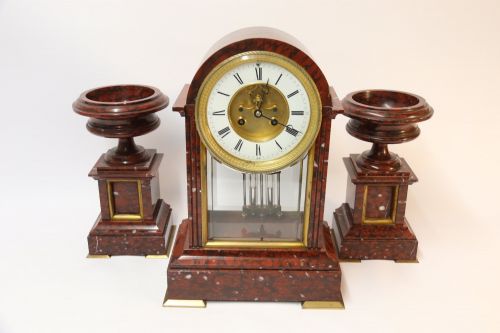
- A clock accompanied by matching side ornaments such as urns or candelabra. These matched groupings were designed to display together on a mantelpiece.
- Four glass clock
- A clock encased in four bevelled glass panels that reveal the mechanical movement and pendulum from multiple angles. This style gained popularity during the late nineteenth century.
- Portico clock
- A clock featuring a architectural case supported by pillars or columns, often housing a suspended pendulum within the central opening. This neoclassical form draws on ancient architectural motifs.
- Japy Frères
- A prominent French clockmaking firm known for producing quality movements during the nineteenth century. Their stamped backplates appear on numerous mantel clocks from the period.
French Brass Pendulum Clock: Frequently Asked Questions
How do four glass clocks work?
Four glass clocks utilise a brass movement suspended within a glass and metal housing, allowing light to pass through and display the internal gears and pendulum clearly.
Most examples rely on a traditional spring-driven or weight-driven mechanism that operates with a visible pendulum swinging between the glass panels.
What is a clock garniture set?
A clock garniture set consists of a central mantel clock flanked by matching decorative objects such as vases, urns, or candelabra. These matched suites were created to furnish a drawing room mantelpiece as a cohesive display.
They share identical materials, such as marble, gilt bronze, or porcelain, matching the aesthetic of the primary clock.
How do I date a french clock?
Dating a french clock involves examining the style of the case, the materials used, and any maker stamps or signatures inscribed on the movement backplate. Periods like Louis XVI revival or Napoleon III provide specific stylistic markers.
The presence of certain decorative techniques, such as ebonised wood or specific porcelain panel designs, helps narrow down the decade of production.
Where should I place a mantel clock?
A mantel clock suits placement on a flat, stable surface such as a fireplace mantel, a sideboard, or a console table where it remains level. Ensuring a stable surface helps the pendulum swing evenly and keeps the movement running accurately.
Avoid areas prone to excessive moisture or direct sunlight to preserve the gilt bronze, marble, and enamel finishes.