


French Brass Display Stand
A French brass display stand brings decorative metalwork and tiered staging into a room to hold precious small objects.
French Brass Display Stand
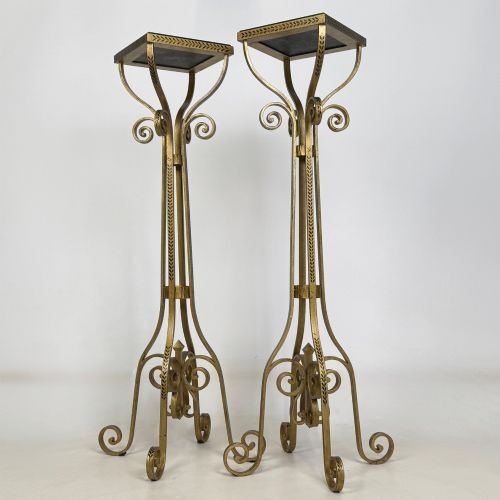
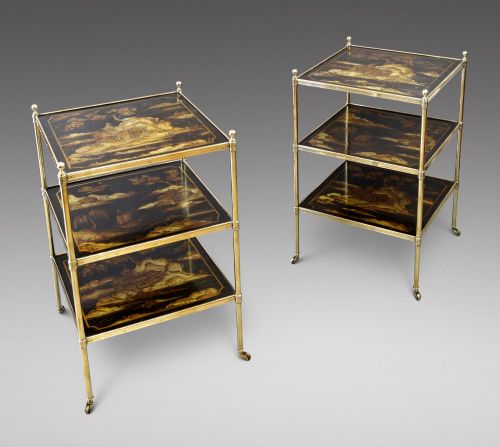
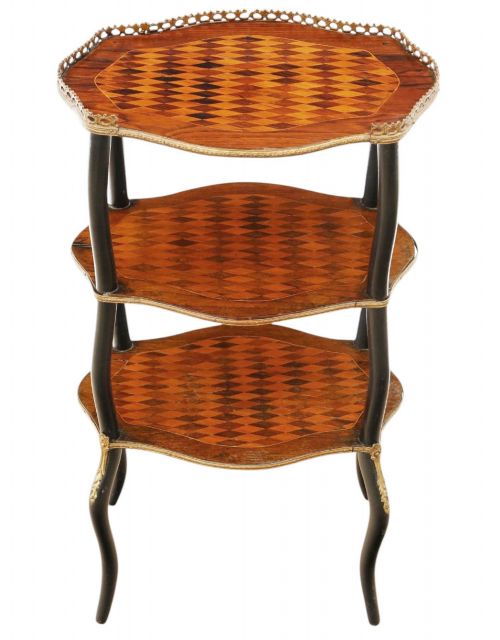
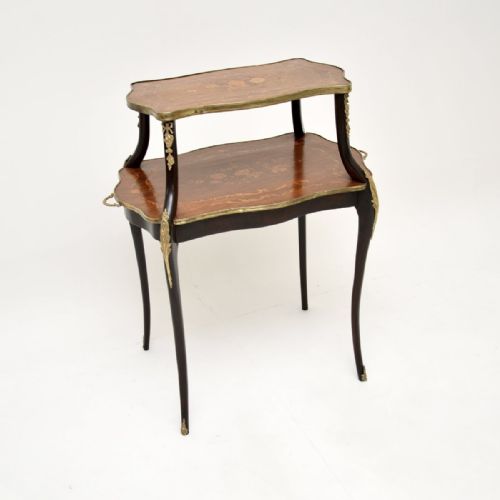
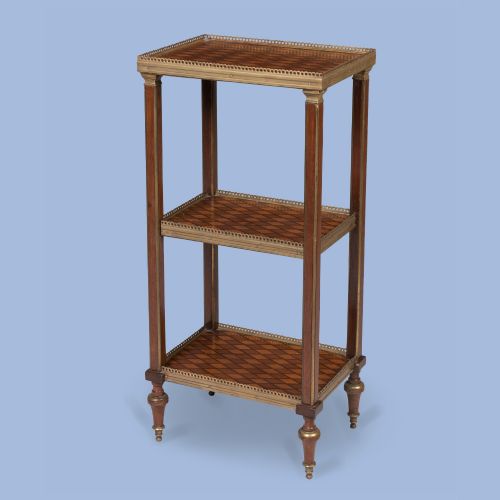
When you search for a french brass display stand, you encounter etagere units, plant stands, and multitiers designed for staging ceramics or plants. These pieces span from the mid nineteenth century through the art deco era, incorporating historical revival aesthetics.
The most common formats on this page are tiered etageres and plant stands featuring brass frames combined with wood or stone. Makers across nineteenth century France and subsequent periods utilised these metal frameworks to support open shelving and glass cabinets.
Materials and Techniques
The construction relies heavily on brass, ormolu, and wrought iron frameworks that support glass, marble, or onyx tiers. Artisans incorporated timber elements such as mahogany, walnut, rosewood, and ebonised wood alongside intricate marquetry and parquetry inlay.
Metal components undergo casting and chiseled detailing, often paired with glazed panels or galleried edges to secure the contents. Structural stability is achieved through multi tier tiering and bolted metal frames that hold heavy stone tops.
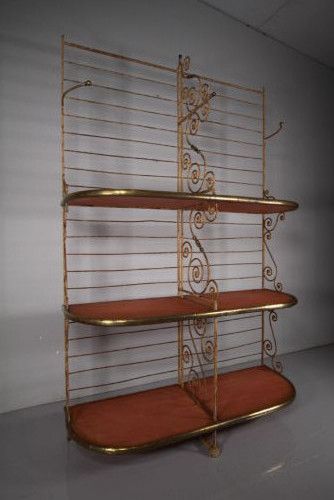
Object types span etageres, plant stands, bakers racks, and vitrines reflecting French design influences from Louis XV revival to Art Deco.
Craftsmanship and Detail
Quality reveals itself in the crispness of cast ormolu mounts, the precision of inlaid wood marquetry, and the thickness of marble or onyx tops. Superior examples display refined surface chasing on the brass and tightly joined timber framing.
Lower tiers of quality show simpler stamped metal parts and plain secondary timbers without decorative parquetry. The weight of the materials and the solidity of the gallery rails distinguish standard production pieces from fine cabinetwork.
Siegel·Donald Ross
The French Brass Display Stand Glossary
- Etagere
- A piece of furniture consisting of a set of open shelves for displaying small objects. They typically feature multiple tiers supported by slender columns.
- Ormolu
- Gilded bronze applied to furniture mounts and decorative hardware. It provides a bright metallic finish popular in nineteenth century French design.
- Marquetry
- Decorative veneer applied to furniture in geometrical patterns or pictorial designs. Craftsmen use contrasting woods to create detailed surface imagery.
- Torchere
- A tall ornamental stand or candlestick holder adapted for display use. These pieces elevate plants or sculptures above floor level.
- Vitrine
- A glass cabinet designed for exhibiting fine porcelain or curiosities. Glazed panels protect the contents while offering all round visibility.
French Brass Display Stand: Frequently Asked Questions
What were french brass display stands used for?
These stands functioned primarily as decorative furniture to exhibit porcelain, glassware, and potted plants within domestic parlours and salons. Their multiple tiers maximised vertical display space without blocking light.
Larger variations served as shop display cabinets or patisserie racks for commercial merchandising. Domestic versions focused on aesthetic elegance to complement surrounding revival style interiors.
How do I date a brass etagere?
Dating relies on identifying the prevailing stylistic influence, such as Napoleon III, Louis XV revival, or Art Deco geometry. Materials like amboyna, kingwood, and ebonised wood point to specific nineteenth century periods.
Construction methods also aid dating, as machine made screws and cast brass replace hand finished components by the early twentieth century. Maker stamps and stamps on ironwork provide further historical markers.
Where should I place a display stand at home?
A multi tier etagere or plant stand fits well in a living room corner or against a neutral wall to highlight collections. Glass or mirrored versions bounce light around smaller spaces.
Ensure the stand rests on level flooring, particularly when supporting heavy marble or onyx tops. Keep them away from direct heat sources to protect inlaid wood veneers.
How do marble top stands differ from glass ones?
Marble and onyx top stands offer heavy, solid surfaces suited for supporting plants or heavy decorative objects. The stone brings natural veining and colour variation to the piece.
Glass shelves and glazed cabinets provide transparency, allowing light to pass through the entire unit. These lighter structures emphasise the surrounding brass framework and displayed items.